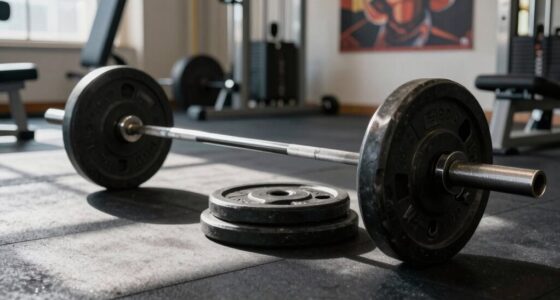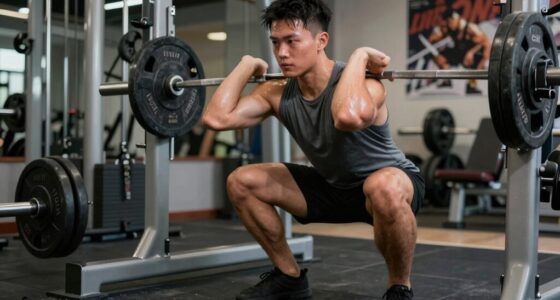
Jumping straight into heavy lifts without proper warm-up sets is a common mistake that wastes energy and raises injury risk. Warm-up sets prepare your muscles, joints, and nervous system gradually, helping you lift more safely and effectively. Skipping this step wastes effort and can lead to setbacks. Understanding how warm-up sets differ from working sets and why they’re essential can keep you safe and improve your progress—there’s more to uncover if you keep exploring.
Key Takeaways
- Warm-up sets use lighter weights to prepare muscles, avoiding fatigue that can diminish energy for working sets.
- Mistaking warm-up sets for actual effort can lead to unnecessary energy expenditure and reduced strength for main lifts.
- Proper warm-up targets neuromuscular readiness, while working sets focus on muscle overload, preventing energy waste.
- Skipping warm-up or rushing through it wastes energy that should be conserved for effective working sets.
- Balancing warm-up intensity ensures energy is preserved for maximum effort during working sets, optimizing performance.
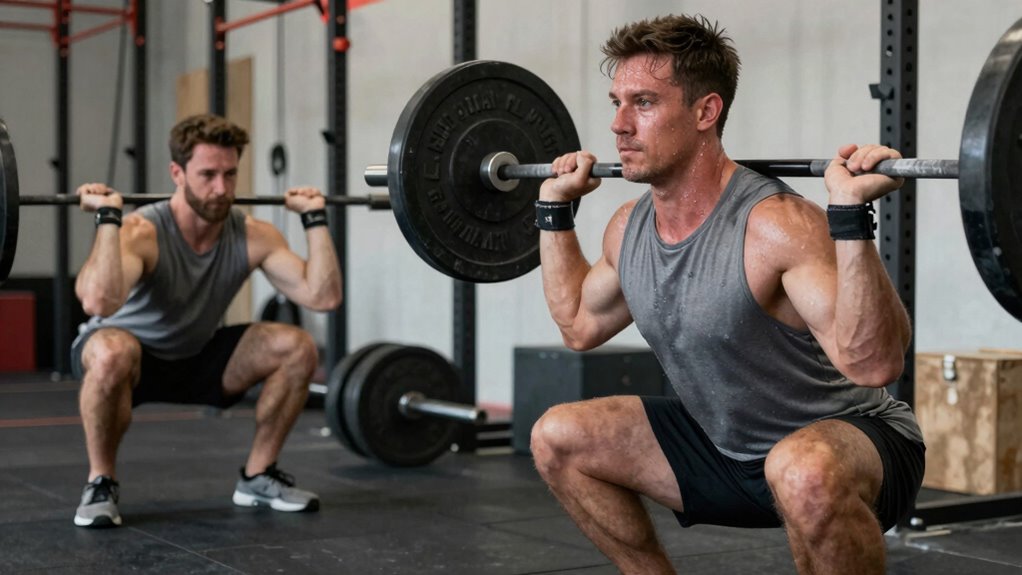
Understanding the difference between warm-up sets and working sets is essential for optimizing your workout. Many people mistakenly treat warm-up sets as just extra reps, but they serve a crucial purpose in preparing your body for the heavier lifts ahead. Properly structured warm-up sets lay the foundation for effective training, helping you implement progression strategies that steadily increase your strength over time. They also play a vital role in injury prevention by gradually loosening up your muscles, joints, and connective tissues, reducing the risk of strains or tears when you start lifting heavier weights.
Warm-up sets prepare your body and prevent injuries, laying the foundation for safe, effective strength gains.
When you approach your warm-up, focus on quality over quantity. Instead of mindlessly doing numerous reps with light weight, aim for a few sets that mimic the movement pattern you’ll perform during your working sets. This not only primes your neuromuscular system but also helps you gauge how your body feels that day. Incorporate lighter loads initially and progressively increase the weight, aligning with your progression strategies. This gradual approach ensures your muscles adapt safely, reducing unnecessary strain and fatigue, which can compromise your performance and safety during the main lifts.
Your working sets are where you push your limits — the heart of your workout. These are the sets where you apply the effort required to stimulate muscle growth and strength gains. Unlike warm-up sets, which are lighter and focus on preparation, working sets involve lifting heavier weights that challenge your muscles and nervous system. It’s important to not rush into heavy weights right away; instead, use your warm-up to gauge your readiness. This strategic shift minimizes the risk of injury, as your body is already primed and prepared for intense effort.
Balancing warm-up and working sets effectively also helps you track your progression. If you notice consistent increases in your working weights over time, it indicates that your warm-up routine and overall training plan are working well. Conversely, neglecting proper warm-up can lead to injuries or setbacks, as your body isn’t adequately prepared for the stress of heavy lifts. Remember, injury prevention isn’t just about avoiding accidents; it’s also about managing fatigue and ensuring your muscles, tendons, and joints are resilient enough to handle progressive overload. Additionally, incorporating proper equipment can further safeguard your joints and muscles during intense lifts.

Adjustable Dumbbells Set 25LB, Weights Dumbbells Set 5/10/15/20/25lbs, Anti-Slip Handle for Exercise Fitness Workout Adjustable dumbbell set 2 (25, Pounds)
【25LBS Adjustable Dumbbells Pair】You will receive 2 piece 25LBS Adjustable Dumbbells.. Adjustable Dumbbell Set of 2. Each dumbbell…
As an affiliate, we earn on qualifying purchases.
As an affiliate, we earn on qualifying purchases.
Frequently Asked Questions
How Do I Know When to Progress From Warm-Up to Working Sets?
You should progress from warm-up to working sets once you notice warm-up indicators like your muscles feeling ready, your heart rate increasing, and your movements becoming smooth. Trust your body’s signals—if you’re no longer feeling light and loose, it’s time to move on. Keep an eye on progression timing; don’t rush, but avoid staying in warm-up too long. shift when your body signals it’s prepared for heavier work.
Can Warm-Up Sets Replace Light Workout Days?
You might think warm-up sets can replace light workout days, but they shouldn’t. Warm-up intensity and duration are meant to prepare your body, not replace actual training. Using them as a substitute can lead to undertraining and slower progress. Instead, keep warm-up sets short and light, reserving your workout days for more focused, higher-intensity sessions that truly challenge your muscles and drive gains.
What Are Signs of Overdoing Warm-Up Sets?
If you notice muscle fatigue or joint strain during warm-up sets, you’re overdoing it. Pushing too hard can tire your muscles prematurely and increase joint stress, reducing your overall workout efficiency. You might also feel less energized for your main sets. Pay attention to how your body responds; if warm-ups leave you sore or unstable, cut back to prevent injury and preserve energy for your actual workout.
How Do Warm-Up Sets Differ for Beginners Versus Advanced Lifters?
As a beginner, you should focus on lighter warm-up sets that emphasize proper technique variations, helping you master movement patterns and prevent injuries. Advanced lifters can incorporate more specific warm-up routines, including heavier sets or targeted mobility work, to prepare their muscles for intense training. Both levels need warm-up sets that prioritize injury prevention, but beginners should keep it simple, gradually increasing intensity, while experienced lifters fine-tune their warm-up to match their workout goals.
Should Warm-Up Sets Be Included in My Overall Workout Volume?
You should include warm-up sets in your overall workout volume to optimize warm-up efficiency and improve workout planning. They prepare your muscles and joints, reducing injury risk and boosting performance. While warm-up sets don’t count toward your main training volume, incorporating them strategically guarantees you’re ready for heavier lifts. Properly planning these sets helps maximize benefits without wasting energy, making your workouts more effective and safer.
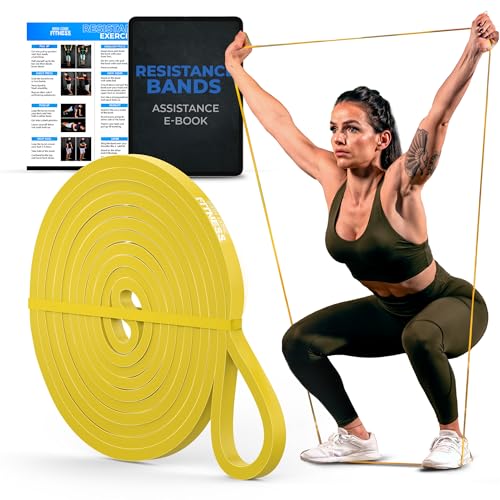
Yellow Light Thick Resistance Band – 5–22 lb Long Looped Rubber for Warm-Up, Activation, Bench Press & Flexibility – Stretch Band for Women and Men – Assisted Training Bands for Legs, Butt & Shoulders
Why yellow? (5lb-22lb tension) Our lightest band. Perfect band for warm ups and activation. Also great for toning…
As an affiliate, we earn on qualifying purchases.
As an affiliate, we earn on qualifying purchases.
Conclusion
Remember, warm-up sets are just the appetizer—they prepare your muscles for the main course, the working sets. Don’t make the mistake of skipping or doing too much of the warm-up, thinking it’s a waste of energy. Getting this balance right means you’re not burning out early or wasting effort. When you hit your working sets with proper prep, you’re setting yourself up for success. Keep your eye on the prize and don’t let small mistakes trip you up.

Lifepro Waver Vibration Plate Exercise Machine – High-Intensity Vibration for Muscle Activation, Full-Body Workout Vibrating Platform with Loop Bands, Fitness Equipment for Strength Toning & Fat Loss
Build Your Dream Body – Transform your physique with our vibrating exercise equipment! The Waver whole body vibration…
As an affiliate, we earn on qualifying purchases.
As an affiliate, we earn on qualifying purchases.

HOZMOZ Ventilated Weight Lifting Gloves, Thick Padded Workout Gym Gloves with Full Palm Protection & Grip & Shock Absorption for Women & Men's Fitness Exercise Training
【The Most Effective Protection】A 1-piece 6mm thickened cushioning pad covers from palm to fingertips, workout gloves women men…
As an affiliate, we earn on qualifying purchases.
As an affiliate, we earn on qualifying purchases.