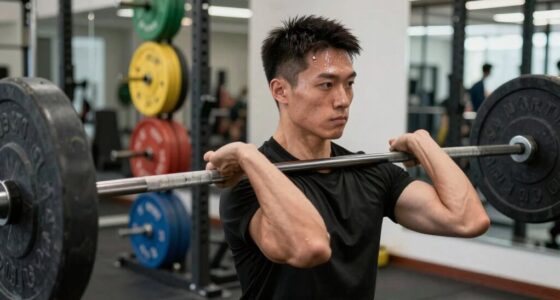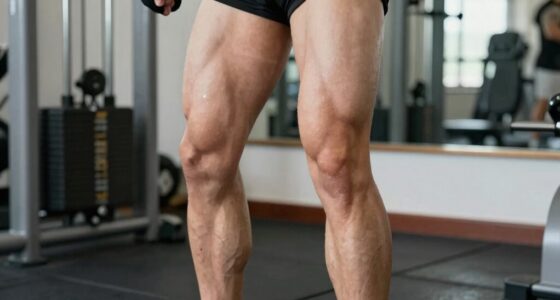

Your weak side can hold you back by causing muscle imbalances, affecting your stability and coordination, and increasing injury risk. Over time, your stronger side relies more, leaving the weaker one less active and less stable, which makes proper movement difficult. To fix it, focus on unilateral exercises and neuromuscular training that target your weaker side and improve control. Keep going to discover more effective strategies to restore balance and release your full potential.
Key Takeaways
- A weaker side causes movement imbalances, increasing the risk of injury and reducing overall performance.
- Muscle compensations develop over time, making the weaker side less active and harder to engage.
- Unilateral exercises and targeted training help rebuild strength and neural activation in the weaker side.
- Improving neuromuscular control through balance and slow, controlled movements restores symmetry and coordination.
- Addressing muscle imbalances enhances stability, power, and confidence while preventing future setbacks.
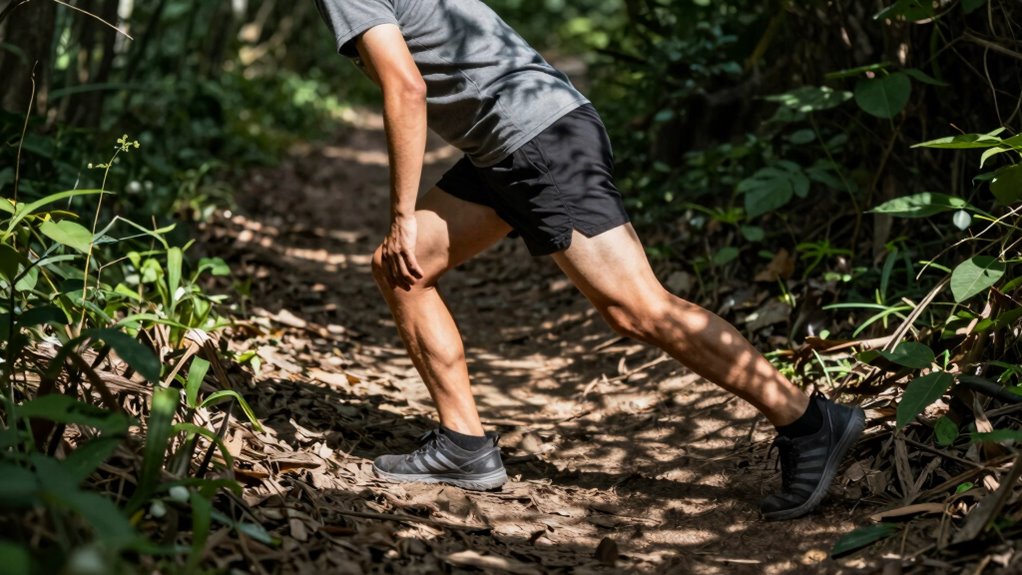
Have you ever noticed how your weaker side holds you back during key moments? It might be subtle, like struggling to keep your balance or feeling less confident when performing certain tasks. Often, this happens because of an unbalanced muscle or coordination challenges that develop over time. When your muscles aren’t equally strong or coordinated, your body naturally favors the stronger side, which can lead to a cycle of imbalance that hampers your overall performance. This imbalance doesn’t just affect strength; it impacts your movement efficiency, stability, and even your risk of injury.
Your weaker side can hold you back, affecting balance, strength, and overall performance.
Imbalanced muscles develop when one side of your body compensates for the other. For example, if your right leg is slightly stronger than your left, you might unconsciously rely more on your right, leaving your left weaker and less stable. Over time, this imbalance becomes ingrained, making it harder to activate and engage the weaker side properly during physical activities. As a result, you might notice difficulty maintaining proper form or coordination challenges when trying to perform tasks that require symmetry or precision. These challenges aren’t just frustrating—they can hinder your progress in training or sports, and increase your vulnerability to strains and strains from overcompensation.
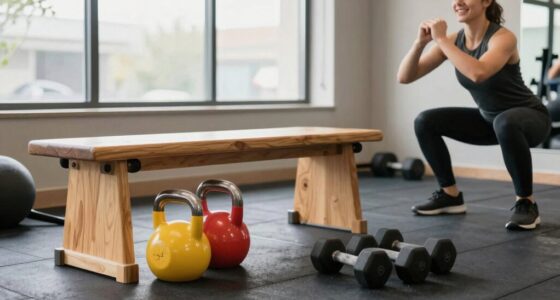
The key to overcoming this problem is recognizing that your weaker side needs targeted attention. Strengthening imbalanced muscles involves specific exercises that focus on the weaker side without over-relying on the stronger one. You can incorporate unilateral exercises like single-leg squats, step-ups, or one-arm presses, which force your weaker muscles to work independently. This not only rebuilds strength but also retrains your nervous system to activate both sides more equally, reducing coordination challenges. Consistency is essential; you need to regularly engage your weaker side to bring it up to par with your dominant side.
Additionally, paying close attention to your body’s signals during movement can help improve coordination. Slow down your movements and focus on proper form, ensuring your weaker side is fully engaged. Sometimes, your body compensates subconsciously—so consciously working to correct these patterns makes a significant difference. Incorporate balance and stability exercises, like single-leg stands or stability ball work, to enhance neuromuscular control. Engaging in neuromuscular training can accelerate the process of restoring symmetry and coordination. Over time, this will help restore symmetry, improve coordination, and ultimately, boost your overall performance.
Addressing an imbalanced muscle and coordination challenges isn’t just about building strength; it’s about retraining your body to move efficiently and confidently. When you focus on strengthening your weaker side, you’ll start noticing improvements in stability, power, and balance. This process takes patience, but the results are worth it—your weaker side won’t hold you back anymore. Instead, it will become an asset, helping you perform at your best and preventing future setbacks.

Leg Extension and Curl Machine,Adjustable Leg Curl Machine for Home Gym,4 in 1 Lower Body Workout Machine with 1000LB Capacity,Leg Workout Equipment Compatible with 1" and 2" Plates
【ULTRA-QUICK ADJUSTMENTS, LEG MACHINE FITS ANY USER】Forget complicated wrenches! This leg extension and curl machine features an innovative…
As an affiliate, we earn on qualifying purchases.
As an affiliate, we earn on qualifying purchases.
Frequently Asked Questions
How Can I Identify My Weak Side Effectively?
You can identify your weak side through dominance correction and symmetry assessment. Pay close attention to how you perform daily activities and exercises, noting which side feels less coordinated or weaker. During workouts, focus on each side separately, comparing strength and movement quality. Recording yourself or working with a trainer helps, as they can spot imbalances and guide you in correcting dominance issues to improve symmetry and overall performance.
Is Muscle Imbalance the Main Cause of My Weak Side?
Muscle imbalance, caused by muscle asymmetry, is often a main cause of your weak side. When one side doesn’t get enough training consistency, it becomes weaker over time. To correct this, focus on training both sides equally, paying extra attention to your weaker side. Incorporate unilateral exercises and track your progress. Staying consistent with your workouts helps balance muscle strength and reduces asymmetry.
How Long Does It Take to Strengthen My Weak Side?
It typically takes 4 to 8 weeks to see noticeable strength improvements in your weak side. Consistency in training routines focused on unilateral exercises is key, along with proper recovery strategies like rest and nutrition. Incorporate targeted movements to address imbalances and avoid overtraining. Stick to your plan, be patient, and you’ll gradually notice increased strength and balance, helping your weak side catch up with the other.
Can Daily Habits Worsen My Weak Side?
Yes, daily habits can worsen your muscle imbalance if you’re unknowingly favoring your strong side. Repeating the same movements or exercises mainly on one side reinforces the imbalance and makes your weak side even weaker. To prevent this, focus on balanced daily habits, like equal reps on both sides, and incorporate specific exercises targeting your weak side. Consistency and awareness are key to correcting muscle imbalance over time.
Are There Specific Exercises for Balancing Both Sides?
Yes, there are specific exercises for balancing both sides. Incorporate bilateral training to strengthen both sides simultaneously, and unilateral exercises to target your weak side specifically. Unilateral moves, like single-leg squats or one-arm presses, help address imbalances by forcing each side to work independently. Regularly including these exercises in your routine can improve symmetry, reduce weaknesses, and enhance overall strength and coordination.

ProsourceFit Core Balance Disc Trainer, 14" Diameter with Pump for Fitness, Balance Training, or Seating; Wobble Board for Core Stability; Flexible Floor Cushions for Kids, Gray
IMPROVE CORE STRENGTH & BALANCE – Strengthens and engages multiple core muscles at once to maintain balance during…
As an affiliate, we earn on qualifying purchases.
As an affiliate, we earn on qualifying purchases.
Conclusion
Your weak side is like a stubborn anchor, holding you back from soaring freely. But now, you see its chains, and you hold the key to break them. With each effort, you’re chiseling away at the stone, revealing your true strength beneath. Embrace your weaker side as a guiding shadow, not a leash. As you do, you’ll find yourself dancing effortlessly, your full potential shining like a sunrise breaking through the clouds—powerful, bright, unstoppable.

HODL 21 ProGrip Rx Golf Trainer – Portable Right-Handed Swing Aid for Muscle Memory, Grip Consistency & Control – Perfect Training Tool for Range & Daily Practice
MASTER THE PERFECT GOLF GRIP – Scientifically molded for right-handed golfers, the ProGrip Rx golf grip trainer positions…
As an affiliate, we earn on qualifying purchases.
As an affiliate, we earn on qualifying purchases.
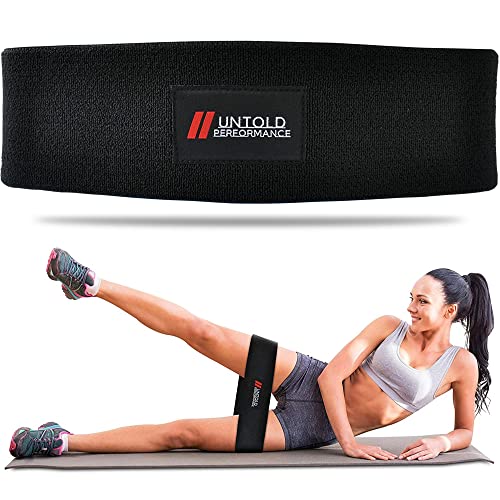
Untold Performance Heavy Resistance Bands – Hip Bands for Working Out, Premium Exercise Bands Resistance, Durable Resistance Bands for Strength, Flexibility & Glute Workouts (Black – Heavy, 1)
Maximized Durability for Intense Workouts – Our resistance bands for women and men provide steady resistance for all…
As an affiliate, we earn on qualifying purchases.
As an affiliate, we earn on qualifying purchases.