
Training to failure can help boost muscle growth and strength when you use it strategically, pushing your muscles to their limit and increasing fiber recruitment. However, overdoing it may lead to excessive fatigue, poor form, and higher injury risks, impairing your recovery and progress. To get the best results, incorporate failure sparingly and prioritize proper recovery. Keep these tips in mind, and you’ll discover how to optimize your training for sustainable gains.
Key Takeaways
- Training to failure boosts muscle hypertrophy by maximizing fiber recruitment and workout intensity.
- It is most effective when used sparingly, such as on final sets or specific training phases.
- Overuse can lead to fatigue, poor form, and increased injury risk, hindering recovery and progress.
- Listening to your body and balancing failure sets with proper rest prevents overtraining and burnout.
- Strategic application enhances growth without compromising technique, safety, or long-term performance.
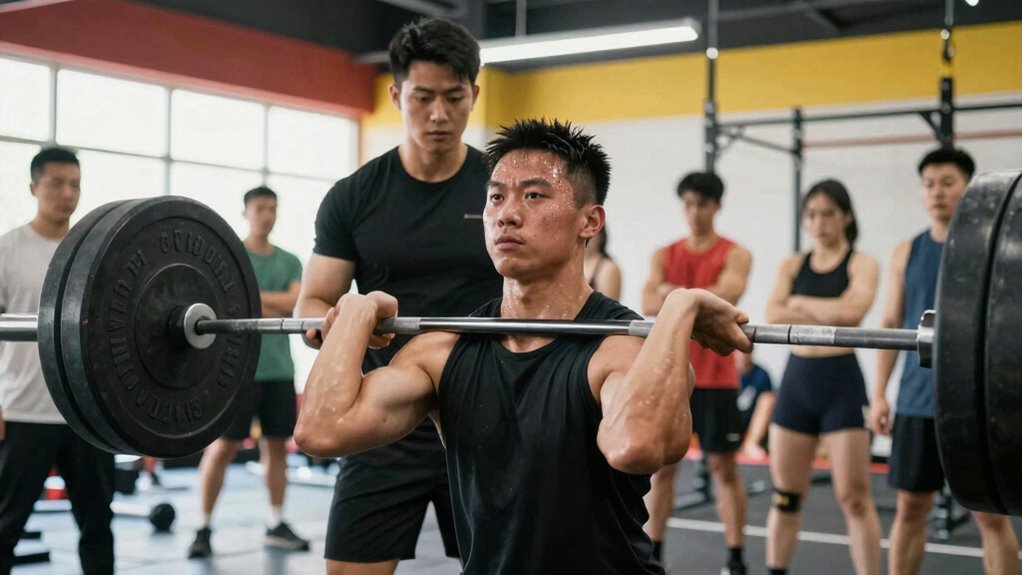
Training to failure involves pushing your muscles to their limit during each workout, ensuring you perform reps until you can no longer complete a movement with proper form. This approach notably increases workout intensity, which is a key factor in stimulating muscle hypertrophy. When you push your muscles to their maximum capacity, you create a greater stimulus for growth because your muscles are forced to adapt to the increased demand. This method can be highly effective if your goal is to build size and strength, as it maximizes muscle fiber recruitment, especially the larger, fast-twitch fibers responsible for hypertrophy. The higher the workout intensity, the more your muscles are challenged, promoting greater gains in muscle mass over time.
However, training to failure isn’t always the best strategy for everyone or every situation. While it can accelerate muscle growth, it also increases fatigue and the risk of overtraining if done too frequently. When you consistently push to failure, your muscles and nervous system may not recover adequately between sessions, leading to diminished performance and increased injury risk. This is especially true if you’re not allowing enough rest or if your training volume is high. Over time, excessive failure training can lead to burnout, mental fatigue, and even injury, which ultimately impairs your progress. It’s essential to balance training to failure with proper recovery strategies and to listen to your body’s signals. Additionally, training to failure during every workout can sometimes backfire by impairing your ability to maintain proper form. When fatigue sets in, your technique may suffer, increasing the likelihood of strains or other injuries. Poor form can also limit the effectiveness of your workout, as the target muscles may not be engaged correctly. This is why many trainers recommend using failure strategically—perhaps only on the last set of an exercise or during specific phases of your training cycle—rather than on every set. Incorporating proper recovery techniques can help mitigate some of these risks and support sustainable progress.

Optimum Nutrition L-Glutamine Muscle Recovery Capsules, 1000mg, 240 Count (Package May Vary)
1000 milligram of pure l glutamine per 2 capsules
As an affiliate, we earn on qualifying purchases.
As an affiliate, we earn on qualifying purchases.
Frequently Asked Questions
How Often Should I Train to Failure for Optimal Results?
You should train to failure about once a week to optimize your results while managing training intensity. This approach allows you to push your limits without risking overtraining or injury. Keep your workout frequency balanced—usually 3 to 4 sessions weekly—so your muscles recover properly. Listen to your body, and avoid going to failure every session, as it can lead to burnout or hinder progress.
Does Training to Failure Increase Injury Risk?
Think of training to failure like pushing a car uphill—you risk overheating the engine. Yes, it can increase injury risk if you push too hard or ignore proper form. Higher exercise intensity at failure strains muscles and joints, making injuries more likely. To prevent this, listen to your body, use proper technique, and mix in lighter sessions. This way, you enjoy gains without risking setbacks.
Can Beginners Safely Train to Failure?
Yes, beginners can safely train to failure if they focus on proper form and gradually increase workout intensity. It promotes muscle hypertrophy, but overdoing it can lead to injury. Start with lighter weights and fewer reps, listening to your body. Training to failure occasionally can boost progress, but consistency and safety matter most. Always prioritize technique and recovery to prevent setbacks and ensure steady gains.
How Does Training to Failure Affect Muscle Recovery?
Training to failure increases muscle fatigue, which can slow your recovery rate if you push too often or intensely. Your muscles need time to repair, and excessive fatigue may prolong soreness and recovery. To optimize progress, balance training intensity with adequate rest. Listen to your body, and avoid training to failure on every session, especially if you’re feeling overly fatigued, to guarantee your muscles recover properly and prevent injury.
Is Training to Failure Effective for Fat Loss?
Training to failure can be effective for fat loss if used strategically to break plateaus, pushing your muscles beyond their comfort zone. However, it may lead to mental fatigue, making consistent workouts harder over time. To avoid burnout, incorporate failure training intermittently and balance it with recovery. This approach keeps your workouts challenging yet sustainable, maximizing fat loss without risking overtraining or mental exhaustion.

WHATAFIT Resistance Bands, Exercise Bands,Resistance Bands for Working Out, Work Out Bands with Handles for Men and Women Fitness, Strength Training Home Gym Equipment
DIFFERENT COLOR ADJUSTABLE RESISTANCE BANDS: The exercise bands come with 5 different resistance level 10lbs, 20lbs, 30lbs, 40lbs…
As an affiliate, we earn on qualifying purchases.
As an affiliate, we earn on qualifying purchases.
Conclusion
Remember, training to failure can be your secret weapon or your Achilles’ heel. Use it wisely, like a well-placed dagger in a knight’s arsenal, and it’ll push your limits. But push too far, and you’ll end up like Icarus, soaring too close to the sun. Listen to your body, vary your approach, and know when to stop. With smart training, you’ll level up without risking a Greek tragedy.

ATERCEL Workout Gloves for Men and Women, Exercise Gloves for Weight Lifting, Cycling, Gym, Training, Breathable and Snug fit (Black, S)
Innovative Palm Design Maximizes Your Grip: We researched how hundreds of people use workout gloves to enhance our…
As an affiliate, we earn on qualifying purchases.
As an affiliate, we earn on qualifying purchases.

The Simple Science of Muscle Growth and Hypertrophy: The Shockingly Simple Truth on How to Build Muscle using the Best Bodybuilding and Strength Training Exercises
As an affiliate, we earn on qualifying purchases.
As an affiliate, we earn on qualifying purchases.