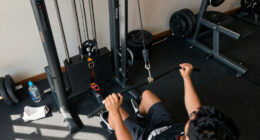
To train heavy without getting beat up, focus on specific strength rep ranges, like 1-5 reps, to maximize gains while minimizing fatigue. Progress gradually by increasing weight in small steps and track your lifts to avoid stagnation. Include accessory exercises to strengthen smaller muscles and support your main lifts, reducing injury risk. Balance your training load with proper rest, so you recover fully. Keep these strategies in mind, and you’ll stay strong and injury-free—learn more to optimize your approach even further.

Get workout gear delivered free with Prime
- Fast, free delivery on millions of items
- Prime Video, Amazon Music and more included
- Member-only deals all year
Key Takeaways
- Focus on low rep ranges (1-5) to maximize strength while avoiding excessive fatigue.
- Implement gradual progression with small weekly load increases to prevent overtraining.
- Incorporate adequate rest periods between sets for full recovery and performance maintenance.
- Use accessory exercises to strengthen stabilizers and supporting muscles, reducing injury risk.
- Balance heavy lifting with proper recovery and progression strategies to avoid burnout and injury.

Understanding strength rep ranges is fundamental for designing an effective training program. When you focus on the right rep ranges, you can maximize your strength gains while minimizing fatigue and injury risk. One of the key concepts to keep in mind is progression strategies. These are methods you use to gradually increase the challenge of your workouts, whether by adding weight, reps, or sets. For heavy lifting, sticking to lower rep ranges—typically 1 to 5 reps—allows you to lift heavier loads, which directly stimulates strength development. However, lifting heavy can take a toll on your body if not managed properly. That’s where accessory exercises come into play. Incorporating targeted accessory movements helps strengthen muscles and joints involved in your main lifts, reducing the likelihood of overuse injuries and ensuring balanced development. Proper training load management is essential to prevent overtraining and promote sustainable progress.
When training with heavy weights, it’s tempting to push yourself to the limit every session, but progression strategies teach you to do so safely and sustainably. For example, you might employ a gradual increase in load—adding small increments each week—so your body adapts without overstressing. Alternatively, you can use volume adjustments, such as increasing the number of sets or reps within your rep range, to progressively overload your muscles. Rest periods are also indispensable; longer rest between sets allows you to recover fully, enabling heavier lifts and better performance. Tracking your progress is essential; it helps you identify when you’re ready to increase intensity and ensures you’re moving forward systematically rather than risking stagnation or burnout.
Accessory exercises play a significant role in complementing your main heavy lifts. They target smaller muscle groups and stabilizers that might be neglected during your primary movements like squats or deadlifts. For instance, if you’re focusing on heavy bench presses, incorporating tricep extensions, shoulder work, and back rows can enhance your overall pressing strength and stability. This not only improves your main lifts but also reduces injury risk by strengthening supporting muscles. When combined with proper progression strategies, accessory exercises provide a balanced approach that promotes steady strength gains without overloading your system. Remember, the goal is to lift heavy, but smartly—using these strategies and supplementary exercises to keep your progress consistent and your body resilient.
adjustable dumbbell set for strength training
As an affiliate, we earn on qualifying purchases.
As an affiliate, we earn on qualifying purchases.
Frequently Asked Questions
How Often Should I Incorporate Heavy Reps Into My Routine?
You should incorporate heavy reps into your routine about once or twice a week. This allows you to apply progressive overload without overtraining. Mix in exercise variation, like changing grip or angles, to target muscles differently and prevent plateaus. Listen to your body, and if you feel fatigued, reduce the frequency. Consistently challenging yourself with heavy reps while varying exercises helps you build strength safely and effectively.
Can Beginners Safely Train With High-Intensity Rep Ranges?
You can absolutely train with high-intensity rep ranges as a beginner, but it’s like walking a tightrope over a volcano—dangerous if you ignore your limits. Start with moderate training volume and carefully select exercises to avoid overloading your muscles. Focus on proper form, progress gradually, and listen to your body. This approach helps prevent injury while building strength safely and effectively.
What Are the Best Recovery Strategies After Heavy Training Sessions?
After heavy training sessions, you should prioritize nutrition planning and sleep optimization to recover effectively. Focus on consuming protein-rich meals to repair muscles and include carbs to replenish glycogen stores. Aim for quality sleep, as it boosts recovery hormones and reduces fatigue. Hydrate well and consider light stretching or foam rolling to alleviate soreness. These strategies help you bounce back faster and stay strong for your next workout.
How Do I Avoid Injury When Lifting Heavy Weights?
Think of lifting heavy like sailing a ship—proper warm-up and joint mobility are your anchors. Before hitting max weights, do a proper warm-up to prepare your muscles and joints, reducing injury risk. Incorporate dynamic stretches and mobility drills to keep your joints flexible. Always listen to your body, avoid rushing, and progress gradually. With these precautions, you’ll navigate heavy lifts safely and confidently, like a seasoned sailor.
Should I Use Different Rep Ranges for Different Lifts?
Yes, you should vary rep ranges for different lifts to optimize training volume and muscle activation. For compound lifts, use lower reps (3-6) to build strength, while higher reps (8-12) work on hypertrophy. Isolation exercises can benefit from even higher reps. Switching up rep ranges keeps your muscles engaged, prevents plateaus, and reduces injury risk by avoiding excessive strain on the same muscles.
barbell weight plates for progressive overload
As an affiliate, we earn on qualifying purchases.
As an affiliate, we earn on qualifying purchases.
Conclusion
So, next time you’re tempted to lift heavy every day, remember that pushing your limits smartly actually keeps you stronger longer—without turning into a total wreck. Irony? The more you respect those rep ranges, the less you’ll get beat up. Sounds counterintuitive, right? But trust the process: lift heavy, recover well, and watch your strength grow without turning pain into your new best friend. After all, smart training beats all-out chaos every time.
resistance bands for accessory exercises
As an affiliate, we earn on qualifying purchases.
As an affiliate, we earn on qualifying purchases.
strength training tracking journal
As an affiliate, we earn on qualifying purchases.
As an affiliate, we earn on qualifying purchases.
Fall Picks
fall essentials
As an affiliate, we earn on qualifying purchases.