To stop guessing your weights, start by using Rate of Perceived Effort (RPE) and target repetition ranges to find what feels challenging yet manageable. Begin with lighter weights for warm-ups and gradually increase while listening to your body. Track your progress with apps or visual cues, and adjust weights regularly to keep challenging yourself safely. If you keep these methods in mind, you’ll discover more effective ways to optimize your workouts.
Key Takeaways
- Use RPE and repetition ranges to identify appropriate weights that match your effort level and ensure safe progression.
- Warm up thoroughly and perform controlled tests to find your maximum safe working weights without risking injury.
- Increase weights gradually when exercises feel easy and maintain proper form to promote continuous gains.
- Track your weights, reps, and sets digitally or visually to monitor progress and adjust loads accurately.
- Listen to your body and avoid pushing to true maxes, focusing instead on sustainable overload and proper technique.

LIVIKEY Fitness Tracker Watch with Heart Rate Monitor, Activity Tracker with Pedometer, Sleep Monitor, Calories & Step Counter, IP68 Waterproof Smart Watches for Women Men Fitness Watch for Sports
Heart Rate and Sleep Monitoring: The Fitness Tracker monitors your heart rate automatically all day, and you can…
As an affiliate, we earn on qualifying purchases.
As an affiliate, we earn on qualifying purchases.
Why Guessing Your Workout Weights Can Hurt Your Progress
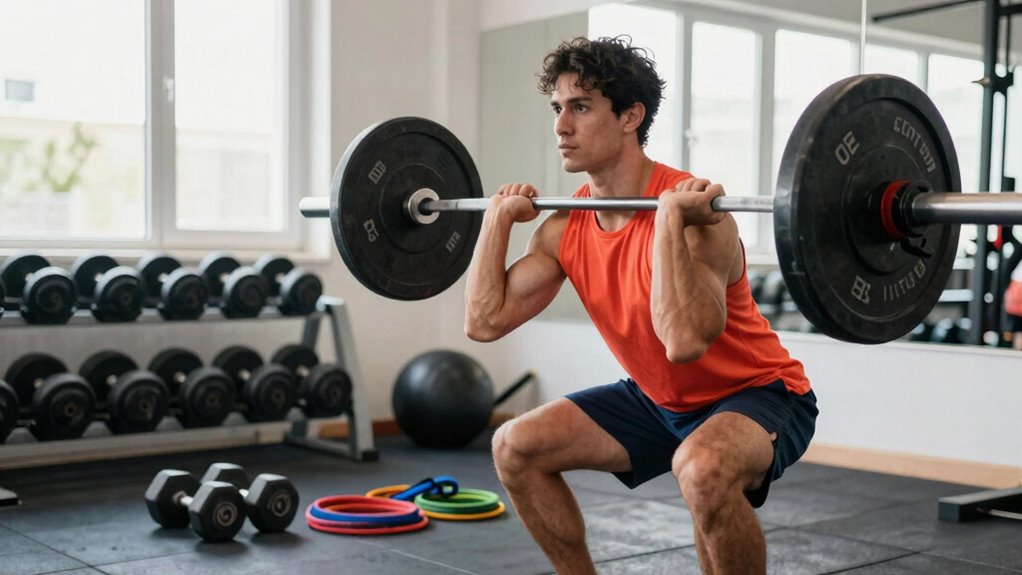
Guessing your workout weights might seem like a quick way to save time, but it often hampers your progress instead. When you choose weights without a clear plan, you miss out on effective progression strategies that ensure consistent strength gains. This approach can also increase your risk of injury because you might push too hard or lift too light, disrupting proper form or overloading muscles unexpectedly. Over time, inconsistent weights make it harder to track progress and stay motivated. By relying on precise methods to determine your weights, you create a safer workout environment that promotes steady improvements. Accurate weight selection helps you avoid setbacks, ensures proper muscle engagement, and supports injury prevention—key factors for long-term success in your fitness journey. Additionally, understanding how to adjust your loads properly can optimize your training effectiveness and help prevent plateaus.

PowerBlock Elite EXP Adjustable Dumbbells, Sold in Pairs, Stage 1, 5-50 lb. Dumbbells, Durable Steel Build, Innovative Workout Equipment, All-in-One Dumbbells, Expandable with Expansion Kits
ADJUSTABLE DUMBBELLS SET: Elevate your fitness and performance with strength-training equipment that adjusts with you. These PowerBlock dumbbells…
As an affiliate, we earn on qualifying purchases.
As an affiliate, we earn on qualifying purchases.
How to Find Your Ideal Workout Weights Using RPE and Repetition Ranges
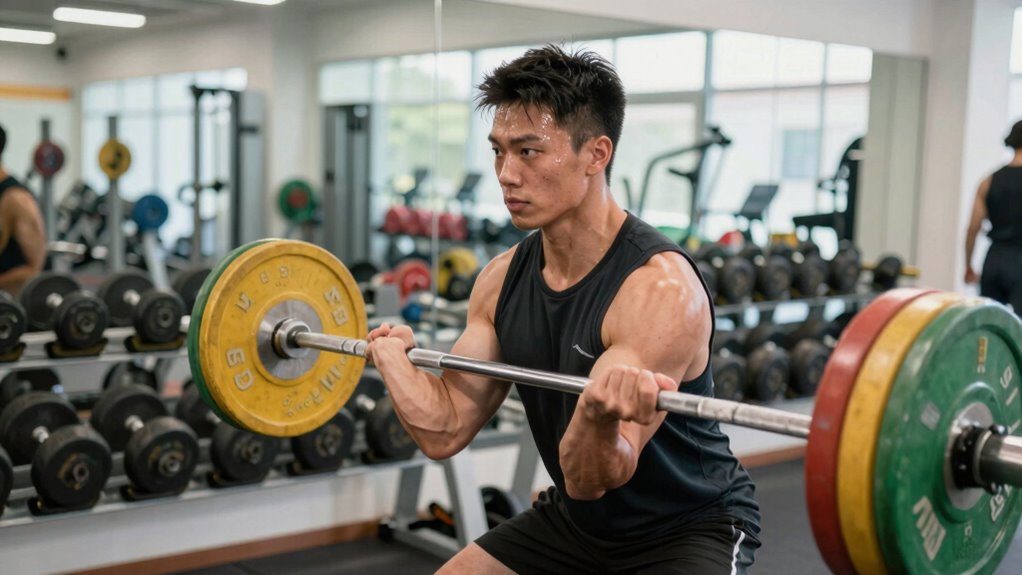
To find your ideal workout weights, understanding how to use Rate of Perceived Exertion (RPE) and repetition ranges is essential. RPE helps you gauge effort level, ensuring you train neither too hard nor too easy, which supports effective progression planning. When selecting exercises, consider your target repetition range—typically 8-12 reps for hypertrophy or 4-6 for strength—and match your weight accordingly. Using RPE, aim to finish each set feeling like you could do 1-2 more reps at your target RPE level. Adjust weights as you improve to stay within your ideal effort zone. Proper exercise selection combined with RPE and repetition ranges keeps your training focused, safe, and aligned with your goals, allowing you to progress consistently without guesswork. Additionally, incorporating progressive overload principles ensures continuous adaptation and growth over time.

Workout Log Book with RPE: The 12-Week Fitness Tracker and Progress Journal: Daily Training Diary for Strength and Cardio, SMART Goal Setting, and … for Men and Women (6×9 Portable Gym Edition)
As an affiliate, we earn on qualifying purchases.
As an affiliate, we earn on qualifying purchases.
Safe Tests to Determine Your Maxes and Working Weights
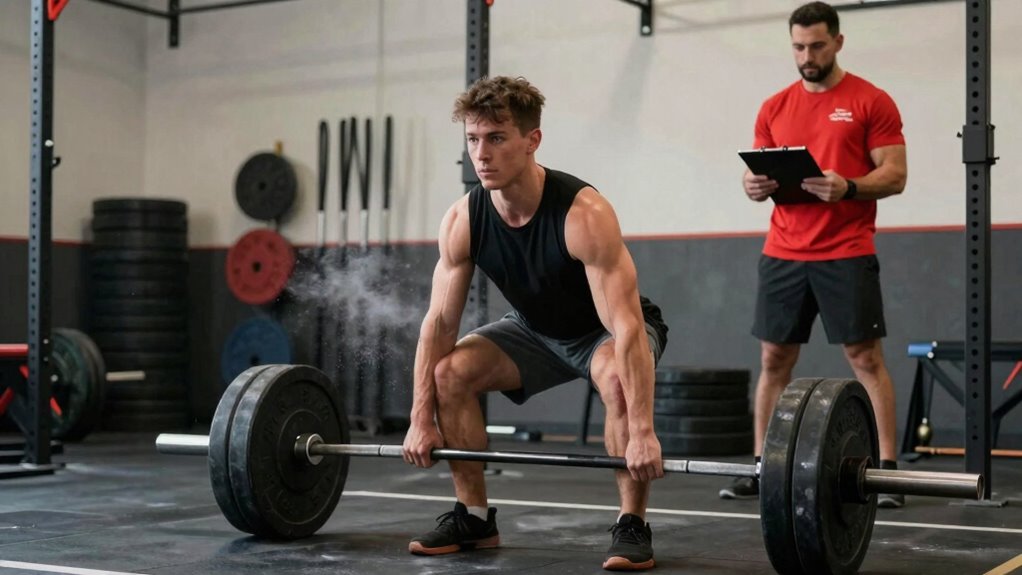
Determining your max lifts and working weights safely is essential for effective training and injury prevention. To do this, start with a gradual approach, using lighter weights to warm up and progressively overload your muscles without pushing too hard. Perform a few controlled test reps at increasing intensities until you reach a safe maximum, listening closely for signs of fatigue or discomfort. This method minimizes the risk of injury while providing an accurate measure of your strength. Remember, attempting a true max without proper preparation can be dangerous. Incorporating proper recovery techniques into your routine can enhance your progress and help prevent overtraining. Incorporate these safe testing strategies into your routine to establish realistic maxes, which help you set appropriate working weights. By respecting your limits, you ensure consistent progress while prioritizing injury prevention.

WF Athletic Supply Cast Iron 1-Inch Standard Grip Plate for Strength Training, Muscle Toning, Weight Loss & Crossfit – Multiple Choices Available
💪 SET OF 2 (each 2.5 lbs., TOTAL of 5 lbs.) – Made of solid cast iron and…
As an affiliate, we earn on qualifying purchases.
As an affiliate, we earn on qualifying purchases.
How to Adjust Your Weights Over Time for Continuous Gains
As you progress in your training, regularly adjusting your weights is crucial to keep challenging your muscles and guarantee continuous gains. Effective progression planning involves systematically increasing your weights while maintaining proper form. To do this, focus on accurate weight calibration, ensuring each lift matches your current strength level. Use cues like completing reps with good form but feeling fatigued to decide when to increase. Here’s a simple guide:
| Progression Step | Action |
|---|---|
| Week 1 | Set baseline weights |
| Week 2-3 | Slightly increase weights when easy |
| Week 4-5 | Add more weight as strength improves |
| Week 6+ | Adjust based on performance and fatigue |
| Ongoing | Continue gradual increases |
Stick to this approach for consistent gains without overtraining. Regularly tracking your progress helps maintain motivation and ensures your training remains aligned with your evolving strength levels and the importance of proper form.
Tools and Techniques to Track Your Progress and Keep Your Weights Accurate
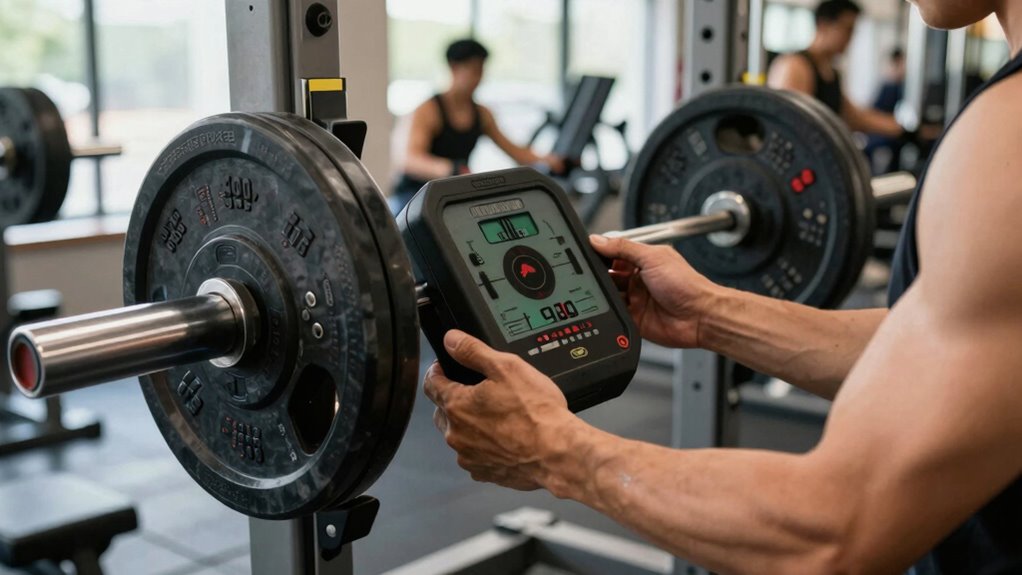
Tracking your progress and maintaining accurate weights are key steps to guarantee your training stays effective. Digital tracking tools, such as apps or spreadsheets, help you log weights, reps, and sets consistently. They provide a clear record, making it easier to identify progress and adjust your working sets accordingly. Visual cues, like marking weights on a bar or using color-coded plates, give you immediate, tangible feedback, so you know exactly where you stand. These cues help prevent guesswork and ensure you’re lifting safely and effectively. Combining digital tracking with visual cues keeps you organized and accountable, reducing mistakes and pushing you toward steady gains. Content formats such as videos, images, or interactive tools, can enhance your understanding and retention of proper lifting techniques. By staying precise with your data, you’ll avoid overtraining or undertraining, making every workout count.
Frequently Asked Questions
How Often Should I Reassess My Working Weights?
You should reassess your working weights every 2 to 4 weeks, depending on your progress tracking. Regularly reviewing your lifts allows you to adjust weight increment strategies effectively, ensuring steady gains without risking injury. If you notice consistent improvements, consider slightly increasing your weights. Conversely, if progress stalls, reassess your technique and recovery. This approach keeps your training challenging and safe, helping you reach your goals efficiently.
Can I Use Body Weight to Estimate My Lifting Capacities?
You can definitely use body weight exercises for strength estimation; they’re a powerful tool like a secret weapon. While they won’t give you exact numbers, your ability to perform exercises like push-ups or pull-ups can help gauge your relative strength. Use progressions and repetitions as clues to your capacity, then adjust your weights accordingly. Remember, body weight exercises are a solid starting point to estimate and track your strength gains safely.
What Are Signs I’M Lifting Too Heavy or Too Light?
If you’re lifting too heavy, you’ll notice your form deteriorates, with technique breakdown and increased fatigue. You might struggle to complete reps or feel unstable. Conversely, if weights are too light, you won’t experience enough challenge, and your fatigue will be minimal. Focus on maintaining proper form throughout sets, and listen to your body—if technique breaks down or you’re overly fatigued, adjust your weight accordingly.
How Do I Modify Weights for Injury Recovery?
To modify weights during injury recovery, start with lighter loads to prevent further injury and prioritize injury prevention. Gradually increase weights as your strength and mobility improve, paying close attention to your body’s signals. Incorporate gentle recovery exercises recommended by a healthcare professional, and avoid pushing through pain. Consistently adjusting your weights guarantees safe progress, helps avoid setbacks, and supports a steady recovery process.
Are There Specific Warm-Up Routines to Determine Safe Working Weights?
Yes, there are specific warm-up routines to determine safe working weights. Start with dynamic stretching to increase blood flow and loosen muscles, then gradually add light weights to your warm-up sets. Use mental preparation to focus on your form and listen to your body. This approach helps you gauge your capacity safely, reducing injury risk and ensuring you find the right working weight for your session.
Conclusion
Don’t leave your progress to guesswork—trust the process and use proven methods like RPE and proper testing. Consistently tracking your weights guarantees you’re always challenging yourself without risking injury. Remember, slow and steady wins the race; patience and precision lead to real gains. By staying mindful of your progress and making adjustments, you’ll build strength safely and effectively. Keep your eyes on the prize, and let data guide your journey to better results.