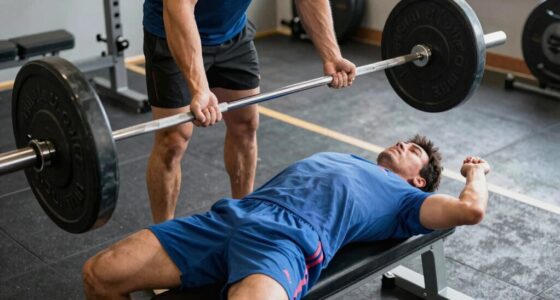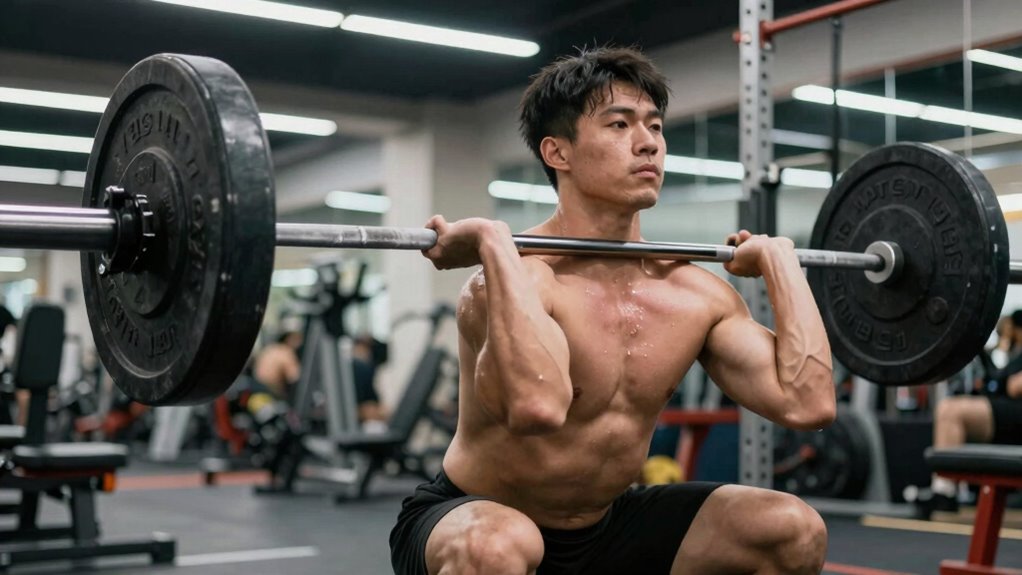
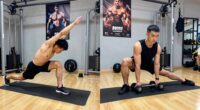
Focusing on a handful of compound movements like squats, deadlifts, bench presses, overhead presses, and bent-over rows gives you the biggest bang for your buck. These lifts activate multiple muscle groups at once, boosting strength, muscle growth, and functional fitness efficiently. Prioritize these exercises early in your workouts, use proper form, and track your progress to maximize results. Keep going, and you’ll uncover even more ways to make your lifting routine more effective.
Key Takeaways
- Focus on core compound movements like squats, deadlifts, and bench presses for maximum muscle engagement and efficiency.
- Prioritize performing these lifts early in your workout when energy levels are highest.
- Use variations of key exercises to target muscles from different angles and prevent plateaus.
- Maintain proper form to maximize results and reduce injury risk, especially with heavy weights.
- Track progress regularly and adjust weights and reps to ensure continuous strength gains.
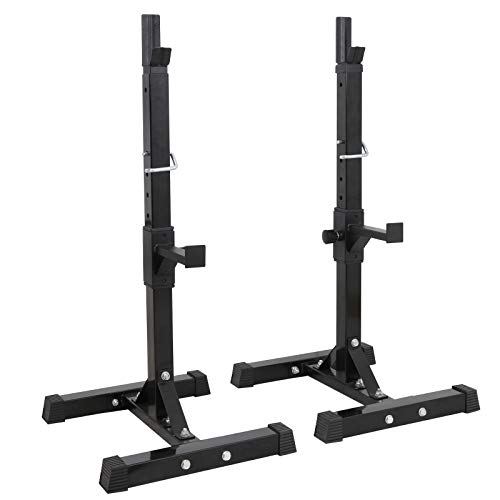
F2C Max Load 550Lbs Pair of Adjustable Squat Rack 41"-66" Sturdy Steel Barbell Rack Free Bench Press Stands GYM/Home Gym Portable Dumbbell Racks Stands
【Professional Grade for Serious Training】 Ideal for squats, bench presses, and a wide range of strength exercises, this…
As an affiliate, we earn on qualifying purchases.
As an affiliate, we earn on qualifying purchases.
Why Compound Movements Are Key to Max Results
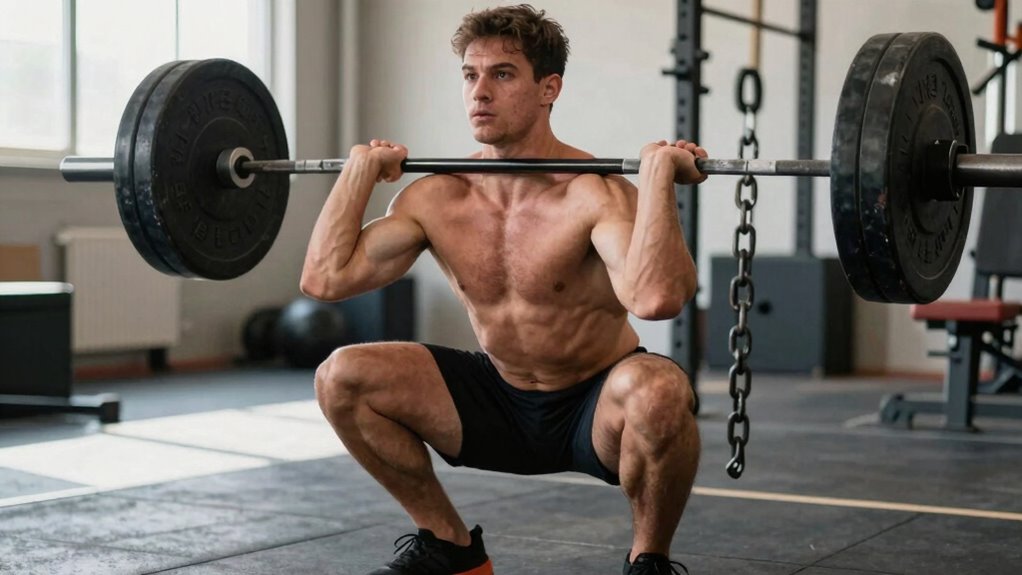
Because compound movements work multiple muscle groups at once, they’re essential for maximizing your lifting results. They boost muscle activation across various areas, ensuring you engage more muscles in less time. This comprehensive engagement also enhances functional fitness, which improves your overall performance in daily activities. Instead of spreading your effort thin with isolated exercises, compound movements give you a more effective workout. Incorporating them into your routine ensures you hit your muscles hard and fast, making every session more productive and aligned with your goals.
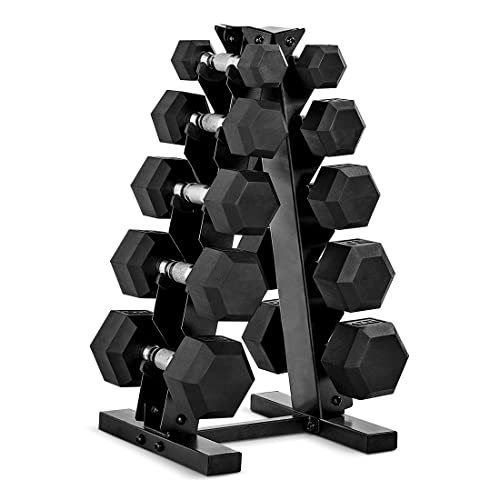
CAP 150 LB Rubber Coated Hex Dumbbell Hand Weight Set with Vertical Storage Rack – Chrome Handle | Black Rack
SET INCLUDES – A pair of 5-pound, 10-pound, 15-pound, 20-pound, and 25-pound rubber hex dumbbells with a black…
As an affiliate, we earn on qualifying purchases.
As an affiliate, we earn on qualifying purchases.
The Top 5 Compound Exercises to Build Strength and Muscle
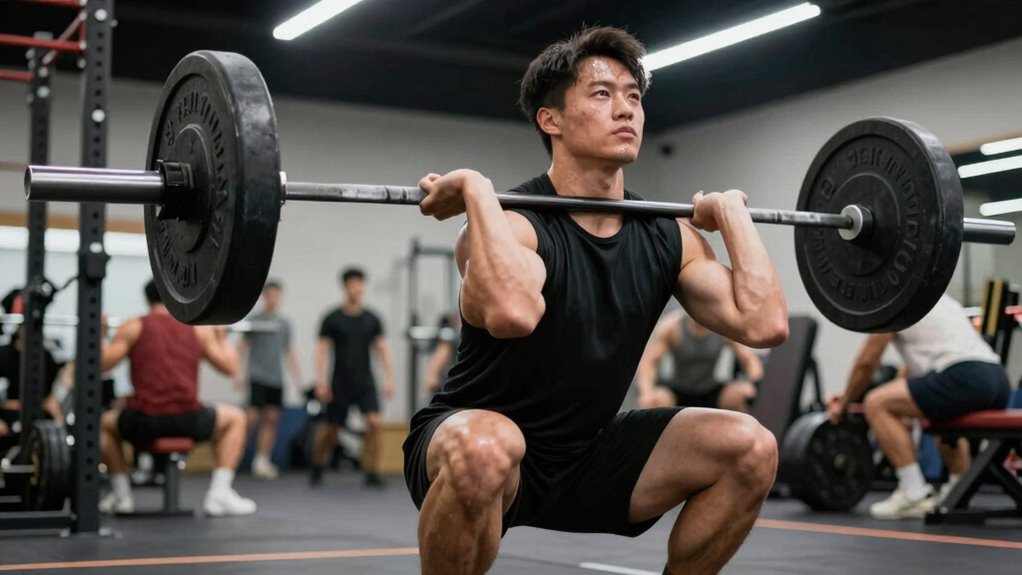
The top five compound exercises are essential tools for building both strength and muscle efficiently. These moves target multiple muscle groups simultaneously, maximizing your workout results. To keep things versatile, explore exercise variations and equipment alternatives, allowing you to adapt based on your access and goals. For example, squats can be performed with a barbell or dumbbells, and push-ups can be modified with elevated feet or resistance bands. Here’s a quick comparison:
| Exercise Type | Equipment Alternatives |
|---|---|
| Squats | Barbell, dumbbells, resistance bands |
| Deadlifts | Barbell, kettlebell, trap bar |
| Bench Press | Barbell, dumbbells, resistance bands |
| Overhead Press | Barbell, dumbbells, resistance bands |
| Bent-over Rows | Barbell, dumbbells, resistance bands |
These options ensure you can keep progressing, regardless of your setup. Incorporating compound movements into your routine is key to maximizing efficiency and results.

WHATAFIT Resistance Bands, Exercise Bands,Resistance Bands for Working Out, Work Out Bands with Handles for Men and Women Fitness, Strength Training Home Gym Equipment
DIFFERENT COLOR ADJUSTABLE RESISTANCE BANDS: The exercise bands come with 5 different resistance level 10lbs, 20lbs, 30lbs, 40lbs…
As an affiliate, we earn on qualifying purchases.
As an affiliate, we earn on qualifying purchases.
How to Incorporate Compound Lifts Into Your Workout for Best Gains
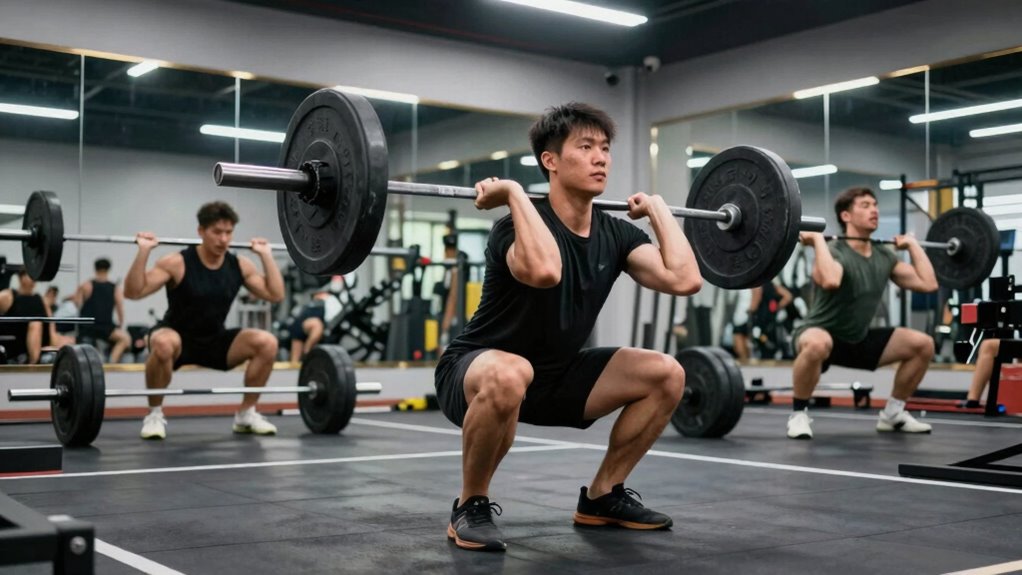
To maximize your gains, strategically incorporate compound lifts into your workout routine by scheduling them early in your training sessions when your energy levels are highest. This ensures you can perform exercise variations with proper form and intensity. Effective workout sequencing involves prioritizing these lifts first, so you hit your strongest when you’re freshest. Consider these tips:
Prioritize compound lifts early in your workout to maximize strength and performance.
- Start with fundamental compound exercises like squats, deadlifts, or bench presses.
- Incorporate exercise variations to target muscles from different angles.
- Keep your workout balanced by spacing out compound lifts to avoid fatigue and optimize recovery.
- Additionally, understanding the importance of proper workout sequencing can help prevent overtraining and enhance overall performance.

HOZMOZ Ventilated Weight Lifting Gloves, Thick Padded Workout Gym Gloves with Full Palm Protection & Grip & Shock Absorption for Women & Men's Fitness Exercise Training
【The Most Effective Protection】A 1-piece 6mm thickened cushioning pad covers from palm to fingertips, workout gloves women men…
As an affiliate, we earn on qualifying purchases.
As an affiliate, we earn on qualifying purchases.
Avoid These Common Mistakes When Doing Compound Exercises
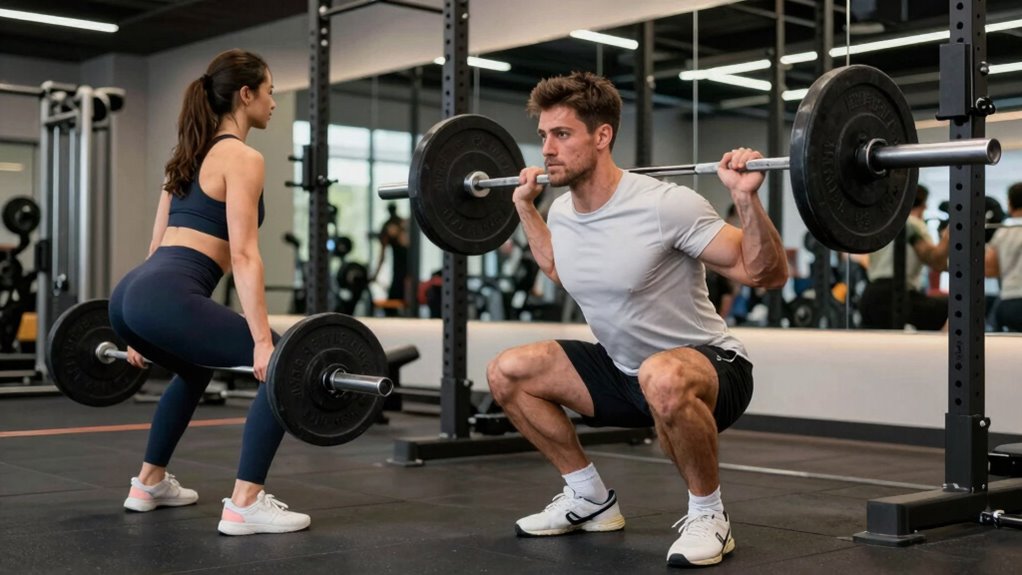
Even experienced lifters can make mistakes when performing compound exercises, which can lead to injury or slow progress. One common error is neglecting proper form technique, such as arching your back during deadlifts or allowing your knees to cave in during squats. These mistakes compromise safety and effectiveness. Always prioritize correct form over heavier weights to prevent injury. Additionally, overlook equipment safety at your peril. Ensure your equipment is in good condition, set up correctly, and used within its limits. For example, use collars on barbells and adjust safety bars properly. Rushing through reps or sacrificing technique for heavier weights increases risk. Focus on controlled movements and proper setup to maximize results while minimizing injury risk. Paying attention to ADAS sensor calibration can also prevent costly mistakes in vehicle safety systems, much like ensuring proper form in lifting enhances safety and performance.
Track and Adjust Your Compound Lifts for Faster Progress

Tracking your progress and adjusting your lifts is essential for breaking through plateaus and accelerating gains. Without it, you risk stagnation and missed potential. To maximize results, implement effective progress tracking and adjustment strategies. Incorporate balance and motivation into your routine to stay consistent and focused. Here are key points: 1. Record every lift—note reps, sets, weight, and form to identify patterns. 2. Set specific goals to measure progress objectively and stay motivated. 3. Regularly review your data and adjust your training plan by increasing weights, modifying reps, or refining technique.
Frequently Asked Questions
How Often Should I Perform Compound Movements Weekly?
You should perform compound movements about 2 to 3 times weekly, allowing your muscles adequate recovery. Incorporate progression strategies like increasing weight or reps and use variation techniques such as changing grips or angles to keep challenging your muscles. This approach helps prevent plateaus, promotes steady gains, and guarantees you’re consistently stimulating your muscles for maximum results. Adjust frequency based on your recovery and progress.
Can Beginners Safely Do Advanced Compound Lifts?
Imagine a young lion observing the pride; you can attempt advanced lifts, but safety depends on your mastery. Beginners can handle advanced compound lifts if you prioritize proper form correction and follow progression strategies. Start slow, master each movement, then gradually increase weight. Focus on technique, listen to your body, and don’t rush—building a solid foundation guarantees you grow stronger safely and effectively, like the lion learning from its pride.
What Equipment Is Necessary for Effective Compound Exercises?
For effective compound exercises, you mainly need a barbell, weight plates, and a squat rack or power cage. However, equipment variety can enhance your workout programming by incorporating dumbbells, resistance bands, and benches. This variety helps target muscles differently and prevents plateaus. Focus on quality gear that supports proper form and safety, and adapt your equipment choices based on your fitness level and goals to maximize results efficiently.
How Do I Prevent Injuries During Heavy Compound Lifts?
Prevent problems during powerful, heavy lifts by practicing proper form and prioritizing injury prevention. Focus on maintaining meticulous technique, warming up thoroughly, and progressing gradually to build strength safely. Use appropriate equipment, like belts and wraps, for added support. Don’t rush reps or ignore pain—listen to your body. Staying vigilant with form and listening to your limits keeps you safe and reduces injury risk during intense compound exercises.
Are There Specific Warm-Up Routines for Compound Movements?
Yes, you should do specific warm-up routines for compound movements. Start with dynamic stretching to loosen your muscles and improve mobility. Then, perform muscle activation exercises targeting the muscles involved in the lift, like bodyweight squats or light presses. This prepares your body, enhances performance, and reduces injury risk. Always gradually increase intensity, focusing on proper form during warm-up sets before hitting heavier weights.
Conclusion
Focusing on the top compound lifts truly maximizes your gains, making your workouts more effective and efficient. By consistently incorporating these moves and avoiding common mistakes, you’ll see faster progress and greater strength. Plus, tracking your lifts keeps you motivated and on course. The 80/20 rule holds here—prioritize the key compound exercises, and you’ll enjoy better results with less wasted effort. Embrace these moves, and watch your fitness journey accelerate.