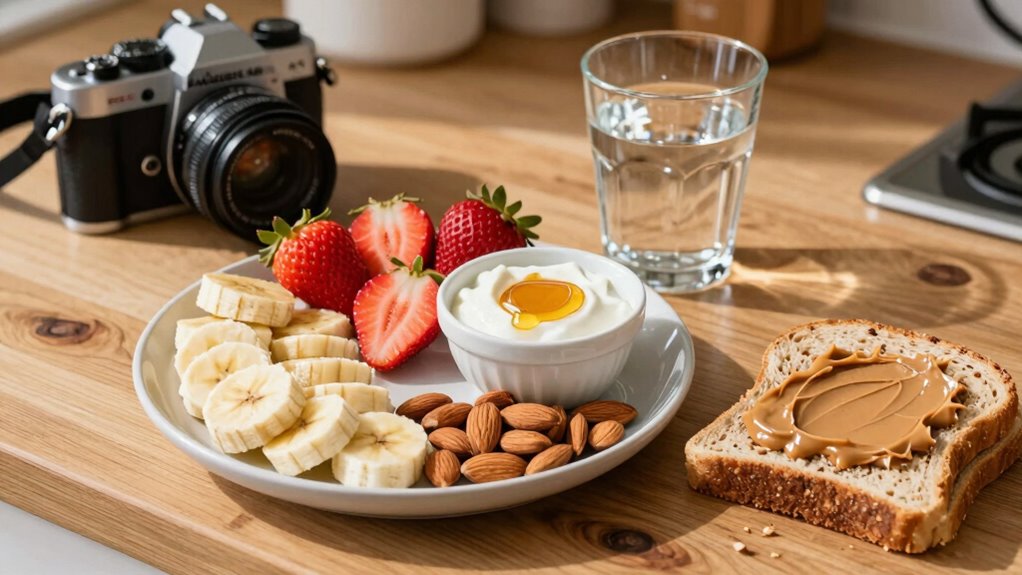
To optimize your workout, choose a meal based on your goals and timing. Eat easy-to-digest carbs like fruit or toast 30-60 minutes before for quick energy, or a balanced meal with carbs, protein, and fats 1-3 hours prior for sustained power. Avoid heavy or greasy foods that can cause discomfort. If you want to fine-tune your pre-workout fueling, keep exploring for more tips.
Key Takeaways
- Choose quick-digesting carbs like fruit or toast 30-60 minutes before exercise for immediate energy.
- Eat a balanced meal with carbs, protein, and fats 1-3 hours prior for sustained energy.
- Opt for easy-to-digest carbohydrate sources such as bananas, oatmeal, or whole-grain bread to replenish glycogen.
- Include moderate protein in your pre-workout snack to support muscle repair and maintain energy levels.
- Avoid heavy, greasy, or high-fat foods to prevent digestion issues and discomfort during workouts.
pre-workout energy snacks
As an affiliate, we earn on qualifying purchases.
As an affiliate, we earn on qualifying purchases.
How to Choose the Right Pre-Workout Meal for Your Goals

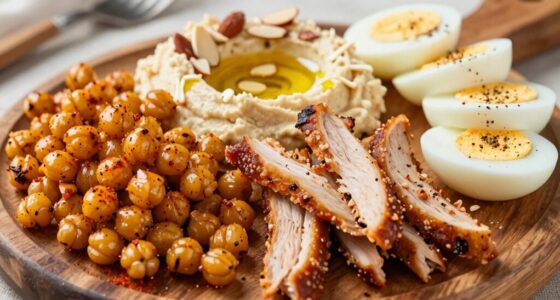
Choosing the right pre-workout meal depends on your specific fitness goals. Meal timing plays a vital role in optimizing your energy levels and performance. If you aim for quick energy, opt for easily digestible carbs like fruit or toast about 30 to 60 minutes before exercise. For sustained energy, plan a balanced meal with carbs, protein, and healthy fats 1 to 3 hours ahead. Consider your dietary restrictions, such as allergies or vegetarian preferences, to select suitable foods that fuel your workout effectively. Avoid heavy or greasy foods that might cause discomfort or sluggishness during exercise. Tailoring your meal based on your goals, timing, and dietary needs ensures you get the right nutrients to perform at your best. Air fryer cooking techniques can be useful for preparing healthy, convenient pre-workout snacks that meet these criteria.
healthy pre-workout meal prep
As an affiliate, we earn on qualifying purchases.
As an affiliate, we earn on qualifying purchases.
When Is the Best Time to Eat Before Exercise?
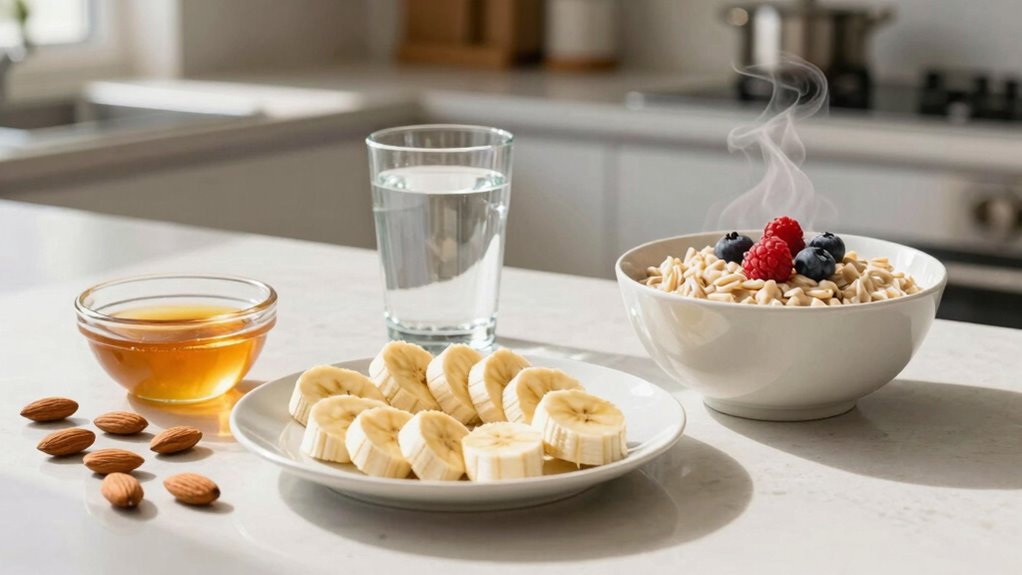
Timing your pre-workout meal can make a significant difference in your energy levels and performance. The key is to regard meal timing and digestion speed to maximize your workout. Generally, eating 30 to 60 minutes before exercise works well if you prefer a small snack that’s easy to digest. If you need a larger meal, aim for 2 to 3 hours prior to allow digestion to complete comfortably. Keep in mind that everyone’s digestion speed varies; some might feel ready sooner, while others need more time. Experimenting with different timings can help you determine the optimal window for your body for better workout results.
easy digestible carbs for workout
As an affiliate, we earn on qualifying purchases.
As an affiliate, we earn on qualifying purchases.
What Are the Top Carbohydrate Sources to Fuel Your Workout?

Consuming the right carbohydrate sources before your workout can substantially boost your energy and endurance. Focus on easy-to-digest options with a moderate to high glycemic index for quick energy release, aligning with ideal carbohydrate timing. Good sources include fruits, oatmeal, and whole-grain bread. These carbs help replenish glycogen stores and prevent fatigue. To choose wisely, understand the glycemic index—lower for sustained energy, higher for immediate fuel. Here’s a quick guide:
| Carbohydrate Source | Glycemic Index | Ideal Timing |
|---|---|---|
| Bananas | Moderate | 30-60 mins before |
| Oatmeal | Low | 1-2 hours before |
| Whole-grain bread | Moderate | 30-60 mins before |
| Dried fruit | High | 30 mins before |
Choose your carbs based on your workout timing and energy needs.
protein and carb pre-workout snacks
As an affiliate, we earn on qualifying purchases.
As an affiliate, we earn on qualifying purchases.
Should You Include Protein or Fats in Your Pre-Workout Snack?
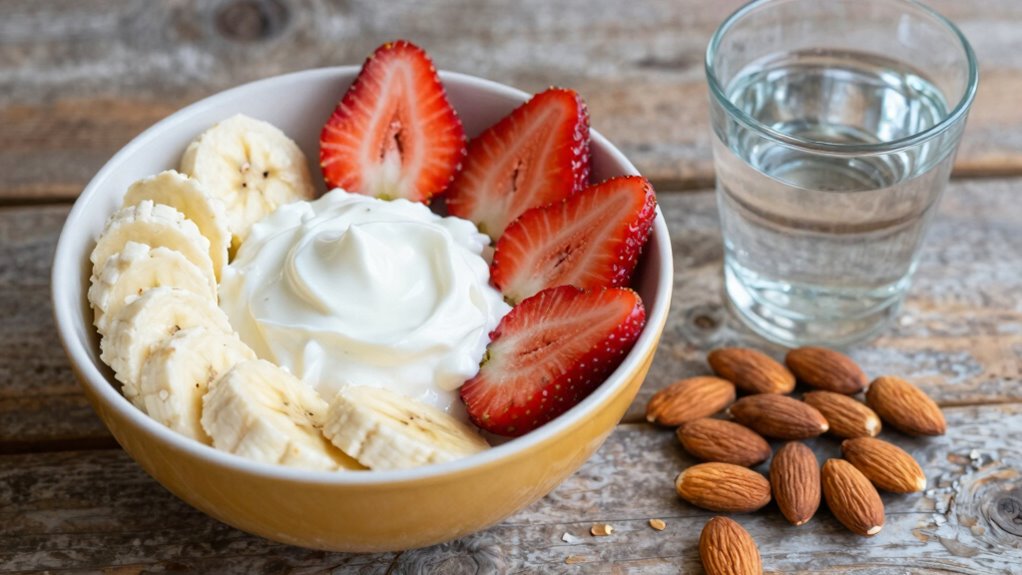
Including protein or fats in your pre-workout snack can enhance muscle support and provide sustained energy, but it’s important to choose the right amounts. Proper protein timing helps maximize muscle repair, so a small amount before exercise can be beneficial. Fats slow digestion and can influence fat metabolism, making them less ideal immediately before workouts. Aim for a balance that fuels you without causing discomfort or sluggishness. Incorporating content formats that are easy to digest can further optimize your pre-workout nutrition.
Including small amounts of protein before workouts supports muscle repair and sustained energy.
- Opt for easily digestible protein sources like yogurt or a small protein shake
- Limit high-fat items close to workout time to prevent delayed digestion
- Pair carbs with moderate protein to support muscle and energy needs
Balancing these nutrients ensures you’re energized without hampering your performance.
Common Mistakes to Avoid When Planning Your Pre-Workout Nutrition
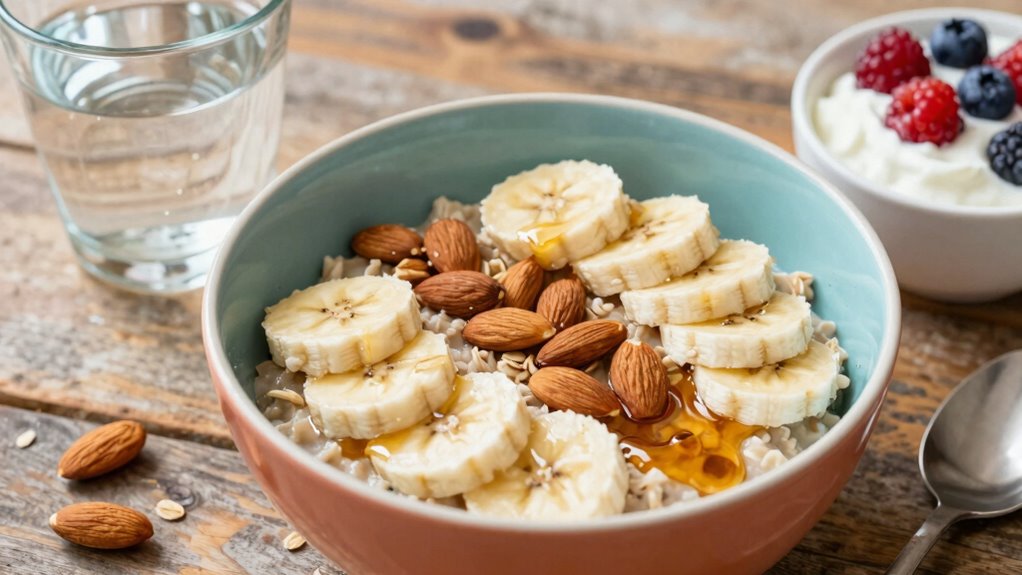
Many people make simple mistakes when planning their pre-workout meals that can affect performance. Skipping carbohydrates can leave you without quick energy, while overloading on fats can slow digestion. Additionally, ignoring the timing of your meal may leave you feeling sluggish or hungry during exercise. Incorporating connected fitness technology can help you better monitor and optimize your pre-workout nutrition for improved results.
Skipping Carbohydrates
Skipping carbohydrates before a workout is a common mistake that can hinder your performance. Carbohydrates are your body’s primary energy source, especially during intense exercise. If you avoid them, you might feel sluggish or fatigued. This is especially important if you’re following low carb diets or practicing carbohydrate cycling, which require strategic timing of carb intake. Without enough carbs, your glycogen stores deplete faster, reducing stamina and strength. To optimize your workout, include easily digestible carbs like fruits or oats. Incorporating well-drained soil and full sun conditions can also promote healthier plant growth, supporting your nutritional goals.
- Neglecting carbs can lead to early fatigue and decreased performance
- Low carb diets or carb cycling demand careful timing to fuel workouts
- Skipping carbs limits your energy, making intense sessions harder to complete
Overloading Fats
Overloading on fats before your workout can slow down your digestion and leave you feeling sluggish. Fats overconsumption can cause discomfort and hinder your performance, as they take longer to digest than carbs or proteins. Consuming too many fats may lead to a nutrient imbalance, leaving you without enough quick-burning energy for your workout. Avoid high-fat foods like fried snacks, heavy meats, or creamy sauces right before exercise. Instead, focus on balanced meals with moderate fats and ample carbs to fuel your activity efficiently. Remember, while healthy fats are important, timing and portion size matter. Too much fat before your workout can impair digestion and reduce your stamina, so choose wisely and keep your pre-workout meal light and easily digestible. For optimal performance, understanding the role of calorie balance in your nutrition can help you plan effectively.
Ignoring Timing
Timing plays a vital role in how effectively your pre-workout meal fuels your performance. Ignoring proper meal timing can lead to sluggishness or discomfort during exercise. Rushing to eat right before your workout might cause stomach upset, while waiting too long can leave you feeling drained. Pay attention to your snack frequency and how your body responds. Using proper airless paint spraying tips can also help optimize your workout environment, ensuring your focus remains on your nutrition.
Quick Tips to Perfect Your Pre-Workout Fueling Routine
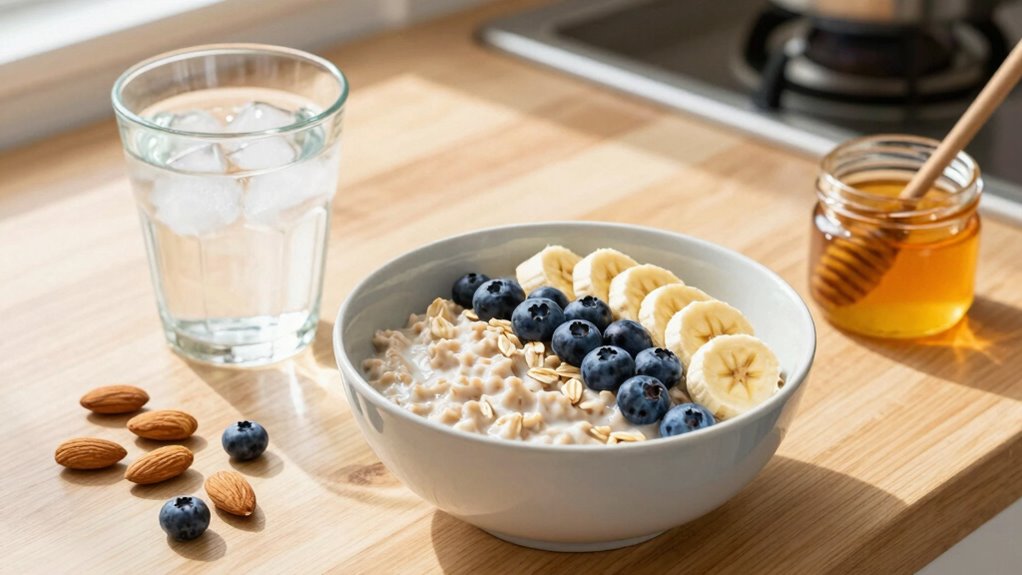
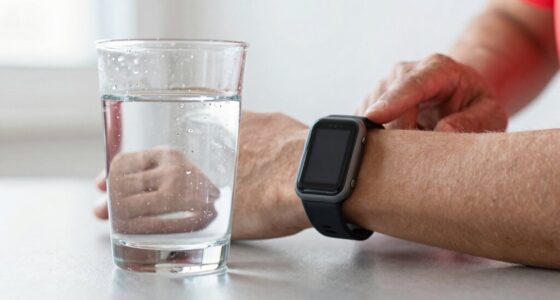
To optimize your pre-workout meals, focus on simple, easily digestible foods that provide quick energy without causing discomfort. Stay hydrated by implementing effective hydration strategies; drink water steadily before your workout to maintain ideal fluid levels. Avoid heavy or greasy foods that slow digestion, and opt for small carbohydrate-rich snacks like a banana or a slice of toast with honey. Incorporate easily digestible protein if needed, such as yogurt or a small smoothie. Remember, your post workout snacks are just as important for recovery, so plan nutritious options that replenish glycogen and support muscle repair. Additionally, incorporating aquatic exercise into your routine can enhance your overall fitness and recovery. By fine-tuning your fueling routine with these tips, you’ll boost your energy, improve performance, and recover faster.
Frequently Asked Questions
Can I Eat Immediately Before Exercise Without Feeling Bloated?
You can eat immediately before exercise without feeling bloated if you choose easily digestible foods and pay attention to meal timing. Opt for small, light snacks like a banana or yogurt, which promote digestive comfort. Avoid heavy, greasy meals right before your workout, as they can cause discomfort. Listen to your body and experiment with timing to find what works best, ensuring you feel energized rather than bloated during exercise.
Are Liquid Pre-Workout Meals More Effective Than Solid Foods?
Liquid pre-workout meals can be more effective than solid foods because they often have faster absorption rates, giving you quick energy. You’re likely to feel less bloated and more comfortable during your workout. While solids take longer to digest, liquids deliver nutrients swiftly, making them ideal if you need an energy boost on short notice. Choose based on your digestion speed and workout timing for ideal results.
How Do I Customize My Pre-Workout Meal for Different Workout Intensities?
To customize your pre-workout meal for different intensities, focus on meal timing and nutrient balance. For lighter workouts, eat a small, easily digestible snack an hour before, emphasizing carbs for quick energy. For intense sessions, opt for a balanced meal with carbs, protein, and healthy fats about 2-3 hours prior. Adjust portion sizes based on your energy needs, ensuring you feel fueled without discomfort during exercise.
Is There a Best Pre-Workout Meal for Weight Loss?
Don’t put all your eggs in one basket—your best pre-workout meal for weight loss focuses on meal timing and nutrient balance. Aim for a small, balanced snack with protein and complex carbs about 30-60 minutes before exercise. This fuels your workout without excess calories, helping you burn fat efficiently. Keep it light, stay consistent, and listen to your body to find what works best for your weight loss goals.
Should I Avoid Certain Foods Before Exercising to Prevent Stomach Issues?
You should avoid foods that trigger your food sensitivities, like dairy or spicy items, before exercising. Also, pay attention to meal timing—eat too close to your workout can cause stomach issues. Aim to have a light, easily digestible meal 1-2 hours beforehand. This helps prevent discomfort and keeps your energy levels steady, ensuring your workout feels smooth and effective.
Conclusion
Think of your pre-workout meal as the ignition switch to a blazing fire. When you choose the right fuel at the right time, you’ll power through your workout like a well-tuned engine roaring to life. Avoid common pitfalls, and listen to your body’s signals. With the perfect blend of carbs, protein, and fats, you’ll turn your exercise session into a symphony of strength and stamina—ready to conquer whatever challenges lie ahead.