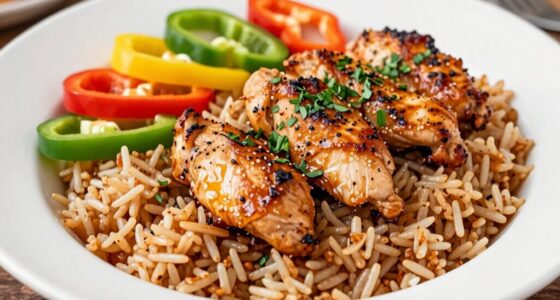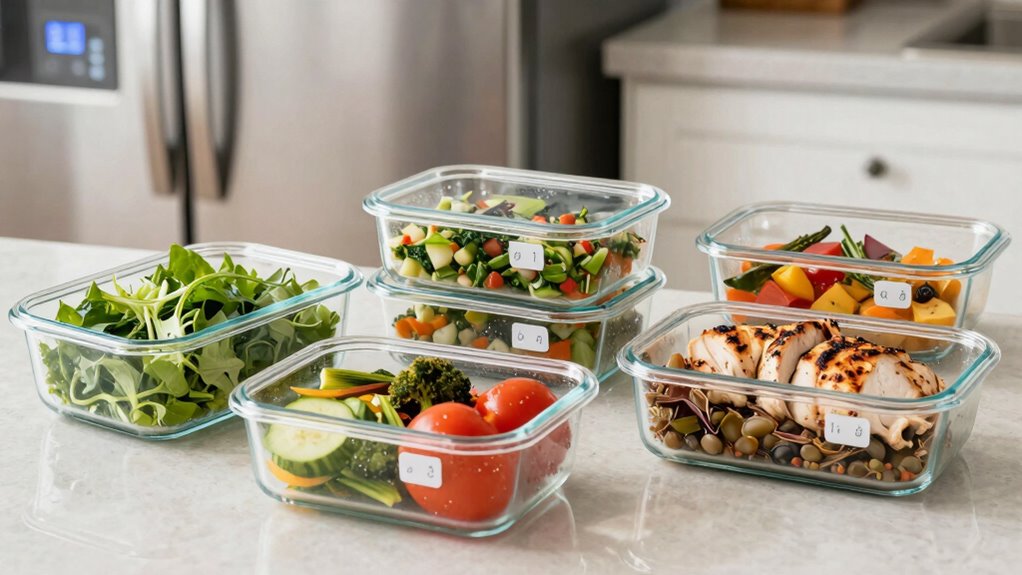

To keep your meal prep safe, store cooked foods in airtight containers and freeze at 0°F (-18°C) or below. Typically, meals stay safe for 3-4 days in the fridge and up to 3-6 months in the freezer, depending on the food. Always label packages with dates and reheat to 165°F (74°C). Proper techniques and storage times prevent foodborne illness, and more tips can help you master safe meal prep practices.

Get workout gear delivered free with Prime
- Fast, free delivery on millions of items
- Prime Video, Amazon Music and more included
- Member-only deals all year
Key Takeaways
- Properly cooled meals stored at 0°F (-18°C) or below remain safe for 3-6 months, depending on the food type.
- Reheat meals to an internal temperature of 165°F (74°C) before consuming.
- Use airtight containers and label with preparation dates to monitor storage duration.
- Avoid refreezing foods that have been thawed unless they are thoroughly cooked first.
- Regularly check for signs of spoilage and discard any meals with unusual odors, colors, or textures.
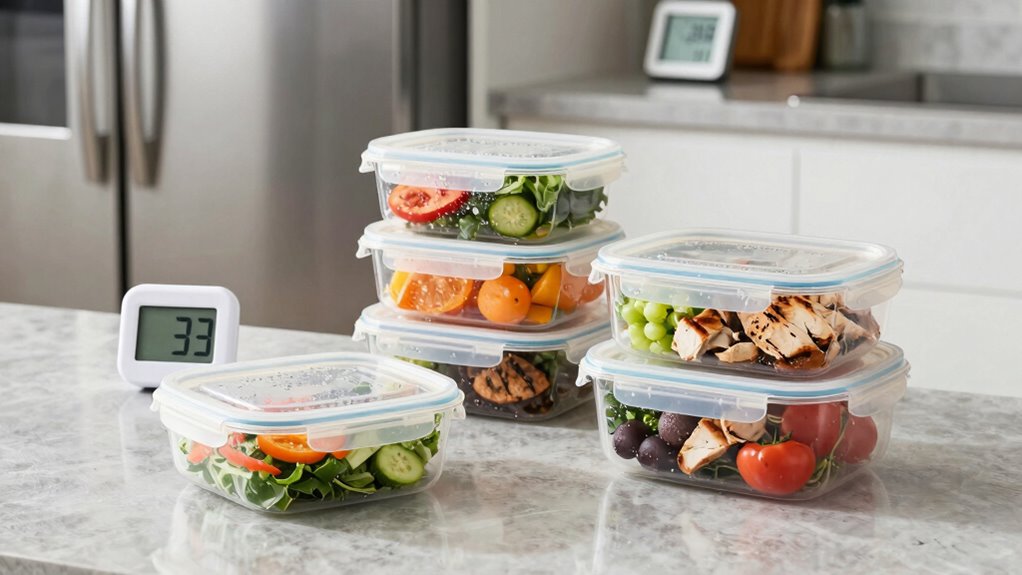
Meal prepping is a great way to save time and stay healthy, but guaranteeing your food stays safe is essential. Proper storage techniques help prevent foodborne illnesses and maintain the quality of your prepared meals. One of the key aspects of food safety is understanding how long your meals remain safe to eat and the best methods to store them. Freezing techniques play a crucial role in prolonging the shelf life of your meals. When you freeze food properly, you lock in freshness and prevent the growth of harmful bacteria. To do this effectively, use airtight containers or freezer bags designed for long-term storage. Remove as much air as possible before sealing to prevent freezer burn and maintain texture and flavor. Label each package with the date you prepared it so you can keep track of how long it’s been stored. Keep your freezer at 0°F (-18°C) or below to guarantee optimal preservation.
Equally important is preventing cross contamination, which can lead to foodborne illnesses. Always wash your hands thoroughly before handling food, especially when switching between raw ingredients and cooked meals. Use separate cutting boards and utensils for raw meats, vegetables, and ready-to-eat foods. Clean all surfaces and tools with hot, soapy water after each use. When storing prepped meals in the fridge or freezer, guarantee they are properly cooled before sealing and storing. Hot foods can raise the temperature inside the storage unit, creating an environment conducive to bacteria growth. Divide large batches into smaller portions to cool quickly and store more efficiently.
In terms of freezing techniques, it’s best to freeze meals as soon as possible after cooking to preserve nutrients and prevent bacterial growth. For foods that are best thawed slowly, plan ahead to transfer them from the freezer to the refrigerator. This gradual thawing minimizes the risk of bacterial proliferation. If you need to reheat frozen meals, always heat them to an internal temperature of 165°F (74°C) to kill any bacteria that may have developed during storage.
Products Worth Considering
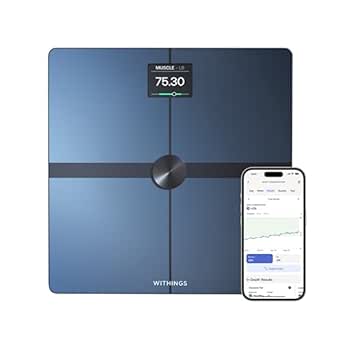
Withings Body Smart Wi-Fi and Bluetooth Smart Scale
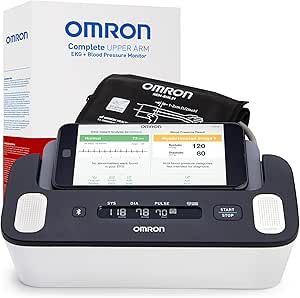
OMRON Complete 2-in-1 Upper Arm Blood Pressure Monitor with EKG

Withings Body Scan Smart Scale with Segmental Body Composition and ECG, Black
As an affiliate, we earn on qualifying purchases.
Frequently Asked Questions
Can I Reheat Meals More Than Once Safely?
You can reheat meals more than once, but you should follow reheating guidelines carefully. Make sure to reheat food to at least 165°F to kill bacteria. Watch for food spoilage indicators like off smells, slimy textures, or discoloration. Reheating multiple times increases the risk of bacterial growth, so it’s best to reheat only what you plan to eat and avoid repeated reheating to keep your food safe.
How Can I Tell if Food Has Gone Bad?
You might think your leftovers are fine, but always trust your senses. If food smells sour or off, it’s a clear sign it’s gone bad, regardless of expiration dates. Use the smell test first—if it smells strange, toss it. Also, check for slimy textures or discoloration. Remember, even if it looks okay, it’s safer to avoid eating if you’re unsure. When in doubt, throw it out.
Is Freezing Meals Suitable for All Types of Food?
Freezing meals works well for many foods, but not all. Freezing vegetables preserves their texture and nutrients, though some may lose quality upon thawing. Freezing dairy like milk and cheese is generally suitable, but they can change in texture or taste. You shouldn’t freeze cooked eggs or high-water-content produce like lettuce. Always check specific guidelines to make sure your food remains safe and tasty after freezing.
What Are the Signs of Bacterial Contamination?
Did you know that foodborne illnesses affect 48 million Americans annually? You can spot bacterial contamination signs like a sour smell, slimy texture, or discoloration on your meals. Common bacteria such as Salmonella or E. coli often cause these changes. Trust your senses—if food smells off, looks strange, or feels slimy, discard it to avoid illness. Staying vigilant helps keep your meals safe and healthy.
How Long Can Cooked Rice Be Stored Safely?
You can safely store cooked rice for up to 4 to 6 days if you keep it at proper temperature control. Make sure to refrigerate it within two hours of cooking and store it in airtight containers. Keeping the temperature below 40°F (4°C) prevents bacterial growth. Always reheat rice thoroughly before eating, and discard it if it develops an off smell or slimy texture.
Conclusion
By following proper storage times, you keep your meals safe and delicious. Think of your fridge as a fortress, guarding your food from spoilage—if you let leftovers sit too long, that fortress weakens. But if you stay vigilant and toss out meals after the recommended days, you prevent bacteria from taking hold. So next time you prep, picture yourself as a food guardian, protecting your health and satisfaction with every meal stored properly.