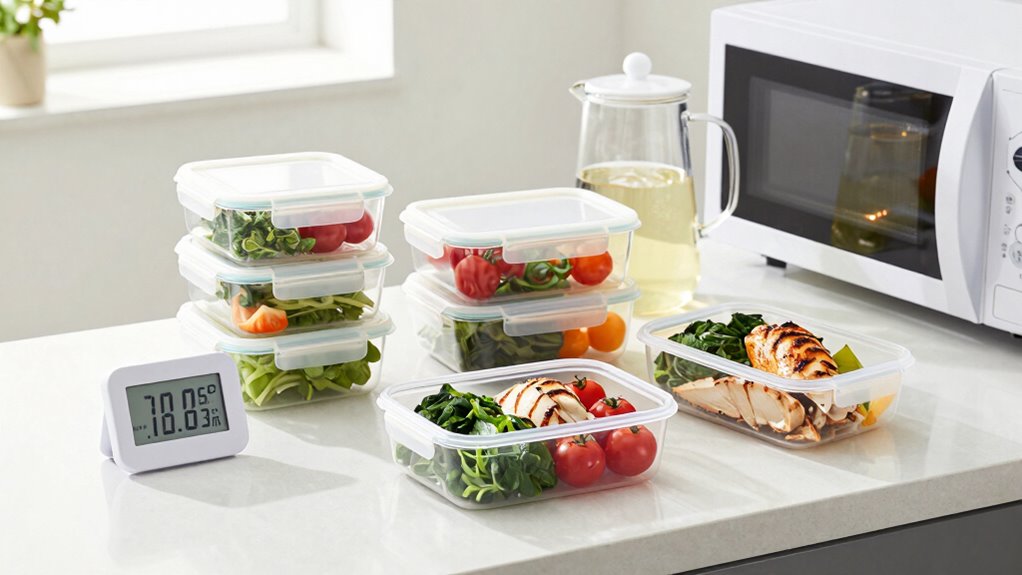
To keep your meal preps safe, cool hot foods quickly within 1-2 hours using shallow containers or ice baths to prevent bacteria growth in the danger zone (40°F-140°F). Store leftovers in airtight containers, label them with dates, and keep them at or below 40°F. Reheat to at least 165°F, stirring for even heat. Watch for signs of spoilage like odors or discoloration. Keep learning the best practices to guarantee your meals stay fresh and safe.

Get workout gear delivered free with Prime
- Fast, free delivery on millions of items
- Prime Video, Amazon Music and more included
- Member-only deals all year
Key Takeaways
- Cool hot foods within 1-2 hours using shallow containers or ice baths to prevent bacterial growth.
- Store meals in airtight, labeled containers at 40°F or below, avoiding overcrowding for proper air circulation.
- Reheat leftovers to an internal temperature of at least 165°F, stirring for even heating and using a food thermometer.
- Check for spoilage signs like mold, off odors, slimy textures, or discoloration before consuming stored meals.
- Use quality containers, accurate thermometers, and proper labeling to ensure safe storage, reheating, and meal tracking.
Products Worth Considering

Garmin Forerunner 55 GPS Running Smartwatch, Black

Philips Sonicare 5950 Rechargeable Electric Toothbrush with 2 Brush Heads, Navy

Hyperice Normatec Elite Wireless Compression Boots Recovery – Standard Size
As an affiliate, we earn on qualifying purchases.
Why Proper Cooling Is Essential for Food Safety

Proper cooling is essential because bacteria multiply rapidly between 40°F and 140°F, known as the danger zone. If food stays in this range too long, foodborne bacteria can grow quickly, increasing the risk of food poisoning. When you don’t cool your meals appropriately, cross contamination risks also rise, as bacteria from raw or cooked foods can transfer to other items. Fast cooling helps prevent this spread and keeps your food safe to eat. Using shallow containers speeds up cooling and reduces bacteria growth. Always avoid leaving hot foods out for extended periods, and ensure your refrigerator is at the right temperature. Proper cooling not only safeguards your health but also maintains the quality of your meal prep. Understanding foodborne bacteria growth is crucial for effective food safety practices. Additionally, proper storage techniques help maintain the safety and freshness of your meal prep over time. Maintaining consistent refrigerator temperature is also vital to prevent bacteria from thriving during storage, and implementing cooling guidelines can further enhance food safety during meal prep. Ensuring proper food handling practices during preparation and storage further reduces risks associated with bacteria growth.
How Long Should You Let Meals Cool Before Refrigerating?
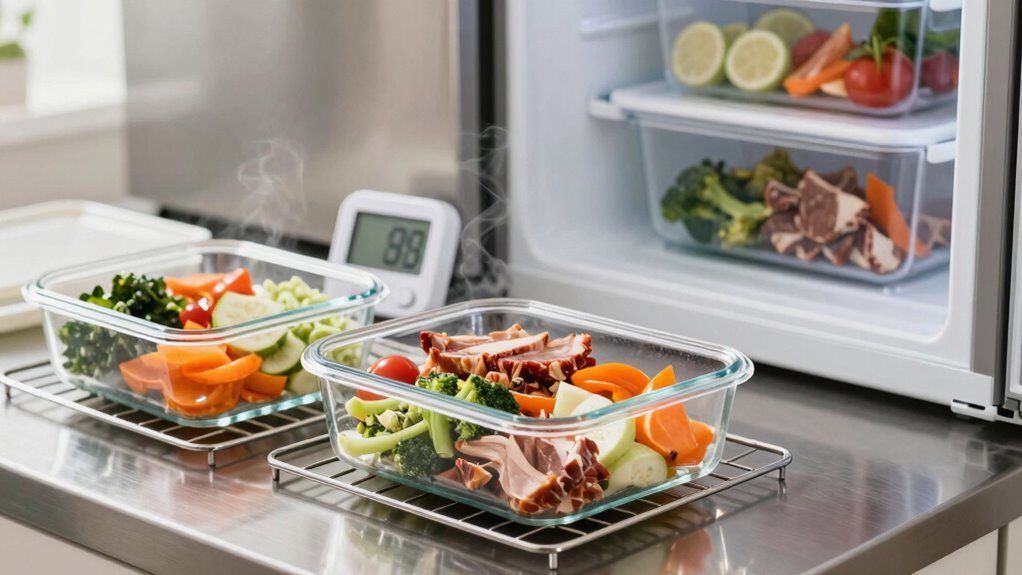
After you’ve cooled your food to a safe temperature, knowing how long to wait before refrigerating is key to keeping it safe. The cooling duration is critical for proper refrigeration timing. Generally, you should aim to cool hot foods within 1 to 2 hours. To visualize this, imagine:
- Setting your dish on the counter, steam slowly rising.
- Using an ice bath or dividing large portions into smaller containers.
- Stirring occasionally to release heat evenly.
- Monitoring the clock to ensure it reaches 70°F (21°C) within the first hour, then below 40°F (4°C) within the next.
This process prevents bacteria growth. Remember, proper refrigeration timing minimizes risk and keeps your meals safe for later enjoyment.
Best Practices for Storing Meal Prep Safely
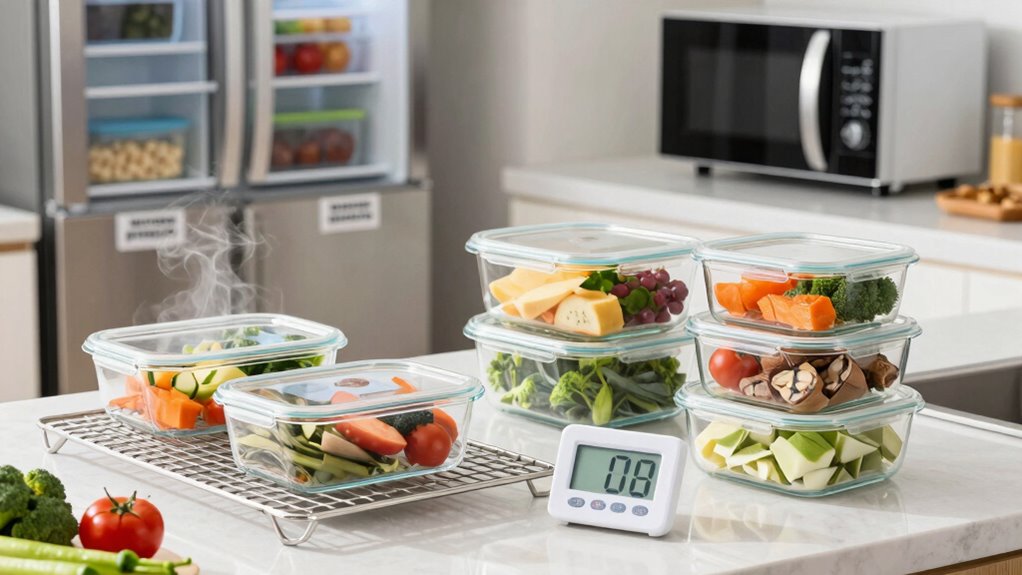
To keep your meal prep safe, maintaining proper storage of food in the refrigerator or freezer is essential. Use reusable containers with airtight seals to prevent bacteria growth and avoid spills. Make sure containers are clean and dry before packing your meals. Label each container with the date you prepared the food, so you know how long it’s been stored. Store leftovers in the coldest part of your fridge, ideally at 40°F or below, and avoid overcrowding to guarantee proper air circulation. When freezing meals, confirm containers are sealed tightly to prevent freezer burn and contamination. Proper storage helps preserve freshness, taste, and safety. Additionally, understanding temperature control is crucial for maintaining the safety and quality of your stored meals. Regularly check your fridge and freezer temperatures, and discard any meals that show signs of spoilage or have been stored beyond safe timeframes. Ensuring proper food handling is also vital to reduce the risk of foodborne illnesses. Maintaining correct food safety practices ensures your meals remain safe for consumption and reduces waste. Proper storage techniques can also help extend the shelf life of your meals and prevent unnecessary waste.
Reheating Leftovers Safely : What You Need to Know
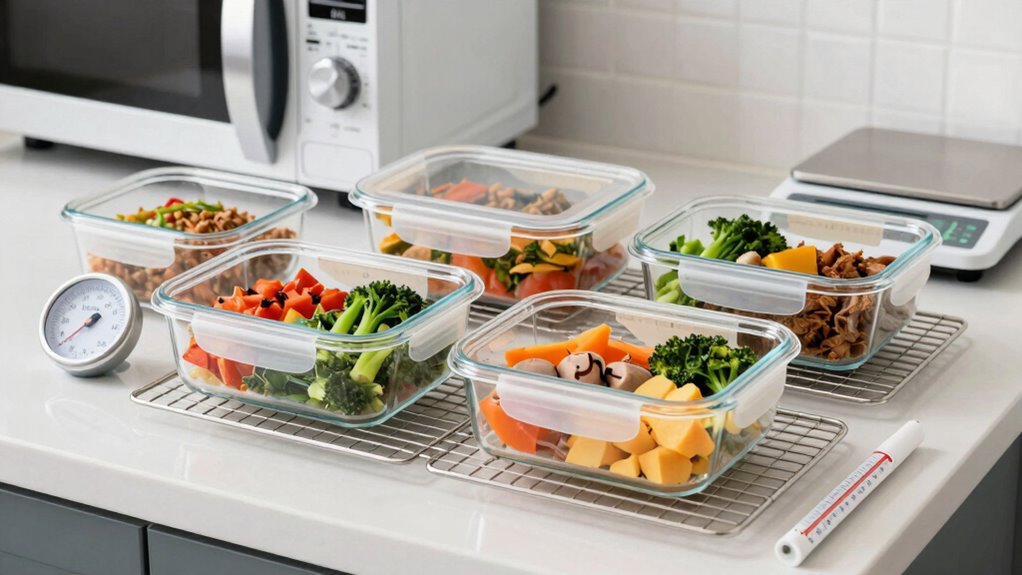
When reheating leftovers, it’s vital to reach the right temperature to kill harmful bacteria and keep your food safe. Make sure your storage containers are airtight and stored properly to prevent contamination. Additionally, using a food thermometer can help ensure your food reaches the proper internal temperature for safety. Proper reheating techniques can also minimize the risk of microplastics in dust contaminating your food. Using an air purifier with filter maintenance features can help reduce airborne pollutants in your kitchen environment, further protecting your food from contamination. Incorporating requirements traceability into your food safety practices can help you track and verify proper handling procedures. By following proper reheating guidelines and storage techniques, you can enjoy your leftovers without worry. Being aware of food safety principles can further help prevent foodborne illnesses.
Reheating Temperature Guidelines
Reheating leftovers to the correct temperature is vital for guaranteeing food safety. You should aim for an internal temperature of at least 165°F (74°C) to kill bacteria. Here’s what to keep in mind:
- Use a food thermometer to check the temperature, not just look for steam or hot spots.
- When microwave reheating, stir your food midway to promote even heating.
- Follow recommended reheating times based on the amount and type of food.
- Make certain the entire portion reaches 165°F, not just the center or edges.
Microwave safety is essential—avoid cold spots that harbor bacteria. Always reheat leftovers thoroughly within the proper reheating times to prevent foodborne illness and enjoy safe, delicious meals.
Proper Storage Techniques
Proper storage techniques are key to maintaining the safety and quality of your leftovers before reheating. First, always use clear food labeling to note the date and contents, so you know when to consume or discard. This helps prevent eating spoiled food and reduces waste. Portion control is also essential; divide large batches into smaller portions to cool quickly and store efficiently. Use airtight containers to prevent contamination and maintain freshness. Store leftovers in the refrigerator at 40°F (4°C) or below, and avoid overcrowding, which can hinder proper cooling. Labeling and portioning ensure you handle leftovers safely, reducing the risk of foodborne illness. Additionally, smart home safety devices like leak detectors and air monitors can help you maintain a safe kitchen environment when storing or reheating food. Incorporating proper temperature control techniques helps preserve flavor and texture while keeping your meals safe for future consumption, especially when combined with food safety practices that emphasize hygiene. Proper handling and storage of leftovers, including understanding piercing care and hygiene, can also prevent potential contamination. Being aware of zodiac traits and personalities may seem unrelated but can influence how individuals manage their kitchen routines, ensuring safer practices overall.
How to Spot Spoiled Meal Prep Foods

Ever wonder how to tell if your meal prep foods have gone bad? Start by checking expiration dates; if they’re past, discard the food. Next, look for mold detection—fuzzy spots or unusual colors mean it’s spoiled. Pay attention to the smell; sour or off odors indicate bacterial growth. Feel the texture—slimy or sticky surfaces are red flags. Finally, observe the appearance; discoloration or slimy residues suggest it’s time to toss. Always trust your senses—if anything seems off, don’t risk eating it. Proper storage and timely consumption help prevent spoilage, but these signs are your best indicators. Staying alert to these details ensures your meals remain safe and fresh, protecting your health and peace of mind.
Common Food Safety Mistakes When Meal Prepping
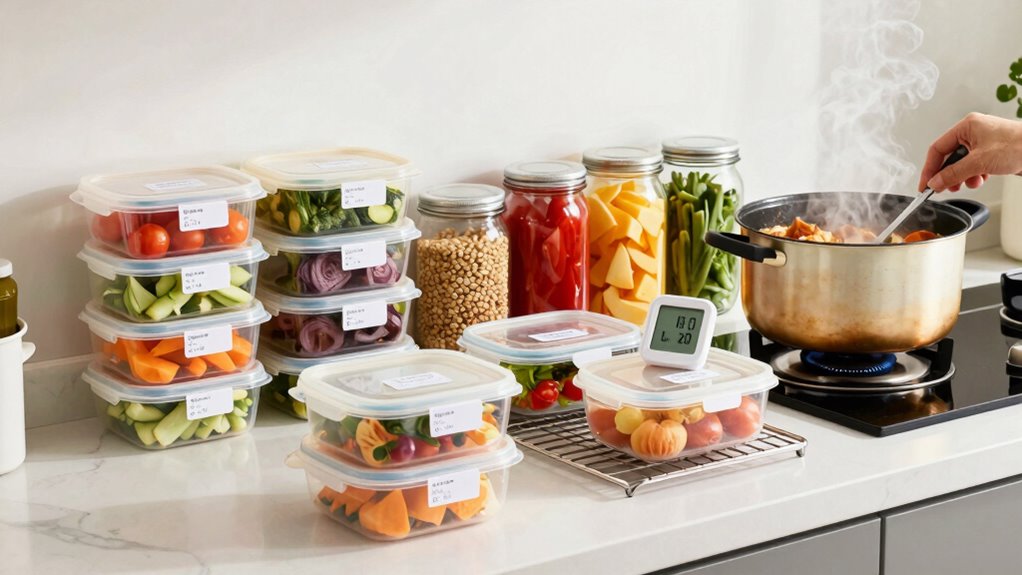
One common mistake people make when meal prepping is overlooking proper food handling and storage practices. Poor food labeling can lead to confusion about expiration dates or ingredients, increasing the risk of consuming spoiled food. Additionally, inconsistent meal portioning can cause uneven storage times and temperature control issues, which may promote bacterial growth. Failing to clearly label meals with dates and contents makes it harder to track freshness and plan consumption accordingly. Overstuffing containers or not dividing food into appropriate portions can also compromise cooling and reheating safety. To avoid these mistakes, always label your meals accurately, use proper portion sizes, and store food promptly at the correct temperature. Proper food storage is essential for maintaining food safety and reducing waste, ensuring your meal prep remains healthy and reliable. Remember that temperature regulation plays a crucial role in preventing bacterial growth during storage and reheating. Maintaining appropriate food safety practices is vital to prevent foodborne illnesses and keep your meals safe for consumption. Incorporating safe reheating techniques can further minimize risks and preserve food quality. Being aware of food storage guidelines can help prevent common errors and keep your meals safe from spoilage.
Essential Tools and Equipment for Safe Meal Prep
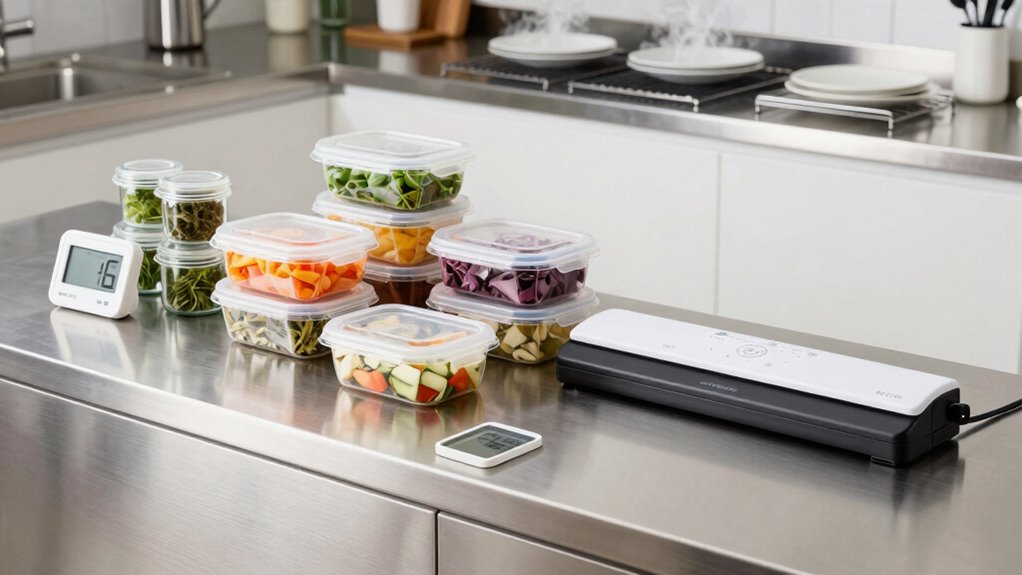
To guarantee your meal prep stays safe, having the right tools and equipment is essential. First, invest in high-quality food storage containers with airtight seals to keep your meals fresh and prevent contamination. Second, use reliable kitchen thermometers to check that foods reach safe internal temperatures during cooking and reheating. Third, keep a set of sharp knives and cutting boards to minimize cross-contact and ensure precise portioning. Fourth, have accessible labeling supplies like markers and labels to track storage times and prevent spoilage. These tools help you maintain proper food safety practices, reduce waste, and ensure your meals stay fresh and safe to enjoy. Proper equipment makes meal prep safer, more efficient, and more enjoyable.
Tips for Planning Meal Prep to Maintain Food Safety
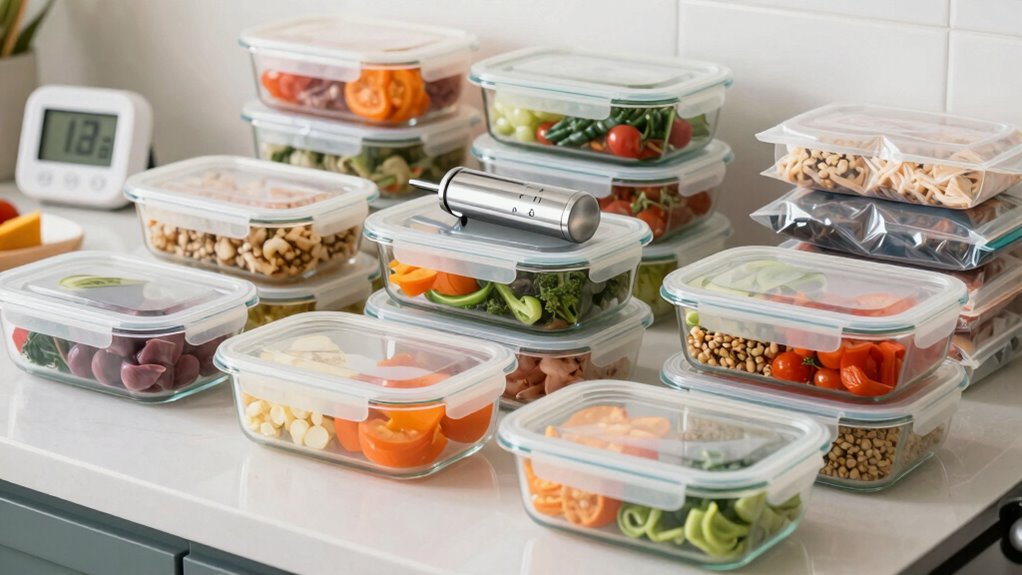
Planning your meal prep carefully is key to maintaining food safety. Start by choosing appropriate meal prep portion sizes to prevent leftovers from spoiling quickly. Smaller, evenly divided portions cool faster and store more safely. Focus on ingredient freshness; use fresh produce, meats, and dairy to reduce the risk of bacteria growth. Organize your shopping list to prioritize fresh ingredients and avoid bulk buying that could lead to spoilage. When prepping, wash your hands and surfaces thoroughly to prevent cross-contamination. Consider prepping ingredients separately and assembling meals just before eating to maintain freshness and safety. Proper planning ensures you cook, cool, and store food efficiently, reducing the risk of foodborne illnesses. Clear, organized plans help you stay on track with safe meal prep practices. Additionally, understanding food safety guidelines can help you make informed decisions during meal preparation. Maintaining proper food storage techniques is also essential to prolong freshness and prevent bacterial growth. Being aware of proper cooling methods ensures that food is cooled quickly and safely to inhibit bacteria development.
Frequently Asked Questions
Can I Leave Cooked Food at Room Temperature Overnight?
No, you shouldn’t leave cooked food at room temperature overnight. Bacteria grow quickly when food stays at room temperature, increasing the risk of food spoilage and foodborne illnesses. To keep your food safe, you should refrigerate leftovers within two hours of cooking. Leaving food out longer gives bacteria a chance to multiply, making it unsafe to eat later. Always store cooked food properly to prevent spoilage and guarantee safety.
How Can I Tell if Frozen Meal Prep Is Still Safe to Eat?
Like a seasoned detective in a noir film, you can tell if your frozen meal prep is still safe by inspecting it closely. Check for freezer burn or color change—these signs mean the food may have been compromised. If it smells off or has an unusual texture, it’s best to discard it. When in doubt, trust your senses; safety always comes first to avoid foodborne illnesses.
Is It Safe to Reheat Food More Than Once?
Reheating food more than once isn’t safe because it increases the risk of food poisoning. Bacteria can grow each time you cool and reheat leftovers, especially if you don’t follow proper reheating guidelines. To stay safe, reheat only what you plan to eat and guarantee you reach the right temperature, usually 165°F. This minimizes bacteria and helps prevent foodborne illnesses.
What Are the Best Containers for Meal Prep Storage?
Perfectly portioned, plastic, or glass containers are your best bet for meal prep storage. Opt for airtight containers to keep food fresh and prevent spills. Look for BPA-free options to protect your health from harmful chemicals. Durable, dishwasher-safe containers make reheating and cleaning easier. By choosing these containers, you secure your food’s freshness, safety, and flavor, making healthy meal prep a hassle-free, hygienic habit you’ll love.
How Long Can Cooked Meals Be Kept in the Fridge?
You should keep cooked meals in the fridge for up to 3 to 4 days. After that, food expiration increases, and bacterial growth can become a concern. To prevent foodborne illnesses, make sure to store your meals in airtight containers and refrigerate promptly. Always check for any signs of spoilage before eating leftovers, and when in doubt, it’s safer to discard old food rather than risk illness.
Conclusion
Think of your meal prep journey as nurturing a garden. Proper cooling, careful storage, and gentle reheating are the seeds you plant for safety. When you follow these rules, you’re cultivating trust in your food’s freshness and health. Keep tending to your habits, and watch your kitchen flourish with safe, delicious meals. With each mindful step, you’re nurturing not just your body, but the foundation of your well-being.