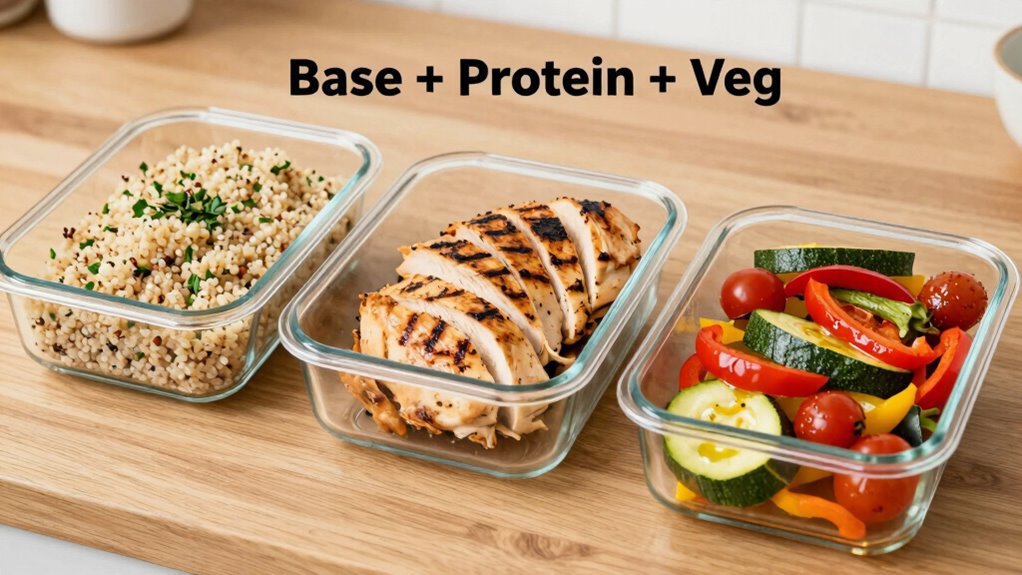

The “Base + Protein + Veg” formula simplifies high-protein meal prep by giving you a flexible, balanced framework that fits your goals and preferences. You can choose nutrient-rich bases like rice or quinoa, different protein sources such as chicken or beans, and colorful vegetables to boost flavor and nutrients. This approach makes planning meals quicker, more consistent, and adaptable—so if you keep exploring, you’ll discover how to optimize your choices for any diet or schedule.

Get workout gear delivered free with Prime
- Fast, free delivery on millions of items
- Prime Video, Amazon Music and more included
- Member-only deals all year
Key Takeaways
- The “Base + Protein + Veg” formula offers a simple, flexible approach to high-protein meal prep for balanced nutrition.
- Selecting lean proteins like chicken or fish maximizes muscle support and aligns with high-protein goals.
- Incorporating nutrient-dense vegetables enhances flavor, fiber, and overall meal quality without sacrificing protein content.
- Proper storage techniques, such as airtight containers and portioning, ensure freshness and convenience for prepped high-protein meals.
- Customizing bases, proteins, and vegetables allows adaptation to dietary needs, preferences, and specific high-protein intake targets.
high-protein meal prep containers
As an affiliate, we earn on qualifying purchases.
As an affiliate, we earn on qualifying purchases.
Why Is the “Base + Protein + Veg” Formula Perfect for Meal Prep?
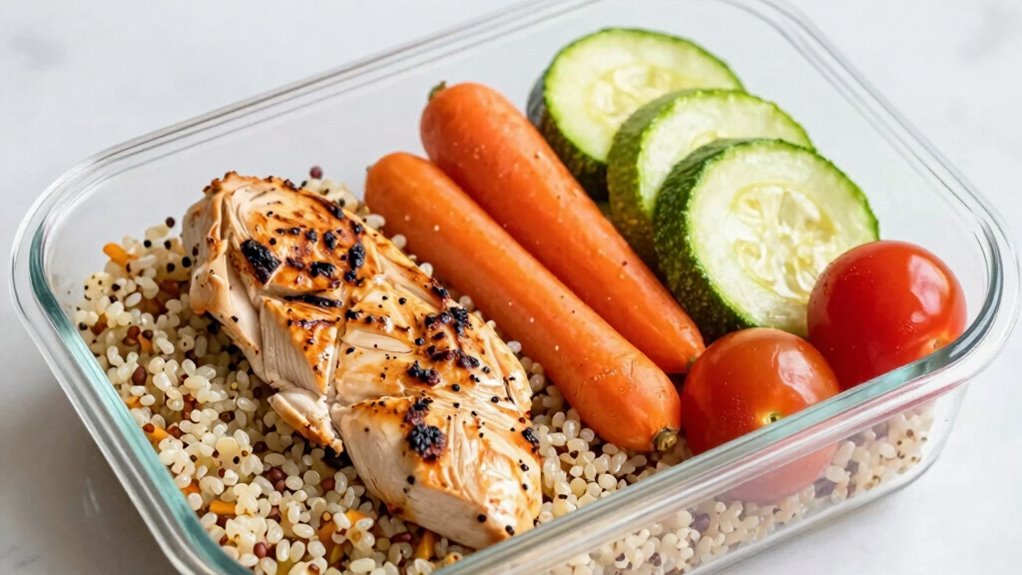
The “Base + Protein + Veg” formula is ideal for meal prep because it provides balanced nutrition in a simple, flexible framework. It helps you plan meals around your typical meal timing, ensuring you stay energized throughout the day. This structure also makes it easy to create snack alternatives that are satisfying and nutritious, preventing you from reaching for less healthy options. By focusing on a solid base like grains or legumes, adding a protein source, and including vegetables, you can customize meals to suit your tastes and schedule. Plus, the straightforward approach reduces decision fatigue, making prep quicker and more consistent. Incorporating meal planning strategies can further enhance your ability to maintain a balanced diet using this formula.
airtight food storage containers
As an affiliate, we earn on qualifying purchases.
As an affiliate, we earn on qualifying purchases.
How to Pick the Best Base for Your High-Protein Meals
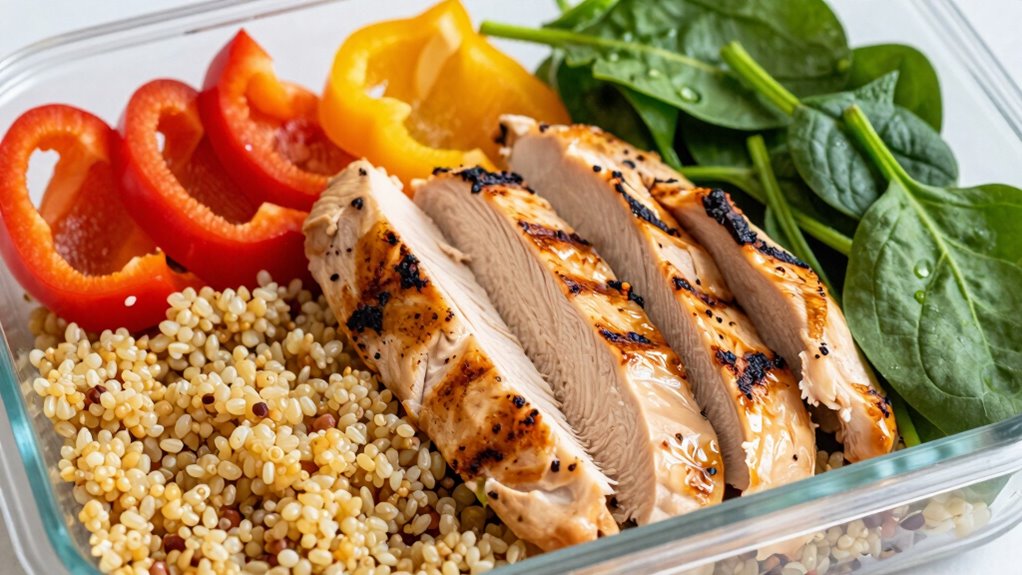
Choosing the right base for your high-protein meals is essential because it sets the foundation for balanced nutrition and flavor. When selecting your base, consider how it fits into your meal prep containers and your grocery shopping list. Opt for grains like brown rice, quinoa, or barley for added fiber and texture. Leafy greens such as spinach or kale work well if you prefer lighter, low-carb options. Think about how long each base stays fresh in your containers—some hold up better than others. When grocery shopping, choose versatile bases that can be easily incorporated into different meals. The right base not only complements your protein but also keeps your meals satisfying and convenient to prepare ahead of time.
As an affiliate, we earn on qualifying purchases.
Choosing Protein Sources to Match Your Goals
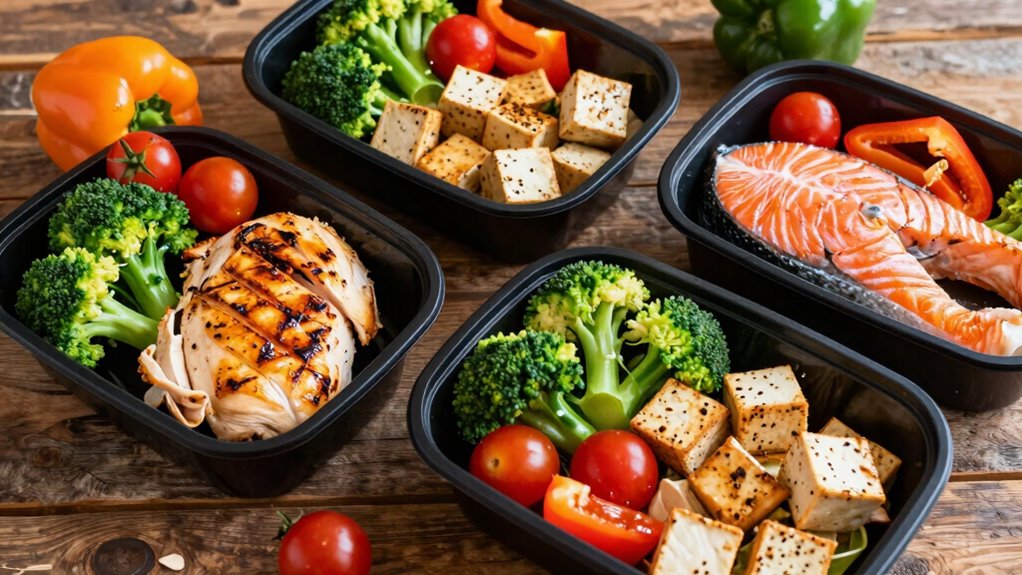
Selecting the right protein sources depends on your specific health and fitness goals. If you’re aiming for muscle growth, prioritize lean animal proteins like chicken or fish. For plant-based options, beans, lentils, tofu, and tempeh provide excellent protein without animal products. Dairy choices such as Greek yogurt, cottage cheese, and milk are also rich in protein and support recovery. If you’re focusing on weight loss, opt for lower-fat options like egg whites or plant-based proteins. Vegetarians and vegans should emphasize variety in plant sources to guarantee complete amino acid intake. Consider your dietary preferences, allergies, and lifestyle when choosing your protein sources. Tailoring these choices helps you meet your goals efficiently while maintaining a balanced and satisfying meal prep routine. Understanding protein quality can further optimize your meal planning and ensure you’re meeting your nutritional needs effectively. Additionally, incorporating vetted water-resistant ingredients into your meal prep can help keep your food fresh and protected during busy days. Being aware of food preservation techniques can also extend the shelf life of your prepared meals.
lean chicken breast for meal prep
As an affiliate, we earn on qualifying purchases.
As an affiliate, we earn on qualifying purchases.
How to Incorporate Vegetables for Maximum Nutrients and Flavor
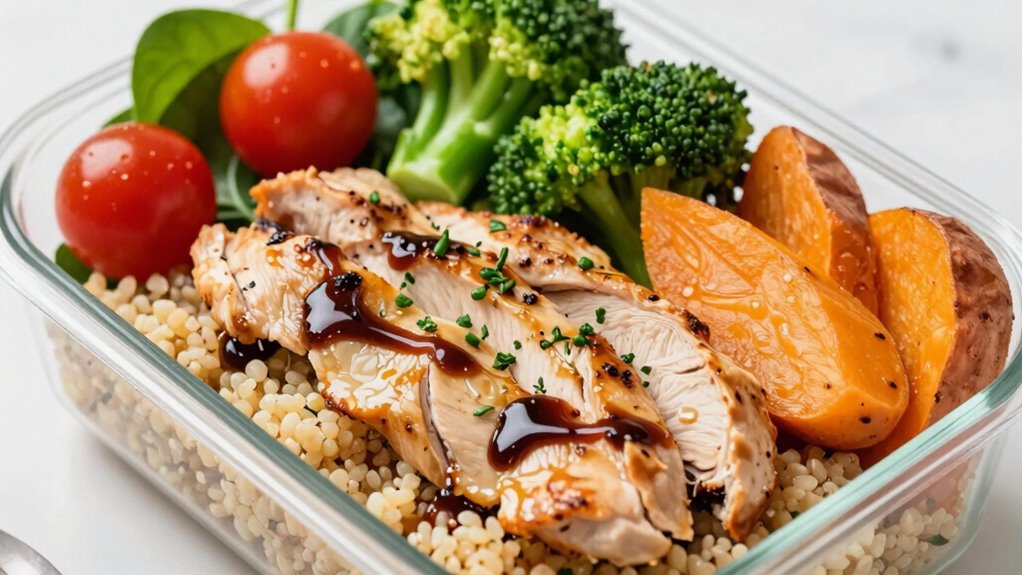
To maximize the nutrients and flavor of your vegetables, incorporate a variety of colorful produce into your meals and prepare them using different cooking techniques. Vegetable roasting is a simple way to boost flavor and preserve nutrients, as it caramelizes natural sugars and enhances taste. Toss vegetables like bell peppers, zucchini, or carrots with olive oil, seasonings, and roast until tender and slightly crispy. This simple cooking method intensifies their flavor, making them more satisfying. Mixing roasted veggies with fresh greens or adding them to stir-fries also boosts nutrient density and flavor complexity. Incorporating a diverse range of vegetables ensures you get a broad spectrum of vitamins and minerals while elevating the overall taste experience. Additionally, paying attention to the finishes and textures of your vegetable preparations can further enhance the visual appeal and mouthfeel of your meals. For example, adding a sprinkle of herbs or a drizzle of flavorful oils can provide an extra layer of taste enhancement. To further boost both flavor and nutrition, consider experimenting with different cooking techniques such as steaming, sautéing, or grilling, which can bring out different qualities in vegetables. Focus on variety and technique to keep your meals vibrant and delicious, ensuring you get a broad spectrum of vitamins and minerals while elevating the overall taste experience.
Batch Cooking and Storage Tips for High-Protein Meal Prep

Batch cooking is a smart way to save time and make certain your high-protein meals stay fresh and convenient throughout the week. Proper food storage is key to maintaining quality and safety. Use airtight containers to prevent spoilage and keep flavors intact. Label containers with dates to track freshness. When batching proteins, cook in large portions and divide them into meal-sized servings. Employ batch cooking techniques like blanching vegetables before freezing to preserve nutrients. Store meals in the fridge for up to 4 days or freeze for longer storage. Additionally, understanding storage capacity helps optimize space and ensure your meals stay fresh longer. Proper temperature control is essential for food safety and maintaining nutritional value. Ensuring consistent temperature management during storage prevents bacterial growth and spoilage. It’s also beneficial to organize your freezer and fridge to maximize storage efficiency, reducing waste and making meal prep more streamlined. Regularly cleaning and defrosting your appliances can further improve storage conditions and prolong the lifespan of your equipment. Here’s a quick visual:
| Food Item | Storage Method | Shelf Life |
|---|---|---|
| Cooked Chicken | Airtight containers | 3-4 days / 3 months (frozen) |
| Steamed Veggies | Freezer bags / containers | 3-4 months |
| Cooked Lentils | Airtight containers | 4-5 days / 6 months (frozen) |
How to Customize Your Meal Plan for Different Diets and Preferences
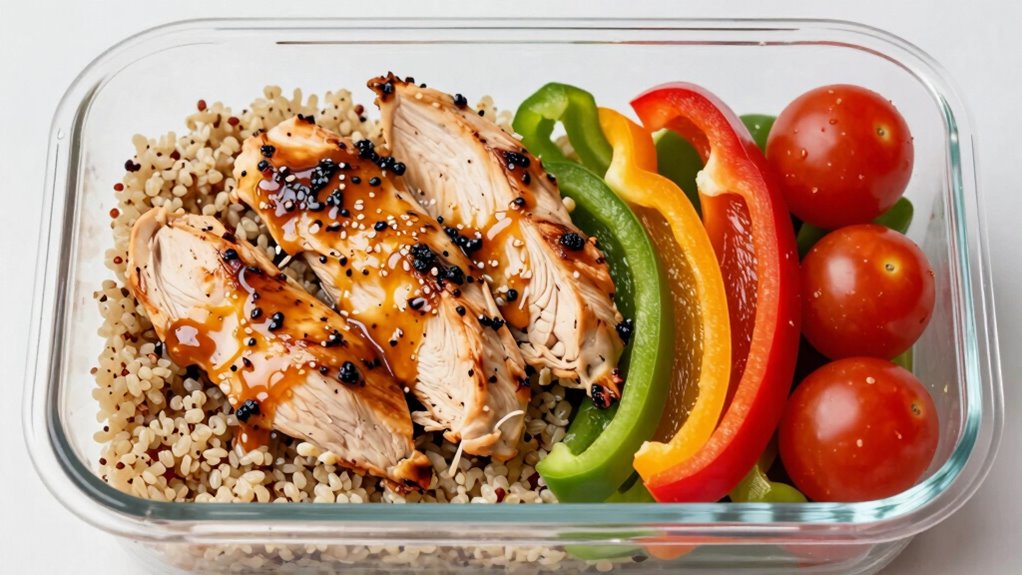
After mastering proper storage techniques, you can tailor your high-protein meal prep to fit various dietary needs and personal tastes. To accommodate gluten-free options, choose naturally gluten-free proteins like chicken, fish, or legumes, and avoid gluten-containing grains. For vegan adaptations, replace animal proteins with plant-based options such as tofu, tempeh, or beans, and add nutrient-dense plant foods to ensure balanced nutrition. Customize your “Base + Protein + Veg” formula by swapping ingredients to match your preferences or restrictions without sacrificing protein content. Incorporate meal prep storage techniques to optimize how you organize and store your meals, ensuring freshness and safety. Paying attention to food safety practices helps prevent spoilage and maintains the quality of your meals over time. Using proper drying methods can significantly improve the longevity and safety of your stored foods. Additionally, understanding how to select safe storage containers is essential for maintaining food quality and preventing contamination. Use spices, herbs, and sauces to enhance flavors suited to your diet. Remember, flexibility is key—adapting your meal plan helps you stay consistent and enjoy your meals while meeting your dietary goals.
Common Mistakes to Avoid When Planning High-Protein Meals
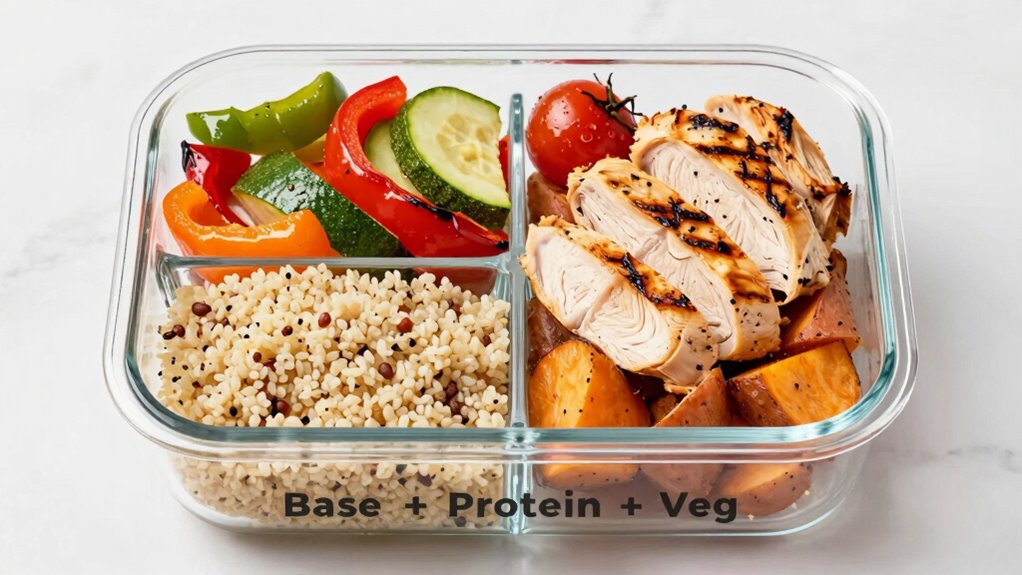
One common mistake is not paying attention to portion sizes, which can lead to overeating or not getting enough protein. Ignoring meal balance may cause your diet to lack essential nutrients and leave you feeling unsatisfied. To succeed, you need to plan carefully and make certain your meals are well-balanced and appropriately sized. Incorporating plant properties like portion control containers can help ensure accurate serving sizes.
Overlooking Portion Sizes
Even though focusing on high-protein meals is important, many people overlook portion sizes, which can lead to overeating or inadequate intake. Without proper portion awareness, you might serve too much protein, risking excess calories, or too little, missing your nutritional goals. Achieving serving accuracy helps you maintain a balanced diet and supports consistent progress. Use measuring tools or visual cues to ensure your portions align with your dietary needs. Pay attention to serving sizes on labels and meal prep guidelines, and adjust portions based on activity level and goals. This mindful approach prevents unintended overeating and helps you enjoy the benefits of your high-protein meals while staying in control of your intake. Proper portion control is key to effective meal planning and overall success.
Ignoring Meal Balance
While focusing on high-protein foods is essential, ignoring meal balance can undermine your progress. A meal imbalance often leads to nutrient neglect, leaving out crucial vitamins, minerals, and fiber that support overall health. Relying too heavily on protein without incorporating enough vegetables, healthy fats, and whole grains can cause your meals to lack diversity and nutritional completeness. This imbalance can also impact your meal preparation efficiency by making it harder to create well-rounded, satisfying dishes. This not only hampers your energy levels but also affects digestion and long-term wellness. To avoid this mistake, verify your meals include a variety of food groups beyond just protein. Strive for colorful plates that provide a spectrum of nutrients. Balancing your meals helps maximize benefits, prevents nutrient deficiencies, and keeps you energized and satisfied throughout the day.
Frequently Asked Questions
How Can I Balance Macronutrients Within the “Base + Protein + Veg” Formula?
To balance macronutrient ratios within the “base + protein + veg” formula, focus on portion control for each component. Fill your plate with a healthy portion of carbs like grains or legumes, add sufficient protein such as chicken or beans, and include plenty of vegetables. Adjust your portions based on your goals, ensuring you get a balanced mix of carbs, proteins, and fats for sustained energy and muscle support.
What Are Some Budget-Friendly Options for High-Protein Ingredients?
You can choose budget-friendly protein options like canned beans, lentils, eggs, and canned tuna for affordable meal prep. Chicken thighs and ground turkey also offer great value and high protein content. Incorporate these into your meals to keep costs low while maintaining protein intake. Shopping in bulk and opting for store brands help stretch your budget further, making your high-protein meal prep both affordable and nutritious.
How Do I Adapt the Formula for Vegetarian or Vegan Diets?
Imagine your plate as a vibrant garden, where plant-based proteins like beans, lentils, and tofu become your main blossoms. To keep flavors rich and satisfying, use herbs, spices, and flavor enhancers like nutritional yeast or soy sauce. These elements add depth and appeal, transforming simple ingredients into hearty, delicious meals that nourish your body and soul. Embrace this colorful garden, and enjoy your nutritious, plant-powered feast.
What Are the Best Seasoning Strategies to Enhance Flavor Without Extra Calories?
You can boost flavor without adding calories by using spice blends like cumin, paprika, or chili powder to add depth and warmth. Incorporate fresh herbs such as cilantro, basil, or parsley to brighten your dishes with natural aroma and flavor. These strategies allow you to enhance your meals, making them more satisfying without extra calories, and keep your prep both tasty and healthy.
How Often Should I Rotate or Update My Meal Prep Ingredients?
You should rotate your meal prep ingredients every 1 to 2 weeks to keep things fresh and interesting. Incorporate seasonal variations to enjoy the best flavors and nutrients, and consider ingredient substitutions to prevent monotony. This approach helps you discover new tastes, maintains your motivation, and guarantees a balanced intake of vitamins and minerals. Regular updates make meal prep more enjoyable and sustainable over the long term.
Conclusion
Mastering the “base + protein + veg” formula transforms meal prep from a chore into a canvas for variety. While simplicity keeps things manageable, don’t forget that customization adds depth—making each meal uniquely yours. The balance between convenience and creativity mirrors life’s dualities: structure and spontaneity. Embrace the process, and your high-protein meals will nourish not just your body, but also your passion for healthy living.
Halloween Picks
halloween
As an affiliate, we earn on qualifying purchases.