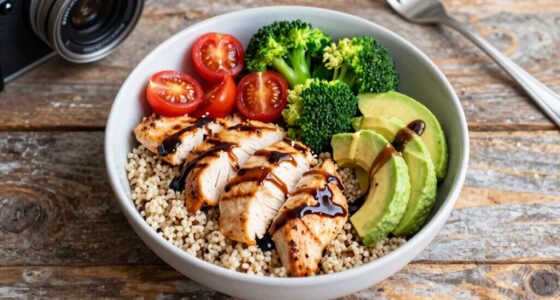

To gain muscle without “dirty bulking,” you need a careful calorie surplus focused on nutrient-dense foods like lean meats, eggs, and whole grains. Timing your meals, especially consuming protein within an hour after workouts, boosts recovery and growth. Incorporate supplements like protein powders and creatine to support your goals without excess calories. Maintaining a steady intake and monitoring progress help prevent fat gain. Keep going, and you’ll discover how to optimize your bulking phase effectively.

Get workout gear delivered free — and shop member deals
- Fast, free delivery on millions of items
- Access to Prime Big Deal Days deals on October 6–7
- Prime Video, Amazon Music and more included
Key Takeaways
- Maintain a moderate calorie surplus, focusing on nutrient-dense foods to promote muscle gain without excessive fat.
- Distribute calories evenly across meals and include protein-rich options post-workout to optimize recovery.
- Use targeted supplements like whey, creatine, and BCAAs to support muscle synthesis without overeating.
- Prioritize whole foods such as lean meats, eggs, and vegetables to ensure clean calorie intake for healthy growth.
- Combine strategic meal timing with supplements to enhance nutrient absorption and minimize fat gain during bulking.

Ever wondered why bulking up requires eating more than you burn? It’s because your body needs extra fuel to build muscle, and that surplus energy provides the raw materials your muscles need to grow. But how you manage that surplus matters. Instead of resorting to “dirty bulking,” where you eat anything in sight and risk gaining excessive fat, focus on strategic meal timing and supplement strategies to make your gains cleaner and more efficient. Understanding the importance of calorie surplus helps you tailor your approach for optimal results.
Meal timing plays an essential role in optimizing muscle growth. When you eat isn’t just about convenience; it influences how your body uses nutrients. Consuming balanced meals with protein, carbs, and fats every few hours keeps your amino acid levels elevated and supports muscle repair and growth. Prioritize having a protein-rich meal within an hour after your workout, as this is when your muscles are most receptive to nutrients. Spreading your caloric intake evenly throughout the day helps prevent excessive fat gain and maintains a steady supply of energy. This approach ensures your body has the nutrients it needs to build muscle without overwhelming your system, reducing the risk of turning your surplus into stored fat.
Supplement strategies can also boost your muscle gains without tipping the scale toward unhealthy weight gain. Protein powders, creatine, and branched-chain amino acids (BCAAs) are popular options that effectively support muscle synthesis. Using a high-quality whey protein shake post-workout can quickly deliver essential amino acids to your muscles, aiding recovery and growth. Creatine monohydrate enhances strength and power, enabling you to lift heavier and stimulate more muscle fibers. BCAAs can help prevent muscle breakdown during intense training sessions and support recovery. Incorporating these supplements smartly into your routine allows you to meet your increased caloric and nutrient needs without overeating or sacrificing quality.
It’s also important to focus on whole, nutrient-dense foods to guarantee your calorie surplus is coming from healthy sources. Lean meats, eggs, dairy, whole grains, nuts, and vegetables should be your staples. This way, you’re fueling muscle growth while minimizing fat gain and supporting overall health. Pairing proper meal timing with smart supplement strategies creates a synergistic effect, making your bulking phase more effective and sustainable.
whey protein powder for muscle gain
As an affiliate, we earn on qualifying purchases.
As an affiliate, we earn on qualifying purchases.
Frequently Asked Questions
How Can I Measure My Ideal Calorie Surplus Accurately?
To measure your ideal calorie surplus accurately, start by tracking your daily calorie intake using a reliable app. Then, determine your metabolic rate with an online calculator or through professional testing. Adjust your intake based on your progress—if you’re gaining too fast or too slow, fine-tune your calorie tracking and surplus. Regularly monitor your weight and muscle gains to make certain you’re staying within a healthy, effective surplus range.
What Are the Signs of a Healthy Versus Unhealthy Surplus?
Coincidences often reveal what your body signals about your surplus. A healthy surplus supports metabolic health, keeps fat gain minimal, and promotes muscle hypertrophy without discomfort. Signs include steady weight gain, improved strength, and good energy levels. Unhealthy surpluses cause fatigue, stubborn fat gain, and poor recovery. You’ll notice your body feels energized and your muscles grow steadily, indicating you’re nourishing your body properly without overloading it.
How Long Should I Stay in a Calorie Surplus Phase?
You should stay in a calorie surplus for about 6 to 8 weeks, then consider incorporating calorie cycling to prevent metabolic adaptation. This approach helps you avoid hitting a plateau and keeps gaining efficient. Pay attention to your progress, and if muscle gains slow or fat gain increases, take a break or reduce calories. Regularly cycling calories guarantees you maximize muscle growth while minimizing fat gain.
Can a Calorie Surplus Cause Fat Gain if Not Managed Properly?
Imagine you’re steering a ship in calm waters; if you don’t watch your map, you might drift into dangerous currents. Similarly, a calorie surplus can cause fat gain if you don’t handle it properly. By using precise calorie tracking and monitoring your intake, you keep your ship steady. Proper fat management ensures you gain muscle without unnecessary fat, helping you navigate your fitness journey smoothly and effectively.
Are There Specific Macronutrient Ratios for Muscle Gain?
Yes, maintaining a balanced macronutrient ratio supports muscle gain. Aim for about 40% carbs, 30% protein, and 30% fats, adjusting based on your activity and goals. Prioritize proper meal timing, like consuming protein-rich meals post-workout, to optimize recovery and growth. Focus on a consistent macronutrient balance and strategic meal timing to maximize muscle gains and minimize fat gain during your surplus.
As an affiliate, we earn on qualifying purchases.
Conclusion
Now that you know how to gain muscle without the chaos of dirty bulking, it’s all about balance. A controlled calorie surplus fuels your gains while keeping fat gain minimal. Instead of reckless overeating, think of it as a steady, purposeful journey—like planting seeds carefully instead of overwatering. By maintaining this mindful approach, you’ll build muscle efficiently and stay in control, proving that smarter, not just more, leads to better results.
As an affiliate, we earn on qualifying purchases.
As an affiliate, we earn on qualifying purchases.
Halloween Picks
halloween
As an affiliate, we earn on qualifying purchases.