
On your rest days, a quick 15-minute mobility routine helps keep your muscles flexible, improves blood flow, and prevents stiffness. Focus on dynamic stretches for major muscle groups like hips, hamstrings, shoulders, and back, using smooth, controlled movements and deep breaths. Incorporating light foam rolling can further boost recovery and loosen tight spots. Maintaining this routine regularly supports injury prevention and long-term movement confidence—stick with it, and you’ll discover even more ways to stay active and healthy.
Key Takeaways
- Incorporate dynamic stretches targeting major muscle groups to prevent stiffness and enhance flexibility on rest days.
- Use controlled, fluid movements like leg swings and arm circles to improve range of motion safely.
- Focus on deep breathing to relax muscles and support recovery during the routine.
- Add light foam rolling to break up fascia adhesions, boost blood flow, and accelerate healing.
- Consistently practicing these exercises reduces injury risk, improves posture, and promotes overall mobility and well-being.
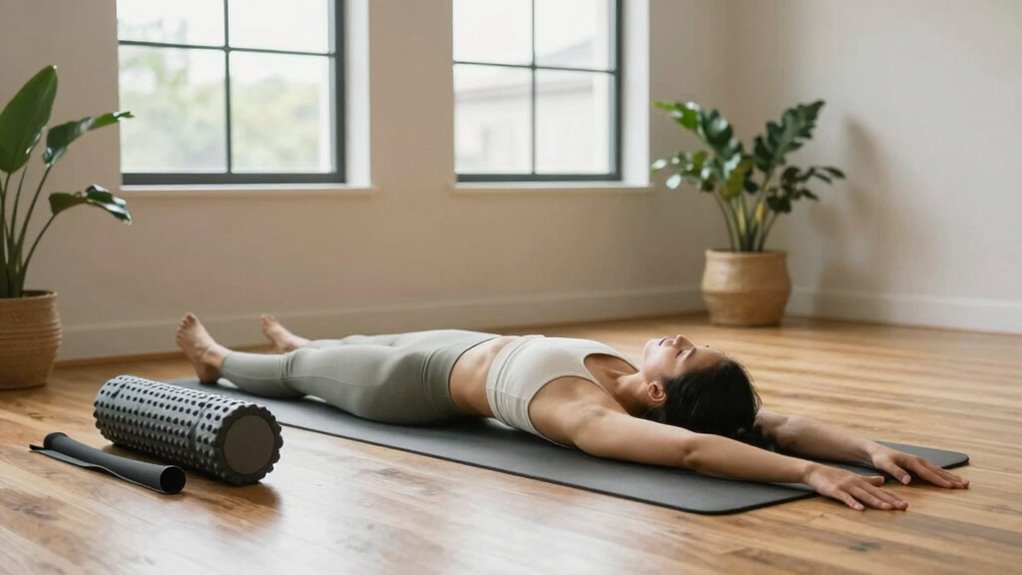
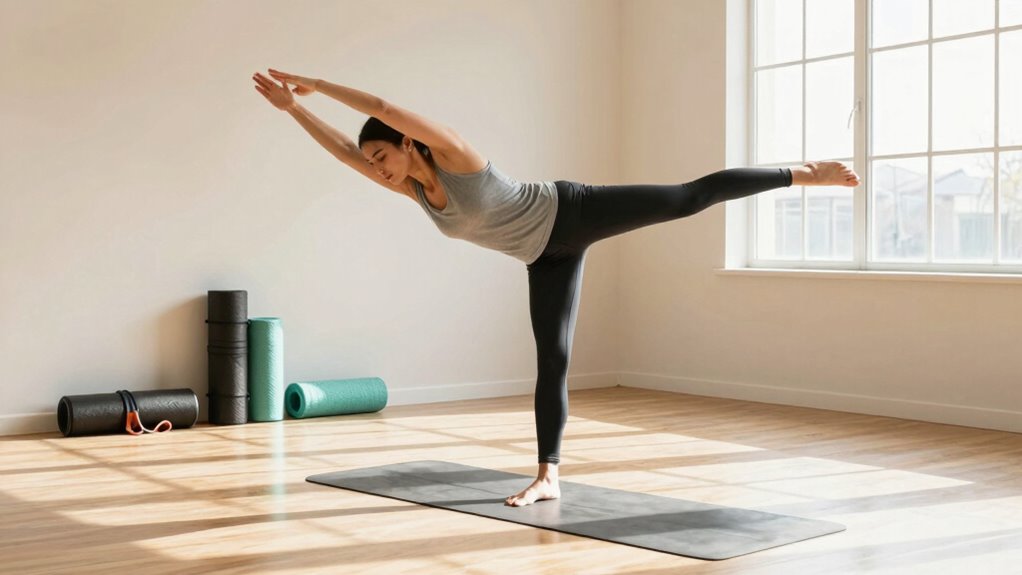
Even on rest days, maintaining mobility is vital to keep your muscles flexible and prevent stiffness. When you skip movement, your muscles can tighten up, making it harder to move freely and increasing your risk of injury. Incorporating a simple, 15-minute mobility routine into your rest day helps you stay limber and ready for your next workout. It’s not about pushing your limits but about supporting your recovery techniques and injury prevention efforts. Moving gently allows your muscles to stay active without overtaxing them, promoting blood flow and aiding in the removal of metabolic waste products. This approach helps you recover faster and reduces soreness, so you wake up feeling refreshed and ready to train. Regularly engaging in existential themes in your routine can deepen your understanding of your body’s needs and your personal growth. A key part of this routine is focusing on dynamic stretches that target major muscle groups—hip flexors, hamstrings, quadriceps, calves, shoulders, and back. These stretches can include leg swings, arm circles, and gentle torso twists. Keep movements controlled and smooth, avoiding any bouncing or jerking. As you perform these stretches, pay attention to your breathing—deep, steady inhales and exhales will help relax your muscles and enhance the effectiveness of each movement. Regularly incorporating these mobility exercises into your rest days ensures your muscles don’t become stiff, which is vital for injury prevention.
Beyond stretching, consider adding some light foam rolling or self-myofascial release. This technique helps break up adhesions in your fascia, improving flexibility and blood flow. When your tissues are more pliable, you reduce tension and the chance of strains or pulls during your active days. Foam rolling also complements your recovery techniques, accelerating healing and keeping your muscles in excellent condition. Remember, the goal isn’t to cause pain but to gently work out knots and tight spots, increasing comfort and range of motion over time. Staying consistent with a 15-minute mobility routine on rest days makes a significant difference in your overall performance and health. It’s a proactive approach to injury prevention, ensuring your muscles stay balanced and resilient. When you keep your joints and muscles moving, you’re less likely to experience stiffness or imbalances that could lead to overuse injuries. Plus, this habit can improve your posture, reduce muscle soreness, and boost your overall well-being. Think of it as a small investment in your long-term fitness journey—simple, quick, and highly effective for keeping you moving freely and confidently.
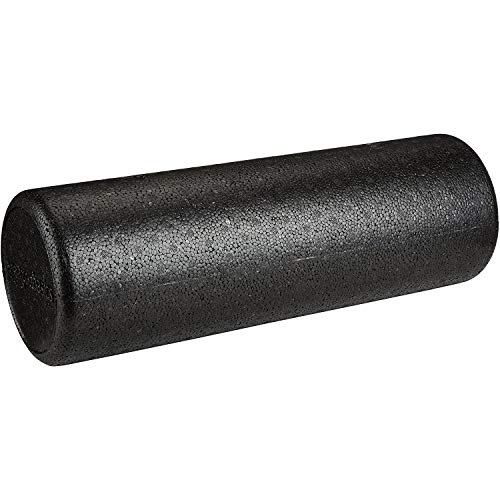
Amazon Basics High-Density Foam Roller for Exercise and Recovery, 18 Inches, Black
High-density foam roller in Black
As an affiliate, we earn on qualifying purchases.
As an affiliate, we earn on qualifying purchases.
Frequently Asked Questions
Can Rest Day Mobility Routines Replace Active Recovery Sessions?
Rest day mobility routines can complement active recovery sessions but shouldn’t fully replace them. They enhance recovery effectiveness by promoting blood flow and flexibility, which aids injury prevention. Active recovery typically involves low-intensity exercises that accelerate muscle repair, while mobility routines focus on joint health and flexibility. Combining both ensures you maximize recovery benefits, reduce injury risk, and maintain ideal movement, keeping you in top shape for your workouts.
How Often Should I Do Rest Day Mobility Exercises?
You should do rest day mobility exercises 2 to 3 times a week, balancing stretch benefits with injury prevention. Consistent mobility work keeps your muscles flexible, improves joint health, and reduces the risk of strains. By making these routines a regular part of your schedule, you support recovery, enhance movement quality, and maintain overall fitness. Incorporate them into your weekly plan, and you’ll stay agile and injury-free longer.
Is It Suitable for All Fitness Levels?
Yes, this routine is beginner friendly and injury adaptable, making it suitable for all fitness levels. You can easily modify exercises to match your comfort and skill, ensuring safe progress. Whether you’re just starting out or more experienced, you’ll benefit from moving gently and maintaining flexibility. This routine helps prevent injuries and keeps you active without overexerting, making it a perfect addition to any fitness journey.
What Equipment Is Needed for These Routines?
Think of your routine like a toolbox—simple, versatile, ready for anything. You mainly need minimal equipment options like a yoga mat, foam roller, or resistance bands, but many variations use just body weight. I once used a chair for balance during a stretch, proving you don’t need fancy gear. This flexibility allows you to adapt your routine based on what equipment you have, making your mobility practice accessible and effective.
Are There Modifications for Injuries or Limited Mobility?
Yes, there are injury-specific modifications and limited mobility adaptations you can use. You should listen to your body and adjust exercises to avoid pain or discomfort. For injuries, reduce range of motion or skip certain movements, and for limited mobility, focus on gentle stretches and seated options. Consult with a healthcare professional for personalized guidance, ensuring your routine supports your recovery while maintaining flexibility and mobility.

Pull Up Bands, Resistance Bands, Pull Up Assistance Band Exercise Bands for Men & Women Working Out, Body Stretching, Physical Therapy, Muscle Training – Black
100% Natural Latex
As an affiliate, we earn on qualifying purchases.
As an affiliate, we earn on qualifying purchases.
Conclusion
Incorporating this 15-minute rest day mobility routine is like giving your body a gentle hug, nurturing flexibility and easing tension without overexertion. It keeps you moving smoothly, like a well-oiled machine, ready to tackle your next workout with renewed energy. Remember, rest isn’t just downtime — it’s a essential part of progress. So, embrace these moments of mobility, and watch how your body thanks you with increased strength and resilience.

MZDXJ Muscle Roller Massage Roller Stick- Deep Tissue Fascia Blaster for Myofascial Pain Relief, Lymphatic Drainage & Body Sculpting, Handheld Physical Therapy & Recovery Tool (Purple Black-18 inch)
[🌟Precise targeting] Our product can reach deep into muscle trigger points. Its professional massage design effectively relieves muscle…
As an affiliate, we earn on qualifying purchases.
As an affiliate, we earn on qualifying purchases.

TEMI Slant Board for Calf-Stretching – Wooden Incline Wedge Stretcher for Squats, Foot & Ankle Mobility, Portable Fitness Equipment, Balance Block for Heel Stretch
👍𝗣𝗢𝗥𝗧𝗔𝗕𝗟𝗘 & 𝗟𝗜𝗚𝗛𝗧𝗪𝗘𝗜𝗚𝗛𝗧 — This calf stretcher slant board is designed for easy transport, weighing just 5 lbs….
As an affiliate, we earn on qualifying purchases.
As an affiliate, we earn on qualifying purchases.