If your ankles are too stiff to squat properly, start with stretching and mobility exercises focused on your calves and Achilles tendons. Ankle circles, dorsiflexion stretches, and kneeling lunges help loosen tight muscles and joint restrictions. Foam rolling also relaxes calf muscles, creating more room for ankle movement. Consistently practicing these techniques will gradually improve your flexibility and squat depth. Keep going, and you’ll discover more ways to enhance your ankle mobility and squat form.
Key Takeaways
- Begin with ankle mobility exercises like dorsiflexion stretches and ankle circles to loosen joint and surrounding tissues.
- Incorporate foam rolling or calf massages to relax tight muscles that restrict ankle movement.
- Practice modified squats using a sturdy chair or box to maintain proper form while gradually improving flexibility.
- Focus on keeping heels flat on the ground during squats to assess and enhance ankle flexibility.
- Progress slowly by increasing squat depth and incorporating regular mobility drills to prevent injury and build confidence.
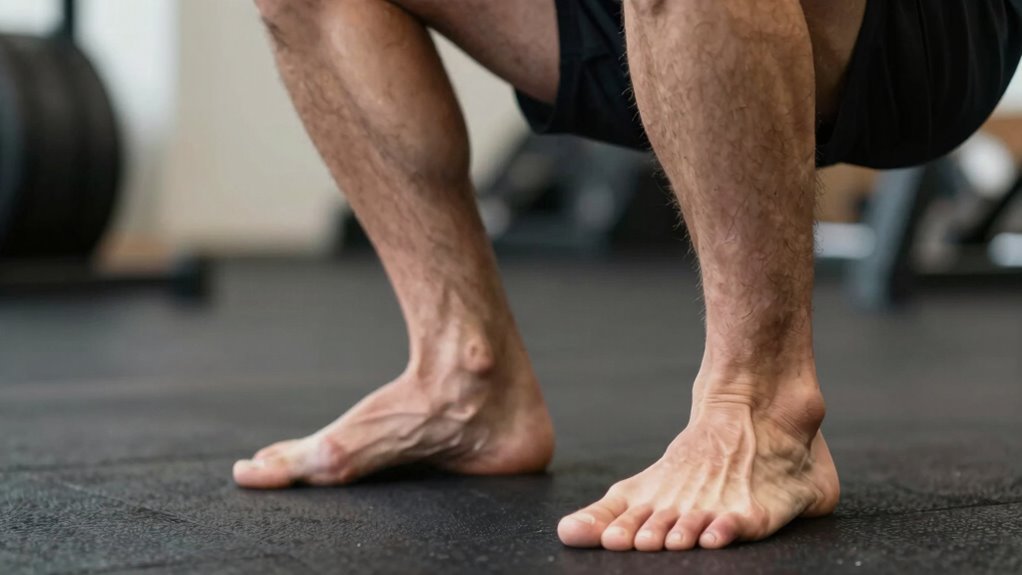
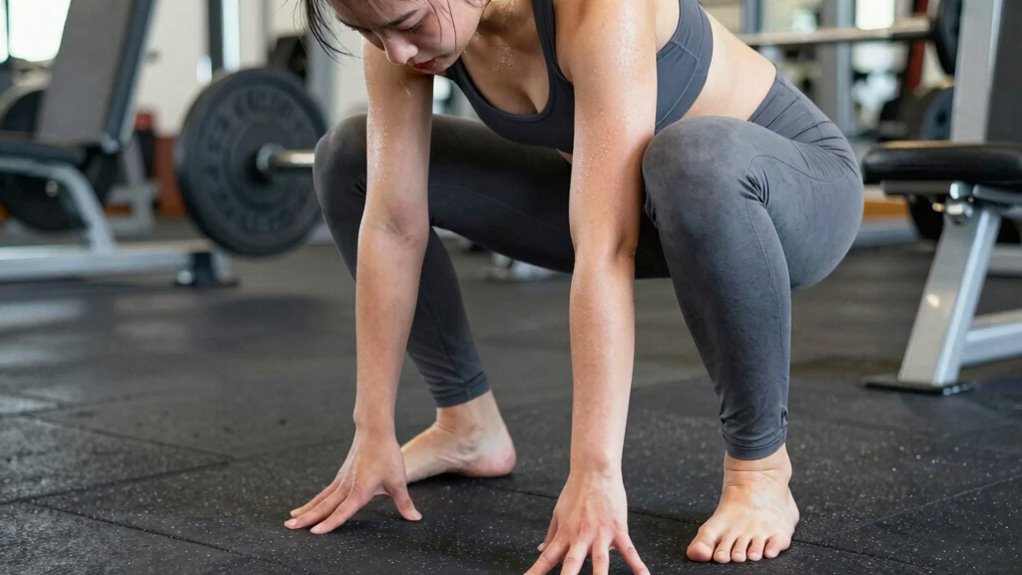
If you struggle with stiff ankles, performing squats can feel frustrating or even painful. Lack of ankle mobility often limits your ability to squat deeply, making the movement uncomfortable and reducing its effectiveness. When your ankles don’t bend enough, you might find yourself leaning forward excessively or stopping short of a full squat. Improving ankle mobility is essential to increase your squat depth and make the exercise smoother and safer. Fortunately, small adjustments and targeted stretches can make a big difference.
First, focus on ankle mobility exercises that loosen up the joint. Simple movements like ankle circles or dorsiflexion stretches help loosen tight muscles and tendons around your ankle. You can do ankle stretches by kneeling with one foot forward and gently pushing your knee over your toes, feeling the stretch in your calf and ankle. Consistently practicing these stretches daily can gradually increase your ankle flexibility, allowing you to squat deeper comfortably.
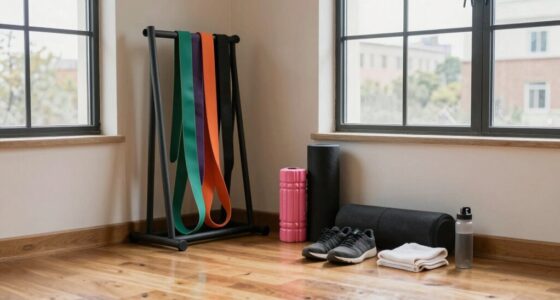
Another effective approach is incorporating foam rolling or massage to release tension in your calves and Achilles tendons. Tight calves can restrict ankle movement, so relaxing these muscles creates more room for your ankle joint to move freely. Once you’ve loosened the muscles, try gentle ankle dorsiflexion drills—where you lean forward over your toes in a controlled manner—to further enhance mobility.
When you’re ready to work on your squat, start with partial squats or box squats using a sturdy chair or box behind you. These modifications help you maintain proper form while preventing overextension of your ankles. As your ankle mobility improves, you’ll notice that you can lower yourself further without compromising your balance or form. Remember to keep your heels flat on the ground throughout the movement, as lifting them indicates limited ankle flexibility.
Pay attention to your foot positioning during squats. Widening your stance slightly and pointing your toes outward can sometimes ease the strain on stiff ankles and allow for greater depth. Keep your core engaged and chest up to support your spine, but don’t push into pain. Progress gradually, and avoid forcing your ankles into uncomfortable positions, which can cause injury.
Ultimately, increasing your ankle mobility takes consistent effort. With patience and dedicated stretching, you’ll find yourself able to squat deeper, feeling more stable and confident in your movement. As your ankles loosen up, you’ll release better squat depth, making your workouts more effective and enjoyable. Remember, small improvements in ankle flexibility translate into significant gains in your overall squat performance. Additionally, incorporating mobility drills into your routine can accelerate progress and prevent injury.

Yes4All High-Density EPP Half Round Back Roller Foam, Exercise Foam Roller for Yoga, Pilates & Stretching – 12, 18, 24, 36 inch
FIRM & DURABLE SUPPORT: Made of high-density EPP foam, this half roller provides steady support for advanced users;…
As an affiliate, we earn on qualifying purchases.
As an affiliate, we earn on qualifying purchases.
Frequently Asked Questions
Can Ankle Stiffness Improve Naturally Over Time?
Yes, ankle stiffness can improve naturally over time if you consistently work on your ankle mobility. Gentle stretching and mobility exercises help loosen tight tissues and increase flexibility, leading to better movement. Regularly incorporating these exercises into your routine encourages natural improvement, making squatting easier and safer. Stay patient and persistent, and you’ll likely notice gradual progress as your ankles become more mobile without needing invasive interventions.
Are There Specific Stretches for Ankle Flexibility?
Imagine your ankles opening like blooming flowers, gaining the flexibility you need. You can improve ankle mobility with specific stretches like ankle circles, calf stretches, and dorsiflexion exercises. Incorporate these into your stretching routines daily, and you’ll notice your ankles becoming more supple. Consistent stretching helps break down stiffness, making squats smoother and more comfortable. Embrace the process, and soon you’ll feel your ankles moving freely, empowering your entire workout.
How Do Ankle Issues Affect Overall Squat Form?
Limited ankle mobility can markedly impact your squat form by reducing your squat depth and causing you to compensate elsewhere, which may lead to injury. When your ankles are stiff, you might lean forward more or lift your heels, compromising stability. Improving ankle mobility allows you to squat deeper with proper alignment, enhancing performance and preventing strain. Focus on stretching and strengthening exercises to optimize your ankle flexibility for safer, more effective squats.
Is Professional Therapy Necessary for Stiff Ankles?
Professional therapy isn’t always necessary for stiff ankles, but it can be highly beneficial. If your stiffness persists despite stretching and mobility exercises, consider consulting a specialist. They might recommend physical therapy to improve flexibility or, in some cases, discuss ankle surgery options if structural issues exist. Investing in professional guidance helps guarantee you address the root cause safely, ultimately improving your squat form and reducing injury risk.
What Are the Risks of Ignoring Ankle Stiffness?
Ignoring ankle stiffness is like leaving a door slightly ajar—it can lead to uneven strain on your joints, risking injuries and reduced ankle mobility over time. You might find yourself compensating during movements, which puts extra stress on knees and hips. Without addressing stiffness, you risk limited range of motion, increased injury chances, and long-term joint deterioration. Prioritizing ankle health now keeps your movement smooth and injury-free down the line.

comness Foot and Calf Stretcher-Stretching Strap For Plantar Fasciitis, Heel Spurs, Foot Drop, Achilles Tendonitis & Hamstring. Yoga Foot & Leg Stretch Strap. (Black)
Alleviate pain effectively: The foot and calf stretcher helps improve blood circulation by stretching the plantar fascia and…
As an affiliate, we earn on qualifying purchases.
As an affiliate, we earn on qualifying purchases.
Conclusion
If your ankles feel too stiff to squat properly, it’s tempting to think flexibility alone is the answer. However, strength and mobility often go hand in hand. Improving ankle mobility through targeted exercises can make a real difference, but consistent practice and proper technique are key. Don’t just rely on stretching—invest in strengthening those muscles too. With patience and dedication, you’ll find your squat improves, proving that both mobility and strength are essential for progress.

diputox Pilates Ring Kit for Women, Pilates Equipment Accessories, Home Workout Set with Magic Circle, Mini Exercise Ball, Ankle Resistance Bands & Yoga Socks, for Fitness, Toning & Better Me Gifts
Harness the Power of Pilates at Home: Elevate your at-home workouts with this Pilates Ring Kit, thoughtfully curated…
As an affiliate, we earn on qualifying purchases.
As an affiliate, we earn on qualifying purchases.

Resistance Bands, Professional Exercise Bands, Physical Therapy Bands for Strength Training, Yoga, Pilates, Stretching, Recovery, Stretch Elastic Band for Working Out, Workout Bands for Home Gym
Upgrade Exercise Band: Made of high quality TEP material, latex free, skin friendly, odorless, smooth and non-sticky surface,…
As an affiliate, we earn on qualifying purchases.
As an affiliate, we earn on qualifying purchases.