
When you don’t want to push your body too hard, opt for low-impact active rest activities like gentle walking, relaxed cycling, or light swimming. Engaging in yoga or stretching helps improve flexibility and relax muscles, while foam rolling can ease tension. Focus on enjoyable movements that boost circulation without strain. These strategies support recovery and keep you active without overexerting yourself—continue exploring more ideas for effective active rest.
Key Takeaways
- Engage in gentle walking outdoors or indoors to promote circulation without overexertion.
- Try low-impact activities like swimming or water aerobics to support recovery and joint relief.
- Incorporate relaxing yoga or stretching routines to improve flexibility and reduce muscle tension.
- Use foam rolling and deep breathing exercises to enhance blood flow and promote relaxation.
- Participate in recreational sports or hobbies that involve light movement for mental and physical refreshment.
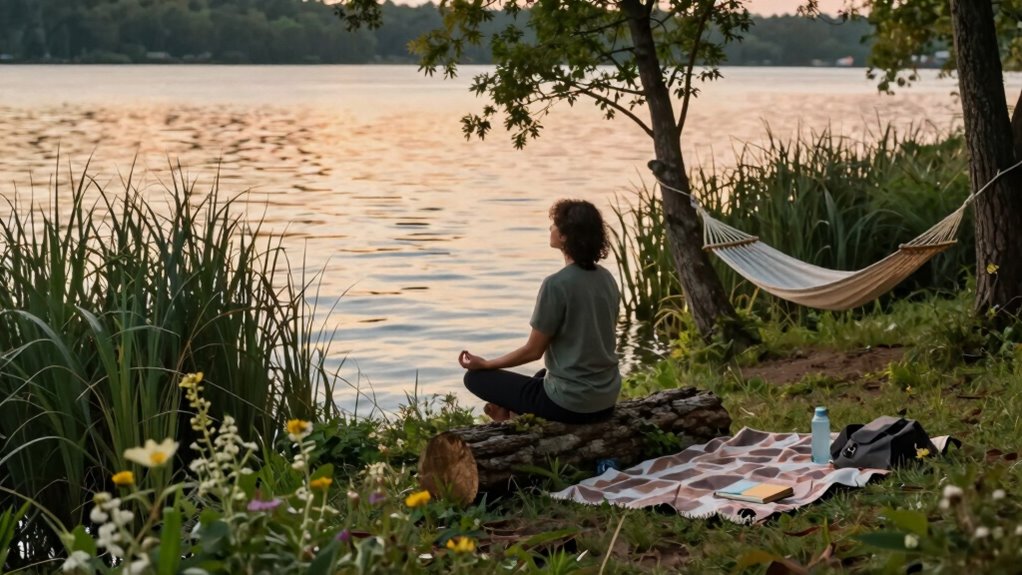
Taking regular breaks from intense workouts is essential for recovery, but that doesn’t mean you have to stay inactive. Instead, you can incorporate active rest ideas that promote healing while still keeping your body moving. Active rest involves engaging in recovery techniques that help your muscles repair, reduce soreness, and prevent stiffness without the strain of a full workout. One of the best ways to do this is through leisure activities that are gentle, enjoyable, and low-impact. These activities allow you to stay active without overexerting yourself, giving your body the chance to recover effectively.
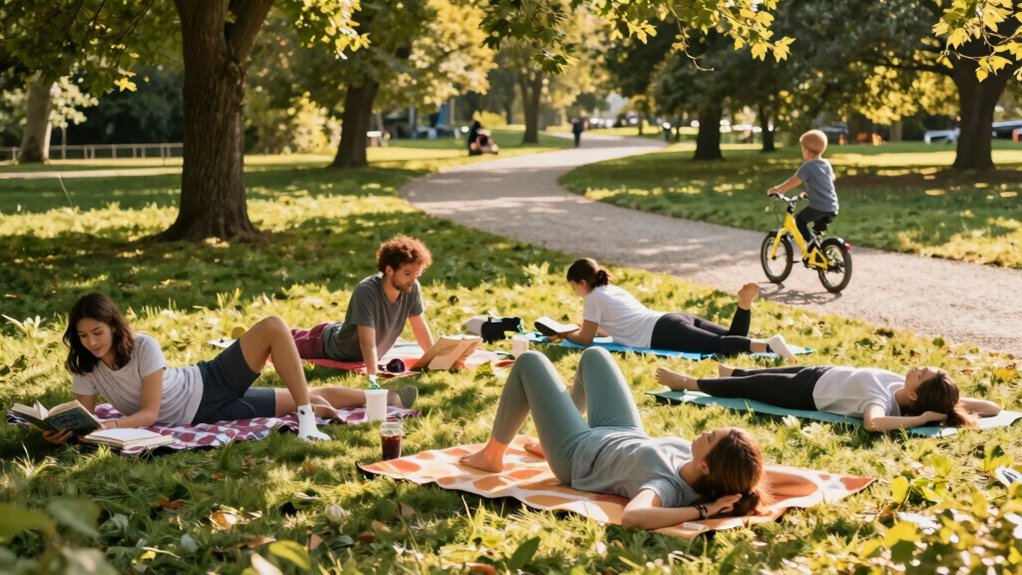
Light walking is an excellent active rest option. It stimulates blood flow, which delivers nutrients to your muscles and helps flush out metabolic waste from previous workouts. You don’t need to walk far or fast; a leisurely stroll around your neighborhood, a park, or even inside your home can do the trick. Cycling at a relaxed pace, either outdoors or on a stationary bike, also provides gentle movement that promotes recovery. It’s a low-impact activity that keeps your joints healthy and muscles engaged without causing additional fatigue.
Gentle walking or cycling boosts recovery by increasing circulation without overexertion.
Swimming is another fantastic leisure activity to incorporate into your active rest days. The buoyancy of water reduces pressure on your joints, making it an ideal way to stay active while allowing your body to recover. Swimming laps at an easy pace or even doing light water aerobics can enhance circulation and loosen tight muscles. Similarly, practicing yoga or stretching routines helps improve flexibility and relax tense muscles, aiding in recovery. These activities focus on controlled movements and deep breathing, which are calming and restorative.
If you prefer something more social, consider recreational sports that don’t require intense effort. Playing a casual game of tennis, golf, or even going for a hike can serve as active rest, providing a sense of enjoyment and mental refreshment alongside physical benefits. The key is to keep the intensity low and focus on enjoying the activity rather than pushing your limits.
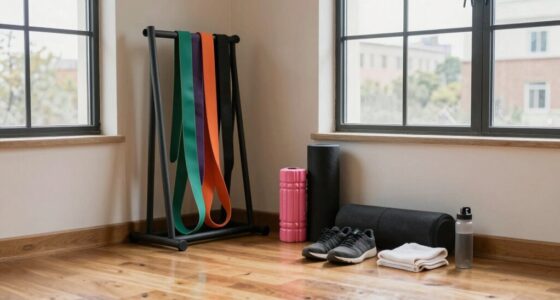
Additionally, using recovery techniques like foam rolling** can help release muscle tension and improve blood flow, further supporting your body’s healing process. Ultimately, the goal of active rest is to give your body a break while maintaining movement. It’s about listening to your body and choosing leisure activities that feel good and support your recovery. Incorporating recovery techniques like gentle stretching, foam rolling, or light aerobic exercises can make a significant difference. These strategies help you bounce back quicker, reduce the risk of injury, and keep your motivation high for future training sessions**. So, next time you feel like skipping the gym, opt for these active rest ideas—you’ll be surprised how effective and enjoyable recovery can be.
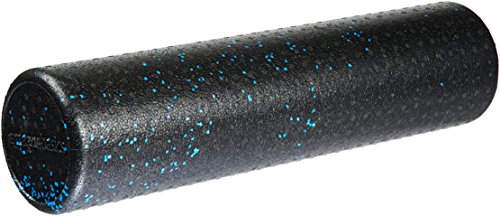
Amazon Basics High Density Foam Roller for Exercise and Recovery, 24 Inches, Blue Speckled
High-density foam roller in Blue Speckled
As an affiliate, we earn on qualifying purchases.
As an affiliate, we earn on qualifying purchases.
Frequently Asked Questions
How Do I Know if I Need Active Rest or Complete Rest?
You’ll know if you need active rest or complete rest when your muscles feel excessively sore or you’re mentally drained. If muscle recovery is slow and you’re mentally exhausted, opt for complete rest to fully recharge. However, if you feel a bit tired but still motivated, active rest with light activities like walking or stretching can give you a mental refresh without hindering recovery. Listen to your body’s signals.
Can Active Rest Help Improve My Athletic Performance?
Like Icarus, you can soar higher by balancing effort and recovery. Active rest helps improve your athletic performance by fostering muscle recovery and offering a mental refresh. When you engage in low-intensity activities, you give your body a chance to heal while keeping your mind engaged. This strategy enhances overall performance, prevents burnout, and prepares you for more intense workouts, ultimately helping you reach new heights in your athletic journey.
What Are Signs I Should Switch From Active Rest to Training?
You should switch from active rest to training when you feel mentally ready, energized, and your recovery nutrition has replenished your energy stores. If you notice improved mood, less fatigue, and motivation returning, it’s a good sign to get back to your routine. Confirm you’re mentally relaxed and your body feels fresh. Listening to these cues helps prevent overtraining and keeps your progress steady.
Is Active Rest Suitable for Injury Recovery?
Yes, active rest can be suitable for injury recovery, but only if you’re careful. It helps with injury prevention and mental recovery by keeping you moving without overloading your body. However, pushing through pain isn’t smart; always listen to your body and consult a professional. If done right, active rest speeds healing, reduces stiffness, and keeps your mind engaged—making recovery smoother and more effective.
How Does Active Rest Differ From Passive Rest?
Active rest differs from passive rest because it involves engaging in light activities that promote recovery, like walking or stretching, rather than complete inactivity. You actively use recovery strategies and incorporate workout variations to stay loose and avoid stiffness. While passive rest means taking a break with minimal movement, active rest keeps your body moving gently, helping your muscles recover faster and preparing you to return to more intense training.

Amazon Basics 1/2 Inch Extra Thick Exercise Yoga Mat with Carrying Strap for Home Workouts and Fitness, 74" x 24", Black
Extra thick, cushy floor mat in Black for yoga, gym, and everyday exercise
As an affiliate, we earn on qualifying purchases.
As an affiliate, we earn on qualifying purchases.
Conclusion
Just like the hero taking a well-deserved break after a long quest, giving your body active rest keeps you sharp and ready for the next adventure. Remember, even superheroes need downtime to recharge their powers. So, next time you’re tempted to skip training altogether, consider gentle activities that refresh your mind and muscles. Embrace the balance, and you’ll return stronger—because sometimes, the greatest progress comes from knowing when to pause and breathe.

beautyin Women Bathing Suit One Piece Water Aerobic Lap Swim Training Swimsuit
Athletic boyleg swimsuit offers a moderate coverage and a modest look for swimming, racing, training, surfing and so…
As an affiliate, we earn on qualifying purchases.
As an affiliate, we earn on qualifying purchases.
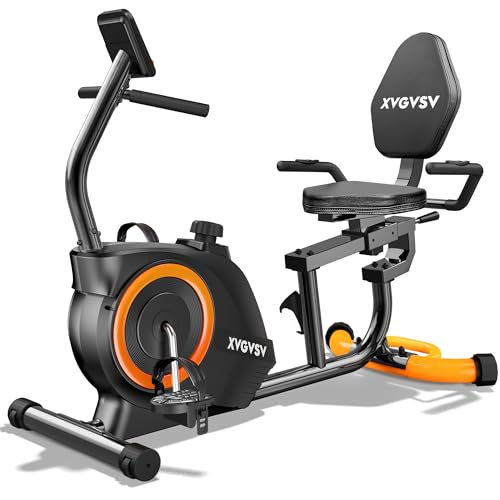
Recumbent Exercise Bike for Home Use, Quiet Recumbent Stationary Bikes for Adults & Seniors, 16-Level Resistance, Adjustable Seat, Supports 400LB, Pulse Sensors & LCD Display
【Ergonomic Design That Adapts to You】Experience personalized comfort with this recumbent exercise bike featuring a plush padded seat…
As an affiliate, we earn on qualifying purchases.
As an affiliate, we earn on qualifying purchases.