
To protect your bars, plates, and hardware from rust, start by regularly cleaning and thoroughly drying all surfaces after use. Apply protective coatings like paint, sealants, or rust inhibitors, and store equipment in a dry, well-ventilated area with humidity control. Use desiccants and moisture barriers for long-term storage, and inspect equipment often for signs of rust or damage. Proper maintenance and smart storage help extend your equipment’s lifespan—keep going to discover more effective tips.

Get workout gear delivered free with Prime
- Fast, free delivery on millions of items
- Prime Video, Amazon Music and more included
- Member-only deals all year
Key Takeaways
- Clean and dry equipment thoroughly after use to remove dirt, sweat, and moisture that promote rust formation.
- Apply high-quality protective coatings like paint, sealants, or epoxy to create a moisture-resistant barrier on metal surfaces.
- Store bars, plates, and hardware in dry, well-ventilated areas with controlled humidity, using dehumidifiers or moisture barriers.
- Regularly inspect and remove any rust spots early using wire brushes or rust removers, then reapply protective coatings.
- Use rust inhibitors or desiccants during long-term storage to prevent moisture contact and extend equipment lifespan.
gym equipment rust inhibitor spray
As an affiliate, we earn on qualifying purchases.
As an affiliate, we earn on qualifying purchases.
What Is Rust and Why Does It Hurt Your Gym Equipment?
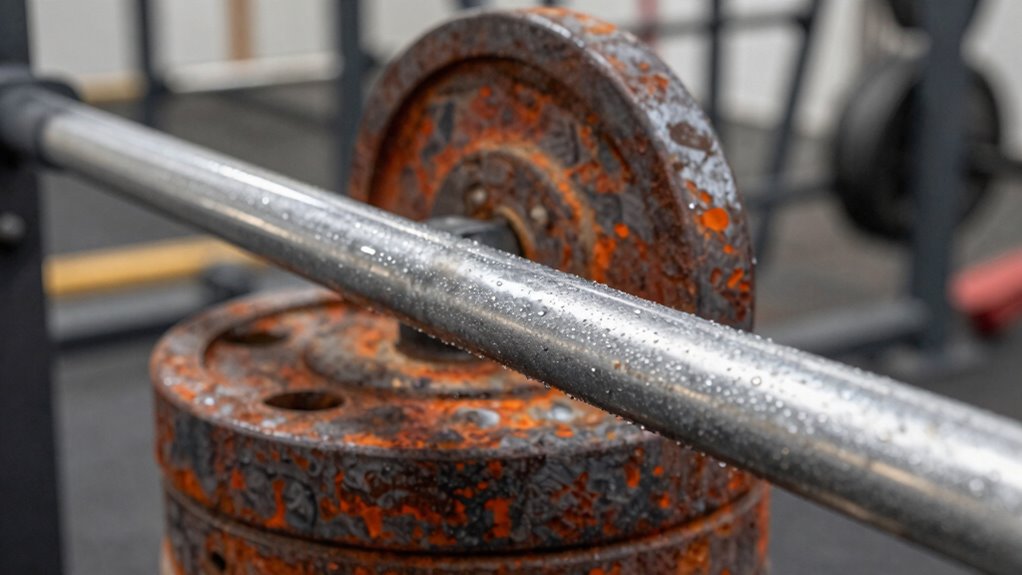
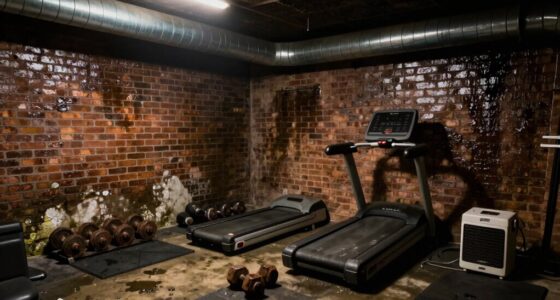
Have you ever wondered what exactly rust is and how it damages your gym equipment? Rust formation occurs when iron or steel reacts with moisture and oxygen, creating a reddish-brown corrosion. This process weakens the metal, leading to equipment deterioration over time. When rust develops on bars, plates, or hardware, it compromises their structural integrity and safety. As rust spreads, it can cause surfaces to become rough or pitted, making equipment uncomfortable or unsafe to use. The more exposure your equipment has to moisture and air, the faster rust forms. Regular maintenance, including preventive measures, can significantly slow down this damaging process. Using protective coatings and appropriate storage techniques can further reduce exposure to elements that accelerate rust formation. Proper ventilation and climate control also play a crucial role in preventing rust, especially in humid environments. This ongoing deterioration not only shortens the lifespan of your gym gear but also increases the risk of injuries. Understanding rust’s impact helps you see why preventing it is essential for maintaining safe, durable equipment. Additionally, sound vibrations are believed to promote cellular regeneration and overall health, which can be a helpful consideration in preventing corrosion through proper maintenance. Recognizing the importance of environmental factors can empower you to take better steps in safeguarding your equipment from rust.
As an affiliate, we earn on qualifying purchases.
Getting Your Equipment Ready to Prevent Rust
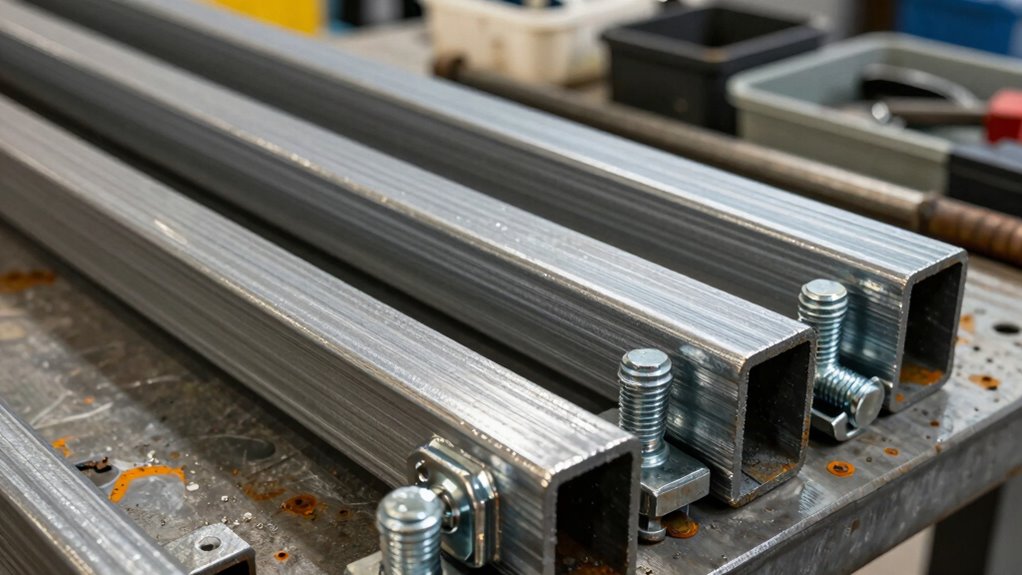
Before you can effectively prevent rust, it’s important to prepare your gym equipment properly. Proper equipment maintenance is key to rust prevention and prolonging the lifespan of your gear. Start by inspecting all surfaces for dirt, moisture, or existing rust. Then, follow these steps:
- Clean thoroughly with a damp cloth and mild detergent to remove debris.
- Dry all parts completely to prevent moisture buildup.
- Remove any rust spots with a wire brush or rust remover.
- Lubricate moving parts with a rust-inhibiting oil to create a protective barrier.
- Regular inspections and maintenance help prevent corrosion and ensure your equipment remains in optimal condition. Additionally, applying protective coatings such as paint or specialized rust inhibitors can provide an extra layer of defense against moisture and humidity. Incorporating regional flavors and techniques in your maintenance routine can also help address specific environmental challenges that contribute to rust formation. Conducting routine corrosion assessments allows you to identify problem areas early and take targeted action. These steps help guarantee your equipment is ready for protective coatings and reduce the risk of rust forming, making your maintenance routine more effective.
gym equipment protective coating
As an affiliate, we earn on qualifying purchases.
As an affiliate, we earn on qualifying purchases.
Applying Coatings and Sealants to Protect Metal Surfaces
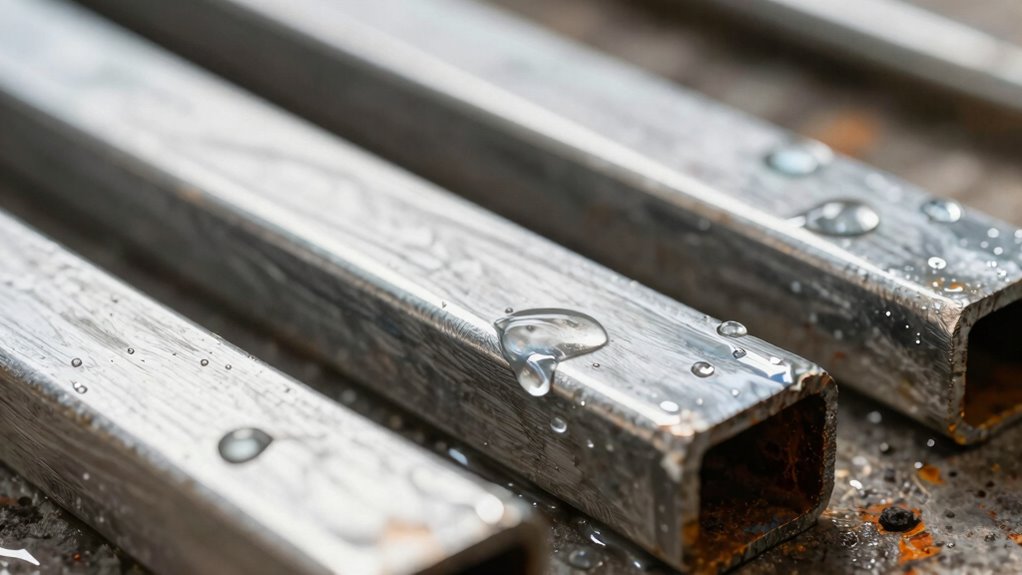
Applying coatings and sealants is a crucial step in protecting your metal surfaces from rust. These barriers enhance metal bonding, preventing moisture from reaching the surface. Choose high-quality coatings known for their durability to guarantee long-lasting protection. Proper application maximizes coating durability and maintains metal integrity. To help, here’s a quick comparison:
| Coating Type | Benefits |
|---|---|
| Paints & Enamels | Easy to apply, available in various colors |
| Sealants & Varnishes | Provide a flexible, waterproof layer |
| Powder Coatings | Superior durability, resistant to corrosion |
| Epoxy Coatings | Excellent metal bonding, high durability |
Select the right coating based on your environment and metal type to enhance rust prevention effectively. Understanding corrosion resistance can help you choose the most suitable protective coating for your needs. Additionally, selecting coatings with corrosion resistance properties is essential for long-term protection. Using proper surface preparation techniques ensures the coating adheres properly and maximizes its effectiveness. Incorporating coating application techniques can further improve the longevity of your protective layer.
As an affiliate, we earn on qualifying purchases.
How to Clean and Maintain Your Equipment to Keep Rust Away
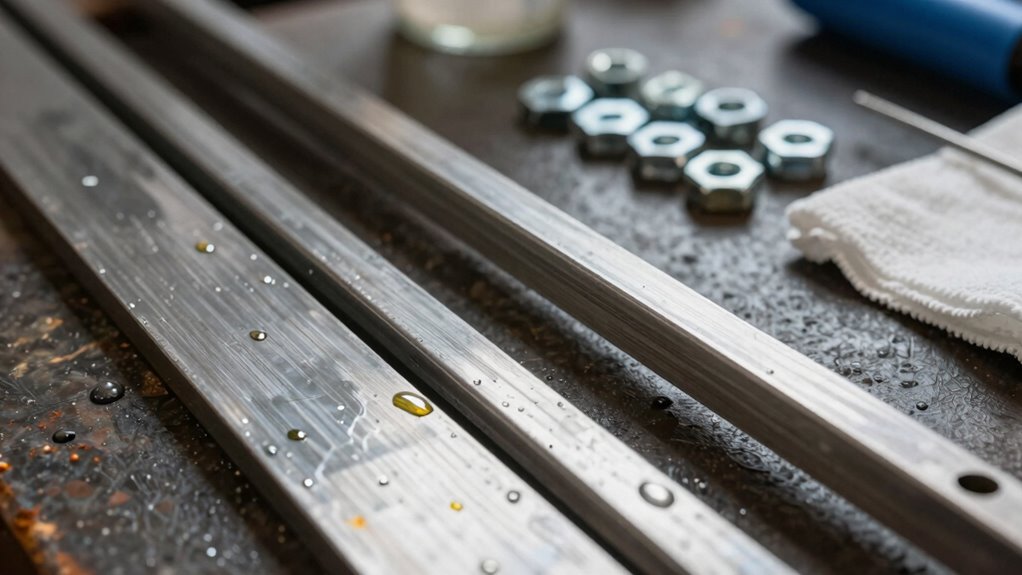
Keeping rust at bay starts with regular cleaning to remove dirt and moisture. Make sure to dry your equipment thoroughly afterward to prevent water from causing corrosion. Applying protective coatings after cleaning adds an extra layer of defense against rust formation. For optimal protection, consider using rust prevention techniques to further safeguard your equipment from corrosion. Incorporating proper storage methods can also significantly reduce exposure to humid environments that promote rust development. Additionally, using air purifiers to control humidity levels in storage areas can help prevent rust by maintaining a dry environment.
Regular Cleaning Routines
Regular cleaning is essential to prevent rust from forming on your equipment. Establishing consistent cleaning schedules helps catch issues early and keeps everything in top condition. During your routine, perform regular equipment inspections to identify any signs of rust or damage. Here are four key steps to maintain your gear:
- Follow a set cleaning schedule, ideally after each use or weekly.
- Use appropriate cleaning agents that won’t harm the metal surface.
- Wipe down all surfaces thoroughly to remove sweat, dirt, and moisture.
- Inspect for rust spots or corrosion, and address them immediately.
- Incorporate preventative maintenance into your routine to further protect your equipment from rust. Additionally, understanding metal protection techniques can enhance your efforts to keep equipment rust-free.
Sticking to these routines ensures your equipment stays rust-free and performs at its best, saving you money and extending its lifespan.
Proper Drying Techniques
Proper drying techniques are essential for preventing rust because moisture left on equipment can quickly lead to corrosion. To effectively control moisture, you should thoroughly dry your bars, plates, and hardware immediately after cleaning. Use clean, absorbent towels or air dryers to remove surface water, paying close attention to joints and crevices where moisture can hide. Avoid leaving equipment damp or damp spots, as these promote rust formation. Implement consistent drying techniques, such as wiping down equipment in a well-ventilated area or using compressed air for hard-to-reach areas. Proper moisture control through diligent drying helps maintain the integrity of your equipment and extends its lifespan, keeping rust at bay and ensuring safe, reliable performance. Additionally, understanding pet storm-anxiety routines can help you prevent unforeseen issues that might lead to hurried or improper equipment handling, further protecting your tools from rust. Regular inspection and maintenance also play a crucial role in detecting early signs of corrosion and addressing them promptly, which is part of preventive maintenance strategies to prolong equipment life. Being aware of environmental factors such as humidity levels can also significantly improve rust prevention efforts. Incorporating dehumidifiers or climate control in storage areas is an effective way to reduce moisture and prevent rust buildup. Implementing proper storage practices, such as keeping equipment in dry, well-ventilated areas, further reduces the risk of moisture accumulation that can cause rust.
Protective Coatings Application
Applying protective coatings is a crucial step in preventing rust, as these barriers shield your equipment from moisture and environmental elements. To guarantee effective metal bonding and maximize corrosion resistance, follow these key steps:
- Clean the surface thoroughly to remove dirt, grease, and loose rust.
- Sand or abrade the metal to create a smooth, rough surface for better coating adhesion.
- Apply a primer designed for metal surfaces to enhance bonding and corrosion resistance.
- Use a high-quality protective coating, such as paint or sealant, evenly across the surface.
- For optimal results, consider using airless paint spraying techniques to ensure an even and efficient application tips for airless spraying.
Proper application ensures the coating adheres firmly, providing a durable barrier against rust. Regular inspection and touch-ups keep your equipment protected, extending its lifespan and maintaining peak performance. Additionally, coating durability can be improved by selecting coatings with stronger adhesion properties and weather resistance. Utilizing protective coatings with superior corrosion resistance helps safeguard your equipment against harsh environmental conditions and prolongs its useful life. Incorporating these protective measures into your maintenance routine is essential for preventing rust damage and ensuring long-term durability of your equipment.
Smart Storage Tips to Minimize Moisture and Humidity
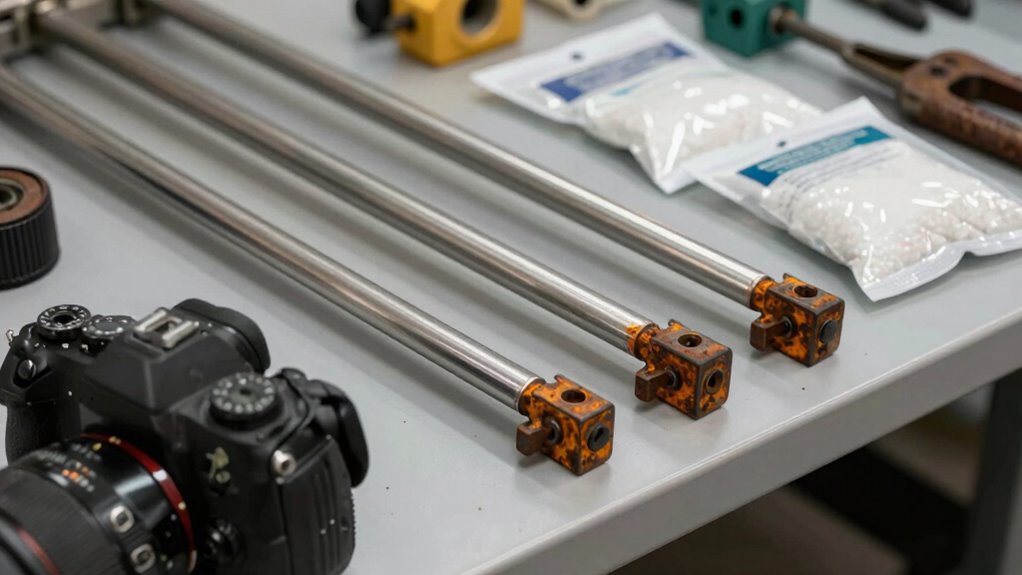
To effectively prevent rust, controlling moisture and humidity in your storage areas is essential. Proper dehumidifier placement helps maintain ideal humidity levels, reducing the risk of corrosion on bars, plates, and hardware. Position dehumidifiers in central locations, away from walls or clutter, to maximize airflow and efficiency. Additionally, using moisture barriers such as plastic sheets or sealants around storage containers prevents dampness from seeping in. These barriers are especially effective in basements or areas prone to high humidity. Keep the environment well-ventilated and regularly monitor humidity levels with a hygrometer. By controlling moisture sources and maintaining consistent conditions, you’ll considerably reduce rust formation, ensuring your equipment stays protected and in top condition over time.
Using Rust Inhibitors and Desiccants for Long-Term Protection
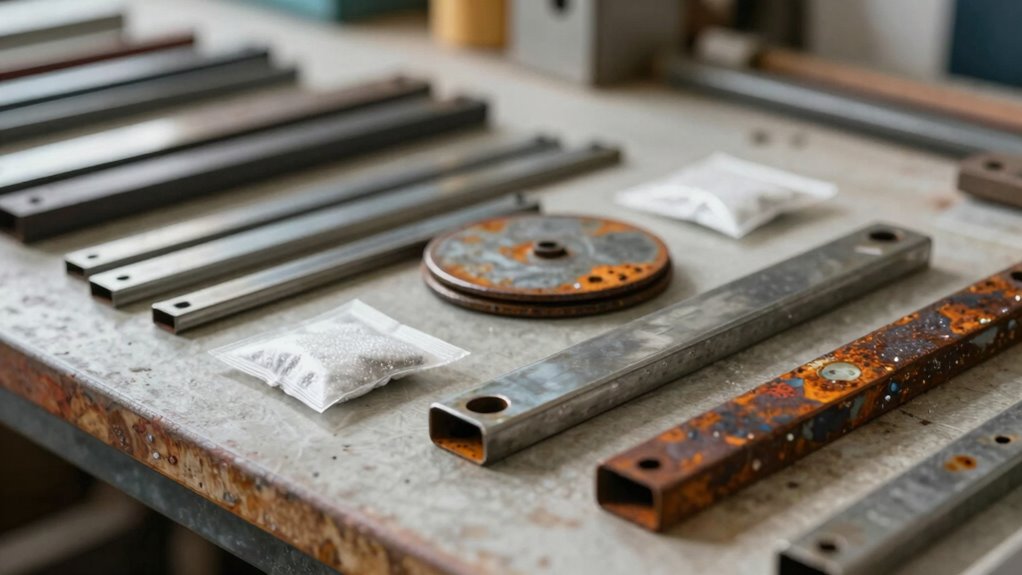
Using rust inhibitors and desiccants can substantially extend the protection of your equipment during long-term storage. Rust inhibitors create a protective film on surfaces, preventing moisture from causing corrosion. Desiccants utilization helps absorb residual humidity, keeping the environment dry. To maximize effectiveness:
- Apply a high-quality rust inhibitor to all metal surfaces before storage.
- Use desiccants packs in sealed containers or cabinets to reduce moisture.
- Regularly check desiccants and replace them when they become saturated.
- Store items in airtight containers with desiccants to maintain a dry environment.
This combination ensures your bars, plates, and hardware stay rust-free, even during extended storage periods. Proper rust inhibitors and desiccants utilization are key to long-term protection.
Common Mistakes That Lead to Rust and How to Avoid Them
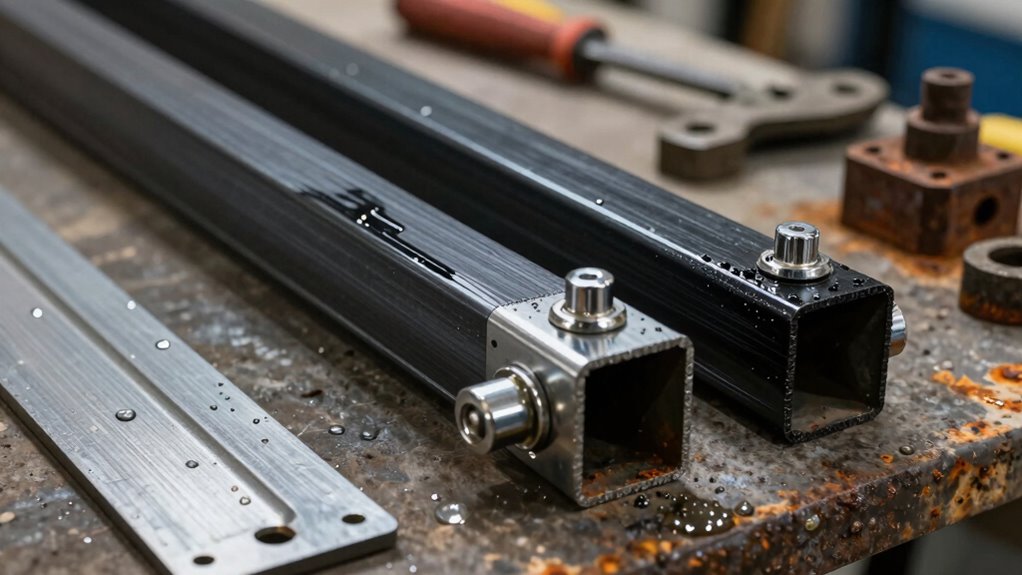
One common mistake is storing items improperly, which exposes them to moisture and accelerates rust. Ignoring regular maintenance allows rust to develop unnoticed and worsen over time. To prevent these issues, you need to use proper storage techniques and stay consistent with upkeep.
Improper Storage Techniques
Improper storage techniques are a common cause of rust, often because moisture and air are allowed to contact metal surfaces for extended periods. When you leave bars, plates, or hardware exposed, you risk developing corrosion spots and rusty bolts. To prevent this, consider these tips:
- Store items in a dry, climate-controlled environment.
- Keep metal parts in sealed containers or plastic bags with desiccants.
- Avoid stacking heavy items directly on metal surfaces, which can trap moisture.
- Regularly inspect stored hardware for signs of rust or corrosion spots.
Proper storage minimizes contact with humidity and air, protecting your equipment from rust and extending its lifespan. Taking these simple steps helps you avoid costly repairs caused by corrosion and keeps your hardware in *ideal* condition.
Ignoring Regular Maintenance
Neglecting regular maintenance allows moisture and dirt to accumulate on metal surfaces, increasing the risk of rust formation. Without routine checks and cleaning, rust spots can develop unnoticed, accelerating corrosion causes. Dirt and moisture act as breeding grounds for rust, especially in hard-to-reach areas. Failing to remove these elements lets rust eat through the metal, weakening its structure over time. Regular inspections help you identify early signs of corrosion causes before they become serious problems. Applying protective coatings or lubricants periodically helps keep moisture at bay. Ignoring maintenance is a common mistake that speeds up rust development, making repairs more costly and time-consuming. Consistent upkeep is essential to extend the lifespan of your equipment and prevent rust spots from compromising performance.
How to Restore Rusted Equipment and Prevent Future Damage
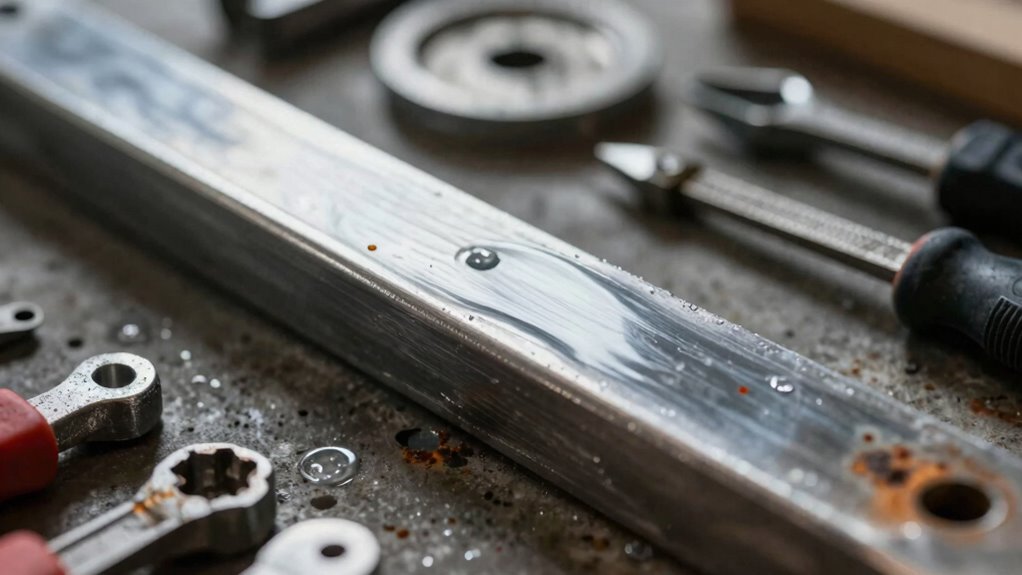
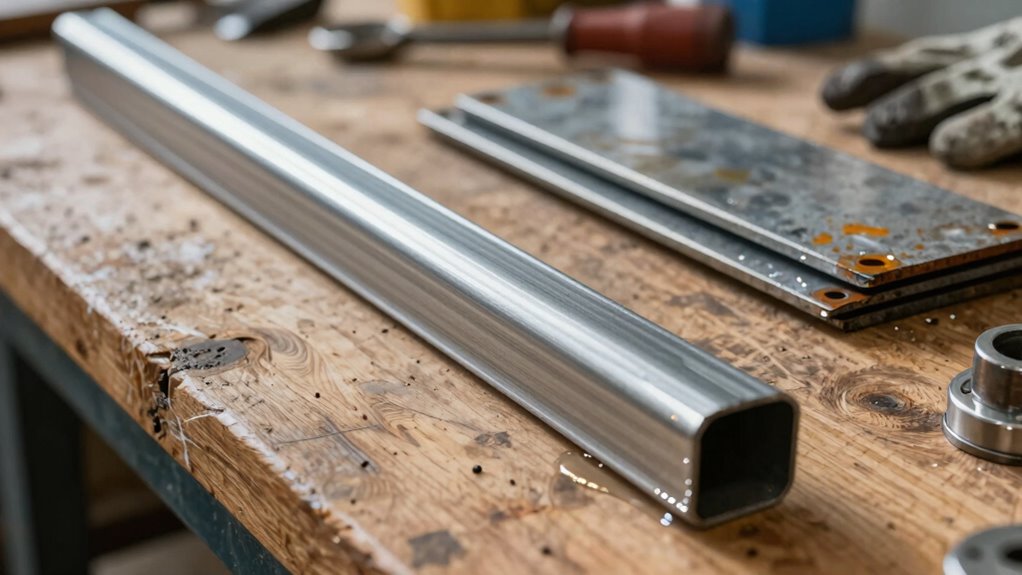
When dealing with rusted equipment, quick action can prevent further deterioration and restore functionality. Effective rust removal is key to equipment restoration. Start by cleaning the affected area with a wire brush or steel wool to remove loose rust. Next, apply a rust converter or penetrating oil to neutralize remaining rust and prepare the surface for treatment. For stubborn rust, consider using sanding or grinding tools. Once clean, protect your equipment with a rust inhibitor or paint to prevent future damage. Regular maintenance, like applying protective coatings and storing equipment properly, is essential for long-term prevention.
- Remove loose rust with a wire brush
- Apply rust converter or penetrating oil
- Sand or grind stubborn spots
- Protect with rust inhibitors or paint
Frequently Asked Questions
What Are the Best Environmental Conditions to Prevent Rust?
To prevent rust, you should keep the environment dry and well-ventilated. Control humidity levels by using dehumidifiers or silica gel packs, which help reduce moisture. Improving ventilation allows fresh air to circulate, preventing dampness buildup that fosters rust. Store bars, plates, and hardware in a cool, dry place, and avoid exposure to water or high humidity environments. These steps keep your equipment in prime condition and rust-free.
How Often Should I Inspect My Gym Equipment for Rust?
You should inspect your gym equipment for rust at least once a month to guarantee safety and longevity. An inspection schedule helps you stay proactive, allowing you to catch rust early through regular rust monitoring. Focus on areas prone to moisture, like joints and seams. By staying consistent with these inspections, you’ll prevent rust buildup and maintain your equipment’s performance and safety over time.
Can Homemade Remedies Effectively Prevent Rust on Heavy-Duty Equipment?
You bet DIY solutions can effectively prevent rust if you get creative! Homemade remedies like applying baking soda paste or coconut oil create a formidable barrier against moisture, boosting rust resistance. While not as foolproof as commercial products, these methods can turn your heavy-duty equipment into an unstoppable fortress. With a little effort and ingenuity, you’ll keep your gear pristine, making rust afraid to even come close!
Are There Specific Coatings Recommended for Different Types of Gym Hardware?
Yes, specific protective coatings are recommended based on material suitability. For metal gym hardware, use rust-resistant options like powder coating or zinc plating, which provide durability and corrosion resistance. For rubber or composite parts, avoid harsh chemicals that could degrade the material. Always choose coatings designed for the specific material, ensuring maximum protection and longevity. Properly applied protective coatings help maintain your equipment’s safety and performance over time.
How Does Humidity Level Affect the Longevity of Gym Equipment Rust Prevention?
Ironically, humidity control is your best friend in fighting rust, yet many overlook it. When humidity levels spike, they accelerate the corrosion cycle, causing equipment to rust faster. Keeping humidity low slows this cycle, extending your gym’s hardware lifespan. You should monitor and regulate humidity to prevent moisture buildup, because a dry environment is your best defense. Without it, even the best coatings can’t fully stop the rust from sneaking in.
Conclusion
Did you know that over 70% of gym equipment damage is caused by rust? By following these prevention tips, you can extend the life of your bars, plates, and hardware. Regular maintenance, proper storage, and protective coatings make all the difference. Taking these simple steps helps avoid costly replacements and keeps your workout gear in top shape. Stay proactive, and your equipment will stay rust-free and ready for every workout.
Halloween Picks
halloween
As an affiliate, we earn on qualifying purchases.