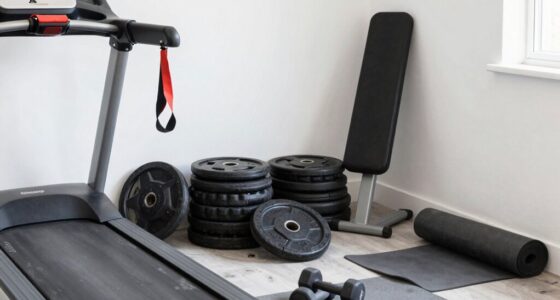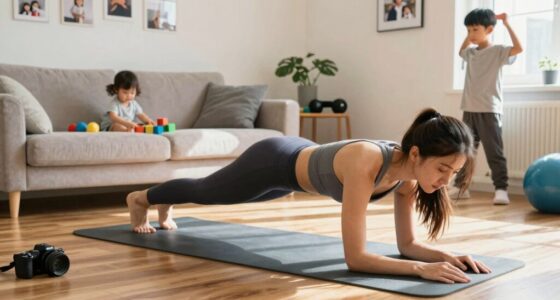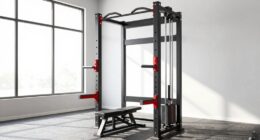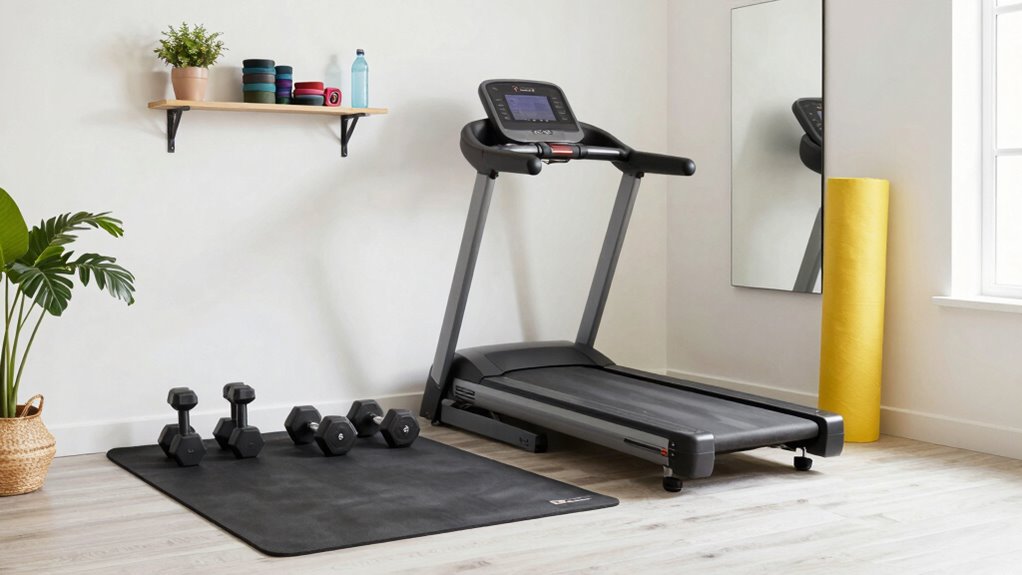

To build a smart home gym, start small by focusing on versatile, essential equipment aligned with your fitness goals. Plan your space carefully, maximizing dual-purpose items and vertical storage to save room. Prioritize quality and safety, avoiding unnecessary gear that clutters your area and busts your budget. As you progress, expand gradually with adaptable equipment that grows with you. Continue exploring these tips to create a practical, motivating workout space without regrets.
Key Takeaways
- Begin with essential, versatile equipment like adjustable dumbbells and resistance bands to save space and budget.
- Set clear fitness goals to guide equipment choices and layout planning for effective workouts.
- Use space-efficient storage solutions and multi-use furniture to maximize your available area.
- Establish a budget, compare quality options, and consider secondhand purchases to avoid overspending.
- Prioritize safety and proper lighting to create an inviting, injury-free environment that motivates consistent workouts.

UNNMIIY Adjustable Dumbbells, 20/30/45/70/90lbs Free Weight Set with Connector,5 in1 Dumbbells Set Used as Barbell, Kettlebells, Push up Stand, Fitness Exercises for Home Gym Suitable Men/Women
5 in 1 Multifunctional Dumbbell Set:With UNNMIIY adjustable dumbbell set, you can get a pair of dumbbells also…
As an affiliate, we earn on qualifying purchases.
As an affiliate, we earn on qualifying purchases.
How to Start Building Your Home Gym
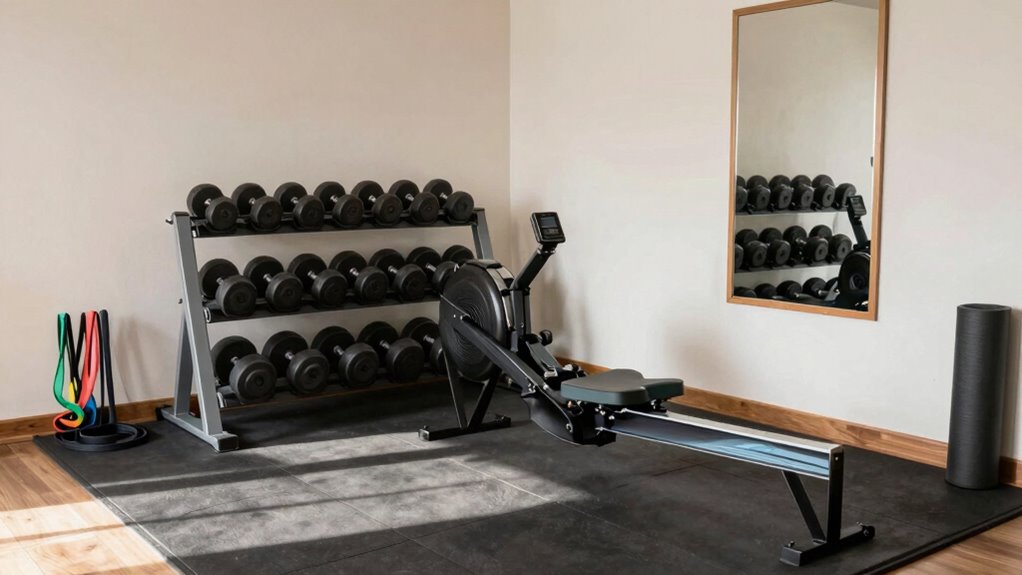
Starting your home gym can seem overwhelming at first, but the key is to plan carefully and set clear priorities. Begin by establishing your fitness goals, which will guide your equipment choices and layout. To stay motivated, incorporate motivational strategies like tracking your workouts and celebrating small wins. Workout tracking helps you monitor progress, stay accountable, and adjust routines as needed. Use a simple notebook, app, or calendar to log each session, noting exercises, reps, and how you feel afterward. This keeps you engaged and focused on your long-term goals. Remember, building a home gym is a marathon, not a sprint. Starting small and using motivational strategies ensures you’ll stay committed and make steady progress without feeling overwhelmed. Incorporating smart financial strategies can also help you allocate your budget wisely and avoid unnecessary expenses as you build your home gym.

WHATAFIT Resistance Bands, Exercise Bands,Resistance Bands for Working Out, Work Out Bands with Handles for Men and Women Fitness, Strength Training Home Gym Equipment
DIFFERENT COLOR ADJUSTABLE RESISTANCE BANDS: The exercise bands come with 5 different resistance level 10lbs, 20lbs, 30lbs, 40lbs…
As an affiliate, we earn on qualifying purchases.
As an affiliate, we earn on qualifying purchases.
Choosing Essential Equipment Based on Your Fitness Goals

Your choice of essential equipment should directly reflect your fitness goals. If you’re aiming for cardio variety, select items like a jump rope, stationary bike, or treadmill to keep workouts engaging. For strength focus, prioritize free weights, resistance bands, or a power rack to build muscle effectively. Use the table below to help decide:
| Goal | Recommended Equipment |
|---|---|
| Cardio Variety | Jump rope, treadmill, rowing machine |
| Strength Focus | Dumbbells, resistance bands, power rack |
| Both | Adjustable dumbbells, kettlebells, versatile stations |
Additionally, understanding the core principles of workout planning can help you create a balanced and effective home gym that adapts as your fitness needs evolve.

Wall Mounted Home Gym Equipment Storage Rack for Resistance Bands, Cable Attachments, Lifting Belts, Jump Ropes and Chains
Strong & Multi-Purpose Storage: Heavy-duty wall mounted gym storage rack designed to hold common workout accessories such as…
As an affiliate, we earn on qualifying purchases.
As an affiliate, we earn on qualifying purchases.
Planning Your Space for a Functional Home Gym Layout

To create a functional home gym, you need to plan your space wisely. Focus on maximizing available area, choosing only essential equipment, and making sure the lighting is bright enough. These steps help you build an efficient and enjoyable workout environment. Additionally, consider how emerging AI technologies can assist in designing and optimizing your gym layout for better motivation and tracking progress.
Maximize Available Space
Maximizing available space is essential for creating a functional home gym that meets your needs without feeling cramped. Focus on space optimization by selecting multi-use equipment and choosing versatile furniture that can serve multiple purposes. Incorporate furniture integration to make the most of your room, such as wall-mounted storage or foldable benches that can be tucked away after workouts. Keep pathways clear to ensure safe movement and easy access to all your gear. Use vertical space for storage solutions like shelves or hooks, freeing up floor area. Avoid clutter by organizing equipment efficiently and choosing compact, streamlined pieces. Additionally, selecting protective accessories like remote car covers can help keep your equipment clean and well-maintained. With thoughtful planning, you can transform even a small area into an effective, comfortable workout zone that maximizes every square inch.
Prioritize Essential Equipment
Focusing on essential equipment guarantees your home gym remains functional without becoming cluttered. Start by identifying top priorities:
- Basic cardio tools like a jump rope or treadmill for effective workouts.
- Strength gear such as dumbbells or resistance bands to build muscle.
- Fitness tracking devices to monitor progress and stay motivated.
Avoid overloading your space with unnecessary items, which can hinder your workout flow. Keep your workout apparel accessible so you’re ready to exercise anytime. Prioritizing these essentials ensures your gym is both practical and motivating. Remember, a well-organized space encourages consistency, while clutter can lead to frustration. Focus on quality over quantity, and gradually add new equipment as your fitness needs evolve. Staying intentional about your choices keeps your home gym functional and enjoyable. Incorporating space planning can help maximize your available area and improve overall usability.
Ensure Adequate Lighting
A well-lit space can make a significant difference in how you experience your home gym. Natural lighting enhances ambient brightness, making workouts more energizing and reducing fatigue. To optimize lighting, consider windows or skylights that maximize sunlight during the day. If natural light is limited, supplement with layered artificial lighting, such as overhead fixtures and task lamps. Use brighter bulbs in areas where detailed movements occur. Keep the following in mind:
| Lighting Type | Benefits | Tips |
|---|---|---|
| Natural Lighting | Boosts mood, reduces energy costs | Position mirrors to reflect sunlight |
| Ambient Brightness | Creates even illumination | Use dimmable fixtures for flexibility |
| Task Lighting | Focused light for specific exercises | Install adjustable lamps near equipment |
This approach ensures your gym remains inviting and functional at any time. Additionally, selecting appropriate lighting fixtures can enhance both safety and aesthetics, contributing to a more motivating workout environment.

Walking Pad Treadmill for Home – Folding Treadmills with Handle Bar Portable Compact Fold up Indoor Foldable Handles Electric Walk Pads Small Spaces Mini Running Quiet Under Bed Office
【Folding Treadmill with Handle Bar】This foldable walking pads functions as a traditional treadmill with handle bar, a foldable…
As an affiliate, we earn on qualifying purchases.
As an affiliate, we earn on qualifying purchases.
Why Starting Small Saves You Time and Money

Starting small when building your home gym allows you to save both time and money by avoiding unnecessary purchases and overcommitment upfront. This approach enhances space efficiency and reduces costs, ensuring you only invest in what you truly need. To maximize your initial setup, consider these benefits:
- Lower initial investment—buy only essential equipment, saving money.
- Flexible layout—a smaller setup is easier to organize and adapt.
- Avoid clutter—prevent overspending on equipment you might not use regularly.
- Incorporating comparative advantage principles can help you focus on the most effective equipment choices for your space and goals.
Selecting Versatile Gear That Can Grow With Your Workout
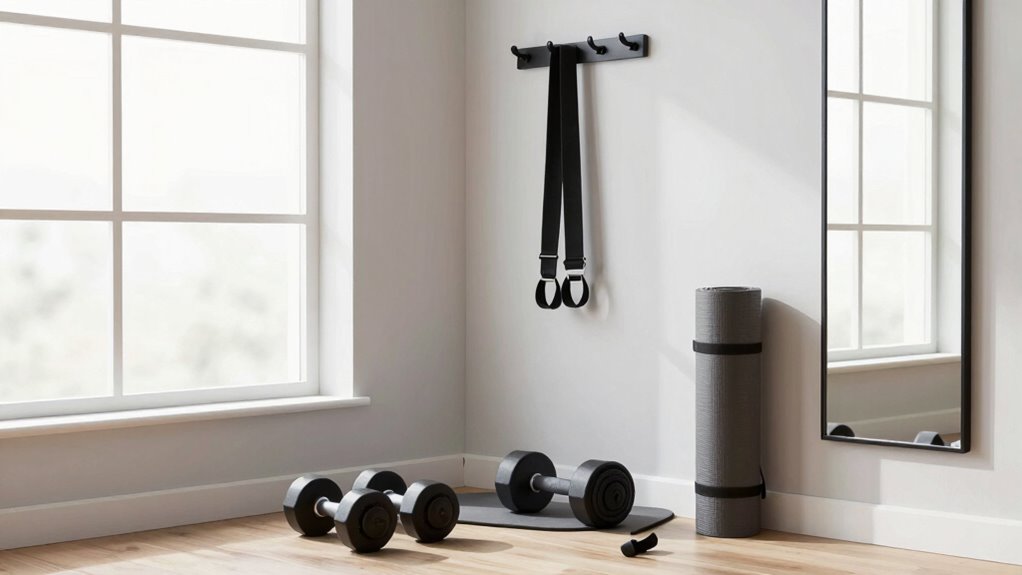
Choosing versatile gear means investing in multi-functional equipment that can serve multiple purposes as your fitness level improves. Look for expandable storage options to keep your space organized as your collection grows. Opt for adjustable workout options so your equipment can adapt to different exercises and intensity levels over time. Additionally, considering the performance cookies used on related websites can help you identify features that enhance user engagement and track your progress effectively.
Multi-Functional Equipment Choices
Opting for multi-functional equipment allows your home gym to adapt and grow with your fitness journey. These versatile pieces serve multiple purposes, saving space and increasing workout variety. Consider equipment like:
- Adjustable dumbbells that replace an entire rack, providing various weights in one compact design.
- Resistance bands with different tension levels, suitable for strength training and mobility exercises.
- A foldable weight bench that can be used for presses, rows, or stored away easily when not in use.
- Selecting equipment that is safe and reliable, ensuring your workouts are effective without risking injury.
Expandable Storage Solutions
To make the most of your versatile equipment, selecting expandable storage solutions guarantees your home gym stays organized as your workout needs evolve. Modular shelving units are a smart choice because they can be rearranged or expanded when your collection grows. These shelves keep your gear accessible and tidy, preventing clutter from piling up. Hidden compartments are another valuable feature, offering discreet storage for smaller items like resistance bands, yoga mats, or accessories. By choosing furniture or storage units with built-in hidden compartments, you maximize space while maintaining a clean look. As your workout routine expands, these adaptable solutions allow you to add or reorganize storage effortlessly, ensuring your gym remains functional and clutter-free without needing a complete overhaul. Incorporating regional flavors and unique pairings can also inspire new ways to organize and enjoy your gear, making your home gym a more engaging space.
Adjustable Workout Options
As your fitness goals evolve, investing in adjustable workout gear guarantees your home gym can grow with you. Adjustable weights are a game-changer, allowing you to modify resistance levels easily. This flexibility supports diverse workout routines without cluttering your space. To maximize your investment, consider:
- Choosing adjustable dumbbells or kettlebells for quick weight changes.
- Opting for a multi-functional power rack that adapts to various exercises.
- Incorporating resistance bands with adjustable tension for versatile workout options.
These versatile pieces enable you to switch between strength training, cardio, and flexibility exercises seamlessly. With adjustable weights and adaptable gear, you won’t outgrow your equipment, making your home gym both cost-effective and future-proof.
Budget Tips for Building a Home Gym Without Overspending
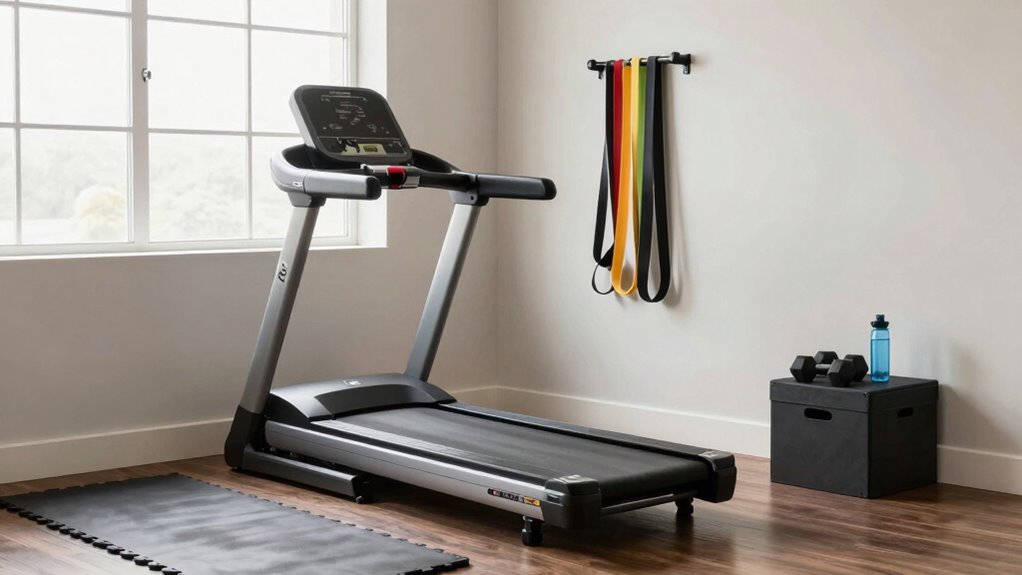
Building a home gym doesn’t have to drain your savings if you plan carefully. Start with budget planning to set a clear limit and prioritize essential equipment. Avoid impulse buys by comparing equipment options—look for versatile, durable pieces that serve multiple purposes. Research online reviews and prices to find the best deals and quality within your budget. Consider buying secondhand or during sales to save more. Focus on core items like a good pair of dumbbells, a mat, and resistance bands before expanding. Remember, you don’t need the most expensive gear to get effective workouts. Being strategic with equipment comparison helps you make smarter choices, ensuring your gym is functional without overspending.
Common Mistakes to Avoid When Setting Up Your Home Gym
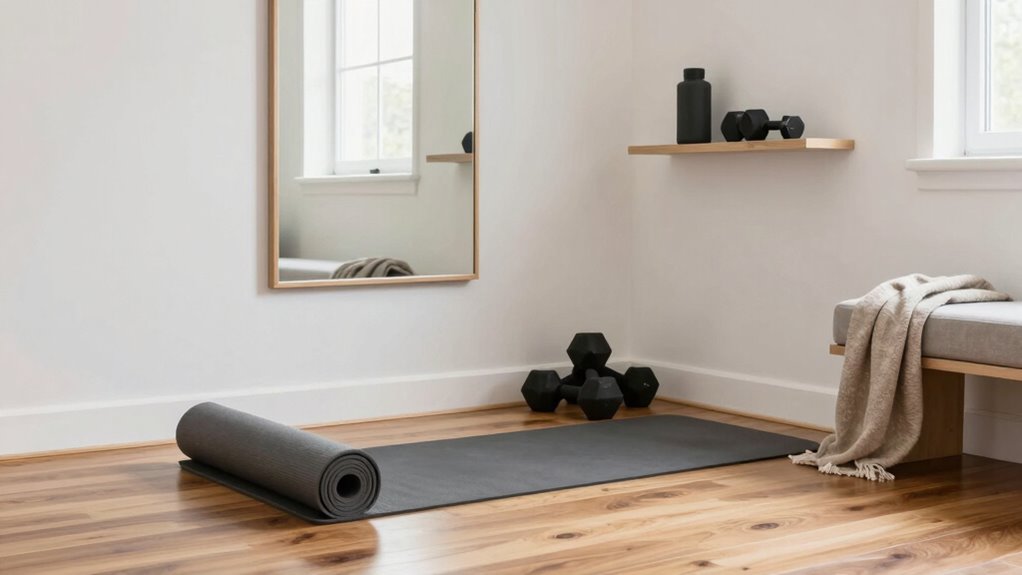
Avoid rushing into your home gym setup without a plan, as this often leads to costly mistakes and wasted space. Common errors include:
- Skipping equipment maintenance, which shortens the lifespan of your gear and creates safety hazards.
- Overloading your space with too much equipment, making it cluttered and difficult to stay motivated.
- Neglecting the importance of a motivational environment—poor lighting, uncomfortable temperature, or boring decor can kill your workout enthusiasm.
To avoid these pitfalls, prioritize regular equipment maintenance, keep your space organized, and create an inviting atmosphere. A well-maintained, motivating environment encourages consistency and saves you money in the long run. Remember, a smart setup isn’t just about what you buy but how you care for and arrange your space.
When and How to Expand Your Home Gym Over Time
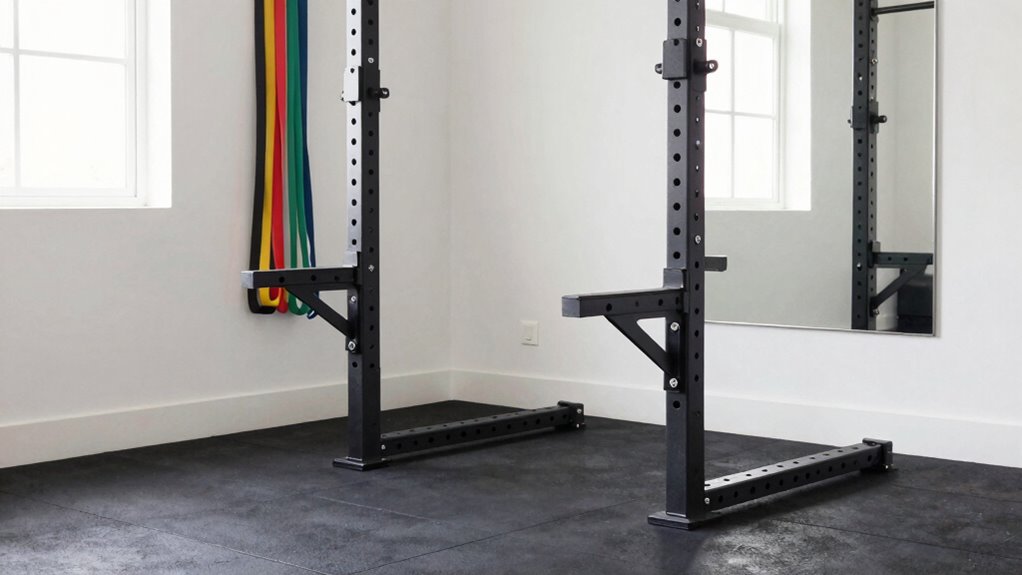
Knowing when and how to expand your home gym guarantees your space grows with your fitness goals, rather than becoming cluttered or inefficient. Regular progress tracking helps you identify when your current setup no longer supports your evolving routines, signaling it’s time to add new equipment or space. To maintain workout variety and avoid plateaus, introduce different gear gradually—like resistance bands, dumbbells, or a stability ball. Focus on small upgrades first, such as adding a mirror or storage solutions, then expand as your skills and goals develop. Keep your expansion intentional, ensuring each addition enhances your workouts without overcrowding. By monitoring progress and planning carefully, your home gym stays functional, motivating, and aligned with your long-term fitness aspirations.
Frequently Asked Questions
How Long Does It Typically Take to See Fitness Results From a Home Gym?
You’ll start seeing fitness results in about 4 to 6 weeks with consistent workouts. Tracking your progress helps you stay motivated and adjust your routines as needed. Incorporating workout variety keeps things interesting and prevents plateaus. Keep a schedule, stay dedicated, and celebrate small wins. Remember, patience and consistency are key to transforming your home gym efforts into real, lasting results.
What Are the Best Brands for Budget-Friendly Gym Equipment?
Think of your gym setup like a treasure hunt—you don’t need a chest of gold to start. Budget brands like Sunny Health & Fitness, Yes4All, and Cap Barbell offer affordable options that don’t compromise quality. These brands are trusted for durability and value. Starting with these allows you to build a solid foundation, saving money while still getting effective equipment to reach your fitness goals.
How Do I Maintain Motivation to Workout Consistently at Home?
To stay motivated to work out at home, try using motivational strategies like setting clear, achievable goals and tracking your progress. Find accountability partners, whether friends or online communities, to keep you committed. Mix up your routine to stay engaged, and reward yourself for milestones. Remember, consistency is key, so create a schedule and stick to it. These strategies help turn exercise into a habit you won’t want to break.
Can a Small Home Gym Replace a Commercial Gym Fully?
A small home gym can fully replace a commercial gym if you focus on space-saving solutions and equipment versatility. You can prioritize multi-functional gear like adjustable weights, resistance bands, and compact cardio machines. These options maximize your limited space while offering a variety of workouts. With dedication, you’ll find that a well-designed, versatile home gym meets your fitness needs just as effectively, saving time and money in the process.
What Safety Precautions Should I Consider When Setting up Equipment?
When setting up your home gym, prioritize safety by carefully planning equipment placement to avoid clutter and tripping hazards. Guarantee heavy or bulky items are secured properly. Check that all electrical outlets and cords meet safety standards to prevent electrical hazards. Keep water away from equipment, and use appropriate mats for stability. Regularly inspect your equipment for wear and tear, and follow manufacturer instructions to maintain a safe workout environment.
Conclusion
Building your home gym is like planting a seed—you start small, nurture it, and watch it flourish over time. By choosing versatile equipment and planning thoughtfully, you’ll create a space that evolves with your fitness journey. Imagine mornings filled with energizing workouts in a cozy corner tailored just for you, avoiding clutter and regret. Start smart, grow steadily, and soon your home gym becomes a sanctuary where your strength and confidence blossom effortlessly.