

TL;DR

Get workout gear delivered free with Prime
- Fast, free delivery on millions of items
- Prime Video, Amazon Music and more included
- Member-only deals all year
MedPage Today’s Oct. 4, 2026, “What We Heard This Week” roundup collected comments from clinicians and health officials on AI, preventive care, GLP-1 drugs and several clinical issues. It is a collection of attributed remarks, not a report announcing new policy or presenting a single study’s findings.
MedPage Today published a weekly roundup on Oct. 4 collecting remarks from health officials and medical experts about artificial intelligence, preventive care, medication side effects and other clinical topics. The comments include Health Secretary Robert F. Kennedy Jr.’s comparison of AI with physicians, but the roundup is a compilation of quotations—not an announcement of a new federal policy or a standalone research report.
Kennedy said AI “can give you a second opinion that is much better informed than any doctor in the country.” The remark, as presented by MedPage Today, appeared to encourage patients to place greater confidence in AI than in U.S. physicians. The roundup does not provide further detail about the setting of the comment, the system Kennedy had in mind, or evidence supporting that comparison.
Stephanie Carlton of the Centers for Medicare & Medicaid Services spoke about the potential use of AI to support preventive care during Medicare annual wellness visits, calling it “a huge opportunity for AI.” Other remarks covered a range of clinical and public-health subjects. Bianca Maria Piraccini of the University of Bologna discussed research reporting a higher likelihood of nail detachment among users of GLP-1 medications. Jonathan Oliver of the University of Minnesota warned that lone star tick larvae can swarm, describing them as “tick bombs.”
The roundup also included commentary on an AI-powered research course, cancer treatment in older or frail patients, severe nearsightedness and an unusual adult eye condition following a strep infection. These remarks vary in subject and evidentiary basis: some refer to research or clinical experience, while others are opinions or warnings. MedPage Today’s short item does not supply detailed methods, data or full transcripts for each discussion.
AI Claims Meet Clinical Questions
The comments bring together two distinct questions about AI in health care: whether it can assist patients with medical decisions and whether it can help clinicians deliver preventive services. Kennedy’s statement makes a broad comparison between AI and doctors, while Carlton’s remark concerns a more specific potential application during Medicare wellness visits. Neither quotation, by itself, establishes that AI is more accurate than physicians or that it has been adopted for those visits.
That distinction matters to patients and health workers. A second opinion can affect whether someone seeks care or trusts a diagnosis, and automated tools may have consequences if their limits are not clear. The roundup records what the speakers said; readers should not treat the remarks as evidence that a particular AI tool is safe, effective or suitable for personal medical decisions. The other topics likewise illustrate why short quotations need their underlying research and clinical context.
Products Worth Considering
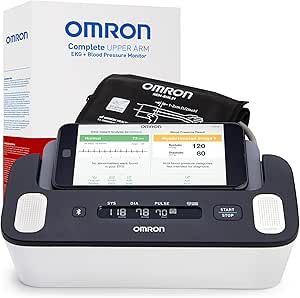
OMRON Complete 2-in-1 Upper Arm Blood Pressure Monitor with EKG

Oral-B iO Series 3 Rechargeable Electric Toothbrush for Adults, Black, with 2 Brush Heads and Travel Case

Philips Sonicare 5950 Rechargeable Electric Toothbrush with 2 Brush Heads, Navy
As an affiliate, we earn on qualifying purchases.
A Roundup Across Medical Topics
MedPage Today describes the item as a set of quotations heard by its reporters during the week. Its publication date is October 4, 2026, and the listed speakers include government officials, physicians and researchers from institutions in the United States and abroad. The format is a brief editorial roundup rather than a single event with one central finding.
Among the additional comments, Gideon Meyerowitz-Katz of the University of Sydney criticized an AI-powered “Research Boot Camp” that promises a journal-ready manuscript in a weekend, comparing the promise to a two-day fitness camp guaranteeing a chance to apply for “American Ninja Warrior.” Pallawi Torka of Memorial Sloan Kettering Cancer Center said “Age is just a number” while discussing treatment considerations for older or frail people with diffuse large B-cell lymphoma. These are attributed perspectives, not full accounts of the course or treatment evidence.
Rupa Wong of the Honolulu Eye Clinic said severe myopia involves more than needing thicker glasses, referring to links with conditions such as cataracts and glaucoma and efforts to classify myopia as a disease. Norman Saffra of Albert Einstein College of Medicine commented on an adult case in which a common strep infection was associated with a rare eye condition. The source provides no case details or full research papers in the roundup itself.
““It can give you a second opinion that is much better informed than any doctor in the country.””
— Robert F. Kennedy Jr., U.S. health secretary, as quoted by MedPage Today
Evidence Behind the Remarks
The roundup does not establish the accuracy or safety of AI medical advice, identify the AI system Kennedy was referring to, or say whether Medicare wellness visits currently use the approach Carlton described. It also does not provide enough information to evaluate the underlying studies, including the research on GLP-1 medications and nail detachment. The exact size of that reported association, study design and potential causes are not included in the supplied item.
Several other remarks lack the details needed to assess their scope. The roundup does not give the full evidence behind the myopia links, the tick warning or the adult eye-condition case, and it does not detail how the course’s advertised promise was evaluated. The comments should be read as attributed statements with differing levels of supporting information, not as a single set of verified conclusions.
Full Studies and Policy Details
Readers seeking to assess the claims will need the underlying sources: the full research papers, clinical presentations or policy information connected to each remark. For AI in Medicare visits, relevant follow-up would include whether CMS issues formal guidance or describes a specific program, what tasks a tool would perform, and how clinicians would review its output. The roundup itself does not announce a timetable or a forthcoming policy decision.
For the medication and eye-health topics, further reporting would need to establish study populations, methods and limitations. Until those details are available, the published item is best understood as a weekly snapshot of what experts and officials said, with several questions left open.
Key Questions
Did MedPage Today report a new federal AI policy?
No. The Oct. 4 item is a weekly quotation roundup. It includes comments about AI and Medicare wellness visits but does not announce a federal policy or implementation plan.
Did the roundup prove AI gives better medical advice than doctors?
No. Kennedy made that comparison, but the item provides no supporting study, named AI tool or performance data. It reports his remark rather than establishing the claim.
What did the roundup say about GLP-1 medications?
It quoted Bianca Maria Piraccini discussing research that found users of GLP-1 medications had a higher likelihood of nail detachment. The short item does not provide the study’s methods, size or detailed results.
When was the roundup published?
MedPage Today’s roundup was published on October 4, 2026.
Source: rss