TL;DR

Get workout gear delivered free with Prime
- Fast, free delivery on millions of items
- Prime Video, Amazon Music and more included
- Member-only deals all year
A Fit&Well report on a 30-day weighted-vest trial says added load may support muscle and bone health, but the article does not present clinical evidence that the vests preserve either. The writer reports knee swelling and a fitness plateau after increasing vest weight alongside running distance and speed, and recommends starting light, avoiding long runs, and changing one training variable at a time.
A Fit&Well report on a writer’s 30-day weighted-vest trial warns that adding load to exercise should be done gradually and without simultaneously increasing other training demands. The writer said combining a vest with longer, faster and more frequent runs led to swollen knees and a fitness plateau; the report presents the experience as a personal account, not clinical proof that weighted vests preserve muscle or bone density.
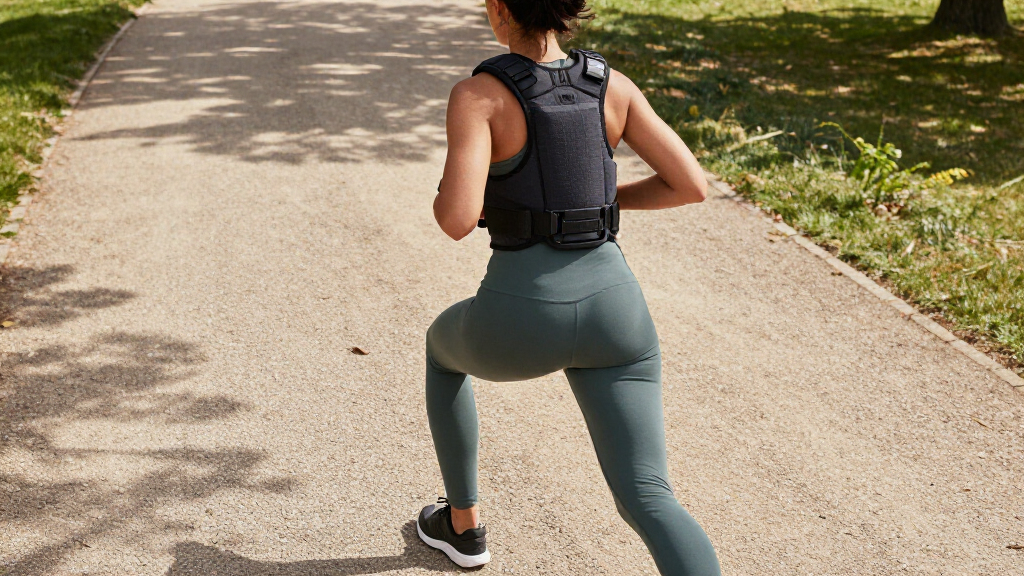
The writer tested two OMORPHO vests, weighing 6 pounds and 10 pounds, while training for a marathon. They said they wore the vests across workouts for a month, at times adding weight while also running farther or faster. One long run ended at 12.5 miles of a planned 14, according to the account. The writer reported knee swelling and a plateau in fitness, then reflected on how to use the equipment differently.
Holly Haywood, a lead instructor at London health club chain Third Space, advised starting with a light load and increasing it as strength and comfort improve, provided technique remains sound. She gave 5% of body weight as a general starting point for resistance training; for a 160-pound person, that would be an 8-pound vest. The writer suggested beginning lower—around 1% to 2% of body weight—for running, but that figure is the writer’s recommendation, not a universal guideline established by the report.
The article’s other suggestions are to avoid wearing a vest on long runs, consider using one for body-weight strength exercises, and change only one training variable at a time. Haywood suggested starting with a 15- to 20-minute brisk treadmill walk and adjusting effort gradually. She cautioned that a vest that is too heavy or worn incorrectly can add strain to the knees, hips and ankles and affect form.
How Added Load Changes Training
A weighted vest changes the demands of ordinary movement: walking, running or body-weight exercises require the body to move against additional load. That can make an activity feel harder, but the source report does not establish how much vest use affects muscle mass or bone density, nor whether it prevents sarcopenia or osteoporosis. Those potential benefits are presented as general rationale for load-bearing exercise, not as measured outcomes from the writer’s trial.
The immediate practical issue is managing total training stress. A vest added to an unchanged workout is one adjustment; increasing distance, pace and frequency at the same time makes it difficult to tell what is causing discomfort or fatigue. The writer’s account illustrates that distinction, though it cannot show that the vest alone caused the knee swelling. Readers considering a vest should treat the advice as general fitness guidance and stop or reduce the load if it causes discomfort or changes their movement.
adjustable weighted vest for running
As an affiliate, we earn on qualifying purchases.
As an affiliate, we earn on qualifying purchases.
A Trial During Marathon Training
The report grew from the writer’s experience testing the equipment while preparing for a marathon. Rather than keeping other parts of training steady, the writer said they sometimes wore the vest while also increasing running distance or speed. The article later recommends holding those demands steady when first introducing added weight, so the body’s response can be judged more clearly.
Haywood’s comments provide professional guidance within the article, while the account of knee swelling and the vest’s fit comes from the writer. The report describes the tested OMORPHO vests as close-fitting and says the writer found them usable for exercises such as push-ups, dips and pull-ups. That is an individual product experience, not an independent comparison of vests or evidence that all designs will fit or perform similarly.
“The general recommendation, like with most resistance training, is to start light and gradually build up as strength and comfort with the vest improve.”
— Holly Haywood, lead instructor at Third Space
best weighted vest for strength training
As an affiliate, we earn on qualifying purchases.
As an affiliate, we earn on qualifying purchases.
What the Trial Cannot Establish
The account does not include measurements of the writer’s muscle mass or bone density before and after the trial, and it does not report a controlled comparison with workouts done without a vest. It therefore cannot establish whether the equipment preserved either, or whether the vest caused the knee swelling. The writer was marathon training and changed several aspects of exercise at once, making it hard to isolate the effect of added weight.
The source also does not specify a research basis for its broader claim about preserving muscle and bone density, or provide evidence that one starting load is appropriate for everyone. Individual fitness, health history, exercise type and technique can affect what load is suitable. People with existing joint or other health conditions should seek professional advice before changing their training; the report does not set out a clinical protocol.
lightweight weighted vest for walking
As an affiliate, we earn on qualifying purchases.
As an affiliate, we earn on qualifying purchases.
A More Gradual Return to Loading
The article offers a practical reset rather than reporting a formal study or planned follow-up: begin with a brief, manageable session, keep the load light, and increase either the weight or another training demand in small steps. For treadmill walking, Haywood’s suggested starting session is 15 to 20 minutes; she advises raising the incline gradually rather than increasing speed and duration together.
Readers should watch for changes in technique, discomfort and recovery, and reduce or remove the vest if movement feels compromised. The report does not announce further testing or provide later results from the writer’s trial. Its guidance remains general: anyone unsure about safe loading, especially those with pre-existing conditions or joint symptoms, can consult a qualified trainer or health professional.
muscle recovery tools post workout
As an affiliate, we earn on qualifying purchases.
As an affiliate, we earn on qualifying purchases.
Key Questions
Does this report prove weighted vests preserve muscle and bone density?
No. It is a personal 30-day account and does not report before-and-after measurements or a controlled comparison. The suggested benefit is not demonstrated by the writer’s trial.
How much weight does the article suggest starting with?
Instructor Holly Haywood gives up to 5% of body weight as a general resistance-training starting point, while the writer suggests 1% to 2% for running. These are attributed recommendations in the report, not a single rule for every person.
Should someone wear a weighted vest on long runs?
The report’s writer advises against using a vest on long runs, based on their own experience. Haywood warns that excessive or incorrect loading can strain joints and affect form; readers should not treat the personal account as a universal medical rule.
What should someone do if a vest causes joint discomfort?
Haywood advises switching to a lighter vest or removing it. If discomfort continues, or if a person has an existing health or joint condition, they should seek advice from an appropriate health professional.
Source: rss
Fall Picks
fall essentials
As an affiliate, we earn on qualifying purchases.