
When you perform lifts, the position of your joints and grip affects the lever and moment arms, which determine how hard each rep feels. A longer lever arm lets your muscles generate more torque with less effort, making the movement easier. Conversely, shorter lever arms require more force, making reps feel tougher. Understanding how your body’s positioning impacts leverage can help you optimize your strength, and if you keep exploring, you’ll uncover ways to improve your workout efficiency.
Key Takeaways
- Increasing the lever or moment arm length amplifies torque, making repetitions feel harder with less force needed.
- Shorter lever arms reduce torque, making movements easier but requiring more effort for the same resistance.
- Adjusting joint angles or grip positions changes lever arm lengths, directly impacting exercise difficulty.
- Proper leverage maximizes muscle force output, enabling more effective and “harder” reps.
- Understanding leverage mechanics helps optimize workout positions for increased strength and reduced injury risk.
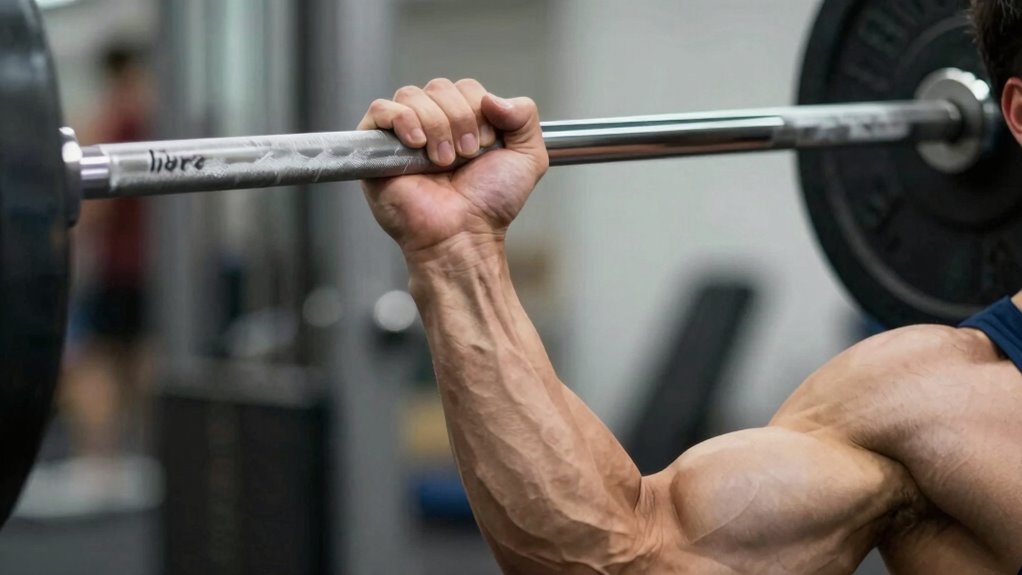
Understanding lever arms and moment arms is essential for grasping how forces generate rotational motion. When you lift or push, your muscles produce force that creates a turning effect around a joint. This turning effect, called torque, depends heavily on your muscle leverage and the length of the lever arm involved. The longer the lever arm, the more torque you can generate with less effort. This is because the torque is the product of the force applied and the distance from the fulcrum (the joint) to the point where the force acts. By understanding how to optimize this relationship, you can improve your strength and efficiency during workouts.
Muscle leverage plays a critical role in torque optimization. Think of your muscles as the force providers, and the bones as the lever arms. When you perform a bicep curl, your biceps muscle contracts to pull on your forearm, causing rotation around your elbow joint. The position of your hand and forearm determines the length of the lever arm. When your hand is closer to the elbow, the lever arm is shorter, and you generate less torque. Conversely, when your hand is farther away, the lever arm lengthens, allowing your muscles to produce more torque with less effort. This is why adjusting your grip or joint angles can markedly influence how “hard” a movement feels.
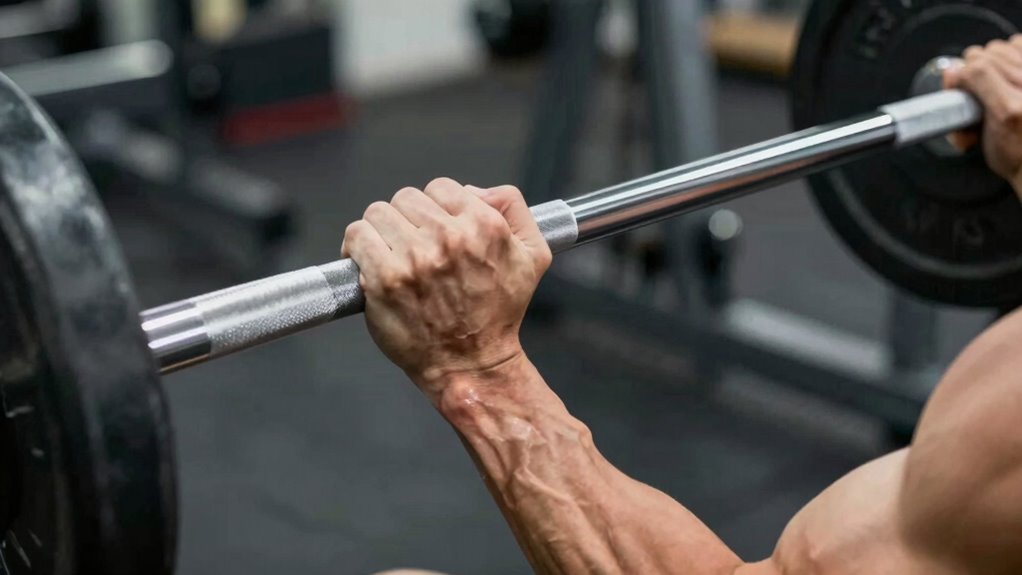
By understanding the mechanics of lever arms and moment arms, you can fine-tune your training to maximize muscle leverage. For example, during a bench press, changing the grip width alters the moment arm around your shoulder and elbow joints. A wider grip can sometimes decrease the effective lever arm, making the movement feel easier or harder depending on your goal. Similarly, in squats, the positioning of your feet affects the length of the lever arm, impacting how much effort your muscles need to exert to lift the weight. Recognizing these principles helps you perform exercises more efficiently, reducing unnecessary strain and increasing the effectiveness of each rep.
Additionally, understanding how lever arms influence force output can help you develop a more targeted and effective workout strategy. Ultimately, mastering torque optimization through understanding lever arms and moment arms allows you to lift smarter, not just harder. It’s about positioning your body and adjusting angles to make the most of your muscle leverage. This not only enhances your strength gains but also minimizes the risk of injury by promoting proper biomechanics. Whether you’re a beginner or an experienced lifter, paying attention to how your joints and muscles work together can make a notable difference in your training results. By applying these physics principles, you can improve your performance, lift more effectively, and develop better control over your movements.

Hezeyferg 22LBS Adjustable Dumbbells Set, Hand Weights Sets with 5 Levels 3lb, 5lb, 7lb, 9lb, 11lb, Adjustable Weight Dumbbells for Women/Men Home Gym Full Body Workout
【Five Weight Adjustable】Hezeyferg adjustable dumbbell has 5 selectable weights from 3lb, 5lb, 7lb, 9lb to 11lb. No matter…
As an affiliate, we earn on qualifying purchases.
As an affiliate, we earn on qualifying purchases.
Frequently Asked Questions
How Can I Measure My Lever Arm Length Accurately?
To measure your lever arm length accurately, you should perform a leverage measurement by holding a known weight at different points along your limb or the object you’re testing. Use a ruler or tape measure to determine the distance from the joint or fulcrum to the point where you hold the weight. Ensuring precise arm length accuracy helps you understand the physics behind your strength and optimize your workout.
Do Different Exercises Require Different Lever Arm Adjustments?
Yes, different exercises often need different lever arm adjustments. When you do exercise variations, like changing grip width or body position, you alter your lever arms. Equipment modifications, such as using resistance bands or adjustable benches, also impact lever arms. By adjusting these factors, you can make exercises easier or harder, targeting different muscles and improving your workout effectiveness. Always experiment safely to find what works best for your goals.
Can Changing My Grip Affect the Moment Arm?
Yes, changing your grip can affect the moment arm. By adjusting your grip width and hand positioning, you alter the distance between the fulcrum and the resistance, impacting the leverage. A wider or narrower grip changes the moment arm length, making the exercise feel harder or easier. Experiment with different grip widths to find what maximizes your strength and targets the muscles effectively.
How Does Fatigue Impact the Effectiveness of Leverage?
Fatigue reduces your muscle’s ability to generate force, which diminishes leverage efficiency during lifts. As muscles tire, your grip and control weaken, making it harder to maintain ideal leverage angles. This means your reps become less effective, and you might need to adjust your technique or rest more often. To keep leverage efficiency high, listen to your body and avoid pushing through fatigue that compromises your form and results.
Are There Optimal Leverage Positions for Specific Muscle Groups?
You can optimize your leverage by adjusting your position to enhance muscle leverage for specific groups. For example, changing grip angles or stance can improve lever arm optimization, making exercises more effective. While some believe there’s a one-size-fits-all approach, tailoring your setup maximizes leverage and reduces strain. Focus on proper alignment and angles to target muscles effectively, ensuring you get the most out of each movement with less fatigue.

REP Fitness Multi Grip Curl Bar
CHOOSE YOUR ATTACHMENT: You have selected the Multi Grip Curl Bar, a high quality REP Fitness Attachment for…
As an affiliate, we earn on qualifying purchases.
As an affiliate, we earn on qualifying purchases.
Conclusion
Understanding lever and moment arms reveals why some reps feel harder or easier—it’s no coincidence. As you adjust your grip or stance, you’re unknowingly changing these arms, aligning physics with effort. The universe seems to conspire, making the same movement feel different each time. So, next time you struggle or soar, remember it’s not just strength but the subtle dance of physics at play. Sometimes, the hardest reps hide a simple shift in leverage.
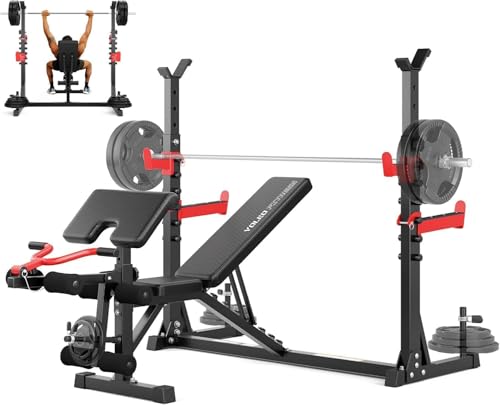
Yoleo 1980LBS Weight Bench with Rack – Bench Press Set, Leg Extension, Preacher Curl & Flat/Incline/Decline Full Body Workout Bench, Adjustable Olympic Weight Benches for Home Gym(47.44IN WIDE GRIP)
【47.44in Wider Grip Rack】47.44-inch extra-wide rack solves tight grips and pinched hands—perfect for broad-shouldered guys, 6ft+ users, and…
As an affiliate, we earn on qualifying purchases.
As an affiliate, we earn on qualifying purchases.

WHATAFIT Resistance Bands, Exercise Bands,Resistance Bands for Working Out, Work Out Bands with Handles for Men and Women Fitness, Strength Training Home Gym Equipment
DIFFERENT COLOR ADJUSTABLE RESISTANCE BANDS: The exercise bands come with 5 different resistance level 10lbs, 20lbs, 30lbs, 40lbs…
As an affiliate, we earn on qualifying purchases.
As an affiliate, we earn on qualifying purchases.