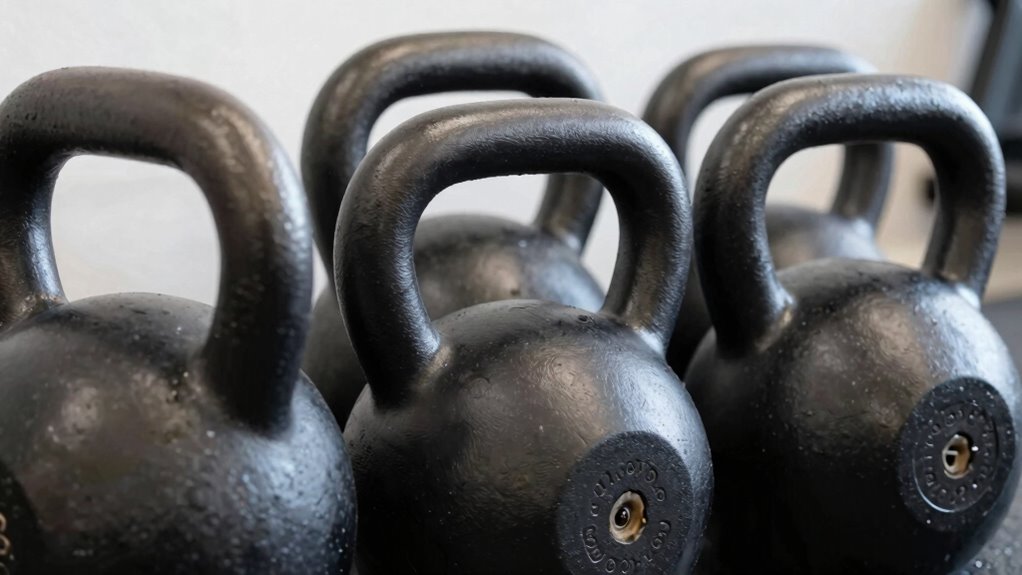

Competition kettlebells feel different because they have a uniform shape, size, and flat bases, which improve stability and grip consistency. These features help you control the lift better and reduce injury risk. Standard kettlebells vary in shape, size, and design, affecting feel and handling. Handle size and weight distribution also influence your grip and balance. To learn more about how shape impacts your performance and technique, keep exploring these key differences.
Key Takeaways
- Competition kettlebells have a uniform shape and size, ensuring consistent handle placement and grip feel across different weights.
- Their smooth, standardized surfaces provide a predictable and comfortable grip, reducing variability in handling compared to standard kettlebells.
- The consistent shape and handle dimensions promote better control and balance during lifts, affecting how they feel in the hand.
- Variations in standard kettlebell designs, including shape and handle texture, lead to differing sensations and grip experiences.
- The design focus of competition kettlebells on functionality and standardization results in a distinct, uniform feel during training and lifts.

Titan Fitness Adjustable Competition Kettlebell, 12-32 KG, Ergonomic Smooth Grip Handle, Flat Base for Floor Exercises, Strength Training Kettlebells for Home Gym
ADJUSTABLE COMPETITION KETTLEBELL: This adjustable Pro Kettlebell features a 12 KG shell with 6 cast iron plates weighing…
As an affiliate, we earn on qualifying purchases.
As an affiliate, we earn on qualifying purchases.
What Are the Main Differences Between Standard and Competition Kettlebells?
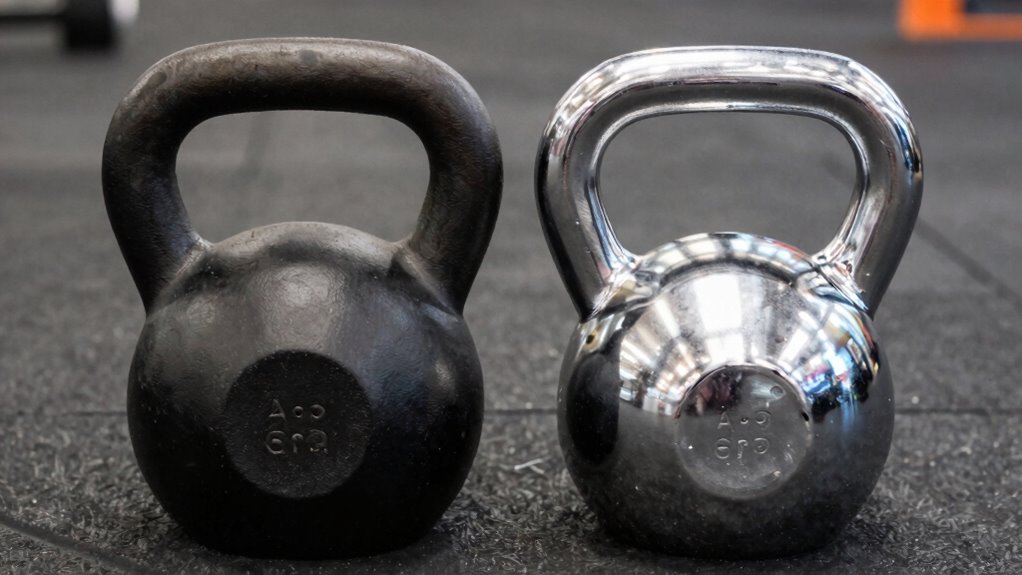
Have you ever wondered what sets standard and competition kettlebells apart? The main differences lie in kettlebell aesthetics and color coding. Competition kettlebells are designed with a uniform size regardless of weight, making them easier to handle during lifts. They feature a consistent shape and smooth finish, emphasizing functionality over appearance. Standard kettlebells, on the other hand, often vary in shape and design, with more diverse aesthetics. They usually come in different colors to indicate weight, but these colors aren’t standardized across brands. Competition kettlebells typically use color coding for quick identification, but their primary focus is on consistent weight placement and balance. This uniformity helps athletes perform precise lifts, while standard kettlebells offer more variety in design and look. Additionally, the design consistency of competition kettlebells supports better performance and safety during training. This consistency also helps reduce injury risk by providing predictable handling characteristics.
![Adjustable Kettlebell Set [Bells of Steel] Kettle Bell Weight Set, Steel Shell, Internally-Loaded for Full Body Workouts, Competition Standard 35mm Handle](https://m.media-amazon.com/images/I/41etKpoFKgL._SL500_.jpg)
Adjustable Kettlebell Set [Bells of Steel] Kettle Bell Weight Set, Steel Shell, Internally-Loaded for Full Body Workouts, Competition Standard 35mm Handle
18 Kettlebells in 1 – Adjustable kettle bell with unique 0.5kg and 1kg increments. Same shape as competition…
As an affiliate, we earn on qualifying purchases.
As an affiliate, we earn on qualifying purchases.
How Kettlebell Shape and Design Affect Grip and Feel
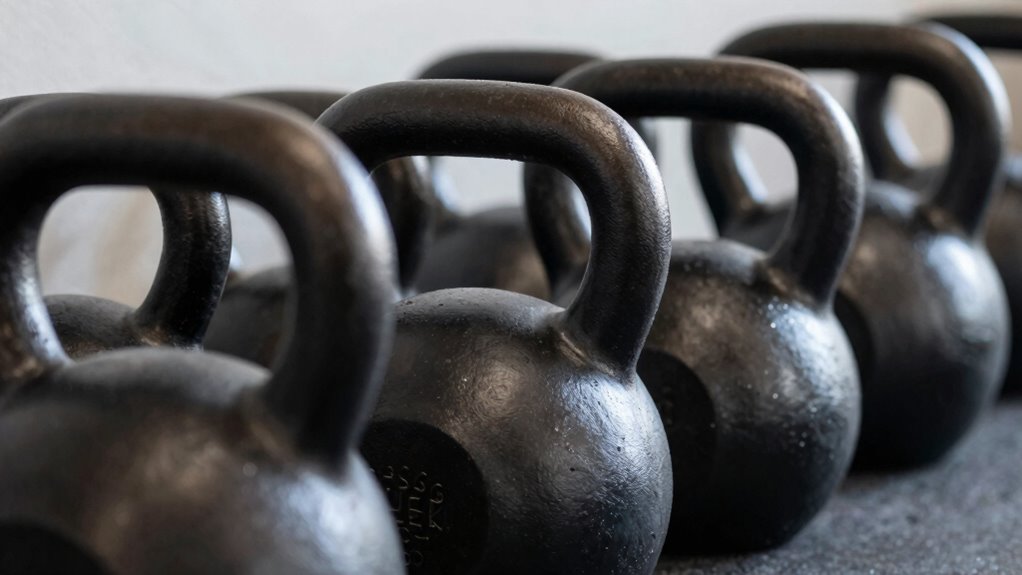
The shape and design of a kettlebell directly influence how it feels in your hand and how you grip it during workouts. An ergonomic grip ensures comfort and reduces strain, allowing you to maintain proper form longer. Handle texture plays a vital role; a rougher surface provides better grip, especially when your hands sweat, preventing slips. Conversely, smoother handles might feel more comfortable initially but can compromise grip security. The thickness and contour of the handle also affect feel—thinner handles offer more control, while thicker ones can challenge your grip strength. Overall, the design choices impact not just comfort but also safety and performance, making it essential to select a kettlebell that suits your grip style and workout needs. Additionally, understanding kettlebell shapes can help you choose equipment that enhances your training effectiveness and minimizes injury risk. Recognizing the design features can also guide you in selecting the most suitable kettlebell for your specific exercises and skill level, especially considering how different shapes can influence training outcomes. Properly understanding handle ergonomics can further optimize your grip and reduce fatigue during extended workouts.

HANABASS Adjustable Kettlebell Handle Ergonomic Grip Replacement for Kettlebell Equipment Versatile Strength Training Attachment for Home and Gym Workouts
Core Versatility: This adjustable kettlebell handle offers a flexible and ergonomic design, allowing users to perform a variety…
As an affiliate, we earn on qualifying purchases.
As an affiliate, we earn on qualifying purchases.
Why Do Competition Kettlebells Have Flat Bases?
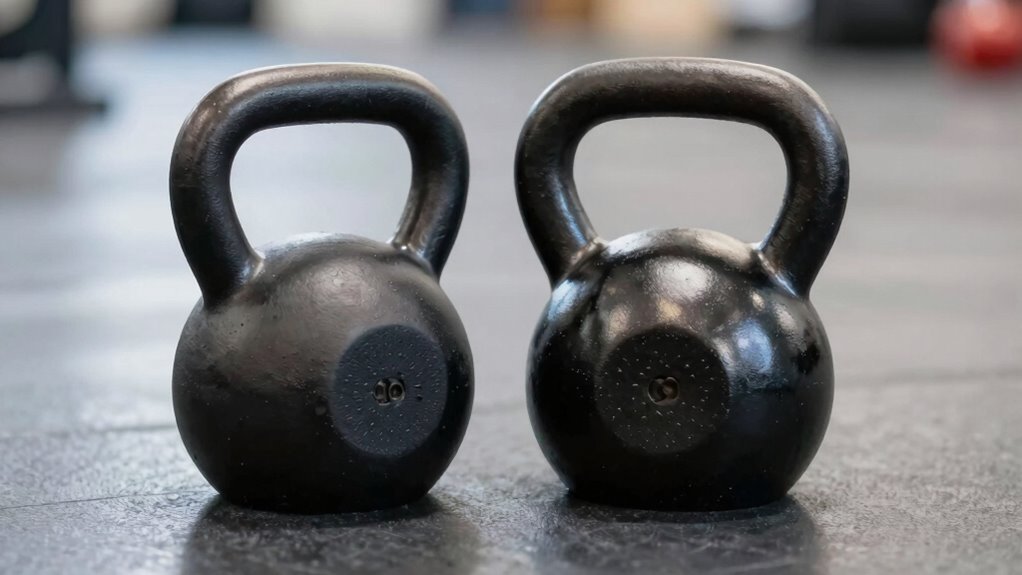
You’ll notice competition kettlebells have flat bases to improve stability during lifts. This design helps you maintain a consistent hand position and balance throughout your workout. With a flat bottom, you’ll find it easier to perform precise, controlled movements every time. Additionally, the flat base supports free floating and prevents wobbling on uneven surfaces. This feature also helps minimize damage to the floor and surrounding equipment, making it safer for training environments. Moreover, the flat base is a standard feature in Gold IRA markets, reflecting a focus on quality and durability in specialized equipment. The flat bottom design also enhances training consistency by reducing variability during each lift.
Stability During Lifts
Flat bases on competition kettlebells are essential for maintaining stability during lifts. They provide a solid, balanced foundation, reducing wobbling and ensuring better control. Material differences, like steel versus cast iron, influence the weight distribution and durability, impacting stability. Aesthetic variations, such as the smoothness of the base, can also play a role, but the flat design primarily enhances stability. With a flat bottom, you can set the kettlebell down securely between reps, minimizing energy loss and improving form. This design helps you focus on your technique without worrying about tipping or uneven contact with the ground. Additionally, the flat base allows for easier storage and stacking, making it more convenient for training setups. The flat base also improves cleanability, ensuring that dirt and debris do not accumulate in crevices, which can affect performance over time. Proper maintenance of the flat base ensures long-lasting stability and performance. Furthermore, the flat design promotes uniform weight distribution, which enhances overall lift safety and efficiency. According to home theater projectors, stability and proper setup are crucial for optimal performance, which parallels the importance of a flat base in kettlebell design.
Consistent Hand Position
A stable base for the kettlebell also helps maintain consistent hand positioning during lifts. With a flat base, the kettlebell sits securely on the ground, allowing you to set your grip consistently each time. This stability minimizes wobbling or shifting, which can disrupt your hand positioning and affect your control. When your hand placement is consistent, you develop better grip strength and technique, reducing the risk of injury. Competition kettlebells have flat bases specifically to support this goal. The uniform contact point makes it easier to position your hand accurately, especially during high-rep sets or complex movements. Additionally, the standardized design of competition kettlebells ensures uniformity across different weights and brands, facilitating consistent training and competition performance. A flat base also helps maintain balance during dynamic lifts, contributing to safer and more effective workouts. Moreover, the flat bottom enhances stability on surfaces, reducing the chance of slipping or tipping during vigorous exercises. Furthermore, this design feature aligns with the goal of consistent hand positioning to improve overall lifting technique and safety. A flat base also allows for easier storage and stacking, making gym organization more efficient.

KETTLE GRYP – The Original – As Seen on SHARK TANK! Converts Your Dumbbells Into Kettlebells – Made in the USA – Dumbbell Grip Handle
TURNS DUMBBELLS INTO KETTLEBELLS IN A SNAP: Simply, open hinged handle, place your own dumbbell into the grip,…
As an affiliate, we earn on qualifying purchases.
As an affiliate, we earn on qualifying purchases.
How the Rounded Body of Competition Bells Changes Your Lifting Technique
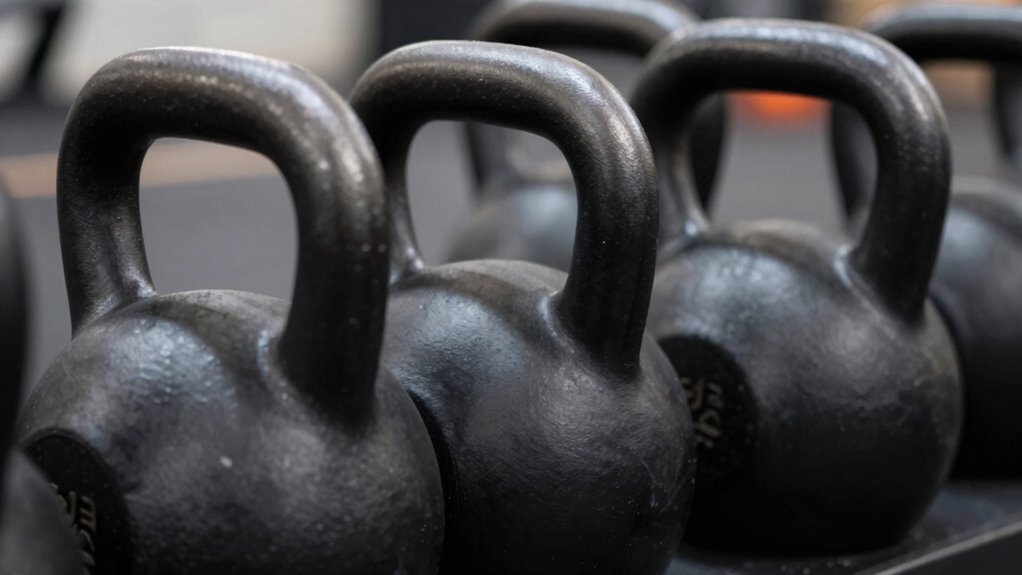
The rounded body of competition kettlebells considerably influences your lifting technique by requiring more precise grip and control. Because of their shape, you need to focus on maintaining an ergonomic grip that accommodates the smooth, curved surface. The weight distribution shifts slightly, demanding better balance and core engagement during lifts. You’ll notice that:
- Your grip must be steadier to prevent slipping
- The rounded shape encourages a more upright posture
- Fine-tuning your control improves safety
- You may need to adjust your wrist position for comfort
- Balance becomes more critical, especially during dynamic movements
These factors mean your technique must adapt to the bell’s rounded body, emphasizing precision over brute force. Mastering this ensures safer lifts and maximizes performance. Proper grip technique plays a crucial role in overcoming the unique challenges posed by the shape of competition kettlebells. Additionally, understanding how kettlebell shape affects your movement can help you develop more effective lifting strategies.
How Handle Size and Shape Influence Your Grip and Control
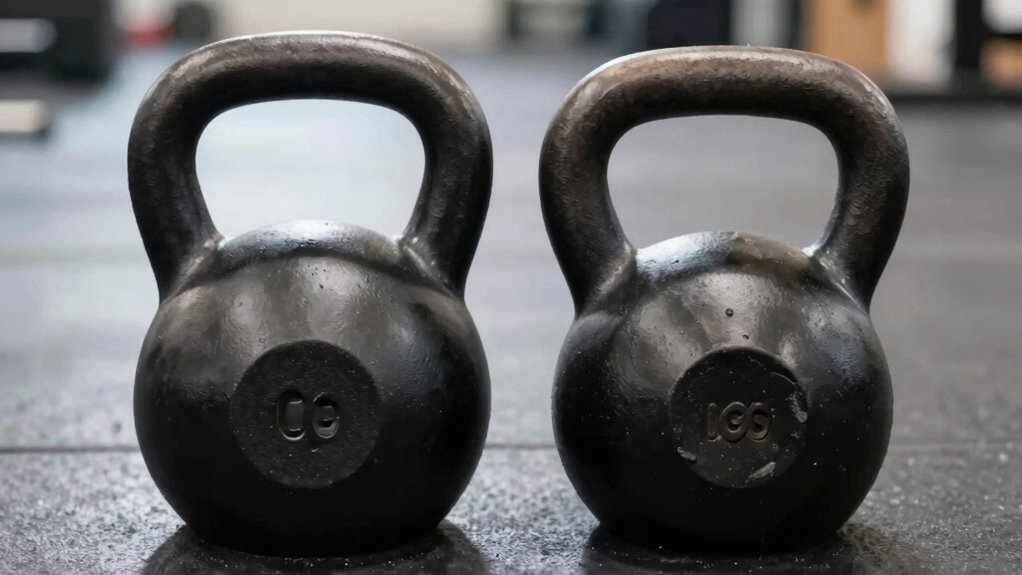
Because handle size and shape directly impact how you grip the kettlebell, choosing the right configuration is vital for maintaining control and preventing fatigue. Handle ergonomics play an essential role in how comfortably and securely you hold the kettlebell during lifts. A thicker handle may improve grip security by engaging more muscles in your hand, reducing slippage, but can also increase fatigue if it’s too challenging to grip for extended periods. Conversely, a thinner handle allows for a more natural grip, making control easier, especially for beginners. The shape of the handle, whether rounded or flat, influences how your hand contacts it, affecting grip security and comfort. Selecting a handle that suits your hand size and lifting style ensures better control and minimizes strain during your workout. Additionally, understanding Handle ergonomics can help you select kettlebells that promote proper technique and reduce the risk of injury. Recognizing the importance of user comfort in handle design can further enhance your workout experience and safety. Furthermore, handle material can influence grip friction and durability, impacting overall performance. Considering handle texture can also improve grip stability in various workout conditions, especially when hands become sweaty. Incorporating ergonomic handle design can optimize your lifting experience and reduce fatigue over time.
How Weight Distribution Affects Balance and Stability
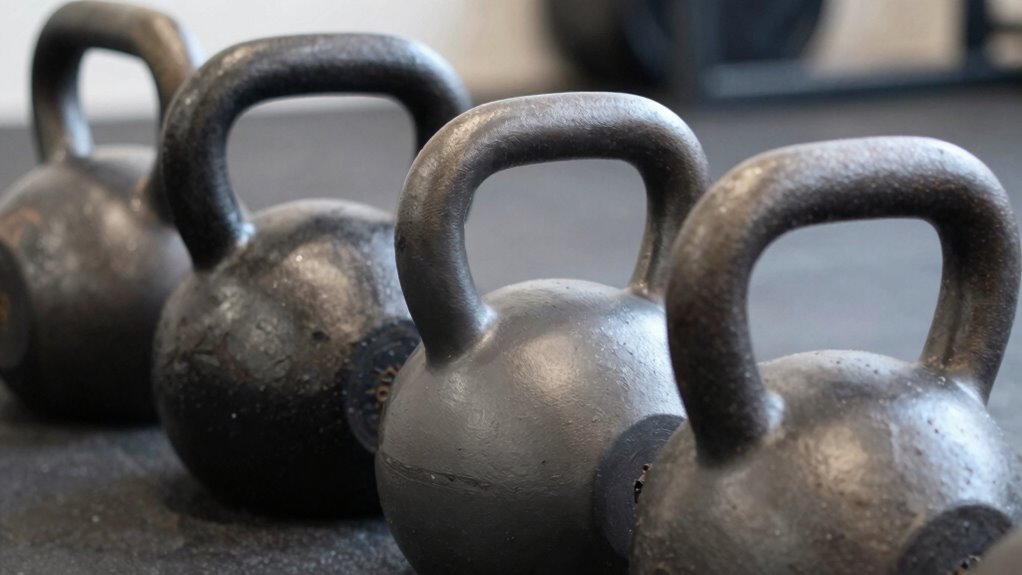
Proper weight distribution is essential for maintaining balance and stability during kettlebell exercises. When your kettlebell’s weight is evenly distributed, your center of gravity stays aligned, making movements smoother and safer. If the weight shifts forward or backward, it throws off your balance, increasing the risk of injury.
Consider these points:
- A well-balanced kettlebell keeps your center of gravity steady.
- Uneven weight makes it harder to control the bell during swings or lifts.
- Front-heavy kettlebells can shift your balance forward.
- Back-heavy design may cause you to lean back unintentionally.
- Proper weight distribution helps you stay upright and confident in your movements.
Tips for Transitioning to Competition Kettlebells and Adjusting Your Technique
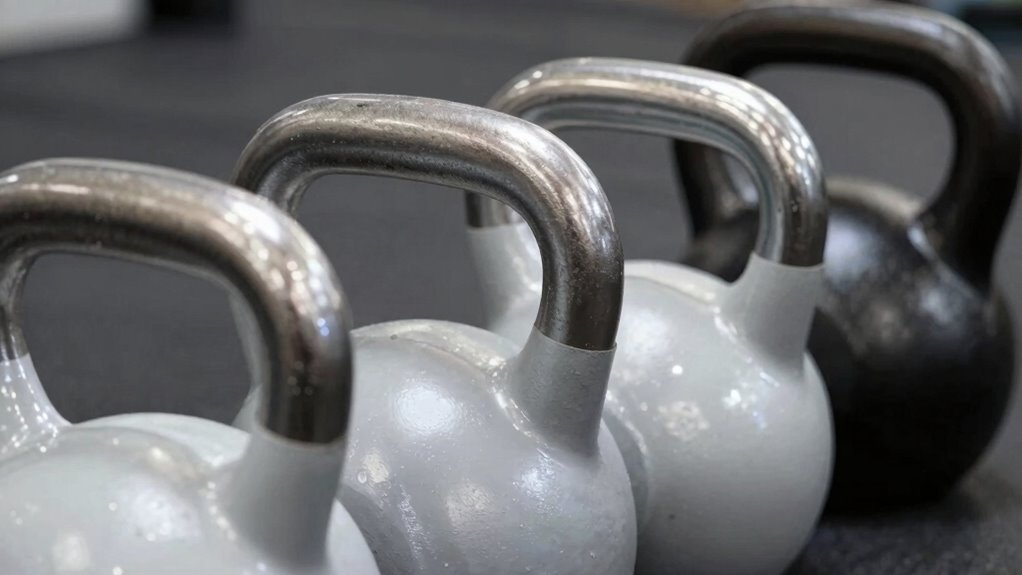
When moving to competition kettlebells, you’ll need to adjust your grip and hand placement to maintain control and safety. Modifying your swing and lifting techniques helps accommodate the different shape and weight distribution. These tweaks will set you up for better performance and reduce your risk of injury.
Adjust Grip and Hand Placement
Switching to competition kettlebells often requires adjusting your grip and hand placement to accommodate their different shapes and sizes. The grip adjustment is vital to maintain control and safety, while proper hand placement ensures efficient movement. To adapt, try these tips:
- Find the ideal spot on the handle that feels natural and secure.
- Keep your grip firm but not overly tight to avoid fatigue.
- Position your hands so your wrists stay straight during swings.
- Experiment with hand height to find comfort with the new shape.
- Focus on relaxed shoulders and a stable grip to prevent slipping.
Modify Swing and Lifting Techniques
Adapting your swing and lifting techniques is essential when shifting to competition kettlebells, as their varied shapes and weights demand different mechanics. You’ll need to modify your approach to account for handle ergonomics, which can affect grip and control during lifts. Focus on maintaining an ergonomic grip to reduce strain and ensure fluid movement. When swinging, pay attention to how the handle’s shape influences your hand position and wrist alignment, making small tweaks to keep your grip secure and comfortable. You might find you need to alter your hip hinge or trajectory to accommodate the new shape, especially during the swing’s ascent and descent phases. Practicing these adjustments will help you transition smoothly and maximize performance while minimizing discomfort.
Choosing the Right Kettlebell Shape for Your Goals and Training

Are you unsure which kettlebell shape best supports your training goals? Choosing the right shape depends on your focus—whether strength, endurance, or aesthetics. Consider how kettlebell aesthetics and color coding can guide your selection.
- For lighter, faster reps: Opt for smaller, more streamlined shapes that improve control.
- For heavy lifts: Look for larger, more stable shapes to handle added weight comfortably.
- For aesthetic goals: Pick kettlebells with smooth surfaces and appealing designs.
- For easy identification: Use color-coded options to quickly find the weight you need.
- For comfort during high reps: Choose shapes that feel balanced in your hands and suit your grip style.
Matching the shape to your goals enhances your training efficiency and enjoyment.
Key Takeaways: How Kettlebell Shape Impacts Performance and Feel

Understanding how kettlebell shape influences performance and feel helps you make better choices for your workouts. The shape affects how comfortable and efficient your movements are, especially during swings, cleans, or presses. For example, competition kettlebells often have a uniform shape that promotes consistent grip and balance, enhancing precision. Kettlebell aesthetics, including color coding, also play a role by helping you quickly identify weights and styles suited for your goals. A well-designed form can reduce strain and improve control, making your lifts smoother. Recognizing these differences ensures you select the right kettlebell for your training style, whether prioritizing comfort, speed, or technique. Ultimately, understanding shape impacts your performance, making your workout more effective and enjoyable.
Frequently Asked Questions
How Does the Weight Distribution Differ Between Standard and Competition Kettlebells?
You’ll notice that the weight distribution in standard kettlebells is uneven, often with more weight toward the handle or base, affecting handle grip and base stability. In contrast, competition kettlebells have a uniform weight distribution, making them feel more balanced and consistent during lifts. This design improves your grip, enhances control, and guarantees better stability, especially during high-repetition workouts or complex movements.
Are There Specific Exercises Better Suited for Different Kettlebell Shapes?
You should choose exercises based on the kettlebell shape to minimize grip fatigue and maximize comfort. For standard kettlebells with ergonomic grips, swings and cleans work well due to their familiar feel. Competition bells, with their consistent geometry, are better for snatches and jerks, where precise grip and control are essential. Adapting your grip and technique guarantees you stay comfortable and safe during different exercises, regardless of the kettlebell shape.
Can Shape Differences Influence Injury Risk During Lifting?
Shape differences can influence your injury risk during lifting, especially if ergonomic considerations are overlooked. A poorly shaped kettlebell may compromise grip stability, causing you to lose control or strain muscles. To minimize this risk, choose a shape that fits comfortably in your hand and guarantees a secure grip. Prioritize ergonomic considerations and focus on maintaining grip stability throughout your workout to prevent injuries and improve performance.
Do Competition Kettlebells Require Different Maintenance or Storage?
Think of your competition kettlebell as a fine-tuned instrument that needs proper care. Yes, they require different maintenance and storage. You should regularly inspect the material durability and keep them in a dry, temperature-controlled environment to prevent corrosion. Aesthetic variations, like paint or coating, can chip if not stored properly. Proper maintenance guarantees your kettlebell stays in top shape, ready to hit the next workout without any hiccups.
How Does Kettlebell Shape Impact Long-Term Training Durability?
The shape of your kettlebell impacts long-term durability by affecting grip comfort and aesthetic appeal. An ergonomic shape reduces strain on your hands, preventing wear and tear over time, while a sleek, visually appealing design encourages consistent use. When you choose a shape suited to your training style, you’re less likely to experience discomfort or damage, ensuring your kettlebell stays durable and effective for years to come.
Conclusion
So, despite all the fuss about shapes and feels, it turns out the kettlebell that feels “different” might just be your way of telling you it’s time to embrace change. Ironically, the more you adapt to various designs, the more your grip on consistency loosens. But hey, if shifting shapes keeps you challenged and engaged, maybe that’s exactly what your workout needs—an unexpected reminder that progress often comes from the quirkiest of differences.