TL;DR

Get workout gear delivered free — and shop member deals
- Fast, free delivery on millions of items
- Access to Prime Big Deal Days deals on October 6–7
- Prime Video, Amazon Music and more included
Fit&Well reports that a personal trainer recommends inexpensive exercise sliders for a no-weights routine targeting the core and glutes. The suggested workout has five moves, performed for 10 repetitions per side with rest periods; the source does not identify the trainer or provide independent evidence of results.
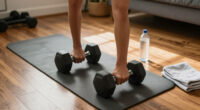
Fit&Well has published a five-move workout using exercise sliders, small discs placed under the feet to make controlled body-weight movements harder. The report says a personal trainer recommends the roughly $10 equipment to clients seeking a workout that challenges the core and glutes without weights, though it does not identify the trainer or specify the product’s price by retailer.
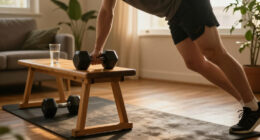
The routine consists of a mountain climber, lateral lunge, high plank step jack, step-back movement and glute bridge heel slide. The instructions call for 10 repetitions per side for each move, with 30 seconds of rest after each exercise. The workout is intended to be completed for two sets, with one minute of recovery between sets.
In the report’s explanation, the sliders add a moving surface that exercisers must control while keeping their bodies steady. For mountain climbers and plank step jacks, the guidance emphasizes maintaining a level, stable position through the torso and hips. For lateral lunges and step-backs, one foot slides while the other supports the body; the bridge variation asks users to keep their hips lifted as they extend and draw in one heel at a time.
The article presents the workout as beginner-friendly and says the trainer regularly recommends sliders to personal-training clients. Those descriptions and the expected muscle engagement are claims in the source report, not findings from a cited trial. The provided material does not include a named trainer, interviews with clients, or measurements of heart rate or strength gains.
A Low-Cost Option for Home Training
The routine is relevant to people looking for a compact, relatively inexpensive alternative to weights for a home workout. Sliders can be used on suitable floors and take up little storage space, while the listed exercises combine upper-body support, leg movement and trunk control. That may make them a practical addition for some people who already exercise and want to vary body-weight sessions.
The report’s headline refers to getting the heart rate up, but the supplied workout instructions do not give a heart-rate target, measured result or pace. Effort will vary with a person’s fitness, how quickly they move and how much rest they take. Readers should treat the routine as an example from a trainer, rather than a guarantee of a particular cardiovascular or muscle-strengthening outcome.
There is also a useful distinction between equipment cost and suitability: the source gives an approximate price but does not discuss floor type, slider designs, or alternatives such as socks on a smooth surface. People new to exercise or returning after an injury may need to adapt the movements and seek guidance from a qualified professional, particularly if they have a pre-existing health condition.
exercise sliders for core and glutes
As an affiliate, we earn on qualifying purchases.
As an affiliate, we earn on qualifying purchases.
How the Slider Routine Is Structured
The article’s central point is that sliders change how familiar exercises feel by making the foot move across the floor. The exerciser must control that motion on the way out and back, rather than simply placing the foot down. Fit&Well says this can increase the time muscles spend under tension and require the trunk to remain stable, but it does not quantify those effects.
The five movements alternate between plank-based and standing exercises, then finish with a floor-based glute bridge. For the plank moves, the instructions call for a straight body line, braced core and steady hips. For the standing moves, they emphasize keeping the supporting leg controlled and returning the sliding foot with the glutes engaged. In the bridge, the pelvis is meant to stay level while one heel slides away and returns.
The suggested volume is specific: 10 repetitions on each side for each exercise, 30 seconds of rest after a move, and two rounds with a one-minute break between rounds. The source does not say how long the full session should take or set a weekly schedule. Its guidance is therefore a single workout template, not a complete training plan.
“There’s a $10 piece of fitness equipment I regularly recommend to my personal training customers who want a stronger core and glutes: sliders.”
— Fit&Well report, describing the trainer’s recommendation
As an affiliate, we earn on qualifying purchases.
Evidence and Equipment Details Missing
The source material does not identify the trainer, provide a publication date, or link the recommendation to a named study. It also offers no test results showing how much the workout raises heart rate or changes core and glute strength. The described effects should be understood as the report’s rationale for using sliders, not independently verified outcomes.
Other practical details are not provided, including the surface on which the routine was tested, whether the approximate $10 price applies to a particular brand, and what modifications may be appropriate for people with different abilities. The report labels the workout beginner-friendly but does not explain how that label was assessed. Readers should stop if a movement causes pain and seek professional advice before exercising if they have a health condition or injury concern.
sliding discs for bodyweight exercises
As an affiliate, we earn on qualifying purchases.
As an affiliate, we earn on qualifying purchases.
Use the Routine as a Template
The report does not announce a product launch, follow-up study or scheduled next development. Its immediate offering is the five-exercise routine and set-and-rest instructions for readers who want to try slider-based body-weight movements.
Anyone considering the workout can first check that the sliders are compatible with their floor and that the surface is stable and clear. Beginning with controlled movements and adjusting the range or repetitions to personal ability may help keep the exercises manageable. The source gives no progression plan, so it remains unclear whether Fit&Well or the trainer will publish guidance on increasing difficulty or adapting the moves.
As an affiliate, we earn on qualifying purchases.
Key Questions
What equipment does the workout use?
It uses exercise sliders, small discs placed under the feet to allow controlled movement across the floor. Fit&Well describes them as costing about $10, but does not name a brand or retailer.
Which exercises are included?
The five moves are mountain climbers, lateral lunges, high plank step jacks, step-backs and glute bridge heel slides. The instructions focus on controlled movement and keeping the hips or pelvis steady.
How many repetitions and sets does the report suggest?
It recommends 10 repetitions per side for each exercise, 30 seconds of rest after each move, and two full sets with one minute of recovery between sets.
Does the report prove the workout raises heart rate or strengthens muscles?
No measured results or cited study are included in the provided source material. Fit&Well presents the trainer’s view that sliders can make the movements more demanding, but does not report heart-rate data or demonstrated strength gains.
Who should seek advice before trying the routine?
People with a pre-existing health condition, injury or uncertainty about safe movement should consider guidance from a qualified health or exercise professional. Stop if an exercise causes pain, and use a surface and equipment setup that allow stable movement.
Source: rss
Halloween Picks
halloween
As an affiliate, we earn on qualifying purchases.