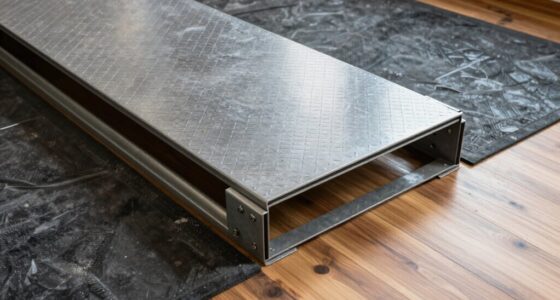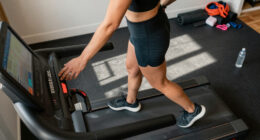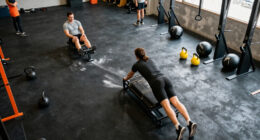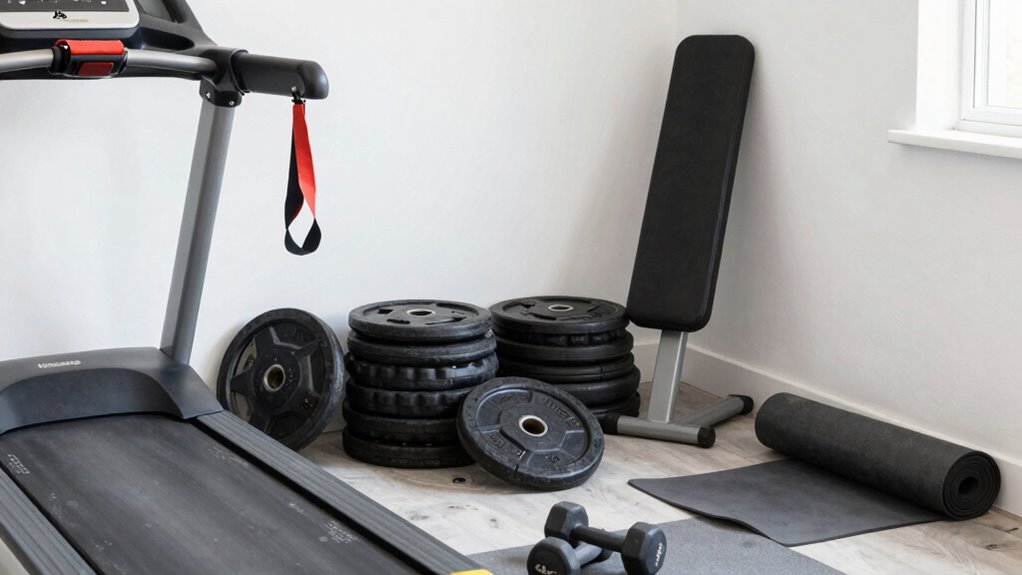

One common spacing mistake in your home gym is crowding equipment too closely, which can cause accidents and injuries. When gear is cramped, it’s harder to move safely, increasing the risk of knocks, falls, or tripping. Proper spacing creates safety zones that keep pathways clear and allow you to perform exercises confidently. If you want to avoid these hazards and set up an effective workout space, understanding proper equipment placement is essential.

Get workout gear delivered free — and shop member deals
- Fast, free delivery on millions of items
- Access to Prime Big Deal Days deals on October 6–7
- Prime Video, Amazon Music and more included
Key Takeaways
- Overcrowding equipment reduces movement space, increasing the risk of knocking over items and causing falls.
- Insufficient clearance around machines can lead to accidental contact or injuries during workouts.
- Blocking pathways or emergency exits hampers quick access to safety features in emergencies.
- Placing heavy or bulky equipment against walls without proper clearance can cause tipping hazards.
- Poorly spaced zones limit safe stretching and free movement, raising the chance of trips and falls.
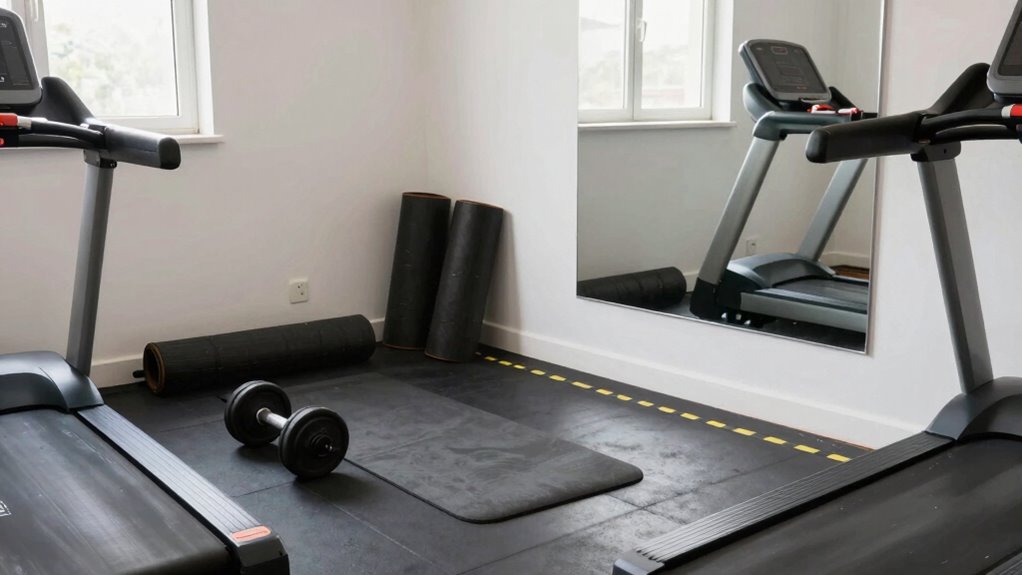
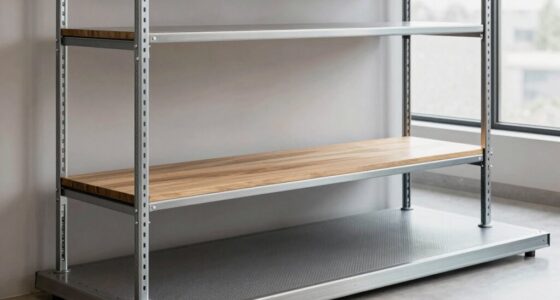
Creating designated safety zones in your home gym is essential to facilitate a productive workout environment. When you organize your space thoughtfully, you not only improve your efficiency but also considerably reduce the risk of accidents. One vital aspect of this organization is proper equipment placement. You want to ensure that each piece of equipment is positioned with enough clearance around it, allowing you to move freely and perform exercises safely. Avoid cluttering the area with unnecessary items, and keep heavier or bulkier equipment against the walls so they don’t obstruct pathways. By doing this, you make it easier to navigate your gym and prevent tripping hazards.
Equally important is maintaining clear emergency access. You should be able to reach exits, fire extinguishers, and first aid supplies quickly in case of an emergency. This means planning your layout with a clear, unobstructed pathway from any point in your gym to these safety features. Don’t block doorways or hide emergency equipment behind furniture or equipment stacks. Instead, create a straightforward route that allows you to respond swiftly if something goes wrong. This simple step can be the difference between a quick response and a dangerous delay in an urgent situation.
When setting up your equipment placement, consider the flow of your workout. Place frequently used items within easy reach, but avoid cramming everything into a small space. Allow enough room for you to perform movements like stretching, lunging, or using free weights without knocking into neighboring equipment. For cardio machines, leave enough space behind and on the sides for safe mounting, dismounting, and maintenance. Remember, a cluttered or cramped layout not only hampers your workout but also increases the risk of falls and injuries, especially if you stumble over misplaced gear. Additionally, paying attention to equipment spacing can significantly enhance your safety and workout experience.
In addition to positioning, pay attention to the flooring beneath your equipment. Non-slip mats or rubber flooring help absorb shock and prevent slipping, further enhancing safety. As you arrange your home gym, keep in mind that safety zones aren’t just about comfort—they’re about creating a space where you can exercise confidently without unnecessary hazards. Proper equipment placement combined with accessible emergency routes makes your home gym a safer, more efficient environment. When every piece of equipment is thoughtfully positioned, and emergency access points are clear and unobstructed, you set yourself up for safer workouts and peace of mind.
As an affiliate, we earn on qualifying purchases.
Frequently Asked Questions
How Often Should I Reassess My Home Gym’s Safety Zones?
You should reassess your home gym’s safety zones every three to six months. Regularly check equipment maintenance to guarantee everything functions properly, and verify that emergency exit planning remains clear and accessible. As you update or add new equipment, adjust the spacing accordingly. Frequent reassessment helps prevent accidents by keeping safety measures current, ensuring you maintain a safe workout environment.
What Are Common Signs of Unsafe Gym Spacing?
You’ll notice unsafe gym spacing when equipment clutter blocks pathways or when there’s improper clearance around machines. If you find yourself squeezing past equipment or if items are piled up, it’s a sign your space isn’t safe. These issues increase the risk of accidents. Regularly check for clutter and guarantee there’s enough room to move freely. Keeping clear zones around your equipment helps prevent injuries and keeps your workout safe.
Can Furniture Placement Impact Gym Safety Zones?
Furnishing your space thoughtfully can be a game-changer for safety. Your furniture arrangement and obstacle placement directly influence your gym’s safety zones. If you place furniture too close or haphazardly, it can make your workout area feel crowded or create unexpected hurdles. Keep pathways clear and maintain adequate space around equipment to prevent accidents. Smart furniture placement guarantees your workout remains safe, enjoyable, and free of unnecessary surprises.
How Do I Prevent Accidental Injuries in Tight Spaces?
To prevent accidental injuries in tight spaces, focus on proper equipment arrangement and obstacle clearance. Keep enough room around each piece of equipment to move safely and avoid collisions. Regularly check that nothing is blocking pathways and adjust furniture or other items that encroach on your workout area. By ensuring clear, open space, you reduce the risk of accidents and create a safer, more effective home gym environment.
Are There Specific Safety Zones for Different Exercise Types?
You might think safety zones are the same for all exercises, but they actually differ based on equipment arrangement and movement space. For strength training, maintain a larger safety zone to avoid collisions with weights or machines. Cardio zones need open space for movement, while stretching areas should be free of obstacles. Following safety zone guidelines helps prevent accidents, ensuring each exercise type gets the appropriate space for safe and effective workouts.
non-slip rubber flooring for home gym
As an affiliate, we earn on qualifying purchases.
As an affiliate, we earn on qualifying purchases.
Conclusion
Remember, safety is no accident. Properly spacing your home gym prevents accidents and keeps your workouts enjoyable. Don’t let a simple mistake turn your fitness goals into setbacks. As the saying goes, “A stitch in time saves nine.” Take a moment now to arrange your safety zones correctly—you’ll thank yourself later. Prioritize your safety today, and your home gym will be a place of progress, not pain.
As an affiliate, we earn on qualifying purchases.
adjustable dumbbell storage rack
As an affiliate, we earn on qualifying purchases.
As an affiliate, we earn on qualifying purchases.
Fall Picks
fall essentials
As an affiliate, we earn on qualifying purchases.