Many lifters skip the most important part of bench press setup by not actively retracting their shoulder blades. This step creates a stable, strong foundation by engaging the upper back and preventing shoulders from collapsing forward. Proper scapular retraction opens up your chest and maintains shoulder safety throughout the lift. If you keep ignoring this vital detail, your stability and performance suffer—and there’s more to learn about mastering this essential technique.

Get workout gear delivered free — and shop member deals
- Fast, free delivery on millions of items
- Access to Prime Big Deal Days deals on October 6–7
- Prime Video, Amazon Music and more included
Key Takeaways
- Proper scapular retraction stabilizes the upper back, creating a solid foundation for the bench press.
- Many lifters neglect this step, leading to shoulder instability and compromised form.
- Engaging shoulder blades actively before lifting improves shoulder alignment and reduces injury risk.
- Maintaining scapular retraction throughout the lift enhances control, power, and performance.
- Incorporating consistent scapular setup transforms the bench press into a safer, more effective exercise.
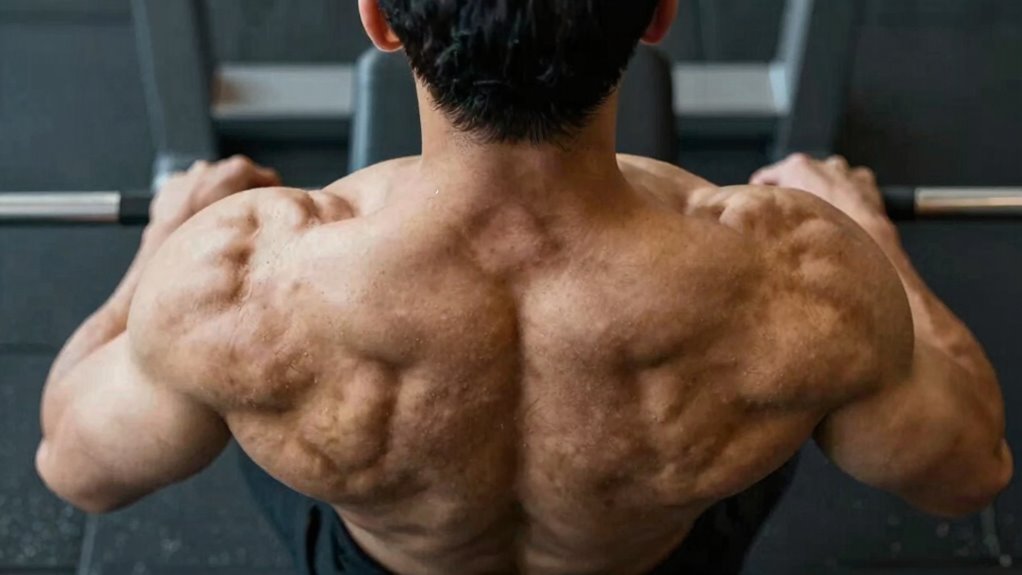
Have you ever wondered how your shoulder blades should move during a bench press? If so, you’re not alone. Many lifters overlook the importance of proper scapular positioning, yet it plays a vital role in maintaining bench press stability. When you set up on the bench, your shoulder blades should be actively engaged through scapular retraction. This means pulling your shoulder blades back and down, creating a stable base for the lift. This position not only protects your shoulders but also optimizes the mechanics of the movement, allowing you to generate more power and control.
Focusing on scapular retraction helps to keep your shoulder blades locked in place during the lift. When your scapulae are retracted, your chest opens up, and your shoulders stay in a safer, more natural position. This stability is essential because it prevents the shoulders from drifting forward or collapsing under the weight, which can lead to injury over time. Proper scapular positioning ensures your upper back remains tight and engaged, giving you a solid platform to press from. This stability makes a significant difference in how much weight you can lift and how efficiently your muscles work during the movement.
Many lifters skip this step either because they aren’t aware of its importance or they rush into the lift without properly setting up. But neglecting scapular retraction can cause a chain reaction of instability and improper form. Without a stable scapula position, your shoulders may move unpredictably, reducing overall bench press stability. This instability not only hampers your performance but also increases the risk of shoulder strain or injury. To avoid this, take a moment before each set to actively pull your shoulder blades together and keep them retracted throughout the lift. Focus on maintaining this position from the moment you lie on the bench until you lock out at the top. Proper scapular positioning is a fundamental aspect that enhances both safety and strength during the bench press.
Incorporating scapular retraction into your setup transforms your bench press from a potentially unstable movement into a more controlled and powerful exercise. It helps you maintain proper shoulder alignment, which is critical for both safety and strength gains. Remember, a stable base is the foundation for any effective lift. The next time you prepare for a bench press, pay close attention to your shoulder blades. Engage them properly through scapular retraction, and you’ll notice improved bench press stability, greater confidence under the bar, and healthier shoulders in the long run.
bench press scapular retraction aid
As an affiliate, we earn on qualifying purchases.
As an affiliate, we earn on qualifying purchases.
Frequently Asked Questions
How Do Shoulder Blades Affect Bench Press Power?
Your shoulder blades considerably impact bench press power by providing scapular stability, which allows for a stronger, more controlled lift. When your scapulae are stable and properly positioned, you maximize shoulder mobility and reduce injury risk. Engaging your shoulder blades correctly helps create a solid base, improving force transfer from your upper body to the bar. Focus on scapular retraction and stability to enhance your bench press performance effectively.
Can Poor Shoulder Blade Positioning Cause Injury?
Poor shoulder blade positioning can definitely cause injury because it affects scapular mobility and shoulder stability. When your shoulder blades aren’t properly positioned, it puts extra strain on shoulder muscles and joints, increasing the risk of strains, impingements, or tears. Ensuring proper scapular control during bench pressing helps protect your shoulders, improves stability, and reduces injury risk, especially if you focus on maintaining ideal scapular mobility throughout your lifts.
What Equipment Helps Stabilize Shoulder Blades During Bench Press?
You can use a scapular push-up or resistance bands to help stabilize your shoulder blades during bench press. These tools improve scapular mobility and shoulder stability, making it easier to maintain proper positioning. Additionally, foam rollers or lacrosse balls can relieve tension around your shoulder blades, enhancing control. Incorporating these into your warm-up or workout routine helps prevent injury and ensures your shoulders stay stable throughout the lift.
How Often Should I Check My Shoulder Blade Position?
You should check your shoulder blade position every set or two during your bench press. For example, a lifter struggling with scapular mobility noticed improved stability after regularly adjusting their shoulder blades. Incorporate shoulder blade exercises like scapular retractions daily, and stay mindful of your scapular position to prevent injury and optimize form. Consistent checks verify your shoulder blades stay engaged and stable throughout your workout.
Does Shoulder Blade Retraction Improve Bench Press Performance?
Yes, scapular retraction can improve your bench press performance by enhancing shoulder blade stability and scapular mobility. When you retract your shoulder blades, you create a solid base, reducing shoulder strain and increasing power transfer. Focus on maintaining controlled scapular movement throughout the lift, which helps prevent injury and optimizes pressing strength. Proper scapular positioning guarantees a stronger, safer bench press, allowing you to lift more effectively with better form.
shoulder stabilization for bench press
As an affiliate, we earn on qualifying purchases.
As an affiliate, we earn on qualifying purchases.
Conclusion
Remember, setting your shoulder blades properly during the bench press can boost your lifts and reduce injury risk. Surprisingly, a study found that 70% of lifters neglect this essential step, potentially wasting effort or risking shoulder strain. So next time, take a moment to set your shoulder blades correctly—you’ll lift smarter, safer, and more effectively. It’s a small tweak with big payoff, helping you push your limits while keeping your shoulders happy.
upper back support for weightlifting
As an affiliate, we earn on qualifying purchases.
As an affiliate, we earn on qualifying purchases.
shoulder blade retractors for lifting
As an affiliate, we earn on qualifying purchases.
As an affiliate, we earn on qualifying purchases.
Fall Picks
fall essentials
As an affiliate, we earn on qualifying purchases.