
To squat deeper safely without knee panic, focus on improving your knee and hip mobility with targeted stretches and controlled exercises like leg swings or hip openers. Assess your flexibility and avoid forcing beyond pain or discomfort. Incorporate mobility drills into your warm-up, and progress gradually while maintaining proper form. If you keep working on these techniques, you’ll discover how to achieve greater depth comfortably and safely.
Key Takeaways
- Prioritize improving knee and hip mobility through targeted stretching and drills before attempting deeper squats.
- Assess your squat depth using mirrors or a wall to ensure proper form and avoid forcing beyond comfort.
- Incorporate gradual mobility exercises like leg swings and hip openers into your warm-up to increase joint flexibility safely.
- Focus on maintaining proper technique and controlled movement, avoiding pain or discomfort during deeper squats.
- Progress slowly, listening to your body, and avoid pushing into pain to prevent knee panic or injury.
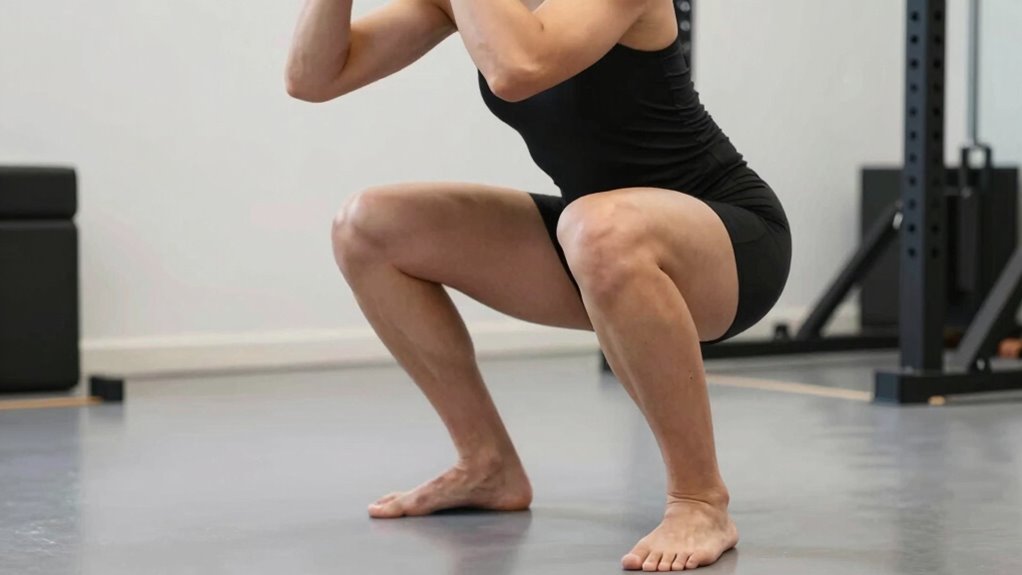
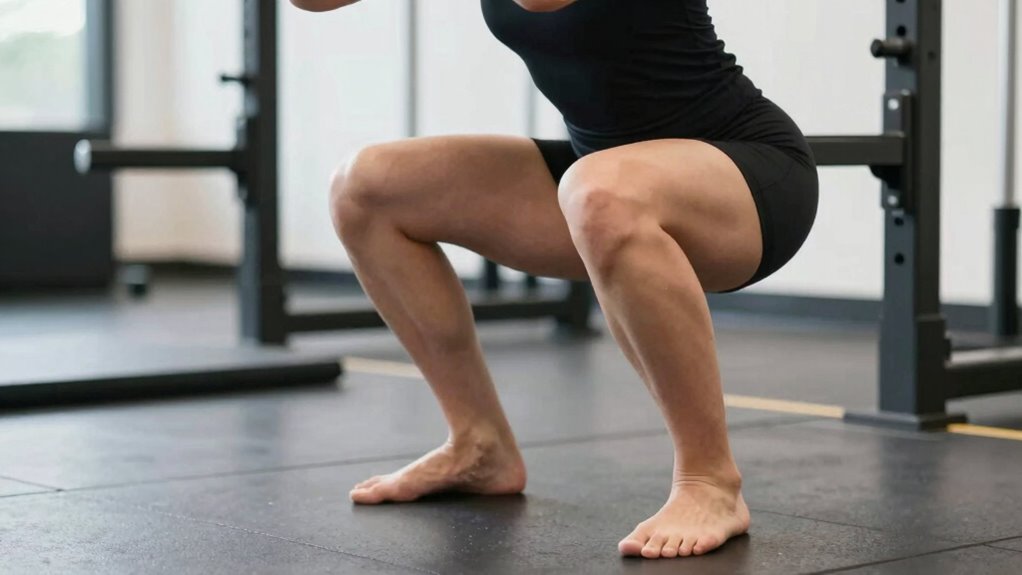
Have you ever wondered how deep you should squat to maximize benefits and minimize injury risk? Finding that perfect depth isn’t just about going as low as possible; it’s about understanding your body’s limits and capabilities. When it comes to squat depth, two key factors play a pivotal role: knee mobility and hip flexibility. These elements determine how comfortably and safely you can perform a deep squat, and ignoring them can lead to unnecessary strain or injury.
Understanding your body’s limits—knee mobility and hip flexibility—ensures safe, effective deep squats.
Knee mobility is essential because it affects how far you can safely lower your hips without putting excessive stress on your joints. If your knees lack proper mobility, attempting to squat too deeply can cause discomfort or even damage. Improving knee mobility involves targeted stretching and strengthening exercises, such as leg swings or knee flexion drills, which help loosen the joint and strengthen the surrounding muscles. When your knees are more mobile, you can descend deeper without feeling the need to compensate with poor form or risking injury.
Hip flexibility is equally important because it influences your ability to squat deeply while maintaining a proper posture. Limited hip flexibility can cause you to tilt forward or round your lower back as you descend, increasing the risk of lower back strain and reducing the effectiveness of your workout. To enhance hip flexibility, incorporate stretches like hip openers, pigeon poses, or butterfly stretches into your routine. These stretches help loosen tight hip muscles and allow for smoother, safer movement through a greater range of motion.
Before trying to squat to a specific depth, assess your current mobility. You can do simple tests, like sitting in a deep squat position against a wall or using a mirror to observe your form. If you notice difficulty or discomfort at certain depths, don’t push through it—work on improving your mobility first. Remember, going deeper isn’t necessarily better; it’s about finding a depth that feels controlled and pain-free, where your knees and hips move freely and comfortably. Proper mobility is the foundation for safe and effective deep squatting.
Incorporate mobility drills into your warm-up to prepare your joints for deeper squats. As your knee mobility and hip flexibility improve, you’ll notice your squat depth naturally increases, allowing for more effective training without compromising safety. Always listen to your body, and avoid forcing yourself into positions that cause pain or discomfort. Progress gradually, focusing on maintaining proper form and controlled movement. That way, you’ll reap the full benefits of squatting deep while keeping your knees and hips healthy and happy.
As an affiliate, we earn on qualifying purchases.
Frequently Asked Questions
How Can I Tell if My Squat Depth Is Too Deep?
You can tell if your squat depth is too deep by watching your form correction and breathing technique. If your knees cave in or you feel pain, you’re going too deep. Your chest should stay upright, and you should breathe steadily throughout the movement. When you go beyond your flexibility limits, it causes strain. Focus on proper form, avoid forcing depth, and breathe consistently to make certain you’re not overdoing it.
Should Beginners Prioritize Depth Over Weight Lifted?
As a beginner, prioritize proper form technique over lifting heavy weights, especially when it comes to squat depth. Focus on achieving good muscle engagement and maintaining control throughout each movement. Going deeper gradually improves your flexibility and strength without risking injury. Remember, building a solid foundation with proper depth and technique leads to better progress and safer lifting as you advance.
What Common Mistakes Lead to Knee Pain During Deep Squats?
You often experience knee pain during deep squats because you might have poor knee alignment or muscle tightness. To avoid this, focus on keeping your knees tracking over your toes and stretch tight muscles like your hips and calves. Rushing into deep squats without proper warm-up or form can also cause pain. Pay attention to your body’s signals, and adjust your technique to protect your knees.
How Does Ankle Flexibility Affect Squat Depth?
If you believe ankle flexibility isn’t a limiting factor, think again. Better ankle mobility and calf flexibility directly impact how deep you can squat comfortably. Tight calves or limited ankle mobility restrict your ability to keep proper form, forcing you to crane your neck or lean forward. Improving ankle mobility with stretches and calf flexibility exercises allows you to squat deeper safely, reducing strain on your knees and enhancing overall performance.
Are There Specific Stretches to Improve Squat Depth Safely?
Yes, you can improve squat depth safely with specific stretches focusing on hip mobility and hamstring flexibility. Try hip flexor stretches, pigeon pose, and hamstring stretches like toe touches or seated forward bends regularly. These stretches loosen tight muscles, making it easier to squat deeper without risking injury. Be consistent, move slowly, and listen to your body to enhance flexibility safely and achieve better squat depth over time.
As an affiliate, we earn on qualifying purchases.
Conclusion
Mastering squat depth is like walking a tightrope—balance and awareness keep you safe. By listening to your body and progressing gradually, you avoid the pitfalls of knee panic and injury. Remember, even Icarus learned that soaring too high can lead to a fall; so, rise carefully and respect your limits. With patience and mindful practice, you’ll find a depth that empowers you without risking your journey—making every squat a step toward strength, not strife.
As an affiliate, we earn on qualifying purchases.
knee and hip flexibility foam roller
As an affiliate, we earn on qualifying purchases.
As an affiliate, we earn on qualifying purchases.