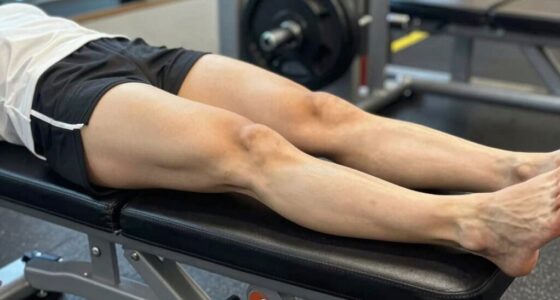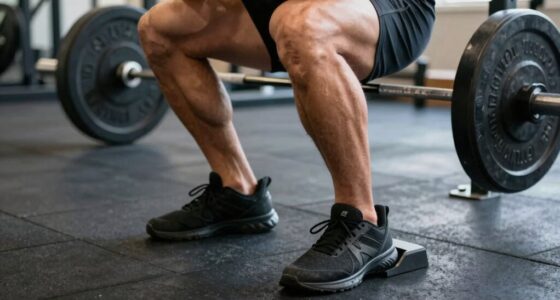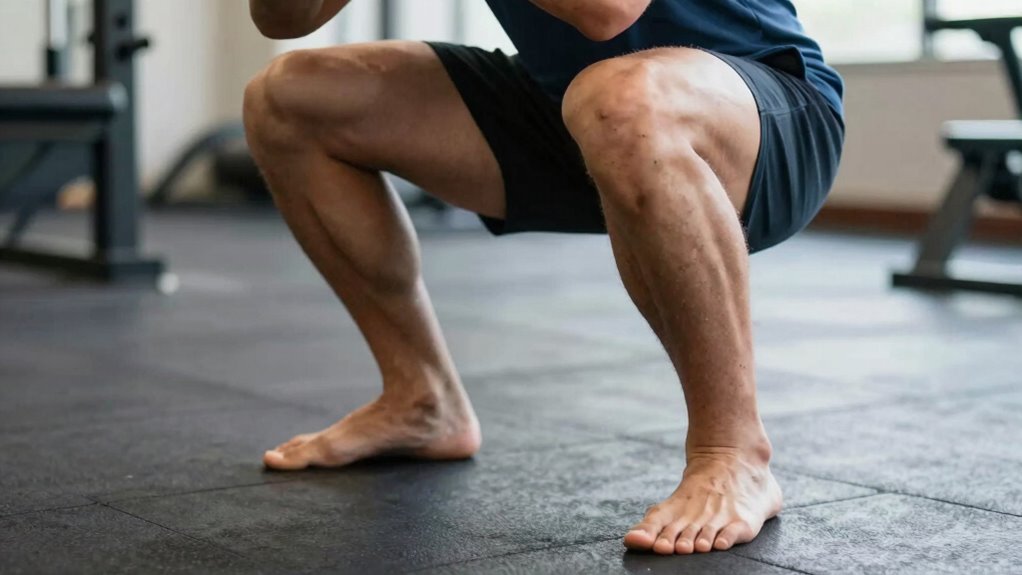

To find your ideal squat stance width quickly, stand naturally with your feet shoulder-width apart and perform a few test squats. Pay attention to how your hips, knees, and ankles feel—choose a stance where your hips move freely without discomfort and your form stays solid. Adjust slightly if needed, keeping your chest up and spine neutral. If you want to learn more about fine-tuning your stance for maximum performance and safety, keep exploring the options.

Get workout gear delivered free with Prime
- Fast, free delivery on millions of items
- Prime Video, Amazon Music and more included
- Member-only deals all year
Key Takeaways
- Start with a shoulder-width stance to assess comfort and mobility during squats.
- Perform bodyweight squats and observe knee tracking and hip movement for natural feel.
- Adjust stance gradually wider or narrower, noting where hips feel loose and movement is smooth.
- Use mirrors or recordings to check for proper alignment and absence of knee caving or heels rising.
- Find the stance where you maintain proper form, stability, and minimal discomfort for optimal performance.
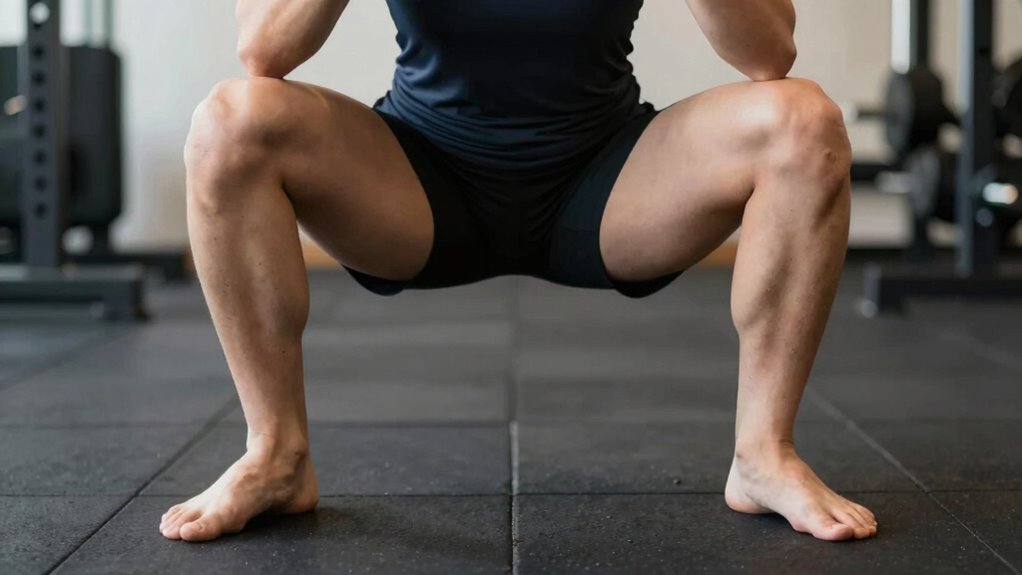
Choosing the right squat stance width is essential for maximizing your performance and preventing injury. Your stance influences how comfortably and effectively you can squat, so finding what works best for your body is key. One of the most important factors to contemplate is your hip flexibility. If your hips are more flexible, you may feel comfortable with a wider stance, allowing for greater depth and stability. Conversely, limited hip flexibility might mean a narrower stance is more suitable, reducing strain and making the movement smoother. The goal is to find a stance that allows you to maintain proper form without forcing your hips into uncomfortable positions. Additionally, understanding how movement mechanics interact with your stance can help you refine your technique for better results. Bar placement plays a significant role in optimizing your squat stance as well. When you adopt a stance that feels natural and allows for proper bar positioning, it becomes easier to keep your torso upright and your core engaged. For example, a high-bar squat typically pairs well with a shoulder-width stance, which aligns with a more upright torso, while a low-bar squat might benefit from a slightly wider stance to accommodate the bar’s position across your back. Experimenting with bar placement helps you discover your ideal stance width, as it impacts how your hips, knees, and ankles coordinate during the movement. When the bar feels stable and balanced, you’re more likely to execute the squat safely and with power. To find your best stance, start with a natural, shoulder-width position and assess how your hips feel during the movement. Pay attention to whether your hips feel tight or loose, and notice if you’re able to descend comfortably without your knees caving inward or your heels lifting off the ground. You should be able to sit back into the squat while keeping your chest up and maintaining a neutral spine. Adjust your stance gradually—widen it if you notice your hips open up more freely or narrow it if you feel strain in your hips or knees. Incorporate a mirror or record your squat to check for proper bar placement and alignment, ensuring your hips and knees are tracking correctly.
As an affiliate, we earn on qualifying purchases.
Frequently Asked Questions
How Often Should I Reassess My Squat Stance Width?
You should reassess your squat stance width every few months or when you notice discomfort, mobility issues, or flexibility considerations. Regular checks help guarantee proper stance adjustments, optimizing performance and safety. As your flexibility or strength improves, your stance may need slight tweaks. Listen to your body and make adjustments accordingly, especially if you experience pain or restricted movement, to maintain effective and safe squatting habits over time.
Can Stance Width Affect My Squat Depth?
Yes, stance width can affect your squat depth because it influences stance comfort and joint alignment. When your stance is too narrow or wide, it may restrict your movement or cause discomfort, limiting how deep you can go safely. Finding the right stance guarantees proper joint alignment, allowing you to squat deeper without risking injury. Adjust your stance as needed to optimize comfort and depth, especially as your flexibility and strength improve.
Is There an Ideal Stance Width for Beginners?
There isn’t a one-size-fits-all ideal stance width for beginners because body mechanics and stance comfort vary. You should start with a shoulder-width stance and adjust based on how comfortable and stable you feel. Focus on maintaining proper form and balance, and listen to your body. As you progress, experiment with slight width changes to find what best supports your squat depth and overall technique.
How Does Hip Flexibility Influence Stance Choice?
If you think hip flexibility isn’t a big deal, think again. Poor hip mobility can turn your perfect squat stance into a pelvic tilt nightmare. When your hips are tight, you’ll likely opt for a narrower stance to avoid discomfort, but that might compromise your form. Improving your hip mobility helps you find a stance that feels natural, keeps your pelvis aligned, and makes squatting less like a contortionist act.
Can Stance Width Prevent Squat-Related Injuries?
Yes, stance width can help prevent squat-related injuries by promoting proper alignment of your hip joint. When you choose a stance that suits your body, you reduce unnecessary strain on your hips, knees, and lower back. Proper stance encourages safer movement patterns, lowers the risk of injury, and supports long-term joint health. Always listen to your body and adjust your stance to maintain comfort and ideal biomechanics during squats.
As an affiliate, we earn on qualifying purchases.
Conclusion
Finding your perfect squat stance width can boost your performance and prevent injuries. Did you know that studies show over 60% of lifters experience discomfort when using an improper stance? By doing this quick test, you’ll identify the stance that feels most natural and powerful for your body. So, don’t settle for a generic width—test, adjust, and optimize your squat for better gains and safer lifts.
As an affiliate, we earn on qualifying purchases.
As an affiliate, we earn on qualifying purchases.
Halloween Picks
halloween
As an affiliate, we earn on qualifying purchases.