

To progress safely with weighted vest training and avoid joint pain, increase weight gradually—start with a light vest and add small increments. Focus on proper technique, maintaining neutral spine and joint alignment, and wear supportive footwear. Listen to your body, and if you feel discomfort, reduce weight or take a break. Incorporate joint mobility exercises and recovery days to prevent overuse. Keep these tips in mind to protect your joints as you advance—more guidance lies ahead.

Get workout gear delivered free with Prime
- Fast, free delivery on millions of items
- Prime Video, Amazon Music and more included
- Member-only deals all year
Key Takeaways
- Gradually increase vest weight, starting at 5-10% of your body weight, to allow joints to adapt safely.
- Maintain proper form with neutral spine, aligned knees, and correct foot placement to minimize joint stress.
- Incorporate joint mobility and stability exercises into warm-ups and cool-downs for flexibility and resilience.
- Listen to your body; reduce weight or take rest if you experience discomfort, swelling, or instability.
- Use supportive footwear and ensure proper technique to protect joints during progressive weighted vest training.
As an affiliate, we earn on qualifying purchases.
How to Safely Progress With Weighted Vest Training and Avoid Joint Pain

To safely progress with weighted vest training and avoid joint pain, you need to listen to your body and increase the load gradually. Focus on core engagement to maintain stability and proper alignment during exercises. This helps distribute the weight evenly and reduces strain on your joints. Incorporate breathing techniques, such as deep, controlled breaths, to enhance oxygen flow and maintain focus. Proper breathing also supports core activation, which is essential for safe movement. Start with a light vest and gradually add weight as your strength improves, never rushing the process. Pay attention to how your joints feel—if you experience discomfort, reduce the load or pause. Consistent core engagement and mindful breathing are key to progressing safely and minimizing joint stress. Exploring safe training practices can also provide valuable tips and visual demonstrations to enhance your training approach. Additionally, understanding joint health and how to protect it during weight-bearing exercises can help prevent pain and injury. Incorporating regular rest and recovery routines is also crucial for long-term joint health and overall progress. Being mindful of progression pace ensures you avoid overloading too quickly, which can lead to joint discomfort.
As an affiliate, we earn on qualifying purchases.
Understanding Joint Pain Risks When Using Weighted Vests

While weighted vests can enhance your training, they also pose risks for joint pain if not used carefully. Excess joint stress from added weight can lead to discomfort or injury, especially if you overload too quickly. Ligament strain may occur when your joints are forced beyond their natural range or stability, increasing the risk of sprains or tears. Poor alignment during exercises amplifies this danger, putting unnecessary pressure on your knees, hips, or shoulders. It’s essential to understand how your body responds to the extra load and avoid pushing through pain. Recognizing early signs of joint stress or ligament strain allows you to adjust your training before serious injury happens. Using proper cycling gear and technique can help prevent misalignment and reduce joint stress. Incorporating body awareness and gradual progression can further safeguard your joints and improve overall training effectiveness. Being mindful of these risks helps you train effectively while protecting your joints long-term.
joint mobility exercise equipment
As an affiliate, we earn on qualifying purchases.
As an affiliate, we earn on qualifying purchases.
Mastering Proper Technique to Protect Your Joints During Vest Workouts
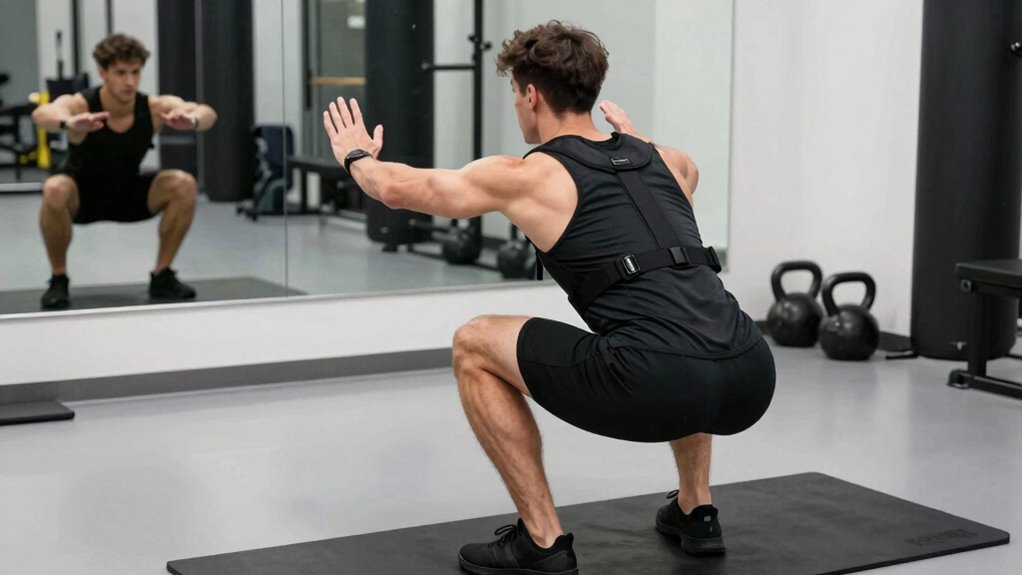
Proper technique is key to safeguarding your joints when training with a weighted vest. Ensuring correct joint alignment prevents unnecessary strain and reduces injury risk. Focus on maintaining a neutral spine, aligned knees, and proper foot placement. Supportive footwear is essential; choose shoes with good arch and ankle support to absorb impact and keep your joints healthy. Check out this quick guide: proper joint alignment can significantly improve your training safety and effectiveness. Additionally, paying attention to joint movement patterns helps prevent compensations that could lead to injuries. Incorporating joint stability exercises into your routine can further enhance joint resilience during weighted vest workouts. Being aware of existing AI ethics guidelines can also help you make safer, more informed choices in your training. Recognizing biomechanical principles ensures that movements are performed efficiently, reducing undue stress on your joints.
As an affiliate, we earn on qualifying purchases.
How to Choose and Progress Your Weighted Vest Weight Safely

Choosing the right weight for your vest is crucial to avoid injury and maximize benefits. With a diverse weighted vest variety, it’s important to select a starting point that matches your fitness level. To progress safely, consider these weight adjustment techniques: 1. Begin with a light vest, around 5-10% of your body weight, to gauge comfort. 2. Gradually increase weight by small increments as your strength improves. 3. Use adjustable vests for precise weight control, simplifying progression. 4. Monitor your body’s response regularly, ensuring no joint discomfort or strain occurs. Additionally, understanding joint safety is essential when increasing load to prevent injury. Incorporating proper training progression strategies can further help in avoiding joint pain and promoting sustained improvements. Regularly assessing training intensity can help you optimize your workouts and prevent overexertion. Being mindful of musculoskeletal health can help maintain long-term joint integrity throughout your training journey. Paying attention to muscle imbalances can also prevent uneven wear and tear on your joints, promoting overall safety and effectiveness.
Recognizing Joint Strain and Knowing When to Adjust or Rest

Pay attention to early signs of discomfort in your joints, like persistent pain or tightness, to prevent injury. Common overuse signs include swelling or decreased range of motion, signaling it’s time to adjust your training. Restoring balance by taking breaks or reducing weight helps protect your joints and keeps your progress safe. Incorporating proper air quality/health practices can also support overall recovery and well-being. Monitoring joint health indicators regularly allows for timely adjustments and promotes long-term training success. Additionally, ensuring proper nutrition supports joint integrity and overall performance. Being aware of your electric dirt bike horsepower can help you tailor your training intensity to avoid joint strain during high-performance activities. Recognizing training progress and listening to your body are essential for sustainable improvements and preventing setbacks.
Spotting Early Discomfort
Recognizing early signs of joint discomfort is essential when using a weighted vest, as ignoring these cues can lead to injury. Your body often provides early warnings before pain intensifies. Pay attention to these signals to prevent overuse.
Here are key indicators:
- A dull ache or stiffness that persists after exercise
- Increased joint sensitivity or swelling during or after activity
- A feeling of instability or looseness in the joint
- Mild discomfort that worsens with continued activity
- Changes in piercing healing or irritation can also be a sign that your joints need a break
These signs are your body’s early warning system, signaling that you need to adjust your training. By catching these symptoms early, you can modify your intensity, rest, or seek professional advice to avoid more serious joint discomfort down the line. Incorporating aquatic exercise into your routine can also help reduce joint strain while maintaining your fitness goals. Being attentive to joint health is crucial for long-term progress and injury prevention. Additionally, understanding proper weighted vest usage techniques can further help prevent undue stress on your joints. Staying informed about safety tips for your DIY and fitness projects can also contribute to overall joint safety and injury prevention.
Common Overuse Signs
Overuse signs often appear as persistent joint discomfort that worsens with continued activity, signaling that your body is under strain. You might notice swelling or stiffness indicating joint inflammation, which suggests you’re pushing beyond safe limits. Pain during or after training, especially if it lingers, can also point to cartilage wear, a sign of overloading the joint structures. Pay attention to sensations of grinding or instability, as these may signal that your joints are under stress. Ignoring these signs increases the risk of long-term damage. If you experience persistent discomfort, it’s vital to adjust your training intensity or take rest days. Recognizing these overuse signs early helps prevent joint inflammation from escalating and protects your joints from irreversible wear.
Restoring Balance Safely
Understanding when your joints are strained is essential to maintaining safe training, especially when using weighted vests. Recognizing early signs of discomfort allows you to prioritize balance restoration and prevent injury. If you experience persistent pain, increased joint swelling, reduced range of motion, or joint instability, it’s time to adjust or rest.
To guarantee safety precautions:
- Listen carefully to your body signals and avoid pushing through pain.
- Reduce vest weight or intensity if discomfort persists.
- Incorporate rest days to facilitate recovery and balance restoration.
- Consult a professional if joint strain continues, ensuring proper form and load management.
Rest and Recovery Tips to Prevent Overuse Injuries

To prevent overuse injuries during weighted vest training, prioritizing proper rest and recovery is essential. Focus on hydration strategies by drinking enough water throughout the day, especially after workouts, to support muscle repair and reduce fatigue. Sleep optimization is equally important; aim for 7-9 hours of quality sleep each night to allow your body to recover and adapt. Incorporate rest days into your routine, giving your joints and muscles time to repair and prevent strain buildup. Listen to your body and avoid pushing through persistent pain or fatigue. By maintaining good hydration and sleep habits, you enhance your recovery process, reduce injury risk, and ensure steady progress in your weighted vest training journey.
Gradually Increasing Intensity Without Hurting Your Joints

As you increase the intensity of your weighted vest workouts, it’s important to do so gradually to protect your joints from strain and injury. Proper weighted vest calibration guarantees you’re adding weight safely, avoiding sudden jumps that could cause harm. To further safeguard your joints, incorporate joint mobility exercises into your warm-up routine, enhancing flexibility and reducing stiffness. Here are four steps to progress wisely:
- Gradually increase weight, avoiding abrupt changes.
- Perform joint mobility exercises regularly to maintain flexibility.
- Use controlled movements during exercises to prevent joint stress.
- Listen to your body and reduce intensity if discomfort arises.
Frequently Asked Questions
Can Weighted Vest Training Benefit Older Adults or Those With Pre-Existing Joint Issues?
Yes, weighted vest training can benefit older adults or those with joint issues when you focus on joint-friendly modifications and safe progression. You should start with light weights and gradually increase intensity, listening to your body. Incorporate low-impact movements and guarantee proper form. Consulting with a healthcare professional before beginning ensures your training is tailored to your needs, reducing the risk of joint pain and promoting strength safely.
Are There Specific Exercises More Suitable for Joint Safety During Weighted Vest Use?
You can safely use weighted vests with joint-friendly exercises like wall push-ups, seated squats, and gentle step-ups. These low-impact modifications protect your joints while still building strength. Always start with light weights and focus on proper form to avoid joint strain. Incorporating these safer options makes your workout more enjoyable and sustainable, helping you progress without risking joint pain. Your joints will thank you for choosing smarter, safer exercises!
How Often Should I Incorporate Rest Days When Increasing Vest Weight?
You should incorporate rest days every 3 to 4 training sessions when increasing your vest weight. This rest day scheduling allows your joints and muscles to recover, reducing the risk of overuse injuries. Adjust your training frequency based on how your body feels; if you notice joint pain or fatigue, add more rest days. Listening to your body helps you progress safely and effectively without risking joint discomfort.
What Are Signs of Overtraining or Joint Overload During Vest Workouts?
You’ll notice signs of overtraining or joint overload through increased muscle fatigue, which feels unusually intense or persistent, and joint swelling, making your joints look puffier or feel tender. If you experience these symptoms during vest workouts, it’s a sign to reduce weight, take extra rest, or modify your routine. Listening to your body helps prevent joint damage and guarantees safe progress without pain.
Can Weighted Vest Training Be Combined With Other Low-Impact Exercise Methods?
Imagine your workout as a symphony—adding variety keeps the melody fresh. You can definitely combine weighted vest training with bodyweight exercises and resistance bands for a low-impact, harmonious routine. This mix strengthens muscles without pounding your joints. Incorporate resistance bands for added resistance and bodyweight moves for functional strength. This balanced approach lets you progress safely, building resilience and confidence without risking joint pain or overtraining.
Conclusion
Think of your weighted vest journey as climbing a mountain—steady steps lead to the summit without tripping on joint pain. By listening to your body, mastering proper form, and progressing gradually, you’ll strengthen your foundation without risking injury. Keep your pace gentle yet determined, and soon you’ll reach new heights. Remember, patience is your trusted guide on this path—so stay mindful, and enjoy the view from the top.
Halloween Picks
halloween
As an affiliate, we earn on qualifying purchases.