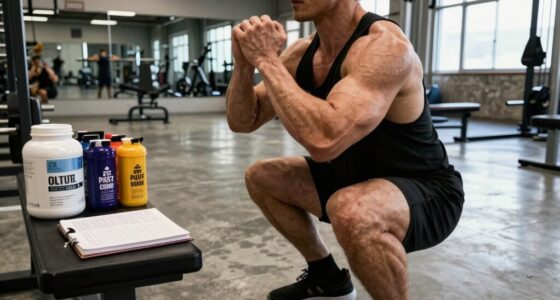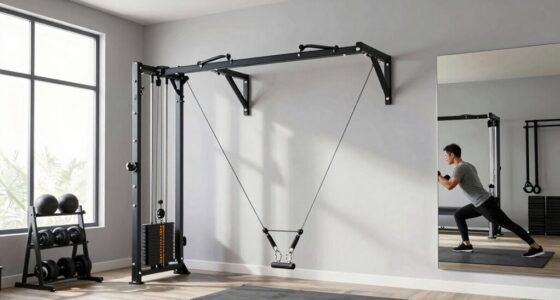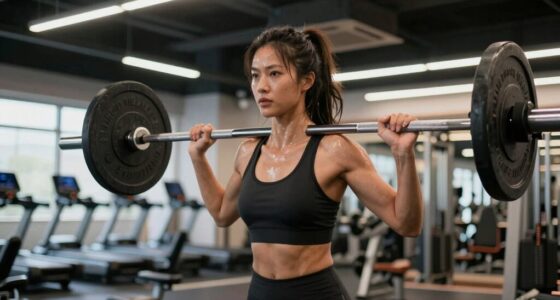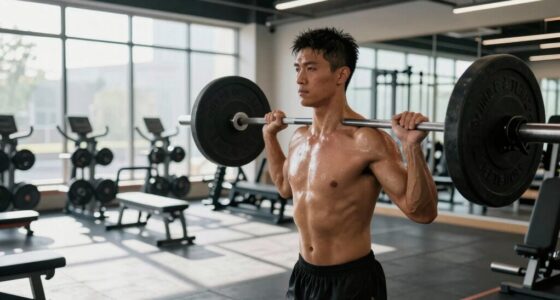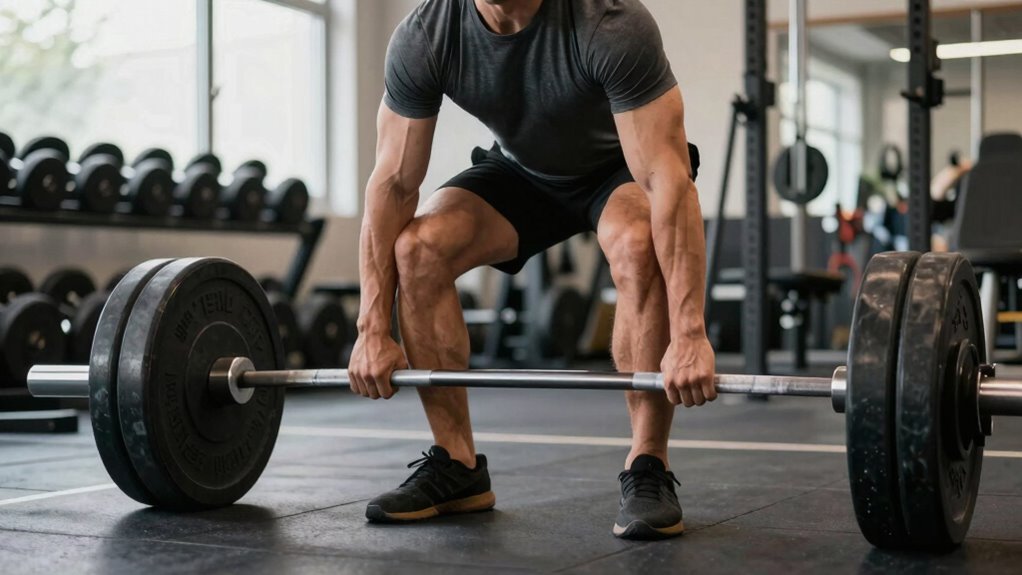
To build a program around one main lift, focus on progressively increasing load through small, consistent increments while dedicating most of your session to that movement. Incorporate accessory exercises that target muscles involved in the main lift to strengthen weak areas and prevent plateaus. Track your progress, adjust volume and intensity accordingly, and vary your auxiliary work periodically. Continuing will reveal how to balance these elements for ideal strength gains and sustained improvement.
Open a free Amazon Business account
Business pricing, bulk buying and tax-exempt orders.
As an affiliate, we earn on qualifying purchases.
Key Takeaways
- Prioritize the main lift by dedicating most session time and focusing on progressive overload strategies.
- Use accessory exercises to strengthen muscles involved in the main lift and address weaknesses.
- Track progress consistently to adjust weight, volume, and intensity effectively.
- Structure sessions to gradually increase load or reps, ensuring steady strength gains.
- Keep workouts efficient by minimizing distractions and maintaining a focused, disciplined approach.
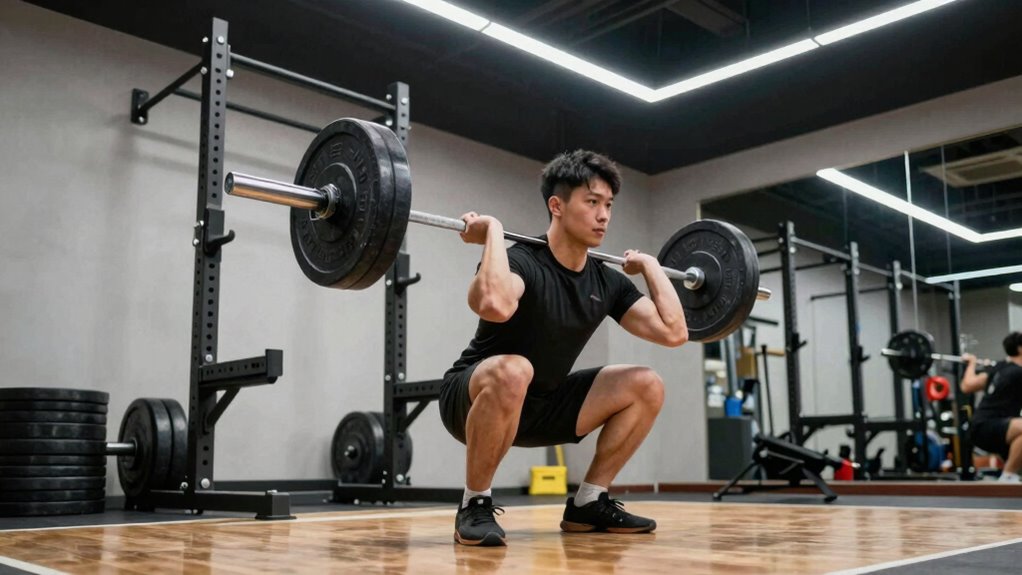
Focusing your training around one main lift can maximize strength gains and streamline your workout routine. When you center your program on a primary movement like the squat, deadlift, or bench press, you create a clear path for progression. You can track improvements more easily and avoid getting sidetracked by less impactful exercises. To make the most of this approach, you need to develop effective progression strategies. These strategies involve gradually increasing the load, volume, or intensity of your main lift over time, ensuring continuous adaptation. For example, you might add small weight increments weekly or increase the number of sets and reps as your strength improves. The key is consistency and patience, allowing your body to adapt without risking injury or burnout. Incorporating Free Floating techniques can also help maintain joint health and improve overall lifting performance. Equally important is selecting accessory exercises that complement your main lift. These exercises should target the muscles involved and address weaknesses that limit your progress. For instance, if your main lift is the squat, including accessory movements like lunges, step-ups, or hamstring curls can strengthen supporting muscle groups. Proper accessory exercise selection helps you build balanced strength, improve stability, and prevent plateaus. When choosing these exercises, focus on movements that enhance your main lift rather than distract from it. Keep the volume moderate to avoid overtraining, and prioritize quality over quantity to maximize gains. In your training plan, dedicate most of your session to the main lift, applying progressive overload through your chosen progression strategies. Use accessory exercises to fill in gaps, correct imbalances, and reinforce your primary movement. This targeted approach allows you to spend your energy efficiently, focusing on what moves the needle most for your strength development. Remember to vary your accessory exercises periodically to challenge your muscles differently and promote continued growth. Tracking your progress meticulously is essential—note weights, reps, and how you feel during each session. This data guides adjustments, ensuring your program remains effective and aligned with your goals. Ultimately, building a program around one main lift hinges on disciplined progression strategies and thoughtful accessory exercise selection. By emphasizing consistent overload on your primary movement and supporting it with complementary exercises, you create a focused, efficient training regimen. This method not only accelerates strength gains but also simplifies your workout planning, making it easier to stay motivated and committed over the long term.
adjustable dumbbell set for strength training
As an affiliate, we earn on qualifying purchases.
As an affiliate, we earn on qualifying purchases.
Frequently Asked Questions
How Do I Choose the Best Main Lift for My Goals?
To choose the best main lift for your goals, focus on exercise selection that aligns with what you want to achieve. If you’re aiming for strength, consider the squat, deadlift, or bench press; for muscle building, pick movements that target your priority areas. Match the lift with your goals, guarantee proper technique, and prioritize consistency. The right main lift should challenge you while supporting your overall progress and long-term goals.
How Often Should I Vary Accessory Exercises?
You should vary your accessory exercises every 4 to 6 weeks to keep your muscles adapting and prevent plateaus. Incorporate exercise rotation to target different muscle groups and movement patterns, which helps avoid overuse injuries and maintains motivation. Pay attention to your progress; if you stop seeing gains, it’s time to adjust your accessory frequency and introduce new variations to challenge your muscles in different ways.
What Are Signs of Overtraining With One Main Lift?
You might notice signs of overtraining with your main lift if you feel persistent muscle imbalance or mental fatigue. Your performance may plateau or decline, and you could experience decreased motivation or difficulty concentrating. Other signs include increased soreness, irritability, or trouble sleeping. If these symptoms persist, it’s a clear signal to reduce intensity, rest more, and assess your program to prevent injury and promote recovery.
How Do I Prevent Plateaus in My Main Lift Progress?
To prevent plateaus in your main lift progress, incorporate periodization strategies that vary intensity and volume over time. Adjust your training phases to avoid stagnation and promote continuous growth. Also, pay attention to nutrition timing by fueling your workouts properly and recovering adequately afterward. These approaches keep your body adapting, help you break through plateaus, and guarantee steady progress in your main lift.
Can I Incorporate Cardio While Focusing on One Main Lift?
You can definitely incorporate cardio while focusing on your main lift; just keep it subtle and well-timed. Cardio integration can boost your overall stamina without overshadowing your strength goals. To maintain accessory balance, schedule cardio on rest days or after lifting sessions, ensuring it complements rather than competes with your main lift progress. This balanced approach helps you stay healthy, energized, and steadily advancing toward your goals.
lifting belt for deadlifts and squats
As an affiliate, we earn on qualifying purchases.
As an affiliate, we earn on qualifying purchases.
Conclusion
Now that you’ve laid the foundation with your main lift, think of your program as a sturdy tree rooted in strength. Each workout adds a new branch, supporting your growth upward and outward. Stay consistent, nurture your progress, and soon you’ll see your efforts bloom into impressive gains. Keep your eyes on the horizon, and remember, with patience and dedication, you’re crafting a masterpiece of muscle and resilience—your very own towering monument of strength.
progressive overload weight plates
As an affiliate, we earn on qualifying purchases.
As an affiliate, we earn on qualifying purchases.
resistance bands for accessory exercises
As an affiliate, we earn on qualifying purchases.
As an affiliate, we earn on qualifying purchases.
Flea & tick season Picks
flea and tick prevention
As an affiliate, we earn on qualifying purchases.