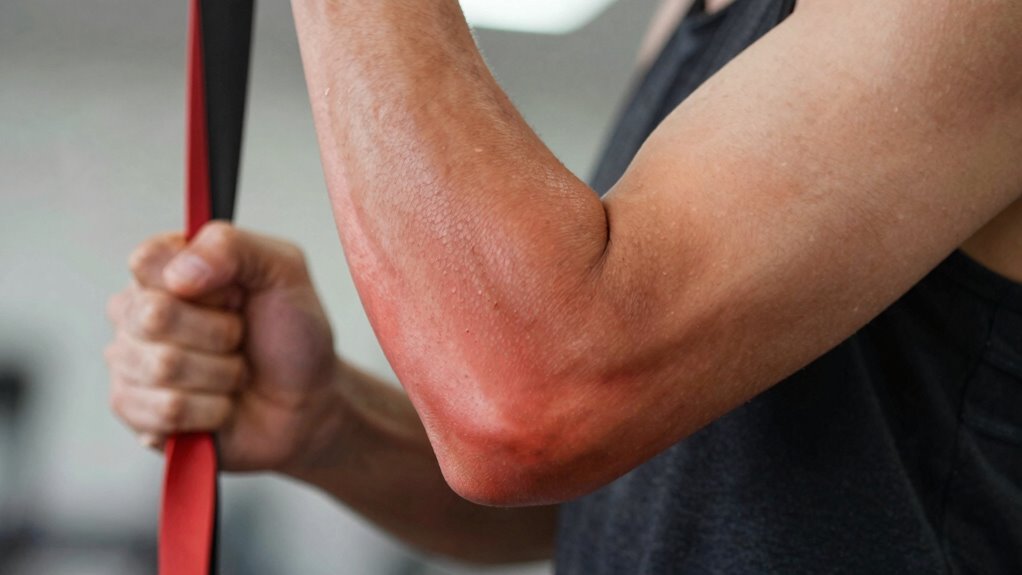

To prevent elbow pain from pulling, avoid common mistakes like gripping too tightly or using poor technique, which can strain your tendons and muscles. Focus on maintaining proper hand placement, engaging the right muscles, and keeping a balanced grip to distribute stress evenly. Don’t ignore early signs of fatigue or discomfort—rest and adjust your form promptly. Continuing on, you’ll discover more tips to help you train safely and prevent injury.

Get workout gear delivered free — and shop member deals
- Fast, free delivery on millions of items
- Access to Prime Big Deal Days deals on October 6–7
- Prime Video, Amazon Music and more included
Key Takeaways
- Using an overly tight grip increases forearm strain, leading to elbow pain; maintain a balanced, firm grip for proper load distribution.
- Ignoring early fatigue signs or muscle burning can worsen injury; listen to your body and incorporate rest to prevent overuse.
- Poor technique or improper equipment selection can cause unnecessary stress; ensure proper form and suitable tools during pulling exercises.
- Skipping warm-up and stretching reduces muscle flexibility, raising injury risk; incorporate these routines before intense pulling activities.
- Rapid progression without gradual overload increases strain; build strength gradually to support joint stability and prevent elbow discomfort.
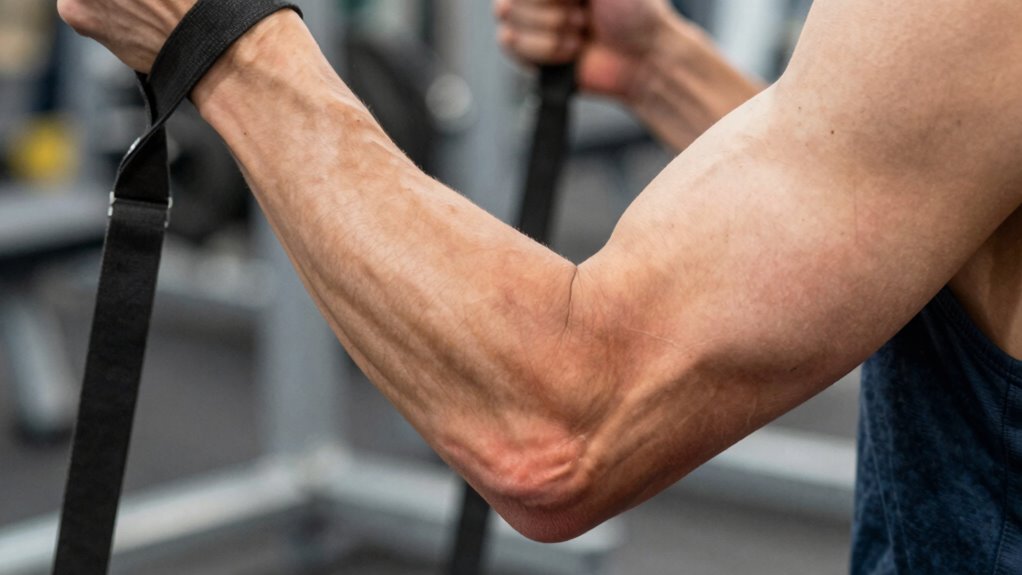
Pulling or tugging motions during activities like weightlifting, sports, or manual labor can often lead to elbow pain. If you’ve experienced discomfort after pulling movements, one of the main issues could be how you’re gripping the object or your muscles feeling fatigued. Understanding the significance of a proper grip and managing muscle fatigue can considerably reduce your risk of injury and help you recover faster.
When you pull, your grip plays an essential role in how stress is distributed across your elbow joint. A proper grip ensures that your muscles, tendons, and ligaments share the load evenly, preventing any one structure from becoming overstressed. For instance, gripping too tightly or unevenly can cause unnecessary strain on your forearm muscles and elbow tendons, leading to pain or even tendinitis. Conversely, holding too loosely might cause your hand to slip, forcing your muscles to work harder to maintain control and increasing fatigue. Finding that balance is key. Use a grip that feels firm but not overly tight, and ensure your hand placement aligns with the movement’s mechanics. This not only improves control but also minimizes undue stress on your elbow.
Muscle fatigue is another common culprit behind elbow pain from pulling. When your muscles tire, they lose their ability to absorb shock and distribute force effectively. As a result, your tendons and ligaments take on more load, often exceeding their capacity and leading to inflammation or injury. To combat muscle fatigue, focus on building strength gradually and allowing ample recovery time between intense sessions. Incorporate exercises that target your forearm, biceps, and shoulder muscles to improve endurance. Using proper technique during pulls can also delay fatigue, as inefficient movement patterns tend to waste energy and increase strain. Additionally, proper equipment selection can help reduce stress on your elbow and improve overall performance.
Additionally, pay attention to your body’s signals. If you notice your muscles burning or your grip slipping, it’s a sign to rest or reduce the intensity. Overtraining or ignoring early signs of fatigue can worsen your condition and prolong recovery. Applying proper warm-up routines and stretching your forearm muscles before activity can also enhance blood flow and flexibility, reducing the likelihood of pain. Remember, quality over quantity matters. Prioritize correct form and gradual progression over lifting or pulling heavier weights or performing more reps than your body can handle.
elbow support brace for pulling exercises
As an affiliate, we earn on qualifying purchases.
As an affiliate, we earn on qualifying purchases.
Frequently Asked Questions
Can Elbow Pain From Pulling Indicate a Serious Injury?
Elbow pain from pulling can sometimes indicate a serious injury, like a muscle strain or an elbow injury that needs medical attention. If the pain persists, worsens, or is accompanied by swelling, numbness, or weakness, you should see a healthcare professional. Don’t ignore symptoms, as untreated injuries could lead to long-term issues. Rest, ice, and proper diagnosis are key to preventing further damage.
How Long Should I Rest to Recover From Pulling-Related Elbow Pain?
Most elbow injuries improve with 1 to 2 weeks of rest, but the exact rest duration depends on injury severity. Studies show that 80% of minor strains heal within this timeframe with proper rest. You should listen to your body; if pain persists or worsens, extend rest and consult a healthcare professional. Resting adequately allows your tissues to repair, reducing the risk of long-term damage.
Are There Specific Stretches to Prevent Elbow Pain During Pulling?
Yes, incorporating specific stretching routines can help prevent elbow pain during pulling. Focus on stretches that enhance your elbow mobility, like triceps and forearm stretches, which loosen tight muscles and tendons. Regularly perform these routines before workouts to prepare your joints and reduce strain. Consistent stretching not only improves flexibility but also helps prevent injuries, ensuring you can pull safely and effectively without discomfort.
Is It Safe to Continue Pulling With Elbow Discomfort?
If you experience elbow discomfort, it’s best to stop pulling immediately, as overuse symptoms can worsen with continued activity. Pushing through pain risks injury, so rest and assess your situation. Make certain you’re using proper technique to prevent further strain. If pain persists, consult a healthcare professional before resuming, and consider incorporating stretches or strengthening exercises to support your elbow and reduce future discomfort.
When Should I See a Doctor for Elbow Pain From Pulling?
You should see a doctor if you experience persistent elbow swelling or nerve tingling, especially after pulling activities. If the pain worsens, doesn’t improve with rest, or if you notice weakness or limited movement, it’s time to seek professional help. Ignoring these signs can lead to further injury. Prompt medical attention guarantees proper diagnosis and treatment, helping you recover safely and prevent long-term issues.
As an affiliate, we earn on qualifying purchases.
Conclusion
Think of your elbow as a delicate instrument; pulling the wrong way can cause it to jam. By avoiding common mistakes and applying the right fixes, you keep your performance smooth and pain-free. Pay attention to your form, rest when needed, and strengthen supporting muscles. With a little care, you’ll prevent setbacks and keep your arm moving like a well-oiled machine—strong, steady, and ready for whatever’s next. Your elbow’s health is the key to your active life.
elbow tendinitis compression sleeve
As an affiliate, we earn on qualifying purchases.
As an affiliate, we earn on qualifying purchases.
adjustable weightlifting grip straps
As an affiliate, we earn on qualifying purchases.
As an affiliate, we earn on qualifying purchases.
Fall Picks
fall essentials
As an affiliate, we earn on qualifying purchases.