
A minimalist 2-day strength plan is perfect for busy weeks by focusing on compound exercises like squats, presses, and rows that target multiple muscle groups at once. Keep workouts short, about 30-45 minutes, using minimal equipment such as dumbbells or resistance bands, and choose a quiet space at home or the gym. To stay consistent and motivated, set clear goals and track your progress. If you want to learn how to optimize your routine, keep exploring these simple strategies.
Key Takeaways
- Focus on compound movements like squats, deadlifts, presses, and rows to maximize muscle engagement in minimal time.
- Schedule two full-body sessions per week with at least 48 hours rest for optimal recovery and progress.
- Use versatile equipment such as dumbbells, resistance bands, or bodyweight exercises for space-efficient workouts.
- Keep workouts short, intense, and focused on quality to ensure effective training within busy schedules.
- Track progress and adjust exercises gradually to maintain motivation and optimize results over time.
Why a 2-Day Strength Routine Is Perfect for Busy Schedules
If you’re pressed for time, a 2-day strength routine is an ideal solution. It allows you to maximize muscle recovery by giving each muscle group enough rest between sessions, preventing overtraining. With fewer workout days, you can maintain a consistent workout frequency without feeling overwhelmed or sacrificing other commitments. This type of content format enables you to focus on effective exercises without the need for lengthy sessions. This approach helps you stay committed and avoid burnout, making it easier to stick with your fitness goals. Plus, shorter routines mean you spend less time in the gym but still get effective results. By focusing on quality over quantity, you ensure your muscles recover properly while you continue building strength. A 2-day plan fits seamlessly into busy schedules, offering a sustainable way to stay active and healthy.
How to Choose the Best Exercises for Short Workouts
Choosing the right exercises for short workouts means focusing on movements that target multiple muscle groups at once. Effective exercise selection maximizes your limited time, allowing you to hit more muscles efficiently. Prioritize compound exercises like squats, deadlifts, presses, and rows, which deliver maximum benefit in minimal time. Avoid isolated movements that focus on single muscles, as they take longer without providing proportional results. When planning your workout, think about your goals and select exercises that align with them, ensuring each movement contributes to overall strength. Workout prioritization means choosing core compound lifts that deliver the best bang for your buck. By focusing on strategic exercise selection, you ensure every minute counts, making even short sessions highly effective. Incorporating piercing care and hygiene into your routine can also help maintain your overall well-being and keep you focused on your fitness goals.
Planning Your 2-Day Workout for Maximum Results
To maximize your results in a 2-day workout plan, it is vital to structure your sessions around key compound movements that target multiple muscle groups simultaneously. Incorporate exercise variation to keep your muscles challenged and prevent plateaus. Mix up your exercises within each session to engage different angles and stimulate growth. Pay attention to workout timing—balance workout intensity with adequate rest and recovery, especially between your two training days. Schedule your workouts when you’re most alert to maintain focus and effort. Keep your plan simple yet effective by prioritizing compound lifts like squats, deadlifts, and presses. This approach ensures you’re maximizing efficiency, making every minute count toward building strength and muscle during your limited workout days. Additionally, monitoring your progression helps ensure continuous improvement and long-term success.
Essential Equipment and Space for a Minimalist Strength Program
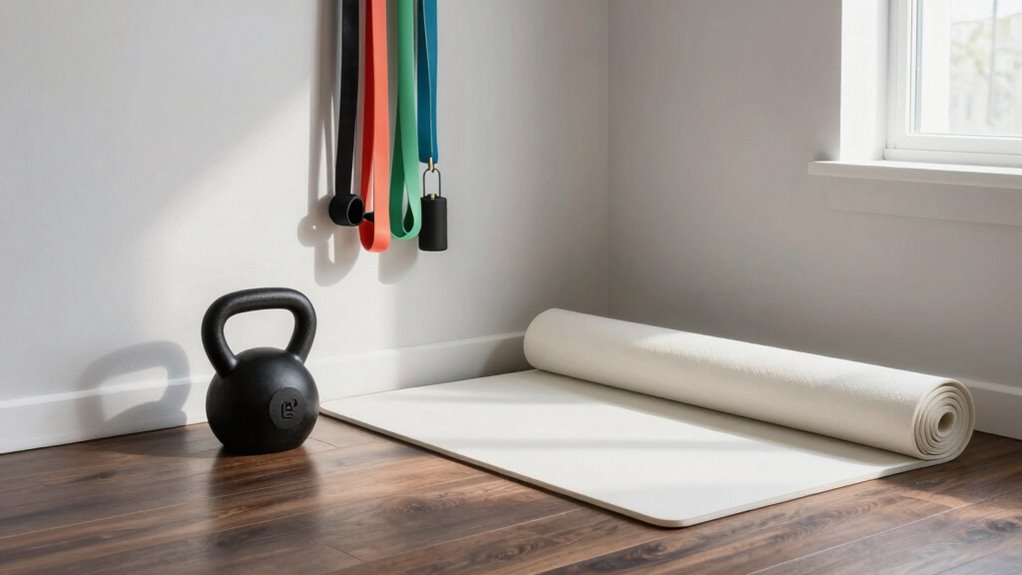
A minimalist strength program requires only essential equipment and a dedicated space to be effective. You don’t need bulky machines or a full gym setup—just minimal equipment that offers versatility. A pair of dumbbells, resistance bands, or a sturdy pull-up bar can cover most exercises. The key is a compact space where you can move freely without distractions. It could be a corner in your living room, a garage, or even a balcony. Prioritize a clear area for bodyweight movements like push-ups, squats, and planks. Incorporating free-floating elements, such as adaptable workout zones, can further enhance flexibility. With minimal equipment and a compact space, you can perform a wide range of strength exercises efficiently. This setup ensures your workouts stay simple, accessible, and effective, fitting seamlessly into your busy schedule.
Tips to Stay Motivated and Consistent With Short Workouts
To stay motivated and consistent, you need clear goals that give you direction. Tracking your progress regularly helps you see how far you’ve come and keeps you focused. When you know your milestones, it’s easier to stay committed to your short workouts. Incorporating advanced technology offerings into your fitness routine can also boost motivation by providing real-time feedback and tracking.
Set Clear Goals
Setting clear goals is essential for staying motivated and consistent with your short workouts. When you define specific targets, you’ll know exactly what to prioritize during each session. Effective goal setting keeps you focused and prevents overwhelm, especially in busy weeks. To get started:
- Identify your workout priorities—whether it’s building strength or improving endurance.
- Set achievable, time-bound goals, like completing your 2-day plan consistently for two weeks.
- Track your progress, so you stay motivated and can adjust your goals as needed.
- Incorporate performance metrics to better understand your progress and refine your approach.
Track Progress Regularly
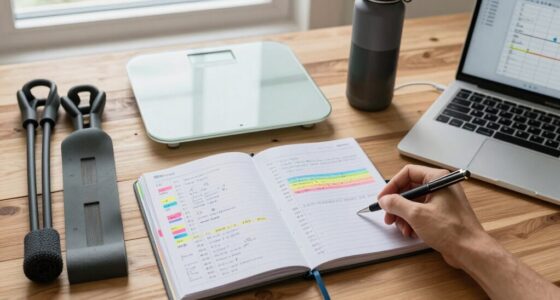
Ever wonder how to stay motivated with just two short workouts a week? Regular progress tracking keeps you focused and energized. By monitoring performance metrics like weight lifted, reps, or sets, you can see tangible improvements over time. This visual motivation helps you push through busy weeks. Use a simple chart to record your stats and note how you feel after each session. Here’s an example:
| Workout Date | Performance Metrics |
|---|---|
| Jan 10 | Squat: 50 lbs, 8 reps |
| Jan 17 | Squat: 55 lbs, 8 reps |
| Jan 24 | Deadlift: 70 lbs, 6 reps |
| Jan 31 | Deadlift: 75 lbs, 6 reps |
| Feb 7 | Overall strength feels improved |
Tracking progress makes your efforts clear and rewarding. Incorporating consistent monitoring can further enhance your motivation and help you stay accountable over time.
Common Mistakes to Avoid in Your 2-Day Strength Routine

Even with a minimalist 2-day strength plan, it’s easy to fall into common traps that can hinder your progress. First, pushing yourself too hard can lead to overtraining pitfalls, making recovery harder and increasing injury risk. Second, neglecting proper form during exercises can reduce effectiveness and cause injuries. Third, skipping warm-ups or cool-downs may seem minor but can lead to strains and delays in progress. To avoid these mistakes, focus on quality over quantity, listen to your body, and prioritize correct technique. Remember, consistency and proper recovery are key, even in a short routine. Staying mindful of these pitfalls ensures you maximize results without setbacks. Avoid these common errors, and your 2-day plan will be more effective and sustainable.
Adapting Your Routine When Your Schedule Changes
When your schedule shifts, it’s important to adjust your 2-day strength routine to stay on track without risking burnout or injury. Flexibility challenges can make sticking to your plan tough, but small tweaks help. If your week gets busier, consider swapping workout days or reducing session length slightly, focusing on quality over quantity. Meal planning becomes vital too; prepare simple, nutritious meals ahead of time to maintain energy without added stress. If your mornings are packed, opt for quick workouts like bodyweight exercises or shorter sessions that still target key muscle groups. Staying adaptable keeps your routine sustainable, ensuring you continue progress without feeling overwhelmed. Remember, the goal is consistency, not perfection—adjustments are part of the process. Incorporating scientific principles into your adjustments can further optimize your results and prevent injury.
Frequently Asked Questions
Can I Customize the Routine for Specific Fitness Goals?
Yes, you can personalize workouts to align with your specific fitness goals. Focus on setting clear goals, whether it’s building strength, toning, or endurance, then tailor exercises within the minimalist plan accordingly. Adjust the intensity, reps, or targeted muscles to suit your needs. This flexibility helps you stay motivated and guarantees your routine effectively supports your unique goals, even within a busy schedule.
How Do I Prevent Injuries With Minimal Equipment?
Think of your workout as building a sturdy bridge; careful steps prevent collapse. To avoid injuries, focus on proper form, gradual progress, and listen to your body. Use equipment alternatives like resistance bands or bodyweight exercises to reduce strain. Injury prevention is key—warm up fully, don’t rush, and prioritize quality over quantity. This way, you strengthen safely, making your minimalist plan both effective and sustainable.
What Are the Best Recovery Strategies After Workouts?
After your workout, focus on proper recovery by prioritizing post-work nutrition with a mix of protein and carbs to replenish energy and support muscle repair. Incorporate stretching techniques to improve flexibility and reduce soreness. Make sure to stay hydrated and get enough sleep. These strategies help your body recover faster, prevent injuries, and prepare you for your next workout, even with minimal equipment and busy schedules.
How Can I Track Progress Effectively in Short Routines?
Imagine uncovering your hidden gains with just a simple glance. You can track progress effectively by using progress journaling to note strength improvements and how you feel after each session. Pair this with wearable tech that monitors your activity and recovery. This combo keeps you engaged, motivated, and aware of your advancements, even in short routines. Stay consistent, and you’ll reveal your progress before you know it.
Is It Safe to Combine This Plan With Other Activities?
Yes, it’s safe to combine this plan with other activities, but you should prioritize proper nutrition tips to support recovery and performance. Incorporate workout variations to prevent overtraining and keep things balanced. Listen to your body, and if you notice excessive fatigue or soreness, scale back or adjust your routine. Staying consistent, fueling well, and mixing different exercises will help you stay safe while maximizing your fitness progress.
Conclusion
Sticking to a 2-day strength plan might seem small, but it’s surprisingly effective—especially when life gets busy. As you stay consistent, you’ll notice progress, maybe even when you least expect it. Sometimes, the busiest weeks bring the biggest breakthroughs. So keep going, adjust when needed, and remember, even a little effort can lead to big results. Who knew that just two days a week could make such a difference?