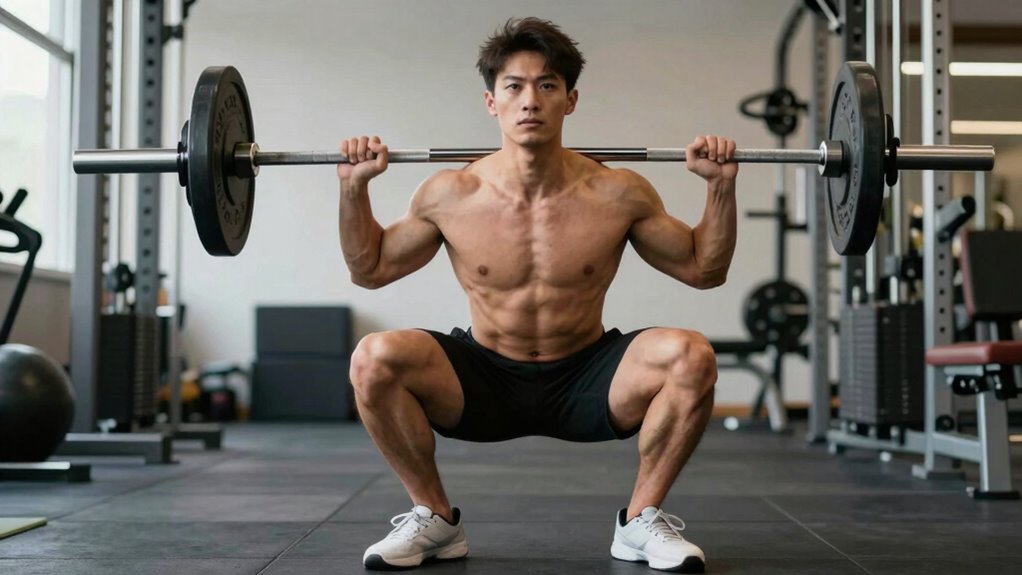
To instantly improve your squat reps, focus on nine key cues: position your feet shoulder-width with toes slightly outward, keep your knees tracking over your toes, push hips back with a neutral spine, engage your core throughout, and keep your heels grounded. Use proper breathing—inhale deeply, brace your core, and exhale during the drive up. If you want to perfect your technique and stay safe, these cues will guide you every step of the way.
Key Takeaways
- Focus on proper foot positioning with toes pointed outward and even weight distribution to enhance balance and stability.
- Keep knees tracking over toes and push them slightly outward to prevent inward collapse.
- Maintain a neutral spine and engage your core to support safe, effective movement.
- Practice hip hinge and keep chest up to ensure proper depth and prevent rounding.
- Use visual cues, tactile signals, and controlled breathing to receive immediate feedback and improve form.
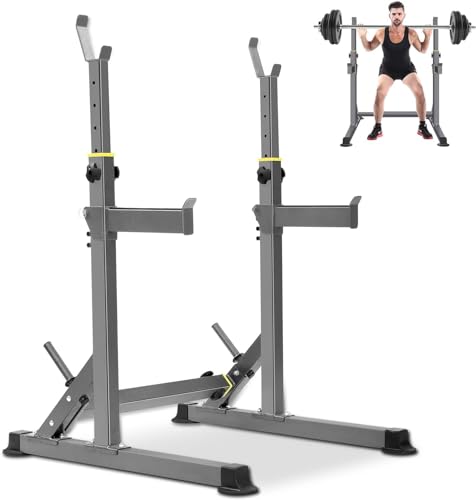
Adjustable Squat Rack,Multi-Function Barbell Rack for Weight Lifting and Home Gym Fitness Workout Portable Squat Bench Press
Adjustable Squat Rack,Multi-Function Barbell Rack for Weight Lifting and Home Gym Fitness Workout Portable Squat Bench Press,Load 690LBS
As an affiliate, we earn on qualifying purchases.
As an affiliate, we earn on qualifying purchases.
Why Proper Squat Form Is Key to Safety and Performance
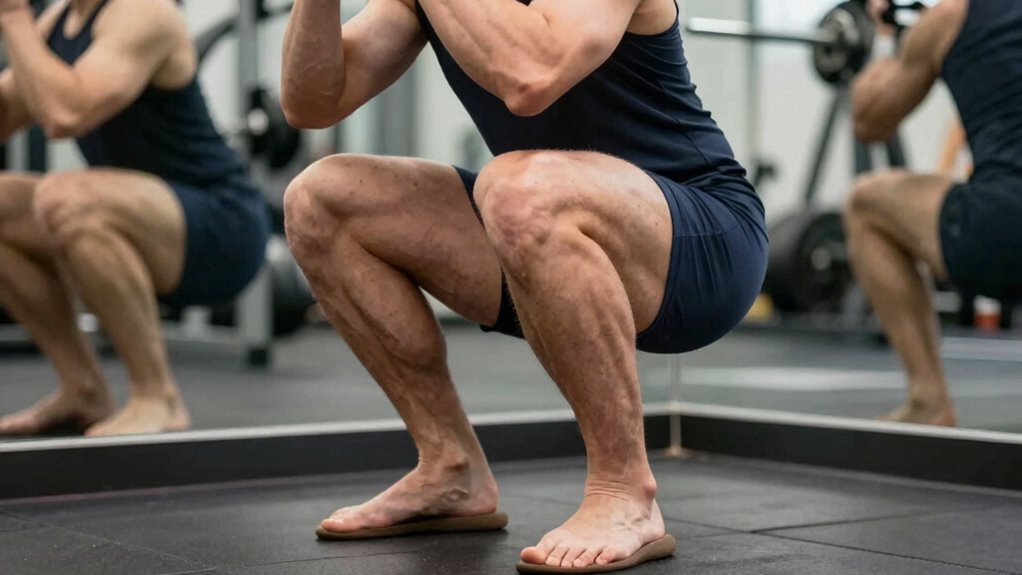
Proper squat form is essential because it directly impacts your safety and how effectively you build strength. When you focus on knee tracking, you ensure your knees stay aligned over your toes, reducing the risk of injury and unnecessary strain. Good hip mobility allows you to squat deeper without compromising form, which engages more muscles and boosts overall strength. If your knees cave inward or shift too far forward, you risk joint pain or ligament injuries. Maintaining proper hip mobility helps you keep a stable torso and proper knee alignment throughout the movement. These elements work together to make your squats safer and more effective, enabling you to lift heavier and improve your technique over time. Prioritizing proper form now sets the foundation for long-term progress and injury prevention. Additionally, paying attention to movement mechanics ensures your workout remains efficient and reduces the likelihood of compensatory patterns.

Gymreapers Knee Sleeves (1 Pair) With Gym Bag – IPF Approved – Knee Compression Sleeve Support for Squats, Weightlifting, and Powerlifting 7MM Neoprene Sleeves – 1 Year Warranty (Black/Black, Large)
𝗚𝗬𝗠𝗥𝗘𝗔𝗣𝗘𝗥𝗦 𝟳𝗠𝗠 𝗞𝗡𝗘𝗘 𝗦𝗟𝗘𝗘𝗩𝗘𝗦 – Built for serious lifters who demand maximum joint support, these 7MM neoprene knee…
As an affiliate, we earn on qualifying purchases.
As an affiliate, we earn on qualifying purchases.
How to Position Your Feet for Stability and Power
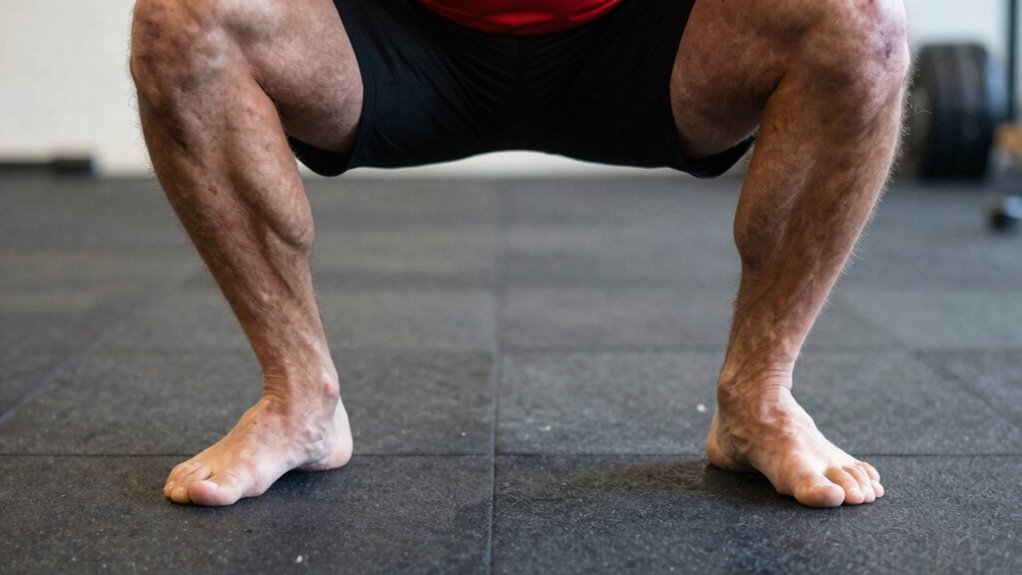
How you position your feet directly influences your stability and power during a squat. Your foot placement determines how well you can maintain balance and generate force. Start by adjusting your stance width to match your body and comfort level—generally shoulder-width or slightly wider. A wider stance provides more stability, especially for heavier lifts, while a narrower stance can improve mobility and target different muscles. Make sure your toes point slightly outward, around 15 to 30 degrees, to allow proper knee tracking and reduce strain. Keep your weight evenly distributed across your entire foot, not just the heels or toes. Proper stance width and foot placement set a strong foundation, making every rep more effective and safer. Additionally, understanding foot biomechanics can help optimize your stance for better performance and injury prevention.

MANUEKLEAR Strong Anti-Slip Deadlift Lifting Squat Shoes for Men, Professional Training Weightlifting Shoes for Men and Women with Rubber Non-Slip Sole Obsidian Black
🎖Sustainable Materials for a Greener Planet: Our shoes are thoughtfully engineered using a combination of TPU, rubber, and…
As an affiliate, we earn on qualifying purchases.
As an affiliate, we earn on qualifying purchases.
How to Align Your Knees and Hips Correctly

Ensuring your knees track in line with your toes and your hips stay level during a squat is essential for safety and effectiveness. To achieve proper knee tracking, focus on pushing your knees slightly outward as you descend, aligning them over your toes. This helps prevent your knees from caving inward, reducing strain on your joints. Hip engagement is equally important; keep your hips level by engaging your glutes and core throughout the movement. Avoid letting one side drop or drift forward, which can cause imbalance and increase injury risk. Proper hip engagement also ensures you’re activating the right muscles and maintaining stability. Being mindful of your body awareness during the movement can greatly enhance your form and results. By consciously aligning your knees and hips, you create a solid foundation for a safe, powerful squat.

ProsourceFit Core Balance Disc Trainer, 14" Diameter with Pump for Fitness, Balance Training, or Seating; Wobble Board for Core Stability; Flexible Floor Cushions for Kids, Gray
IMPROVE CORE STRENGTH & BALANCE – Strengthens and engages multiple core muscles at once to maintain balance during…
As an affiliate, we earn on qualifying purchases.
As an affiliate, we earn on qualifying purchases.
Keep a Neutral Spine During Your Squat
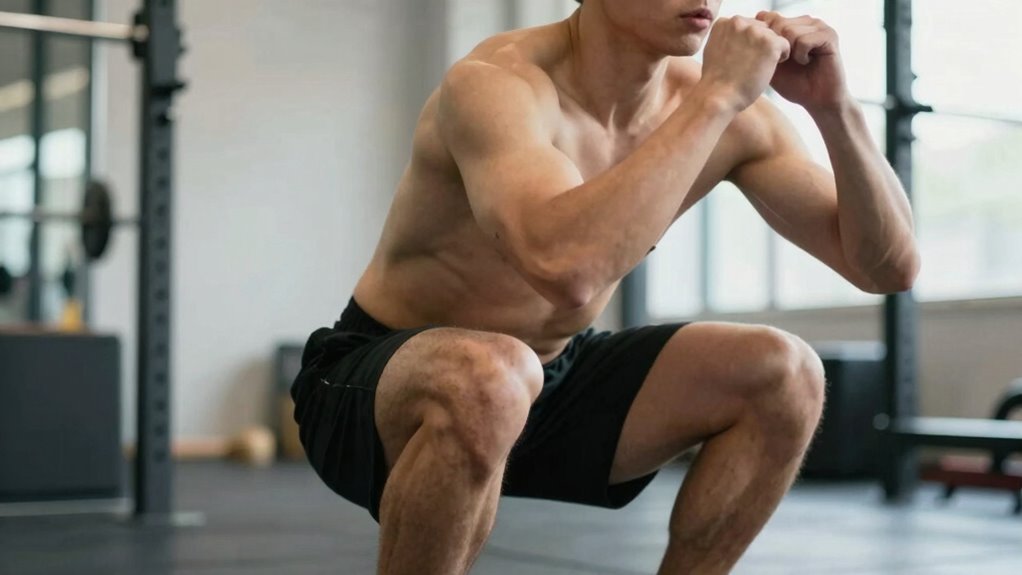
Maintaining a neutral spine is essential for safe and effective squatting because it helps distribute forces evenly and prevents injury. To keep your spine neutral, focus on proper core engagement and a correct hip hinge motion. Here are three key cues:
A neutral spine ensures safe, effective squats by promoting even force distribution and injury prevention.
- Engage your core by tightening your abs and lower back muscles to support your spine throughout the movement.
- Practice a hip hinge, pushing your hips back rather than bending at the waist, to maintain alignment.
- Keep your chest up and shoulders back, avoiding rounding or overarching your back.
- Visualize the importance of spiritual alignment in movement, ensuring your mind and body are in sync for optimal form.
How to Engage Your Core for Better Stability
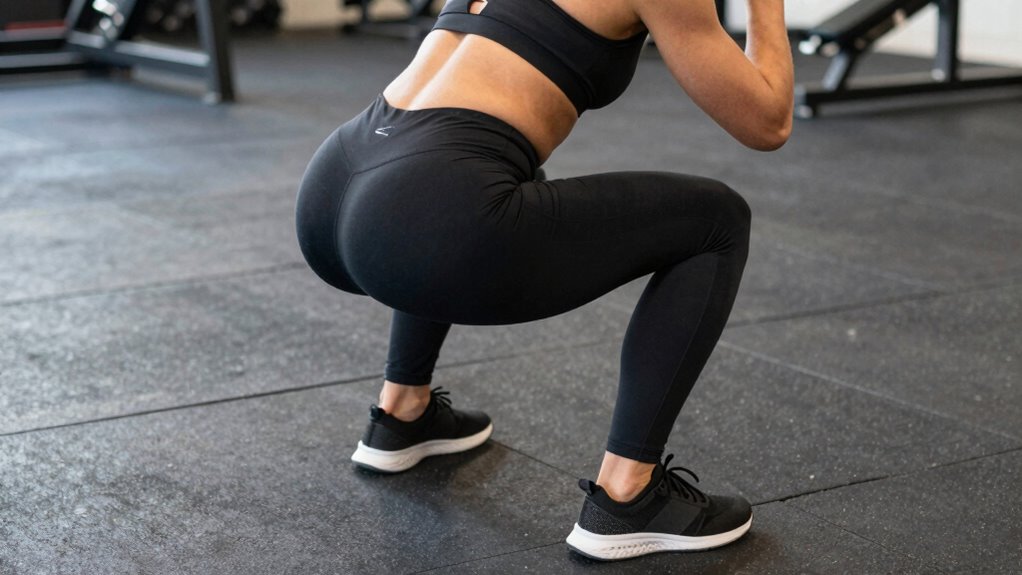
To improve your squat stability, you need to engage your core properly. Focus on bracing your abdominal muscles and maintaining a neutral spine throughout the movement. Remember to breathe steadily to support your core engagement and keep your form solid. Incorporating consistent breathing patterns can help maintain intra-abdominal pressure and enhance overall stability during the squat.
Brace Your Abdominal Muscles
Engaging your abdominal muscles is essential for maintaining stability during squats. Proper abdominal bracing creates a solid core engagement, which supports your spine and helps you lift safely. To brace effectively:
- Take a deep breath and fill your belly with air, tightening your abdominal muscles as if preparing for a gentle punch.
- Contract your core muscles without sucking in or holding your breath, maintaining a firm, stable tension.
- Maintain this tension throughout the movement, keeping your core engaged to prevent any unwanted wobbling or collapsing.
- Consistent core engagement during your squat helps improve overall stability and reduces injury risk.
This technique ensures your core provides the necessary support, improving balance and force transfer. Remember, consistent abdominal bracing during your squat is key to safer, more effective reps and better overall stability.
Maintain Neutral Spine Alignment
After properly bracing your abdominal muscles, focus on keeping your spine in a neutral position. Core engagement is essential to maintain this alignment throughout the squat. Imagine tightening your core as if preparing to be punched in the stomach; this helps stabilize your entire torso. Pay close attention to foot positioning—your feet should be shoulder-width apart with toes slightly pointed outward. Proper foot placement ensures even weight distribution and helps prevent your spine from tipping forward or rounding. Keep your chest up and shoulders back to support the neutral spine. Maintaining this alignment not only improves stability but also reduces injury risk. Regularly check your foot positioning and engage your core to stay locked in a safe, efficient squat form. Additionally, understanding the importance of kitchen knives can be a useful analogy for maintaining proper technique and control in your movements.
Breathe Properly Throughout
Proper breathing is essential for maintaining core stability during your squat. Breath control helps you stay tight and prevents collapsing under load. To optimize your inhalation technique, focus on steady, diaphragmatic breathing. Here are three tips to guarantee you’re breathing properly throughout:
- Inhale deeply through your nose before descending, filling your lungs fully.
- Maintain consistent breath control by avoiding shallow or rapid breaths.
- Exhale slowly and forcefully as you drive up, engaging your core to stabilize your spine.
- Incorporating mindful breathing can also enhance your awareness of golf heritage and women’s LPGA milestones, translating to better focus and control in your lifts.
How to Find and Reach the Right Squat Depth

How do you determine the correct squat depth for your body? It starts with listening to your hips and evaluating your hip flexibility. Your ideal squat depth is where your thighs are parallel to the ground or slightly below, without compromising form or causing discomfort. To find this, perform bodyweight squats and gradually go lower, paying attention to how your hips and lower back feel. If your hips feel tight or you struggle to reach depth without losing alignment, work on improving hip flexibility through targeted stretching. Focus on maintaining a neutral spine and engaged core throughout. Remember, depth varies for everyone; prioritize quality reps and comfort over hitting a specific number. Incorporate balance and motivation techniques to stay consistent and focused during your flexibility journey. Reach your best squat depth by gradually increasing flexibility and maintaining proper technique.
Breathing Tips to Maximize Your Squat Power
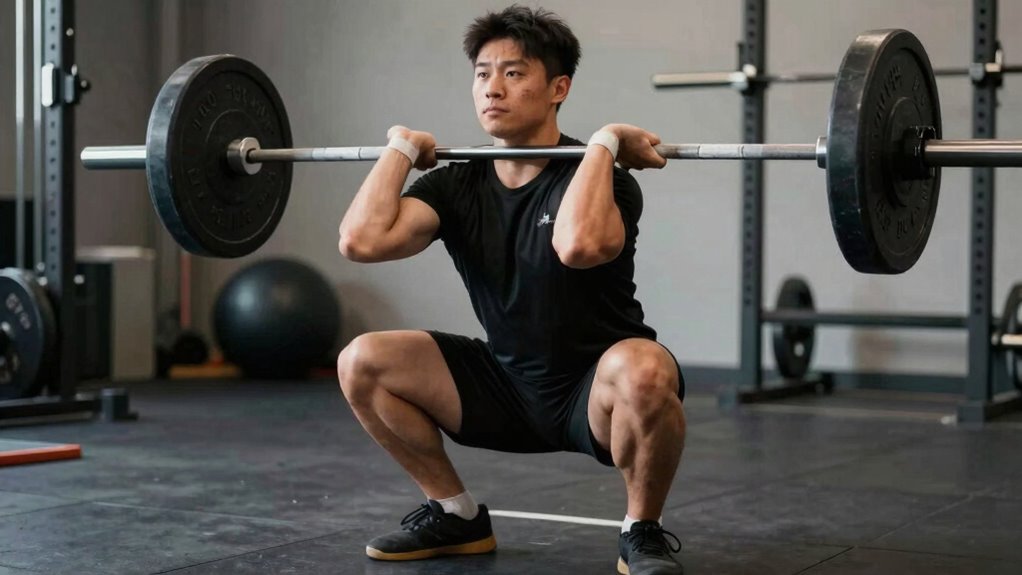
To maximize your squat power, focusing on your breath control is essential. Proper inhalation techniques help stabilize your core and generate more force during each rep. When you set up, take a deep breath into your diaphragm, filling your belly rather than your chest. This creates intra-abdominal pressure that supports your spine. During the descent, maintain this breath, and as you push up, exhale forcefully to transfer power efficiently. Here are key tips to optimize your breathing:
- Use diaphragmatic breathing to improve breath control and stability.
- Inhale deeply before descending, holding your breath briefly during the eccentric phase.
- Exhale sharply during the concentric movement to maximize power and maintain core tightness.
- Incorporate breath control techniques to enhance overall performance and reduce fatigue.
Mastering these inhalation techniques ensures your breath supports your strength and prevents unnecessary fatigue.
Common Squat Mistakes and How to Fix Them
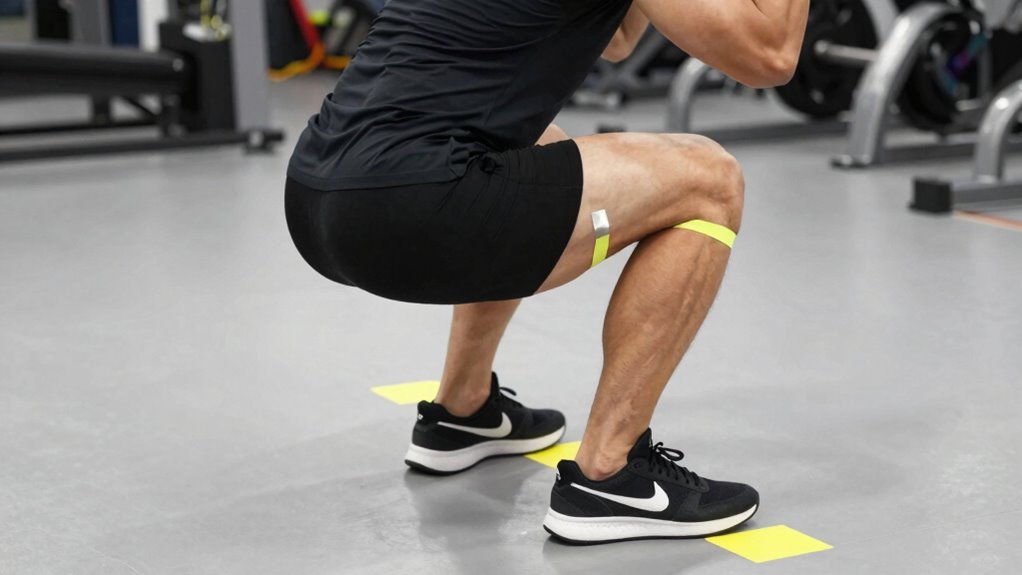
Many lifters struggle with common squat mistakes that can hinder progress and increase injury risk. One frequent error is improper breathing patterns; holding your breath or breathing irregularly can compromise core stability and power. Focus on controlled inhaling on the way down and exhaling as you drive up. Another mistake is poor foot placement—standing too wide, narrow, or unevenly can affect balance and depth. Ensure your feet are shoulder-width apart with toes slightly pointed outward for maximum stability. Correcting these issues involves paying close attention to your breathing and adjusting your foot position to stay balanced and upright. By fixing breathing patterns and foot placement, you’ll improve squat form, reduce injury risk, and make consistent progress.
How to Use Cues and Feedback to Improve Your Technique

Using clear and specific cues helps you understand exactly what to focus on during your squat. Incorporating visual and tactile signals offers immediate feedback to verify your form on the spot. Consistently reinforcing proper technique ensures these improvements become second nature over time.
Clear and Specific Cues
Clear and specific cues are essential for refining your squat technique because they provide immediate, actionable feedback that you can easily understand and implement. When cues are precise, you can focus on key areas like hip mobility and ankle flexibility, which directly impact your form. To maximize their effectiveness:
- Use cues like “push your hips back” to engage hip mobility and ensure proper depth.
- Remind yourself to “keep your heels grounded” to improve ankle flexibility and stability.
- Focus on “maintaining a neutral spine” to keep your torso upright and prevent compensations.
These cues help you stay aware of critical adjustments needed, making your squat more efficient and safe. Clear, targeted feedback accelerates your progress and builds better movement habits.
Visual and Tactile Signals
Visual and tactile signals are powerful tools for refining your squat technique because they provide immediate, physical feedback that helps you adjust on the spot. Visual cues, like watching your form in a mirror or using color-coded markers, allow you to spot issues such as knees caving inward or insufficient depth. Tactile feedback comes from your coach or training partner, who can gently touch your hips or knees to guide proper positioning or alert you to imbalances. These signals keep you aware of your alignment and movement patterns during each rep, enabling quick corrections. By actively paying attention to visual cues and responding to tactile feedback, you develop better proprioception and refine your technique more efficiently. This immediate feedback loop accelerates your progress and helps prevent injury.
Consistent Technique Reinforcement
Consistent technique reinforcement relies on actively applying cues and feedback during every squat. To improve, focus on maintaining proper breathing rhythm, which stabilizes your core and enhances control. Use cues to remind yourself to inhale deeply before descending and exhale as you rise. Additionally, pay close attention to foot placement, ensuring your feet stay shoulder-width apart with toes slightly pointed out. This helps distribute weight evenly and prevents knees from caving inward. To reinforce good habits, try these strategies:
- Check your breathing rhythm before each set, syncing inhales and exhales with the movement.
- Use tactile cues, like tapping your foot, to confirm proper foot placement.
- Seek feedback from mirrors or a coach to correct subtle flaws in technique and solidify your cues.
Frequently Asked Questions
How Do I Know if My Squat Depth Is Correct?
You can tell if your squat depth is correct by checking if your hips drop below your knees without compromising your core stability. Make certain your hip flexibility allows for this range comfortably, without feeling strain or losing balance. If your chest stays upright and your core remains engaged, you’re hitting proper depth. Keep practicing with these cues, and over time, you’ll develop the mobility and stability needed for a safe, effective squat.
What Are the Signs of Poor Squat Form?
You’ll notice poor squat form if your core stability feels off, causing you to wobble or lose balance. Limited hip mobility can make it hard to keep your knees aligned or reach proper depth. Watch for knees caving inward or heels lifting. When your core isn’t engaged or hips aren’t mobile enough, your squat becomes unstable, increasing injury risk and decreasing effectiveness. Focus on core engagement and hip flexibility to improve your form.
Can Squat Form Vary Based on Individual Body Mechanics?
Absolutely, squat form can wildly differ because of your unique body mechanics. Anatomical differences like limb length, hip structure, and mobility restrictions mean what’s perfect for one person might be awkward for another. You might need to modify your stance or depth, and that’s totally normal. Embrace these variations—your body’s signals are telling you what works best, so listen carefully and adapt your technique accordingly.
How Often Should I Check My Squat Technique?
You should check your squat technique regularly, ideally before each session and periodically during your workout. Start with proper equipment setup and incorporate warm-up routines to prime your muscles. Pay attention to your form as you lift, making small adjustments to sustain proper alignment. Consistent checks help prevent injury and ensure you’re engaging the right muscles, leading to more effective and safer squats over time.
Are There Specific Cues for Improving Squat Speed?
Improving your squat speed is like fueling a fast car—you need the right cues. Focus on proper warm-up to activate muscles and optimize mobility. Use breathing techniques to stay tight and controlled, which helps generate power quickly. Cue yourself to drive through the heels, keep a brisk tempo, and maintain core stability. These tips help you explode upward faster, making your reps more efficient and explosive every time.
Conclusion
Mastering these squat cues is like hitting two birds with one stone—you improve your safety and boost performance. Keep practicing, stay mindful of your form, and don’t be afraid to seek feedback. Remember, good technique is the foundation that’ll carry you through heavier lifts and better results. Stick to the plan, and you’ll find your squat game gets stronger with each rep, proving that slow and steady wins the race.