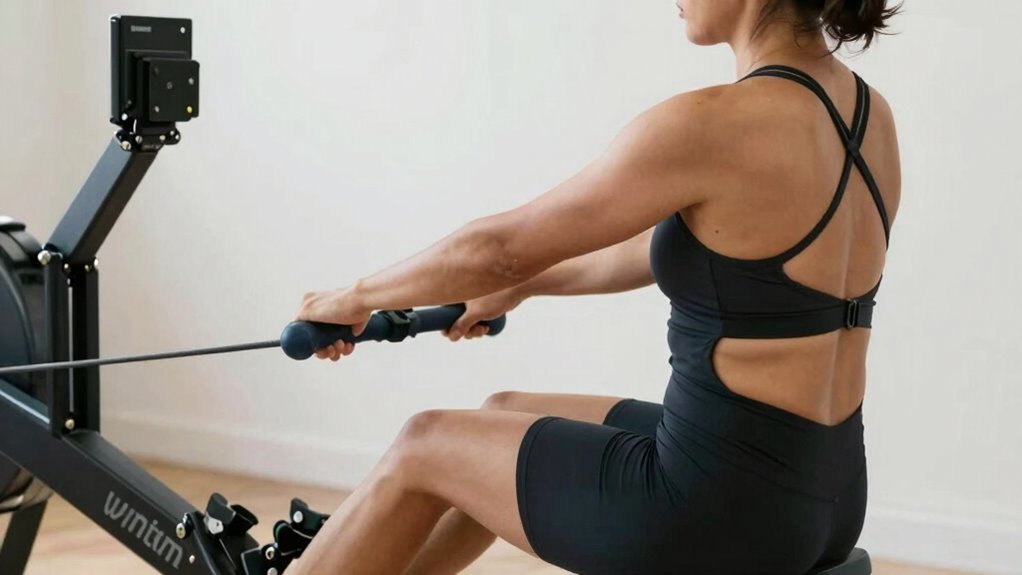
To prevent low back fatigue on a rowing machine, focus on maintaining proper form throughout your stroke. Start with your feet securely strapped and sit tall, engaging your core. Push with your legs, then hinge smoothly at your hips, keeping your back flat and stable. Pull the handle toward your chest, avoiding overreaching, and then control your return. Paying attention to technique at each phase guarantees a safe, effective workout—keep going to discover more tips to protect your back.
Key Takeaways
- Maintain a neutral spine throughout the stroke to prevent lower back strain.
- Engage your core muscles during each phase to stabilize the back and support proper movement.
- Use a smooth hinge at the hips during transitions, avoiding jerky or overextended motions.
- Initiate drive with leg power, ensuring proper leg push and avoiding excessive reliance on your lower back.
- Keep your back flat and shoulders relaxed, focusing on proper posture from catch to finish for back safety.

Seenelling Rowing Machine Adjustable Foot Straps Compatible With Concept 2 Rower Fitness, 4 Pack Replacement Reusable Straps
Versatility for Various Models: Our replacement foot straps are compatible with Concept 2 Model D & E. Please…
As an affiliate, we earn on qualifying purchases.
As an affiliate, we earn on qualifying purchases.
Why Proper Rowing Form Prevents Low Back Fatigue
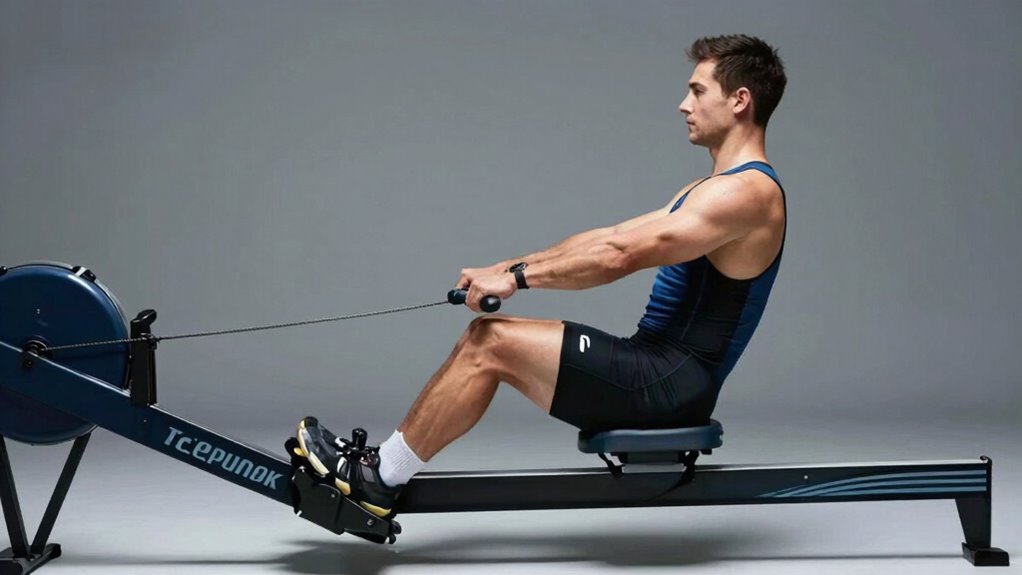
Have you ever experienced low back fatigue after rowing? Proper rowing form is key to preventing this discomfort. When you maintain good posture alignment, you keep your spine in a neutral position, reducing strain on your lower back. Engaging your core muscles creates a stable foundation, supporting your back throughout each stroke. This core engagement helps distribute the workload evenly across your muscles, preventing overuse of your lower back muscles. Without proper form, you might arch or hunch your back, which increases pressure and leads to fatigue. Paying attention to correct technique ensures you maintain proper posture and avoid unnecessary strain. Focusing on posture alignment and actively engaging your core, you guarantee that your back remains protected and supported. This approach not only prevents fatigue but also enhances your overall rowing efficiency. Additionally, muscle engagement plays a crucial role in maintaining proper form and preventing injury during rowing. Developing awareness of muscle activation can further improve your technique and reduce the risk of fatigue. Incorporating proper breathing techniques can also help stabilize your core and reduce tension in your lower back.
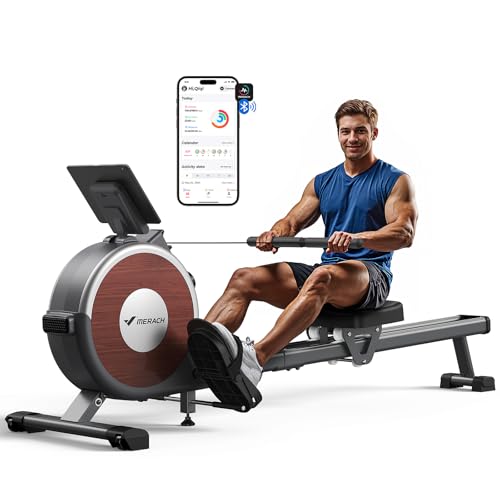
Merach Rowing Machine, Magnetic Rower Machine for Home, 16 Levels of Quiet Resistance, Dual Slide Rail with Max 350lb Weight Capacity, App Compatible with LCD Monitor, Q1S
MERACH APP: Our App offers various courses and programmed exercises for you, Taking the courses can bring your…
As an affiliate, we earn on qualifying purchases.
As an affiliate, we earn on qualifying purchases.
Setting Up Your Rowing Machine for Back Safety

Properly setting up your rowing machine is essential to protect your back during workouts. First, verify your equipment is calibrated correctly: adjust the foot straps, resistance level, and monitor to your height and strength. Second, focus on your rowing posture: sit tall with your chest up, shoulders relaxed, and core engaged. Maintain a slight knee bend at the catch to prevent overextension. Third, check your foot placement and handle height so that your arms extend comfortably without overreaching. Correct setup minimizes unnecessary strain and keeps your back safe. Additionally, gear care tips can help ensure your equipment remains in optimal condition, reducing the risk of malfunctions that could lead to injury. Regular equipment inspection and maintenance can further prevent issues that might compromise back safety. Remember, proper equipment calibration ensures your machine responds accurately to your movements, while good rowing posture keeps your spine aligned. Performing routine checks regularly can help identify potential problems before they affect your workout. Incorporating proper maintenance routines can extend the lifespan of your equipment and maintain safety standards. Taking these steps seriously can significantly reduce the risk of low back fatigue and injury.
Merach Rowing Machine, Magnetic Rower Machine for Home, 16 Levels of Quiet Resistance, Dual Slide Rail with Max 350lb Weight Capacity, App Compatible with LCD Monitor, Q1S
MERACH APP: Our App offers various courses and programmed exercises for you, Taking the courses can bring your…
As an affiliate, we earn on qualifying purchases.
As an affiliate, we earn on qualifying purchases.
Step-by-Step Guide to the Correct Drive Phase
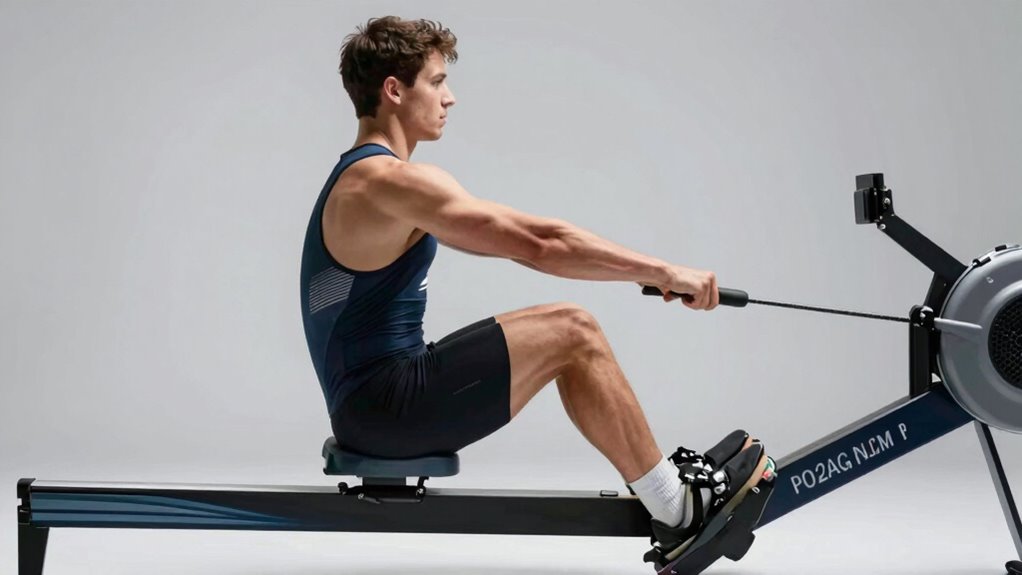
To master the drive phase, start by pushing off with your legs to generate power. Keep your core engaged to maintain stability and control throughout the movement. Proper car protection techniques, such as using a remote car cover, can help preserve your vehicle’s finish during intense workouts or outdoor storage. Additionally, maintaining proper training consistency ensures that your muscles develop the right coordination and strength over time. Finally, pull the handle smoothly toward your chest, coordinating your upper body with your leg drive for an efficient stroke. Incorporating proper crisping techniques can help activate the muscles involved, leading to a more effective and fatigue-free rowing motion.
Initiate With Legs Power
Before you start the drive phase, focus on initiating movement with your legs. Proper leg muscle activation sets the foundation for an efficient and safe rowing motion. Keep your rowing posture upright and engaged as you drive through your heels. To guarantee correct technique:
- Push strongly with your legs, extending your knees fully without overextending your hips.
- Maintain a straight back, keeping your core engaged to support your rowing posture.
- Keep your arms relaxed until your legs have completed the drive, preventing early pulling that can strain your back.
- Ensuring your water damage and rug cleaning is properly managed can help maintain a safe and clean environment, reducing risks of slips and injuries during training.
This order ensures power transfer from your legs to your back and arms, reducing fatigue and low back stress. Properly initiating with your legs maximizes force and maintains proper form throughout the stroke.
Engage Core Properly
Have you activated your core correctly during the drive phase? Proper core engagement is essential to maintain stability and prevent low back fatigue. To achieve proper activation, tighten your abdominal muscles as if preparing for a gentle punch. Focus on pulling your belly button toward your spine without holding your breath. This core engagement creates a solid foundation, supporting your lower back throughout the movement. Keep your hips stable and avoid overarching your lumbar spine. Remember, a strong, engaged core helps transfer power efficiently from your legs through your torso to the handle. Proper activation isn’t just about effort; it’s about precision. By consciously engaging your core during each drive, you ensure a safer, more effective rowing stroke while reducing strain on your lower back. Additionally, understanding the importance of core stability can help you develop better muscle control and improve overall rowing performance. Developing muscle control through consistent core engagement will enhance your overall technique and reduce injury risk. Recognizing the role of consistent practice can further solidify proper form and prevent fatigue. Incorporating proper technique into your routine ensures that each movement supports your body’s natural biomechanics, reducing unnecessary stress. Remember, maintaining proper body alignment during the drive phase also plays a key role in preventing fatigue and injury.
Pull Handle Smoothly
As you begin the drive phase, focus on pulling the handle smoothly toward your lower ribs. Start by ensuring your grip adjustment feels comfortable; a relaxed but firm grip helps prevent tension. Pay attention to handle height—keep it just below your chest for ideal leverage. To pull effectively:
- Engage your back and arm muscles, pulling the handle in a controlled, fluid motion.
- Maintain a steady, smooth rhythm without jerking or rushing.
- Keep your wrists flat and avoid gripping too tightly, which can cause unnecessary fatigue.
- Incorporate proper ergonomic positioning to reduce strain and enhance efficiency during the rowing motion. Additionally, paying attention to your body alignment can help maintain proper form and prevent injury throughout the workout. Recognizing the importance of cultural artifacts in Indonesian decor can inspire you to appreciate the balance and harmony in your own movement patterns. Ensuring your muscle engagement is optimal can further support consistent and injury-free rowing. Focusing on muscle activation techniques can improve overall performance and reduce the risk of fatigue.

Ab Machine and Rowing Machine, 4 in 1 Rowing Machines for Home with 3 Levels of Workout Resistance, Quiet & Foldable Rower Machine with 3 Adjustable Handle Heights & LCD Monitor, Row Machine for Home
4-in-1 Ab Machine and Rowing Machine for Home: This 4-in-1 rowing machine combines rowing mode, ab training mode,…
As an affiliate, we earn on qualifying purchases.
As an affiliate, we earn on qualifying purchases.
How to Transition Safely From Finish to Catch
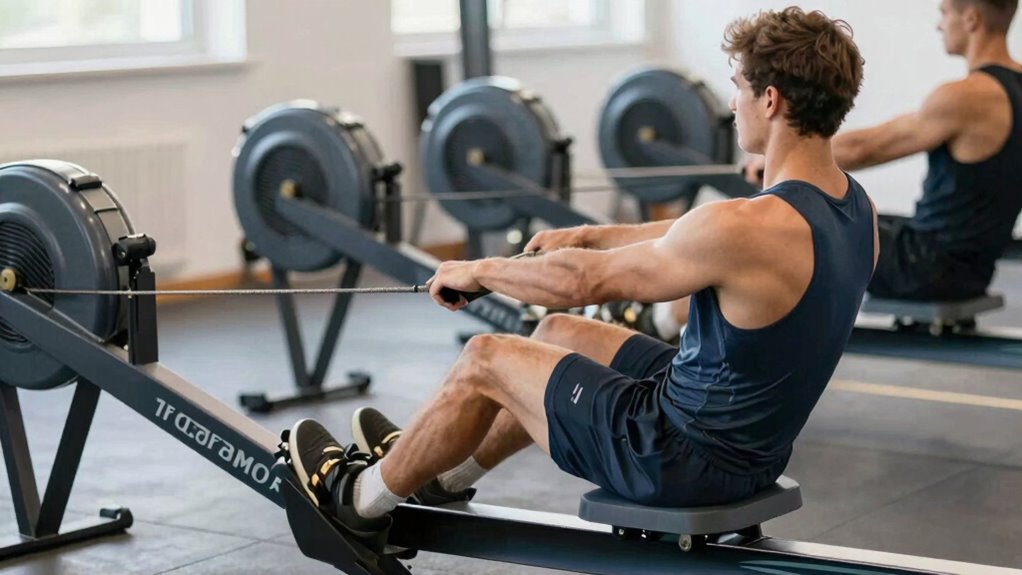
As you move from the finish to the catch, keep your lumbar spine in a neutral position to protect your back. Control the hinge movement by hinging at the hips smoothly, avoiding sudden or jerky motions. Engage your core to stabilize your body and guarantee a safe, efficient changeover. Additionally, be mindful of indoor air quality microplastics in dust, which can accumulate on surfaces and potentially impact your respiratory health during workouts. Maintaining a clean environment can help reduce exposure to indoor pollutants that may affect your overall health. Regular cleaning practices can also minimize the buildup of indoor contaminants, supporting a healthier workout space.
Maintain Lumbar Neutral Position
To move safely from the finish to the catch, maintaining a neutral lumbar position is essential. Proper lumbar alignment ensures spinal stability and prevents low back fatigue. Here’s how to achieve this:
- Keep your core engaged, drawing your belly button toward your spine to support spinal stability.
- Avoid overarching or rounding your lower back; aim for a flat, stable lumbar region.
- Focus on smooth, controlled movements, guaranteeing your spine remains neutral during the transition.
Control the Hinge Movement
How can you guarantee a safe and efficient shift from the finish to the catch? The key is hinge control—maintaining a slight bend at your hips while keeping back alignment steady. As you move into the catch, avoid rushing or overextending your torso; instead, hinge smoothly forward from your hips. Focus on engaging your hamstrings and glutes to control the movement, preventing your back from rounding or over-arching. A controlled hinge keeps your spine neutral and reduces stress on your lower back. Think of it as a gentle, deliberate pivot rather than a jerky motion. By mastering hinge control, you ensure that your transition is fluid, safe, and maintains proper back alignment, setting you up for an effective and fatigue-free rowing stroke.
Engage Core During Transition
Engaging your core during the shift from finish to catch is essential for maintaining stability and control throughout your rowing stroke. Proper core activation guarantees a smooth transition and prevents low back fatigue. To master transition techniques, focus on these steps:
- Tighten your abdominal muscles as you prepare to move, engaging your core muscles steadily.
- Use your core to control the hinge movement, avoiding sudden or jerky motions.
- Maintain this activation as you hinge forward, keeping your back flat and your movements fluid.
These core engagement strategies help you transfer power efficiently while protecting your lumbar spine. Consistently practicing these transition techniques will lead to better form, increased efficiency, and a reduced risk of injury during your rowing sessions.
Engage Your Core for a Strong and Safe Row
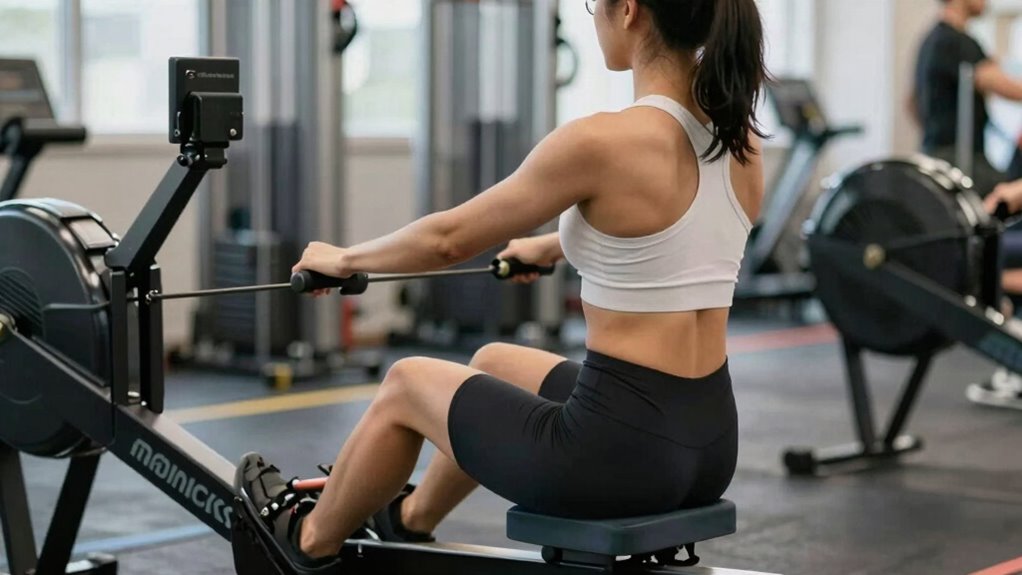
Since your core muscles provide the foundation for every rowing movement, actively engaging them helps improve stability and reduces the risk of injury. Focus on core activation by tightening your abdominal muscles as you prepare to row. This engagement supports proper posture alignment, keeping your back straight and shoulders relaxed. A strong core stabilizes your pelvis and spine, preventing unnecessary strain during each stroke. Maintain a slight inward pull of your belly button toward your spine throughout the movement to reinforce this engagement. Proper core activation ensures your body moves as a cohesive unit, maximizing power and minimizing fatigue. Remember, a well-engaged core not only enhances performance but also keeps you safe from strain or injury during your workout.
Common Mistakes That Cause Back Strain and How to Avoid Them
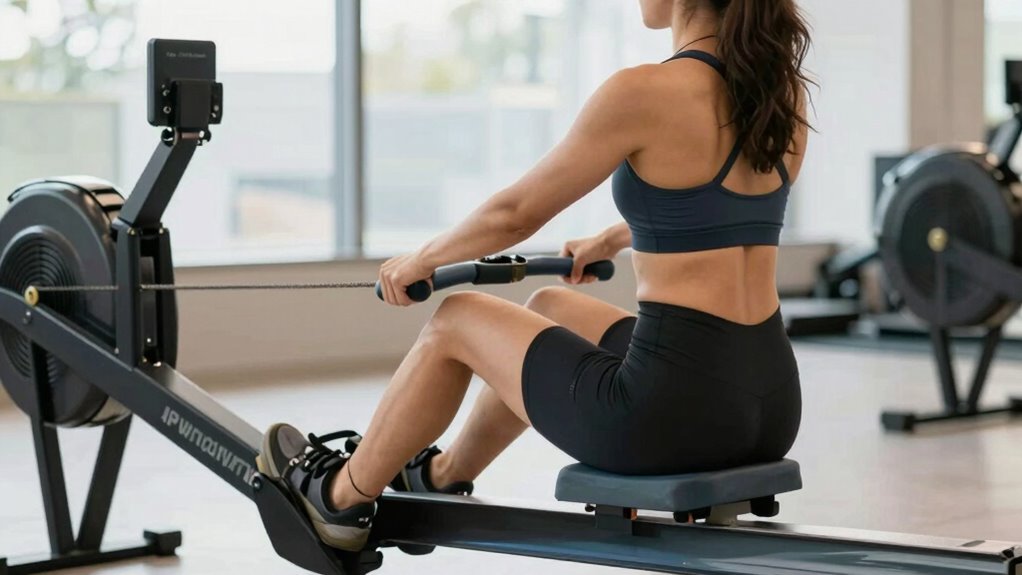
One common mistake that leads to back strain during rowing is neglecting proper posture, such as arching or rounding your back instead of maintaining a straight spine. To prevent this, focus on core activation to support your back throughout each stroke. Additionally, make sure your machine adjustments are correct; improper seat height or foot placement can force you into poor form. Here are three tips to avoid back strain:
- Engage your core from the start to stabilize your spine.
- Check and adjust the foot straps and seat height for ideal alignment.
- Maintain a straight back during the drive and recovery, avoiding over-arching or rounding.
Adjusting Your Technique for Your Body Type and Fitness Level

Adjusting your rowing technique to match your body type and fitness level is essential for maximizing efficiency and minimizing injury risk. Everyone’s body is different, so focus on body type adjustments that suit your proportions and movement patterns. If you have longer legs, you might need to emphasize a longer drive phase, while shorter limbs may require a more compact stroke. Your fitness level also influences your approach; beginners should prioritize controlled movements and gradual intensity, whereas advanced users can increase power and speed with proper form. Incorporate fitness level modifications by adjusting resistance and stroke rate, ensuring you don’t push beyond your limits. Tailoring your technique helps prevent fatigue and injury, making your workouts safer and more effective.
Breathing Tips to Support Back Safety During Rows
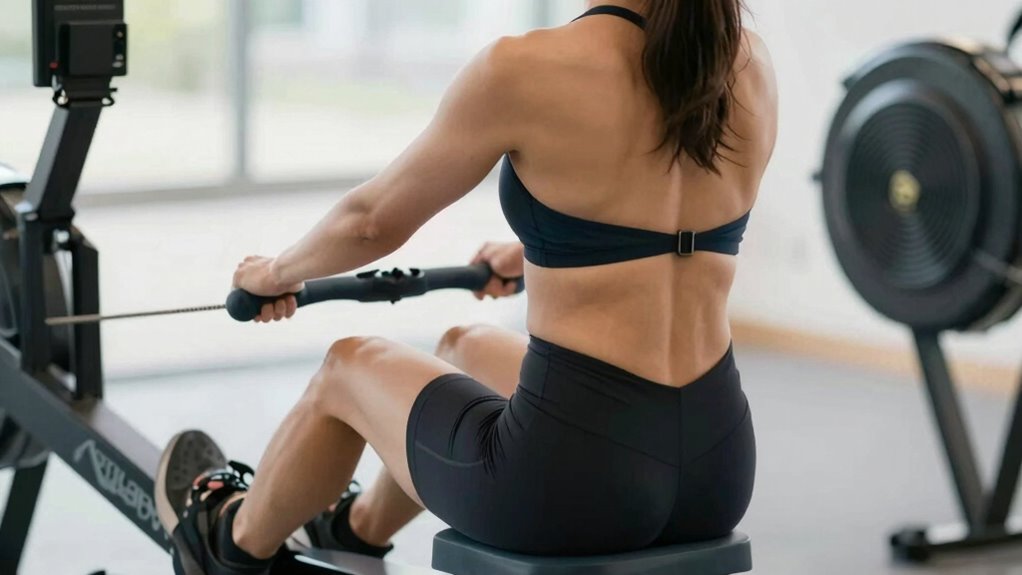
Proper breathing during your rowing sessions is essential for maintaining back safety and overall performance. It helps stabilize your core and ensures proper muscle engagement. To optimize your breathing rhythm and support inhalation control, follow these tips:
Proper breathing stabilizes your core, enhances performance, and safeguards your back during rowing.
- Sync your breath with your movement—inhale during the recovery phase and exhale as you pull back.
- Maintain a steady, controlled inhalation to avoid rushing and over-breathing.
- Focus on deep, diaphragmatic breaths rather than shallow chest breathing to better support your core and reduce back strain.
Early Signs of Back Discomfort and How to Correct Them

Being attentive to your body’s signals during rowing helps prevent back injuries. Early signs of back discomfort, like tightness or dull pain, indicate you may need posture correction. Pay close attention to how your back feels during each stroke—if you notice soreness, it could be due to muscle imbalance or improper form. Adjust your posture to ensure your back stays straight, avoiding excessive arching or rounding. Address muscle imbalance by engaging your core and evenly distributing effort across muscle groups. Recognizing these early signs allows you to correct your technique before pain worsens, reducing the risk of injury. Proper posture correction and awareness of muscle engagement are key to maintaining safe, effective rowing sessions.
Building a Consistent Rowing Routine to Maintain Proper Form

To keep your form on point, you need a clear plan with specific goals. Establishing a consistent routine helps you build muscle memory and avoid bad habits. When you stick to your schedule, maintaining proper technique becomes second nature.
Set Clear Goals
Setting clear goals is essential for building a consistent rowing routine that helps you maintain proper form. When you define specific targets, you stay focused on posture correction and avoid common mistakes that lead to low back fatigue. To keep motivated, try these strategies:
- Set measurable milestones, like improving stroke efficiency or duration.
- Track your progress regularly to see tangible improvements.
- Reward yourself for achieving goals to boost motivation strategies.
Having clear goals keeps you accountable and reinforces good habits. It encourages you to stay attentive to your posture and technique during each session. With a focused approach, you’ll develop muscle memory and prevent fatigue, making your workouts safer and more effective.
Establish Routine Consistency
Establishing routine consistency is key to maintaining proper rowing form over time. Start each session with warm-up exercises to prepare your muscles and reduce injury risk. Consistent warm-ups help reinforce proper technique and prevent fatigue, especially in your lower back. Develop a routine that includes specific times for rowing and stick to it, making it easier to build muscle memory. Hydration strategies are also crucial; drink water before, during, and after your workout to stay alert and prevent cramping. By maintaining a regular schedule, you’ll reinforce good habits and improve your form. Over time, this consistency helps prevent low back fatigue and ensures you get the most out of each session. Remember, a steady routine leads to better technique and lasting results.
Frequently Asked Questions
How Often Should I Check My Rowing Form During Workouts?
You should check your rowing form every 5 to 10 minutes during your workout to maintain technique consistency. Use form correction strategies like recording yourself or asking a coach for feedback. Regular checks help you stay aligned, prevent low back fatigue, and guarantee you’re engaging the right muscles. Staying vigilant with your form prevents injury and maximizes workout benefits, making your rowing sessions safer and more effective.
Can Improper Footwear Affect Back Safety on a Rowing Machine?
Improper footwear can definitely impact your back safety on a rowing machine. If your shoes lack stability or proper cushioning, your feet may shift or wobble, throwing off your balance and stressing your lower back. Think of stable footwear as the foundation of a house; without it, everything else becomes unstable. Choosing shoes with good footwear stability and adequate shoe cushioning helps maintain proper form, reducing the risk of back injuries during your workout.
What’s the Ideal Rowing Machine Seat Height for Back Comfort?
You should set your rowing machine seat height so that when you sit down, your knees are slightly bent at the start of the stroke. Adjust the seat height for ideal back support positioning, ensuring your back stays straight and supported throughout. Proper seat height helps prevent low back fatigue by maintaining good posture, reducing strain, and enabling efficient power transfer, making your workout safer and more comfortable.
How Does Rowing Intensity Impact Back Fatigue Risk?
They say “too much of a good thing can be bad,” and that’s true for rowing intensity. When you push too hard, you risk overloading your back, increasing fatigue. To boost back endurance safely, focus on moderate rowing power and steady pacing. This approach minimizes strain, prevents injury, and helps you maintain consistent effort. Keep your intensity balanced for a stronger, healthier back over time.
Should I Incorporate Stretching Routines to Prevent Back Pain?
Yes, you should incorporate stretching routines to prevent back pain. Stretching helps loosen tight muscles and improves flexibility, reducing strain on your lower back during rowing. Focus on stretches for your hamstrings, hip flexors, and lower back to enhance your overall form and prevent fatigue. Make stretching a regular part of your workout to stay flexible, minimize discomfort, and keep your back healthy during intense rowing sessions.
Conclusion
By mastering proper rowing form, you not only protect your back but also unleash better performance and endurance. When you focus on technique, it’s like your body and mind align—coincidence or not, it’s a sign that consistency and care pay off. Keep listening to your body, stay committed to good habits, and your rowing journey will become a seamless flow of strength and safety, proving that even small adjustments can make a big difference.