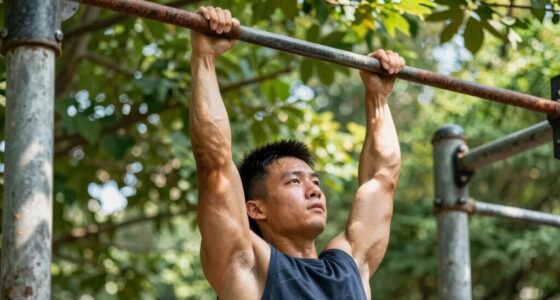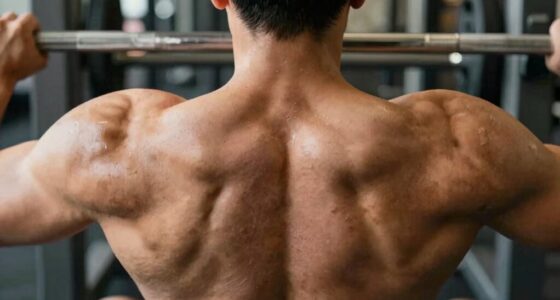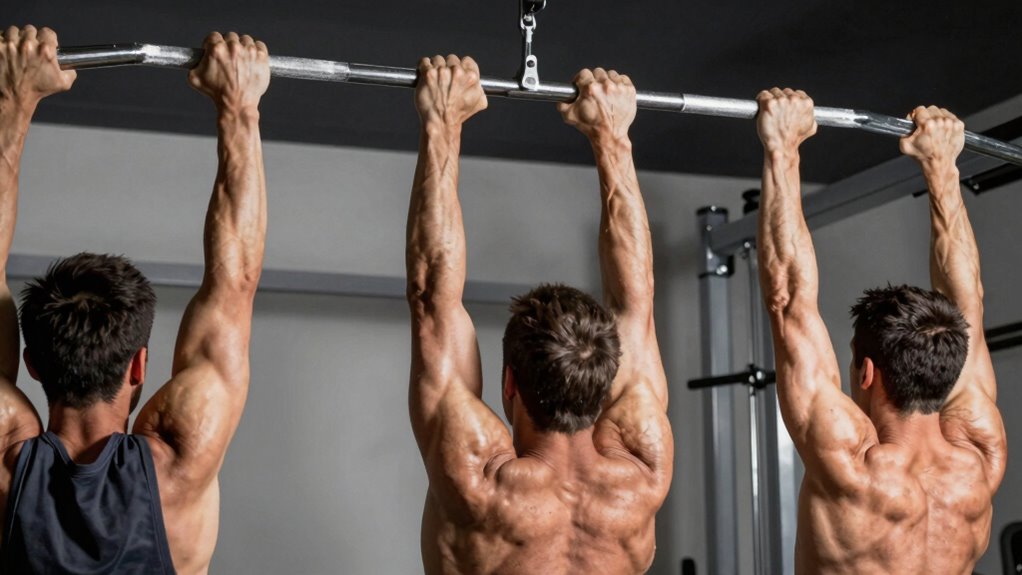
Different pull-up grips target muscles differently and affect your elbows and shoulders. A wide grip emphasizes your lats, helping build broader back muscles, while a close grip activates your biceps and middle back more. Pronated (overhand) grips can stress your wrists and elbows, especially if you have pre-existing issues. Supinated (underhand) grips may reduce joint strain but increase bicep fatigue. Exploring these grip variations can improve your workout, and understanding these effects can optimize your progress.
Key Takeaways
- Different pull-up grips activate specific back muscles, such as lats with wide grip and middle back with close grip.
- Pronated grips increase wrist and elbow joint stress, while supinated grips reduce joint load but target biceps more.
- Neutral grip offers a balanced position, minimizing joint strain and engaging multiple back muscles effectively.
- Varying grip width influences shoulder comfort and muscle recruitment, helping prevent joint discomfort.
- Proper grip technique enhances muscle engagement, reduces injury risk, and tailors workouts for back and elbow health.
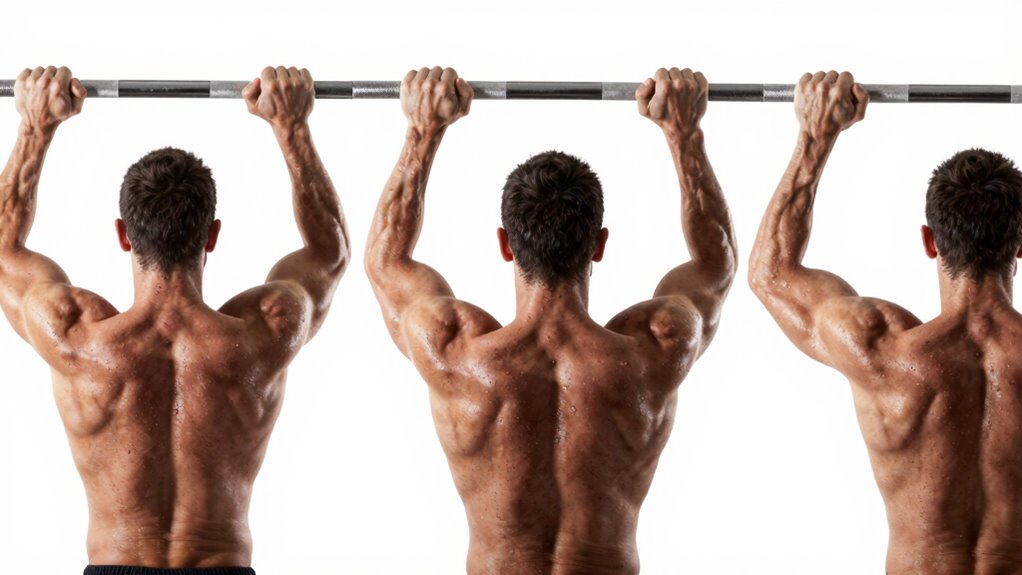
Choosing the right grip for your pull-ups can make a significant difference in targeting different muscle groups and preventing injury. When you switch between grip types, you alter muscle activation patterns, which can enhance your workout results and reduce the risk of joint stress. For example, a wide grip emphasizes your lats more, helping you develop a broader back, while a close grip engages your biceps and middle back more intensely. Understanding how each grip influences muscle activation allows you to tailor your training to meet specific goals, whether it’s building strength, increasing muscle mass, or improving endurance.
Choosing different pull-up grips targets muscles uniquely and helps prevent joint strain.
Different grip styles also impact your joints differently. Over time, certain grips can cause more joint stress, especially if you have pre-existing pain or mobility issues. For instance, a pronated (overhand) grip tends to place more strain on your wrists and elbows, while a supinated (underhand) grip can reduce some of that stress but may increase bicep engagement, potentially leading to fatigue or strain if overused. Neutral grips, where palms face each other, often strike a balance, offering a comfortable position that minimizes joint stress without sacrificing muscle activation.
The grip you choose influences not only which muscles are recruited but also how your joints handle the movement. A wider grip might feel more challenging on your shoulders and elbows, increasing joint stress if not performed correctly. Conversely, a narrower grip can lessen the load on your shoulders but might limit the involvement of your lats, making it less effective for back development. It’s essential to pay attention to how your body responds during each grip variation. If you notice discomfort or pain in your elbows or shoulders, it might be time to switch grips or adjust your technique.
Varying your grip types can also help you avoid plateaus by challenging your muscles in different ways. Additionally, using proper grip techniques can help you optimize muscle engagement and joint safety during your workouts. However, always prioritize proper form to maintain safe joint positioning and to maximize muscle activation. Incorporating different grips strategically throughout your training prevents overuse injuries and ensures balanced development. Remember, mastering the right grip isn’t just about maximizing muscle activation; it’s also about protecting your joints from unnecessary stress. Take the time to experiment with different styles, listen to your body, and find the grip combinations that give you the best results without compromising your joint health. Proper grip selection is a simple yet effective way to enhance your pull-up performance and longevity.
pull-up grip trainer
As an affiliate, we earn on qualifying purchases.
As an affiliate, we earn on qualifying purchases.
Frequently Asked Questions
Do Grip Types Affect Pull-Up Difficulty Levels?
Yes, grip types affect pull-up difficulty levels by altering your hand positioning and grip strength. A wider grip increases the challenge on your back muscles, making the pull-up harder, while a narrower grip emphasizes arm strength. Switching grips also engages different muscle groups, so your grip strength and comfort influence how tough each variation feels. Experimenting with grips lets you target specific muscles and adjust difficulty to match your fitness level.
Can Grip Variations Prevent Workout Plateaus?
Like changing your sails can catch new winds, switching grip variations can prevent workout plateaus. By altering your grip, you challenge different muscles, boost training consistency, and improve grip strength. This variety keeps your muscles engaged and avoids adaptation, ensuring continuous progress. So, don’t stick to one grip—experiment regularly to keep your workouts fresh, effective, and breaking through barriers, just like explorers charting new paths.
Are There Safety Concerns With Different Grip Styles?
Yes, different grip styles can pose safety concerns. You might experience wrist strain or grip fatigue if you use an unfamiliar or improper grip. To stay safe, start with a comfortable grip, avoid overextending your wrists, and listen to your body. Switching grips gradually helps prevent strain and guarantees your elbows and back stay protected, reducing the risk of injury during pull-ups.
How Do Grip Types Influence Muscle Activation?
Did you know that a wide grip activates 25% more lats, while a close grip emphasizes your biceps? Your grip type directly influences muscle engagement, as different grips target various back muscles and elbows. Plus, a secure grip improves stability, allowing you to maintain proper form and maximize activation. Experimenting with grip styles helps you hit different muscles effectively, making your workout more balanced and efficient.
Which Grip Is Best for Beginners?
As a beginner, the neutral grip is your best choice because it promotes proper hand positioning, reducing wrist strain and making the movement easier to control. This grip also helps you build grip strength gradually while engaging your back and arm muscles effectively. Starting with this grip allows you to develop confidence and proper form, setting a solid foundation for progressing to more advanced grip types later on.
pull-up bar with multiple grip options
As an affiliate, we earn on qualifying purchases.
As an affiliate, we earn on qualifying purchases.
Conclusion
Choosing your pull-up grip is like steering a river—each stroke shapes your journey. Whether you pick overhand, underhand, or mixed, you’re directing your muscles through different currents, sculpting your back and elbows along the way. So, experiment with these grips, but listen to your body’s signals. Like a skilled kayaker adjusts their paddle, adapt your grip to keep your fitness voyage smooth and strong. Your back’s adventure starts with the grip you choose.
ergonomic pull-up grips
As an affiliate, we earn on qualifying purchases.
As an affiliate, we earn on qualifying purchases.
adjustable pull-up bar
As an affiliate, we earn on qualifying purchases.
As an affiliate, we earn on qualifying purchases.