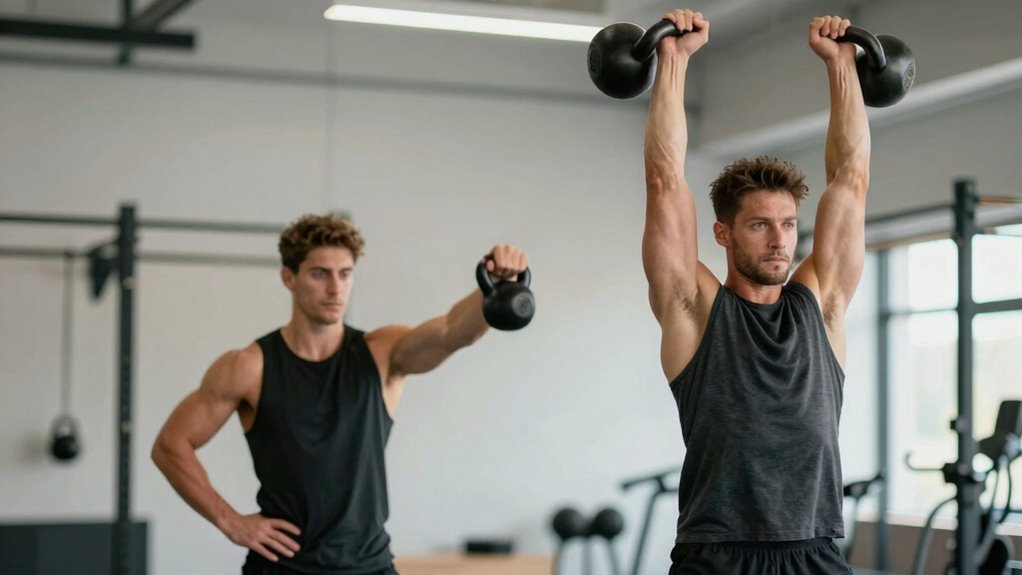

To improve your kettlebell swings, cleans, and presses, focus on proper setup, grip, and posture. Keep a firm but relaxed grip, engage your core, and maintain good shoulder stability. Drive through your hips in swings and cleans, keeping your back neutral. In presses, lock your wrist and keep elbows close. Avoid rushing or using excessive tension. Mastering these cues will boost your safety and efficiency—continue exploring to learn more expert tips.
Key Takeaways
- Maintain a strong, relaxed grip and engage your core to ensure safety and efficient power transfer during swings, cleans, and presses.
- Drive through your hips explosively for swings and cleans, keeping the movement controlled and avoiding excessive arm involvement.
- Keep wrists neutral and elbows close to the body during presses to maintain joint stability and proper alignment.
- Use proper breathing: inhale during eccentric phases and exhale during exertion to stabilize your core and reduce fatigue.
- Focus on smooth, deliberate movements with proper stance and posture to maximize effectiveness and prevent injury.

Fitvids Kettlebell Sets 4 Piece Strength Training KettleBells Weight Set 5lb, 10lb, 15lb, 20lb Kettle Bell
Set of 4 Kettlebells: Includes 5lb, 10lb, 15lb and 20lb kettlebell. The set offers several weights to help…
As an affiliate, we earn on qualifying purchases.
As an affiliate, we earn on qualifying purchases.
Why Proper Kettlebell Technique Improves Safety and Performance
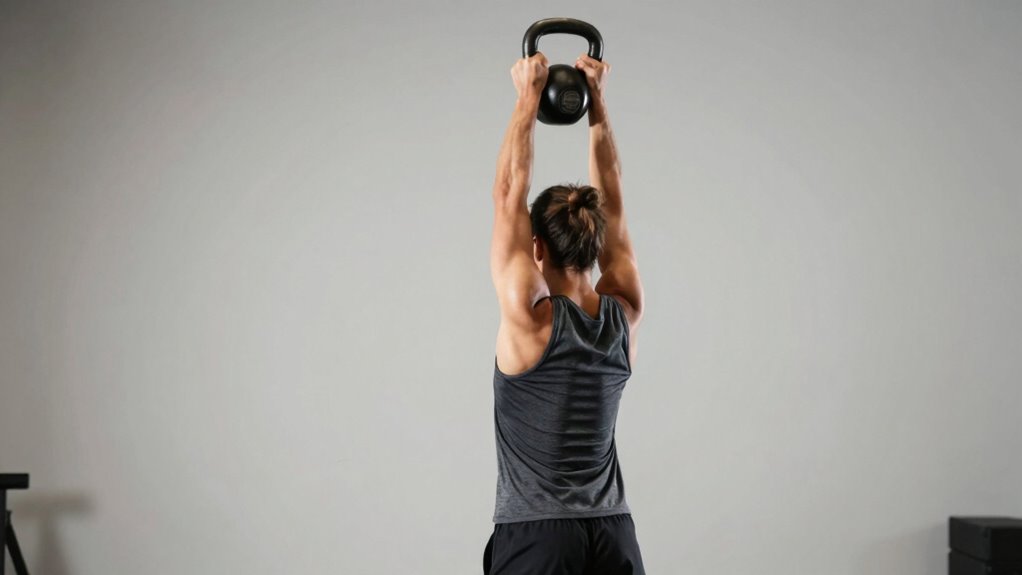
Proper kettlebell technique is essential because it directly impacts your safety and the effectiveness of your workout. A firm kettlebell grip ensures control during each movement, preventing slips or accidents. Your grip influences how power transfers through your body, affecting overall performance. Equally important are breathing techniques; proper breathing stabilizes your core, maintains energy, and reduces fatigue. When you inhale and exhale correctly, you create a rhythm that enhances movement efficiency and minimizes injury risk. Combining a strong kettlebell grip with controlled breathing helps you maintain proper posture and stability, allowing you to perform each exercise with correct form. Focusing on technique cues can help you stay motivated and improve your understanding of effective training methods. Paying attention to body positioning is also crucial for maximizing safety and results. This focus on technique not only keeps you safe but also maximizes the benefits of your kettlebell training. Additionally, understanding the importance of muscle engagement can further improve your workout effectiveness and reduce the risk of injury.

KETTLE GRYP – The Original – As Seen on SHARK TANK! Converts Your Dumbbells Into Kettlebells – Made in the USA – Dumbbell Grip Handle
TURNS DUMBBELLS INTO KETTLEBELLS IN A SNAP: Simply, open hinged handle, place your own dumbbell into the grip,…
As an affiliate, we earn on qualifying purchases.
As an affiliate, we earn on qualifying purchases.
How to Set Up Correctly for Safe and Effective Kettlebell Swings
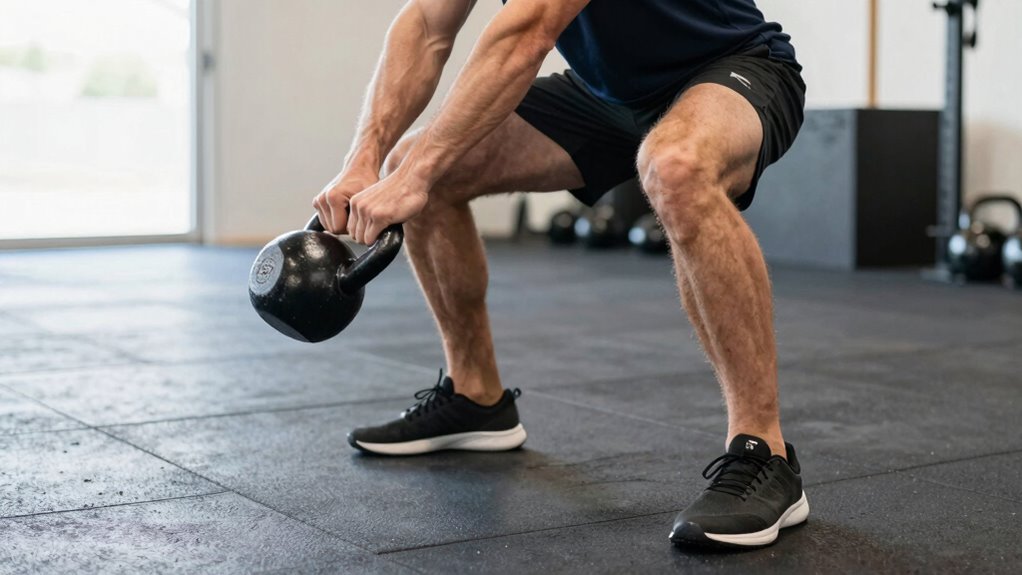
To establish for safe and effective kettlebell swings, start with a solid stance—feet shoulder-width apart and toes slightly pointed out. Make sure you have a secure grip on the kettlebell and maintain a strong, aligned posture throughout the movement. Focusing on these fundamentals helps guarantee your swing is both safe and powerful.
Proper Stance Fundamentals
Setting up your stance correctly is essential for safe and effective kettlebell swings. Focus on stance alignment by placing your feet shoulder-width apart or slightly wider, ensuring your toes point slightly outward. Proper foot positioning allows for ideal balance and power transfer during the swing. Keep your weight evenly distributed across your feet, with a slight emphasis on the heels, to maintain stability and control. Engage your core and keep your chest lifted to support proper posture. Avoid collapsing your arches or overextending your knees. Correct stance fundamentals help you generate force from your hips and maintain control throughout the movement. Remember, a solid setup sets the foundation for safe, efficient swings and reduces injury risk.
Secure Grip and Posture
Achieving a secure grip and maintaining proper posture are essential for performing kettlebell swings safely and effectively. Your hand grip should be firm but not overly tight, allowing for control without unnecessary tension. Wrap your fingers around the handle, ensuring the kettlebell won’t slip during the swing. Keep your shoulder posture active—pull your shoulders back slightly and down away from your ears to prevent hunching. This helps engage your lats and maintain a strong, stable upper body. Focus on keeping your chest up and core tight, which supports a neutral spine. A secure grip combined with proper shoulder posture ensures you can generate power efficiently while reducing the risk of injury. These foundational elements set the stage for a safe, effective kettlebell swing. Additionally, utilizing proper airless paint spraying techniques and gear can help maintain control and safety during your workout. Maintaining awareness of your overall home safety environment can also prevent accidents during exercise routines. Proper rug and floor care, such as ensuring a dry and stable surface, further supports safe movement during training.
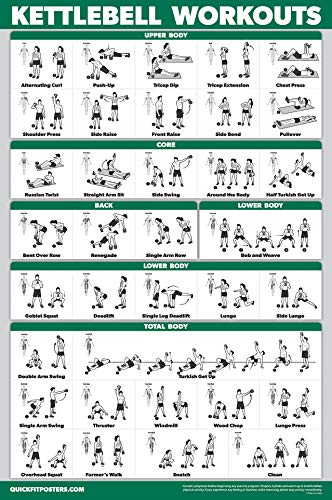
Palace Learning QUICKFIT Kettlebell Workout Exercise Poster | Illustrated Guide | Kettle Bell Routine (Laminated, 18" x 24")
High-quality 3 MIL lamination for added durability
As an affiliate, we earn on qualifying purchases.
As an affiliate, we earn on qualifying purchases.
Key Cues for Performing a Powerful and Controlled Kettlebell Clean
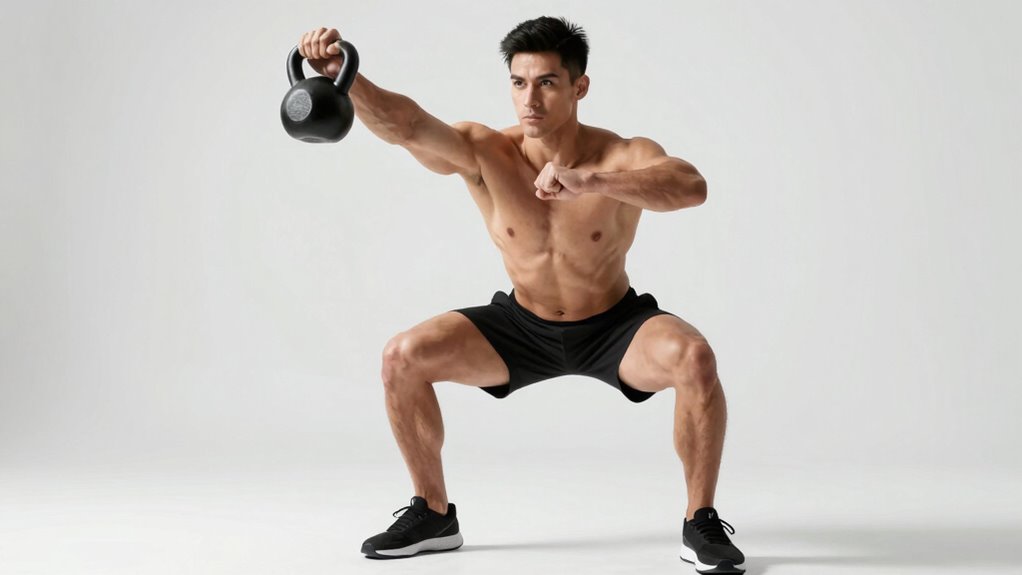
To perform a powerful and controlled kettlebell clean, focus on driving through your hips with proper technique. Keep your wrist and arm aligned to guarantee smooth movement and prevent injury. Mastering these cues helps you generate force while maintaining control throughout the lift. Additionally, understanding proper grip can enhance stability and safety during the movement. Developing a strong foundation in technique ensures consistent progress and reduces the risk of injury over time. Incorporating connected fitness technology can also provide real-time feedback to refine your form and track your improvements effectively. Recognizing the importance of training consistency can further improve your skill development and overall performance. Moreover, paying attention to training programming helps optimize your training sessions for better strength and endurance gains.
Proper Hip Drive Technique
A powerful and controlled kettlebell clean starts with an explosive hip drive that propels the kettlebell upward. To generate this force, focus on a strong hip hinge, engaging your glutes and hamstrings. As you initiate the movement, drive through your hips rapidly, not your arms, to create an explosive drive. This hip action transfers momentum smoothly, lifting the kettlebell to chest height. Proper timing and coordination are essential—think of your hips as the engine powering the movement. Keep your core tight, and avoid overusing your arms. Your hips should lead, not follow, ensuring a clean, efficient lift. Incorporating proper technique ensures safety and effectiveness during each movement. Additionally, developing a strong hip hinge can significantly improve your power and control during the kettlebell clean. Understanding the importance of contrast ratio in projection quality can help visualize the importance of precise movement and timing in your technique. Focusing on movement precision can further enhance your lifting efficiency and safety. Recognizing the role of muscle engagement helps optimize your overall kettlebell performance.
Wrist and Arm Alignment
Maintaining proper wrist and arm alignment is essential for a powerful and controlled kettlebell clean. Focus on keeping your wrist in a neutral position, neither bent nor extended, to prevent strain and guarantee efficient transfer of energy. Your arm positioning should be close to your body, with your elbow slightly tucked in as you guide the kettlebell upward. Avoid flaring your elbow or letting your wrist collapse, as this can compromise stability and control. Keep your wrist aligned with your forearm throughout the movement, which helps generate a smooth, explosive lift. Proper wrist and arm alignment not only improves your technique but also reduces the risk of injury, allowing you to perform cleans safely and effectively. Additionally, understanding how floating on water can aid in recovery and injury prevention highlights the importance of maintaining proper movement mechanics. Paying attention to joint stability during each phase of the movement is crucial to ensure safety and maximize your training results.

BESPORTBLE Fitness Kettlebell Accessories – Adjustable Weight Kettlebell Handle and Base Nut Set for Home Gym Multi-Functional Gym Accessories for Workout
Home gym convenience: for home gyms, this accessory is easy to store and use, making it a convenient…
As an affiliate, we earn on qualifying purchases.
As an affiliate, we earn on qualifying purchases.
How to Execute a Kettlebell Press With Control and Stability
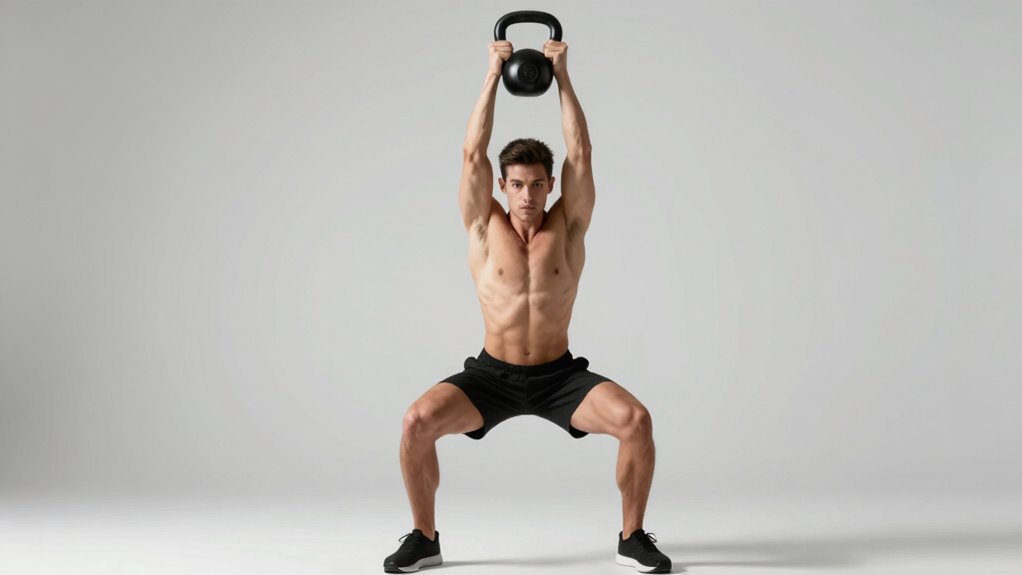
Executing a kettlebell press with control and stability begins with establishing a strong, grounded stance. Keep your feet shoulder-width apart, engage your core, and brace your muscles. Your kettlebell grip should be firm but not tight, allowing for natural movement. Focus on shoulder stability by keeping your shoulder blades down and back, preventing any shrugging. As you press overhead, maintain a straight wrist and control the movement, avoiding any arching or leaning backward. To highlight key points, see the table below:
| Tip | Focus Area |
|---|---|
| Maintain a strong grip | Kettlebell grip |
| Engage your core | Stability & control |
| Keep shoulders stable | Shoulder stability |
| Move smoothly | Controlled execution |
Additionally, paying attention to muscle engagement helps ensure proper technique and reduces the risk of injury. Proper technique mastery can also help improve your overall strength and prevent long-term issues.
Common Mistakes in Swings, Cleans, and Presses: and How to Fix Them
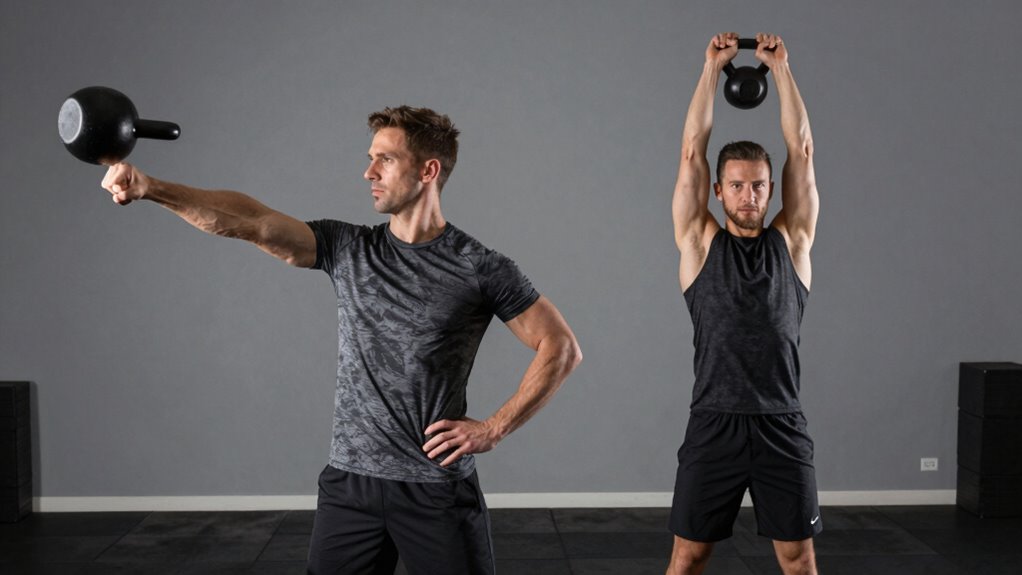
Many common mistakes in swings, cleans, and presses stem from poor form or rushing through the movement. A frequent error is using an improper kettlebell grip, which can cause instability and reduce power. Make certain your grip is firm but relaxed, avoiding death grip tension that hampers fluid motion. Another mistake is neglecting breathing techniques; holding your breath or breathing irregularly can lead to unnecessary strain and fatigue. Practice inhaling during the eccentric phase and exhaling during the exertion phase to maintain core stability and control. Rushing the movement often results in poor form and increases injury risk. Focus on slow, controlled reps, emphasizing proper kettlebell grip and consistent breathing to build a solid foundation and prevent common mistakes. Incorporating proper balance and motivation strategies can further enhance your technique and overall performance.
How to Progress Your Kettlebell Skills Safely Over Time
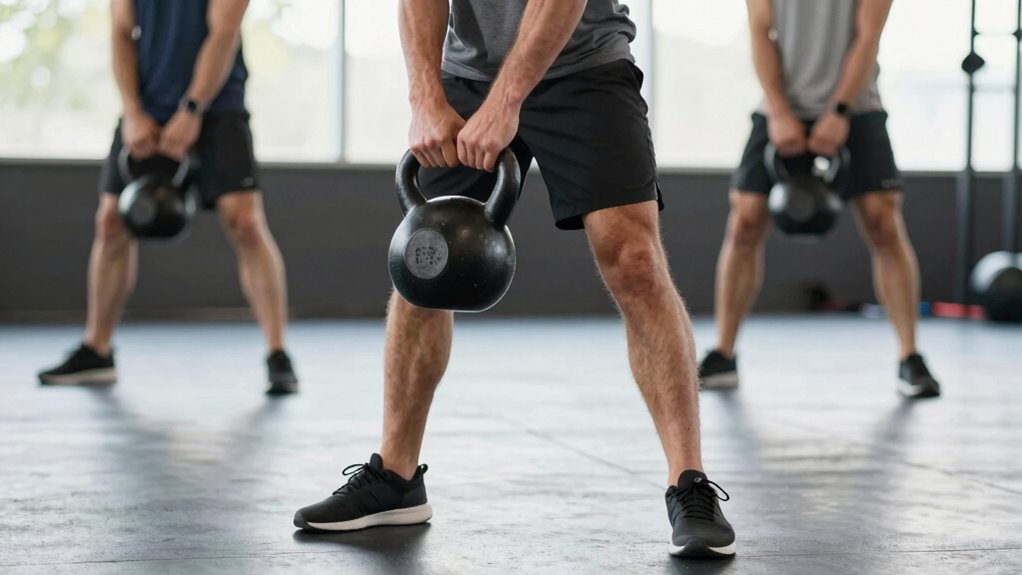
Building a solid foundation with proper form and controlled movements sets the stage for safely advancing your kettlebell skills. To do this effectively, focus on progression planning by gradually increasing weight, reps, or complexity of exercises. Regular skill assessment helps you identify areas for improvement and guarantees you’re ready for the next challenge. Listen to your body and avoid rushing into heavier loads too quickly. Break down complex movements into manageable steps and master each before progressing. Tracking your progress keeps you motivated and clarifies your goals. Remember, training protocols and consistent practice are essential for safe and effective development. Additionally, understanding your power consumption during training sessions can help optimize your workout environment and prevent fatigue. Incorporating appropriate progression strategies ensures steady improvement while minimizing injury risk. Monitoring training load can further help in maintaining a balanced and sustainable workout routine.
Frequently Asked Questions
What Are the Best Kettlebell Sizes for Beginners?
For beginners, kettlebell weight selection should start with lighter options, typically 8-12 pounds for women and 12-16 pounds for men. This allows you to learn proper form and avoid injury. As you progress, track your beginner progress by gradually increasing weight and reps. Focus on mastering technique first, then challenge yourself with heavier kettlebells to build strength safely and effectively.
How Often Should I Practice Kettlebell Techniques?
Imagine sculpting a masterpiece; consistency is your brush. Practice kettlebell techniques 2-3 times a week, allowing your muscles to adapt and improve. Focus on proper form, incorporate technique variation, and track your progress to stay motivated. Don’t rush—quality over quantity matters. With steady effort, you’ll build strength and confidence, transforming your routine into a powerful, effective workout that feels as natural as a dance.
Can Kettlebell Training Help With Specific Athletic Goals?
Yes, kettlebell training can help you achieve specific athletic goals by enhancing sport-specific conditioning and building functional strength. It also promotes injury prevention strategies through improved stability, mobility, and muscular balance. Incorporating kettlebell exercises into your routine boosts power, endurance, and coordination essential for your sport, making your training more effective. Stay consistent, focus on proper technique, and tailor your workouts to match your athletic objectives for peak results.
How Do I Modify Techniques for Limited Mobility or Injuries?
If you have limited mobility or injuries, you can make adaptive modifications and injury-friendly adjustments to kettlebell techniques. Focus on lighter weights, slower movements, and range-of-motion exercises that suit your condition. You might also modify grips or perform seated variations to reduce strain. Always listen to your body, and consult a healthcare professional or trainer experienced in adaptive training to guarantee safe, effective workouts tailored to your needs.
What Are Signs of Overtraining or Improper Form?
You’ll notice signs of overtraining or improper form if you experience muscle fatigue that doesn’t improve with rest, or if you develop joint pain during or after workouts. You might also feel persistent soreness, decreased performance, or unusual discomfort. Pay attention to these signals, and if they occur, reduce intensity, focus on proper technique, and allow your body sufficient recovery to prevent injuries and promote safe progress.
Conclusion
Mastering these kettlebell techniques will transform you into a powerhouse, turning your workouts into unstoppable firestorms of strength. With perfect form, you’ll release lightning-fast swings, precision cleans, and controlled presses that make even the strongest question their limits. Think of your technique as a finely tuned engine—every cue and correction fuels your progress, propelling you toward legendary strength. Stick with it, and soon you’ll be crushing goals like a tidal wave of unstoppable force!