
To fix your deadlift lockout, focus on your grip, hip positioning, and staying tight throughout the lift. Make certain your grip is secure and natural to maintain shoulder stability. Position your hips so your shins stay vertical and your chest slightly over the bar, driving through your heels. Keep your shoulders retracted and upper back tight to create a solid platform. Addressing these weak spots will boost your lockout strength—keep going to discover more effective techniques.
Key Takeaways
- Ensure proper grip width and natural feel to maximize leverage and shoulder stability during the lift.
- Maintain correct hip positioning with hips neither too high nor low to activate posterior chain muscles effectively.
- Focus on a strong, consistent setup to generate maximum force and prevent energy leaks at lockout.
- Keep shoulders back and chest up to create a tight back and solid platform for lockout stability.
- Regularly assess and refine your technique to address weak links and improve overall deadlift lockout strength.
Have you ever struggled to lock out your deadlift at the top? That frustrating feeling when the bar stalls just below full extension is common, but it often signals weak links in your setup or technique. To fix this, you should start by examining your proper grip and hip positioning. These foundational elements play a vital role in how effectively you can drive through the lift and finish strong.
Your proper grip isn’t just about holding onto the bar; it’s about establishing control and stability from the start. A mixed grip or double overhand grip can influence how securely you hold the bar, but more importantly, you want to verify your grip width allows for maximum leverage. Too wide, and you might compromise your shoulder position; too narrow, and you could limit your pulling power. Find a grip that feels natural and allows you to keep your shoulders back and chest up during the lift. This setup helps maintain a tight back and prevents rounding, which can sap your strength at lockout.
Choose a grip that feels natural to maximize leverage and maintain a tight, stable back during the lift.
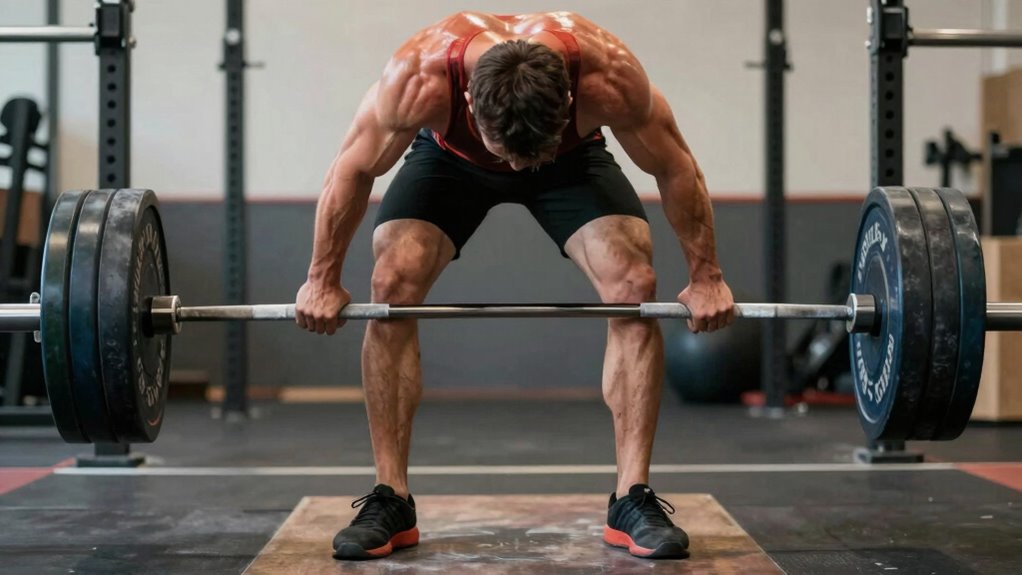
Next, focus on your hip positioning. Many lifters make the mistake of starting with their hips too high or too low, which directly impacts their lockout. Ideally, your hips should be set in a position where your shins are vertical, and your chest is slightly over the bar. This posture enables you to generate maximum force from your legs and hips simultaneously. When you initiate the pull, drive through your heels, keeping your hips engaged and stable. As you approach the lockout, your hips should be in a position where they’re not rising faster than your shoulders or overextending. Proper hip positioning ensures that you use the strongest parts of your posterior chain—glutes, hamstrings, and lower back—and prevents you from relying solely on arm strength or back extension to complete the lift. Additionally, maintaining consistent positioning throughout the movement helps prevent energy leaks and improves your overall lockout efficiency.
Maintaining proper grip and precise hip positioning also helps you stay tight throughout the movement. When your grip is secure, your shoulders stay retracted, and your upper back tightens, creating a solid platform for the lift. Correct hip placement allows your entire posterior chain to activate synergistically, reducing the chance of losing power at the top. This combined approach minimizes unnecessary movements and helps you lock out with confidence.
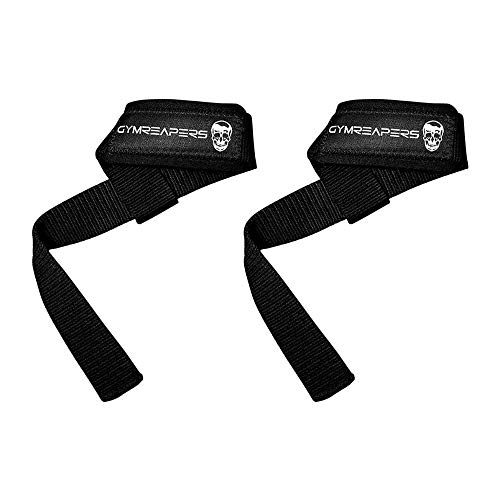
Gymreapers Lifting Wrist Straps for Weightlifting, Bodybuilding, Powerlifting, Strength Training, & Deadlifts – Padded Neoprene with 18" Cotton (Black)
𝗚𝗬𝗠𝗥𝗘𝗔𝗣𝗘𝗥𝗦 𝗟𝗜𝗙𝗧𝗜𝗡𝗚 𝗦𝗧𝗥𝗔𝗣𝗦 – Built for lifters who refuse to let grip fatigue limit performance. These classic cotton…
As an affiliate, we earn on qualifying purchases.
As an affiliate, we earn on qualifying purchases.
Frequently Asked Questions
How Can I Prevent My Deadlift From Stalling at Lockout?
To prevent your deadlift from stalling at lockout, focus on improving your deadlift technique and maintaining mental focus throughout the lift. Keep your chest up, engage your glutes, and drive through your heels. Visualize completing the lift before you start, and stay mentally present to avoid losing momentum. Regularly train accessory movements like glute bridges and rack pulls to strengthen weak points, ensuring a smoother lockout every time.
What Accessories Can Improve Deadlift Lockout Strength?
You can improve your deadlift lockout strength with accessory exercises like Romanian deadlifts and rack pulls, which target your posterior chain. Grip enhancements such as thick bars or grip trainers help you hold heavier weights longer, boosting overall lockout power. Incorporate these into your routine consistently, and you’ll notice increased control at the top of your deadlift, preventing stalls and improving your lockout strength over time.
How Often Should I Train Lockout Specifically?
You should train deadlift lockout specifically 1 to 2 times per week, focusing on your training frequency and ideal volume. This allows you to target weak points without overtraining. Incorporate heavy lockout work and accessory exercises, adjusting volume based on your recovery and progress. Consistency is key—stick to a schedule that challenges you but also lets your muscles recover and adapt effectively.
Does Deadlift Grip Type Affect Lockout Performance?
Yes, grip type can affect your lockout performance. Grip variation, like overhand or mixed grip, influences grip strength, which directly impacts your ability to hold the bar at the top. A stronger grip enhances stability and control during lockout, preventing slippage. You should experiment with different grip variations to find what maximizes your grip strength, ensuring a more secure and powerful lockout in your deadlift.
Can Mobility Issues Hinder My Deadlift Lockout?
Mobility issues can definitely hinder your deadlift lockout, especially if you lack hip mobility or hamstring flexibility. When your hips don’t move freely or your hamstrings are tight, you struggle to fully extend at the top, limiting your lockout strength. Improving these areas through targeted stretches and mobility exercises helps you achieve a more efficient lockout, allowing you to lift heavier and with better form.
deadlift hip positioning guide
As an affiliate, we earn on qualifying purchases.
As an affiliate, we earn on qualifying purchases.
Conclusion
To improve your deadlift lockout, focus on strengthening your glutes, hamstrings, and lower back. Addressing weak links isn’t just about lifting heavier; it’s about building a solid, balanced foundation. When you consistently work on these areas, you’ll notice your lockout becoming more secure and efficient. Remember, progress comes from targeted effort and patience. Keep troubleshooting your weak spots, and you’ll crush your deadlift goals with confidence and control.

BRTGYM Deadlift Jack Barbell Stand,Carbon Steel Made,Easily Load and Unload 600lb Barbell Plates for Deadlift Exercise, Weight Training, Home Gym (Black Powder Coated)
A Must-Have Back Saver: It's a piece of auxiliary equipment that takes a lot of strain off your…
As an affiliate, we earn on qualifying purchases.
As an affiliate, we earn on qualifying purchases.

RitFit Deadlift Jack/Barbell Jack Unload 660LB Barbell Stand with Non-Slip Handle and Base, Perfect for Deadlift and Powerlifting
【DURABLE MATERIAL】: Made of high-quality metal materials, reinforced with screws, with a thickened design at the placement of…
As an affiliate, we earn on qualifying purchases.
As an affiliate, we earn on qualifying purchases.