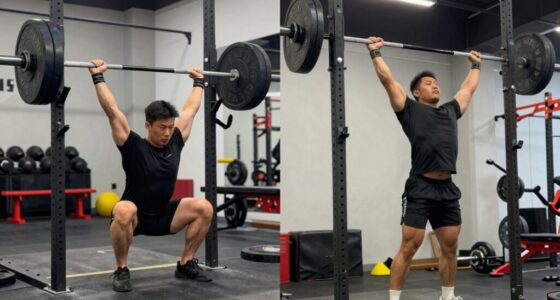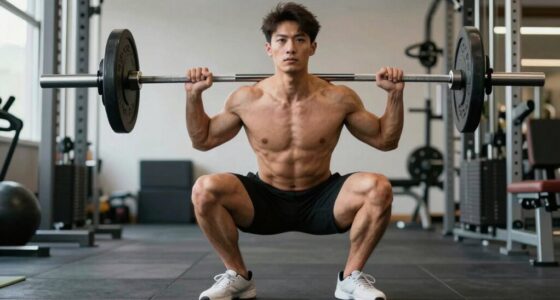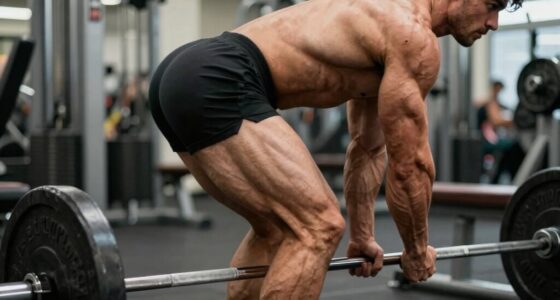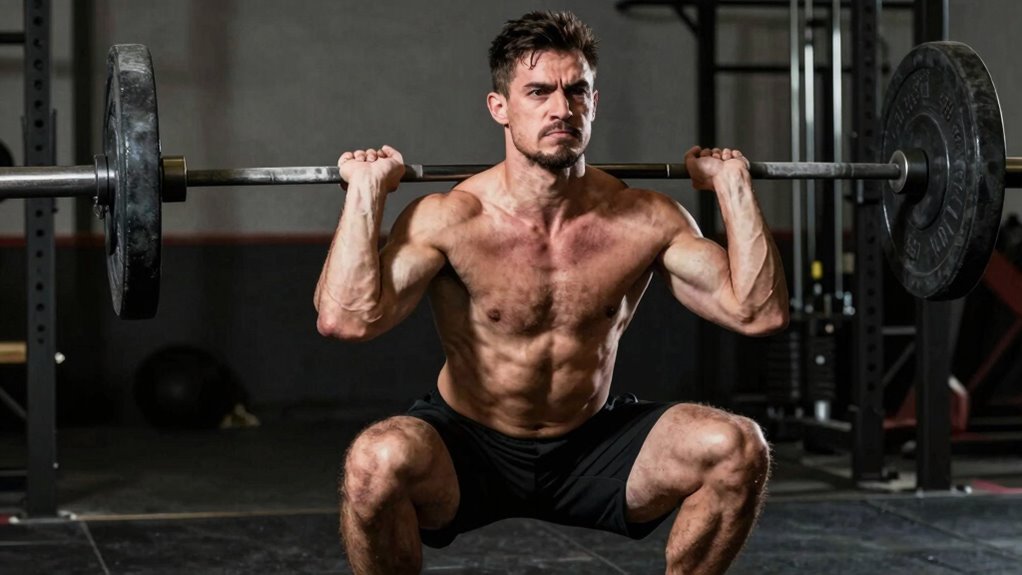
To train your core for heavy lifts, focus on bracing drills that emphasize proper posture, controlled breathing, and core activation. Stand tall with a neutral spine, breathe deeply into your belly, and tighten your abs as if preparing for a gentle punch. Practice maintaining this tension while lifting or holding positions, gradually increasing load. Consistent practice helps develop automatic engagement, ensuring safer, more powerful lifts—so stay with it to release maximum core strength and stability.
Key Takeaways
- Practice diaphragmatic breathing to create intra-abdominal pressure before lifting.
- Maintain proper posture with a tall chest and neutral spine during drills.
- Engage core muscles as if preparing for a gentle punch to build bracing strength.
- Regularly perform bracing exercises with increasing load for consistent improvement.
- Focus on controlled breathing and alignment to develop automatic, effective core activation.
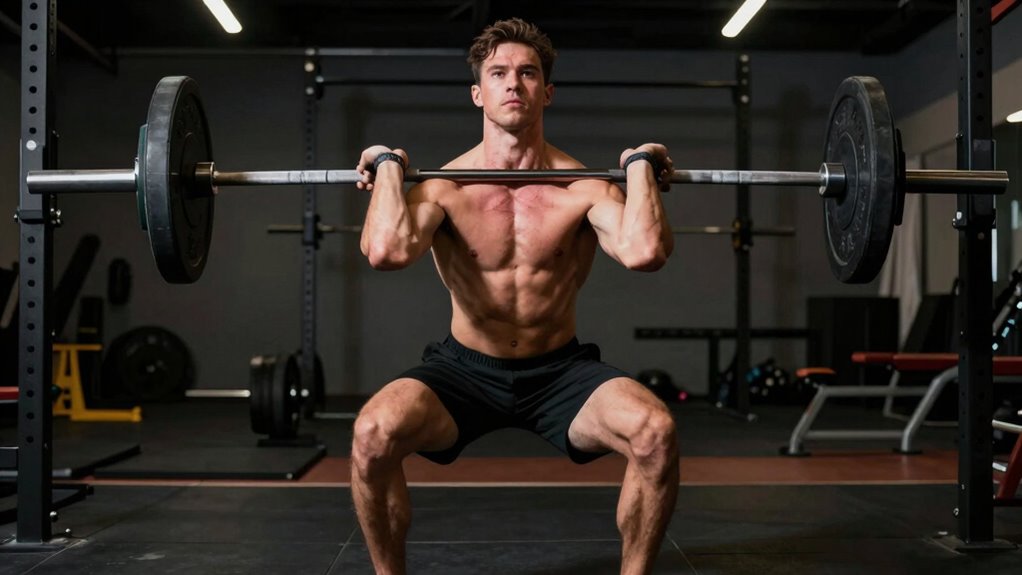
Have you ever wondered how athletes and fitness enthusiasts build core strength and stability? The secret often lies in effective bracing drills that focus on engaging your core muscles correctly. When training for heavy lifts, developing a solid brace is essential to protect your spine and maximize your lifting power. But it’s not just about squeezing your abs; it’s about mastering posture correction and breathing techniques that create a stable foundation for every movement.
Posture correction plays a pivotal role in bracing drills because it helps align your spine and pelvis properly. When your posture is correct, your core muscles can activate more efficiently, providing better support during lifts. To achieve this, you should focus on standing tall with your chest up, shoulders back, and maintaining a neutral spine. As you practice, consistently check your alignment in front of a mirror or through mindful awareness, ensuring your shoulders aren’t rounded forward and your hips aren’t tilted. This alignment ensures your core is in the best position to engage during heavy lifts.
Proper posture alignment enhances core activation and supports safer, more effective heavy lifting.
Breathing techniques are equally essential because they influence how well you can brace and maintain stability under load. Proper breathing involves diaphragmatic, or belly, breathing, which encourages the expansion of your abdomen rather than shallow chest breathing. Before lifting, take a deep breath into your belly, filling your lungs and expanding your diaphragm. This creates intra-abdominal pressure, acting like an internal corset that supports your spine. As you brace, hold your breath momentarily, tightening your core muscles—similar to preparing for a punch—before executing the lift. This technique, often called the Valsalva maneuver, increases stability and helps you transfer force effectively. Developing core stability is critical for maintaining control during heavy lifts and preventing injury.
Integrating posture correction and breathing techniques into bracing drills is straightforward. Begin by standing tall, taking a deep diaphragmatic breath, and then engaging your core as if you’re about to be gently punched in the stomach. Maintain this tension throughout the lift, making sure your back remains straight and your pelvis stays neutral. Practice these drills regularly, gradually increasing the load as your core becomes more conditioned. Over time, you’ll notice that your ability to brace effectively improves, leading to safer, more powerful heavy lifts.
The key is consistency. Focus on maintaining proper posture and controlling your breath to build a resilient core that can handle the demands of heavy lifting. With diligent practice, these techniques will become second nature, giving you the stability and strength needed to crush your personal bests.

VEVOR Diamond Core Drilling Machine, 0.8-8 in Drilling Diameter, Stand-Mount Dry and Wet Concrete Core Drill Rig with 8 Drill Bits, 800 RPM Speed, UNC1 1/4-7 Thread, 3000W, Lightweight
Powerful & Fast Drilling: This core drill is equipped with a robust 3000W motor and spins at 800…
As an affiliate, we earn on qualifying purchases.
As an affiliate, we earn on qualifying purchases.
Frequently Asked Questions
How Often Should I Incorporate Bracing Drills Into My Workout?
You should incorporate bracing drills into your workout 2-3 times a week for ideal training frequency. Focus on gradual integration strategies, starting with short sessions and increasing intensity as your core strengthens. Consistency is key, so make these drills a regular part of your routine, especially before heavy lifts. This approach helps improve core stability, reduces injury risk, and boosts your overall lifting performance.
Can Bracing Drills Improve Other Athletic Performance Areas Besides Lifting?
Yes, bracing drills can boost your athletic performance beyond heavy lifting. They enhance core stability, which improves balance, coordination, and agility. Strong core muscles also help prevent injuries during dynamic movements, jumps, and sprints. By regularly practicing bracing drills, you develop a resilient core that supports various sports and physical activities, making you more efficient and reducing your risk of strains and other injuries in different athletic pursuits.
Are There Any Risks or Common Mistakes Associated With Bracing Exercises?
Yes, there are risks and common mistakes with bracing exercises. If you overuse or improperly execute core stability techniques, you could strain your neck, back, or other muscles. Avoid holding your breath too long, which can increase intra-abdominal pressure and cause injury. Focus on proper form to prevent injury and maximize benefits, ensuring your core stability improves safely and effectively for better injury prevention during lifts and athletic activities.
How Long Does It Typically Take to See Results From Bracing Drills?
You’ll usually start noticing results from bracing drills within 4 to 6 weeks, as your muscle activation improves and your core strength develops. Consistent practice helps your body adapt, making your core more stable and efficient during heavy lifts. Keep focusing on proper technique and gradually increase intensity, and you’ll see gains in strength development and overall lifting performance in just a few weeks.
Do Bracing Drills Benefit Beginners or Only Advanced Lifters?
Think of your core as a fortress wall. Bracing drills benefit both beginners and advanced lifters, acting as the foundation for core activation. For beginners, it’s like laying strong bricks, helping build stability early on. Even if you’re experienced, these drills reinforce your defenses, preventing injury and boosting strength. So, don’t wait—start bracing now to strengthen your fortress and enhance every lift, no matter your skill level.

Bas Rutten O2Trainer: Breathing Muscle Training Device | Lung Power & Endurance Tool for Athletes, Singers & High-Altitude Performance | Diaphragmatic Respiratory Trainer | 16 Resistance Caps | Blue
DESIGNED BY UFC LEGEND BAS RUTTEN: Created by world champion fighter and conditioning expert Bas Rutten, the O2Trainer…
As an affiliate, we earn on qualifying purchases.
As an affiliate, we earn on qualifying purchases.
Conclusion
By incorporating bracing drills into your routine, you’ll build a stronger, more stable core that supports heavy lifts safely. Imagine Sarah, a powerlifter who struggled with back pain—after focusing on bracing drills, she improved her stability and lifted heavier without discomfort. Consistent practice transforms your core into a solid foundation, boosting performance and reducing injury risk. Stay committed, and you’ll reveal your full strength potential with every heavy lift.

RitFit Weight Lifting Belt – Great for Squats, Lunges, Deadlift, Thrusters – Men and Women – 6 Inch Black/Camouflage
SUPER SUPPORTIVE & VERSATILE – The 6” extra-wide contoured weight lifting belt offers comprehensive support, stabilizing your back,…
As an affiliate, we earn on qualifying purchases.
As an affiliate, we earn on qualifying purchases.

Ykimok Golf Putting Mirror, Putting Training Aid, Putting Mirror for Golfers, Corrects Posture for Improved Accuracy, Suitable for Indoor Practice, Outdoor Training, and Home Use
Posture Correction: Improve putting accuracy with the Putting Mirror! Its reflective surface aligns eyes, shoulders, and putter face,…
As an affiliate, we earn on qualifying purchases.
As an affiliate, we earn on qualifying purchases.