
To avoid ego lifting without feeling weak, focus on proper programming and safety. Choose weights that challenge you within your limits and prioritize correct form over heavy loads. Embrace gradual progress by celebrating small victories instead of immediate validation. Shift your mindset to value consistency and technique, knowing strength builds over time. If you want to learn how to keep progressing safely and effectively, keep exploring these key strategies.
Key Takeaways
- Focus on proper form and technique rather than just lifting heavier weights.
- Follow a structured training plan that emphasizes gradual progression over time.
- Celebrate small milestones like improved form, reps, or controlled lifts to build confidence.
- Choose weights that challenge you without compromising safety or technique.
- Prioritize consistency and effort over immediate validation or ego boosts to ensure sustainable progress.
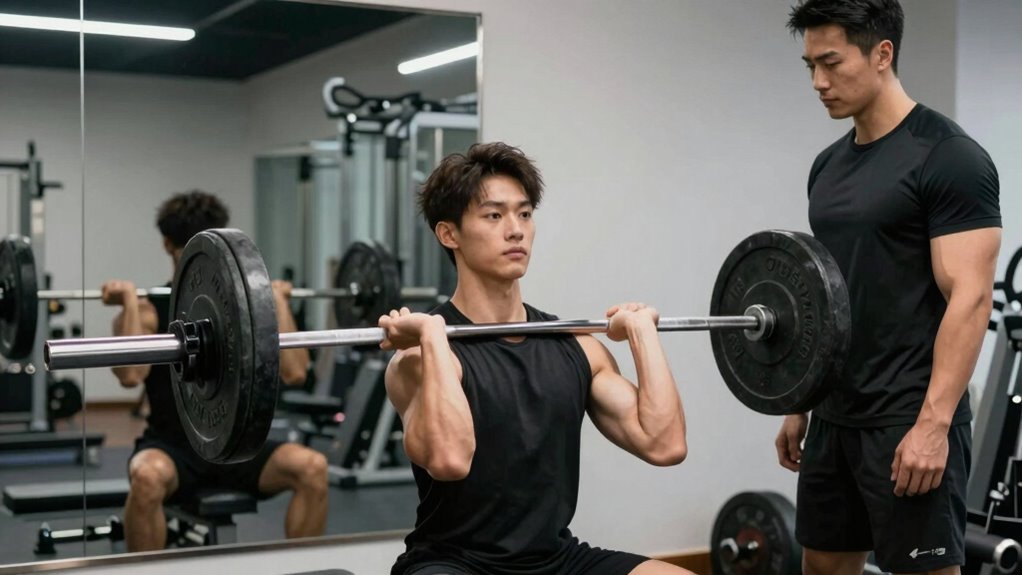
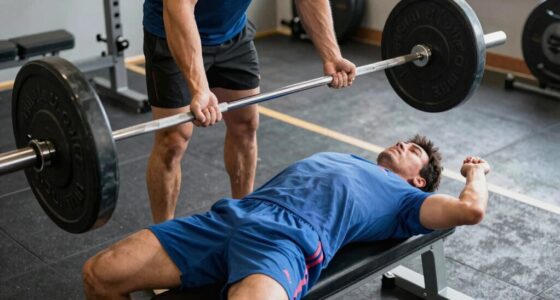
Ego lifting can be tempting, especially when you want to impress others or prove your strength. You might find yourself loading more weight than you can handle, pushing through fatigue, or neglecting proper form—all because you crave validation or a sense of dominance in the gym. But this approach often leads to setbacks, injuries, and long-term progress stalls. To truly improve without feeling weak, you need a mindset shift that prioritizes sustainable growth over instant ego boosts. Recognize that real strength isn’t just about lifting heavy; it’s about consistency, proper technique, and smart training strategies. When you adjust your perspective, you’ll see that lifting within your limits isn’t a sign of weakness but a foundation for genuine progress.
Lifting within your limits builds strength and prevents setbacks, proving real progress is about consistency, not ego.
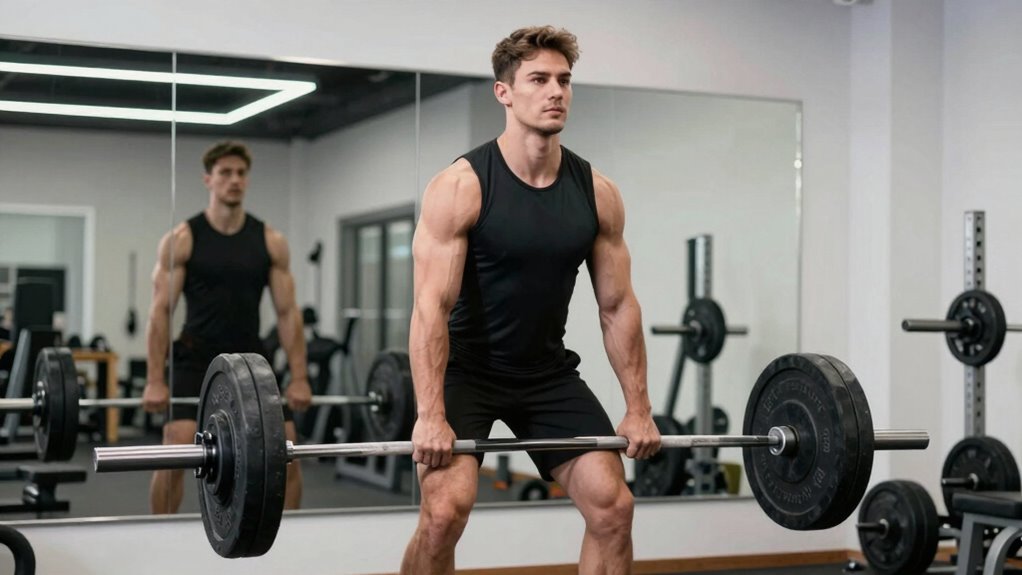
Proper programming plays a key role in avoiding ego lifting. Instead of chasing PRs every session or throwing together random workouts, follow a structured plan designed to gradually increase your strength safely. This means focusing on progressive overload but doing so in a way that respects your current ability. Incorporate a mix of compound movements, accessory work, and adequate recovery periods. Proper programming helps you stay disciplined and prevents you from succumbing to the temptation of lifting heavier just for show. It also ensures you’re training the right muscles with the right intensity and volume, reducing the risk of injury and burnout. Additionally, understanding how training methods influence your progress can help you make smarter choices in your routine.
You’ll find that shifting your mindset from ego-driven lifting to goal-oriented training makes a significant difference. Celebrate small victories, like improving form, increasing repetitions, or adding modest weight increases. These milestones build confidence and reinforce good habits without risking injury. Remember, strength takes time to develop, and patience is part of the process. Stay focused on your long-term progress instead of short-term ego boosts. When you approach each session with the mindset that quality and safety come first, you’ll naturally choose appropriate weights, execute proper form, and avoid the temptation to lift beyond your capacity.
In essence, avoiding ego lifting requires a conscious effort to prioritize proper programming and a mindset that values durability over bravado. Instead of looking for immediate validation, focus on consistent effort and smart training strategies. Over time, this approach not only protects your body but also accelerates your growth as a lifter. When you shift your perspective in this way, you’ll lift smarter, progress faster, and enjoy the journey of building genuine strength—without ever feeling weak.
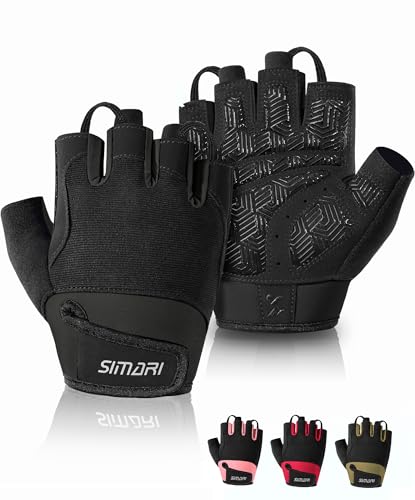
SIMARI Breathable Workout Gloves for Men & Women, Weight Lifting Gloves with Padded, Grip, Full Palm Protection, Gift for Gym Exercise, Cycling, Weightlifting Training, Fitness, Black, Size M
【Full Plam Protection with SBR Pad】SIMARI Workout Gloves feature SBR cushioning pads in key muscle areas throughout the…
As an affiliate, we earn on qualifying purchases.
As an affiliate, we earn on qualifying purchases.
Frequently Asked Questions
How Can I Tell if I’M Ego Lifting During a Workout?
You can tell if you’re ego lifting by practicing mindful awareness during your workout. Pay attention to your form and whether you’re sacrificing technique for heavier weights. Peer feedback can also help; ask a trainer or workout partner if your lift looks safe and controlled. If you’re struggling to maintain proper form or feeling overly competitive, you’re likely ego lifting. Focus on your own progress rather than comparing yourself to others.
What Are Signs of Overtraining Caused by Ego Lifting?
You might notice overtraining signs like persistent fatigue, decreased performance, or lack of progress, which happen when you ignore proper form and lose your mind-muscle connection. Pushing too hard with ego lifting can lead to overuse injuries and burnout. To prevent this, focus on maintaining proper form, stay connected to your muscles, and listen to your body’s signals, ensuring you train smart and avoid overtraining.
Can Ego Lifting Lead to Long-Term Injuries?
Ego lifting can lead to long-term injuries if you don’t prioritize technique correction and listen to your body. Pushing too hard with improper form stresses joints and muscles, risking strains or tears over time. Developing mental toughness helps you resist the urge to lift heavier than you should, maintaining safe progress. By focusing on proper technique and mental discipline, you protect yourself from potential long-term damage caused by ego-driven lifts.
How Do I Stay Motivated Without Ego-Driven Goals?
Motivation matures when you shift your mindset from ego to growth. Focus on fulfilling fitness goals through consistent effort and progress rather than impressing others. Set specific, achievable milestones and celebrate small successes. Embrace the journey, not just the results, and remember that real strength comes from self-improvement. This mindset shift transforms your approach, making workouts rewarding without the need for ego-driven goals, fueling ongoing motivation and meaningful progress.
Are There Specific Exercises to Help Prevent Ego Lifting?
You can prevent ego lifting by focusing on exercises that emphasize mind-muscle connection, like slow controlled movements or isolation exercises such as tricep extensions or leg curls. Prioritize proper form over heavier weights to guarantee you’re engaging the right muscles. This approach keeps you honest with your strength, reduces injury risk, and helps you build genuine progress without resorting to ego-driven lifts.

Progressive Overload: Workout Logbook
As an affiliate, we earn on qualifying purchases.
As an affiliate, we earn on qualifying purchases.
Conclusion
Remember, Rome wasn’t built in a day. Staying humble and focused on proper form helps you progress safely and effectively. Avoid ego lifting by trusting your limits and celebrating small wins. When you stay disciplined and patient, you’ll see better results without risking injury. Keep your ego in check, and your gains will follow. Ultimately, true strength comes from consistency and humility, not lifting the heaviest weights just to impress others.

RitFit Weight Lifting Belt – Great for Squats, Lunges, Deadlift, Thrusters – Men and Women – 6 Inch Black/Camouflage
SUPER SUPPORTIVE & VERSATILE – The 6” extra-wide contoured weight lifting belt offers comprehensive support, stabilizing your back,…
As an affiliate, we earn on qualifying purchases.
As an affiliate, we earn on qualifying purchases.

WHATAFIT Resistance Bands, Exercise Bands,Resistance Bands for Working Out, Work Out Bands with Handles for Men and Women Fitness, Strength Training Home Gym Equipment
DIFFERENT COLOR ADJUSTABLE RESISTANCE BANDS: The exercise bands come with 5 different resistance level 10lbs, 20lbs, 30lbs, 40lbs…
As an affiliate, we earn on qualifying purchases.
As an affiliate, we earn on qualifying purchases.