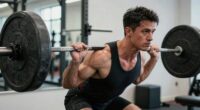
To fix knee pain during squats, check your technique first. Make certain your feet are shoulder-width apart with toes slightly outward, and keep your knees tracking over your toes without caving in or wobbling inward. Maintain proper hip and torso positioning, engaging your core for stability. Avoid squatting too deep beyond your form limits. Correcting these common mistakes will reduce stress on your knees. Keep going, and you’ll discover more effective ways to protect your joints and improve your squat form.
Key Takeaways
- Ensure knees track directly over toes, avoiding inward collapse during squats.
- Maintain proper foot placement with feet shoulder-width apart and slightly pointed toes.
- Keep hips level and torso slightly forward to support correct knee alignment.
- Avoid going too deep without proper form to prevent undue knee stress.
- Engage your core to stabilize your body and support safe knee movement.
knee support brace for squats
As an affiliate, we earn on qualifying purchases.
As an affiliate, we earn on qualifying purchases.
What Common Mistakes Hurt Your Knees During Squats?
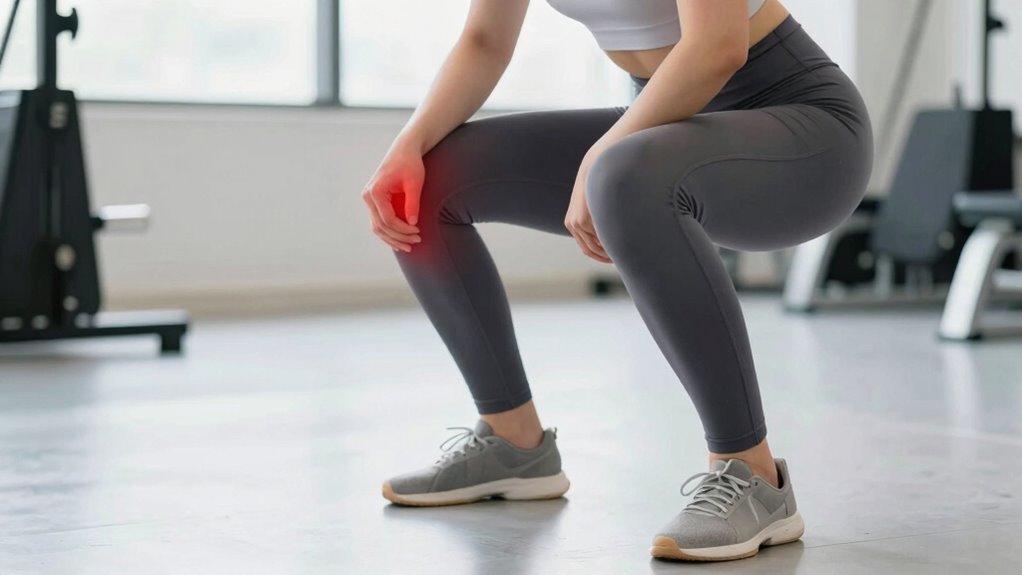
One of the most common mistakes that can hurt your knees during squats is allowing your knees to cave inward or move excessively forward past your toes. Poor knee alignment puts unnecessary stress on your joint structures, increasing injury risk. To protect your knees, focus on maintaining proper knee alignment throughout the movement. This means keeping your knees tracking in line with your toes, not collapsing inward. Additionally, pushing for excessive squat depth can also cause problems if your form isn’t right; going too low may compromise knee stability, especially if your technique isn’t solid. Instead, aim for a squat depth where your knees stay aligned and your form remains controlled. Proper knee alignment ensures you engage the right muscles and reduces strain on your knee joints during the movement. Recognizing and correcting technique mistakes is essential for long-term knee health during squats.
squat technique training aid
As an affiliate, we earn on qualifying purchases.
As an affiliate, we earn on qualifying purchases.
How Should Your Feet Be Placed to Protect Your Knees?
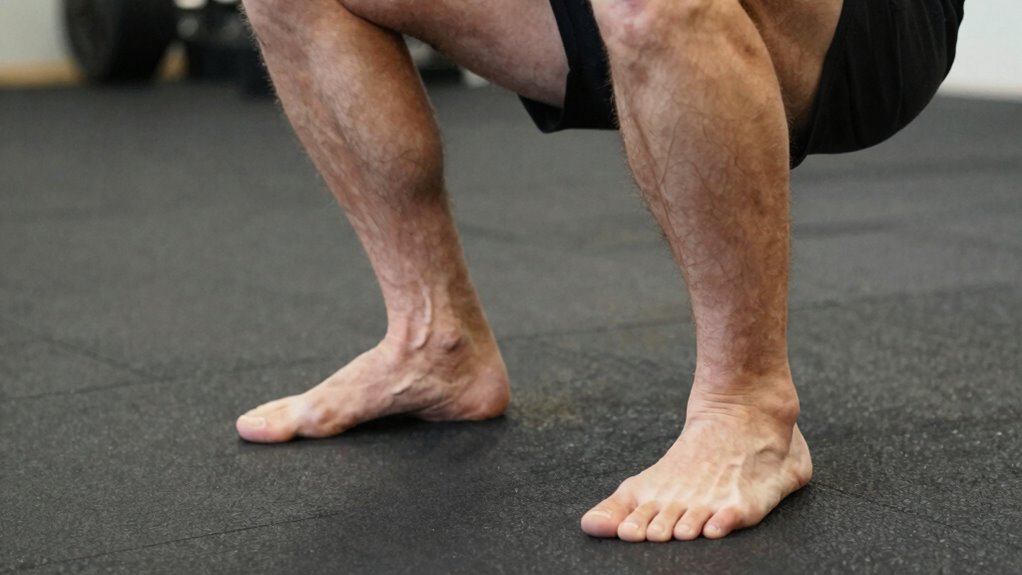
Proper foot placement is essential for protecting your knees during squats. Your feet should be shoulder-width apart, with toes slightly pointed outward to allow natural ankle movement. Ensuring proper ankle alignment helps distribute force evenly through your knees and hips. If your feet are too narrow or too wide, it can cause your knees to cave inward or shift outward, increasing strain. Focus on keeping your weight centered over the midfoot and heels, which helps maintain stability and proper ankle alignment throughout the movement. Avoid letting your heels lift or your toes curl excessively. Correct foot placement sets the foundation for safe and effective squatting, reducing unnecessary stress on your knees and improving overall form. Additionally, paying attention to kinetic chain alignment ensures all joints work harmoniously, further protecting your knees.
knee alignment knee sleeves
As an affiliate, we earn on qualifying purchases.
As an affiliate, we earn on qualifying purchases.
Are You Tracking Your Knees Correctly During Squats?
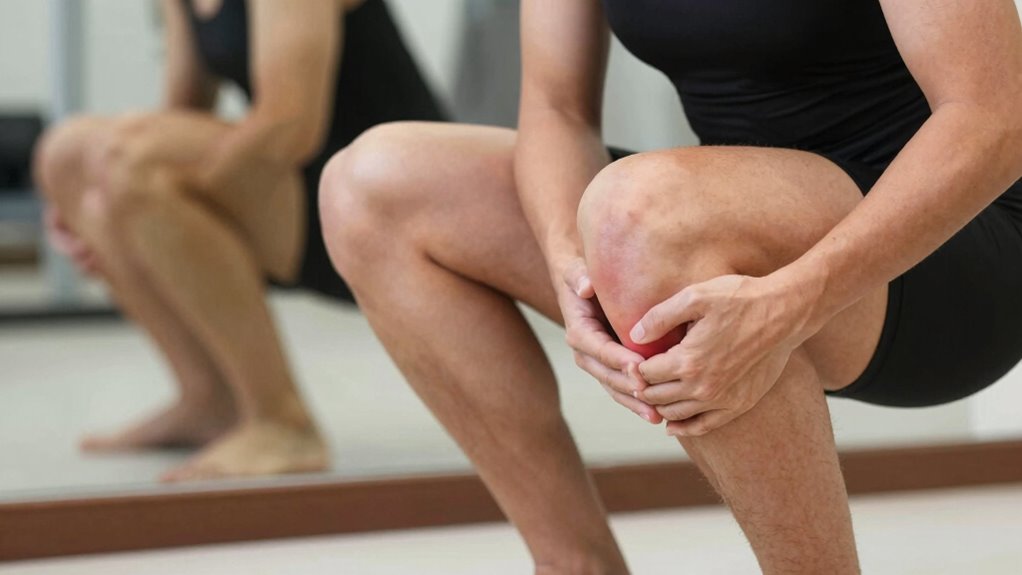
Tracking your knees correctly during squats guarantees you maintain proper alignment and prevent unnecessary strain. Proper knee tracking guarantees your knees stay aligned with your toes throughout the movement, avoiding inward or outward collapse that can cause pain. Focus on keeping your knees in line with your squat alignment by engaging your core and maintaining a steady hip position. Visualize your knees tracking over your toes as you descend, rather than letting them cave inward or drift outward. Using mirrors or recording yourself can help you monitor your form. Remember, correct knee tracking isn’t just about safety—it also maximizes your squat efficiency and helps prevent long-term joint issues. Prioritize knee tracking to ensure a safe, effective squat every time.
stability core workout equipment
As an affiliate, we earn on qualifying purchases.
As an affiliate, we earn on qualifying purchases.
What’s the Right Hip and Torso Position for Safe Squats?
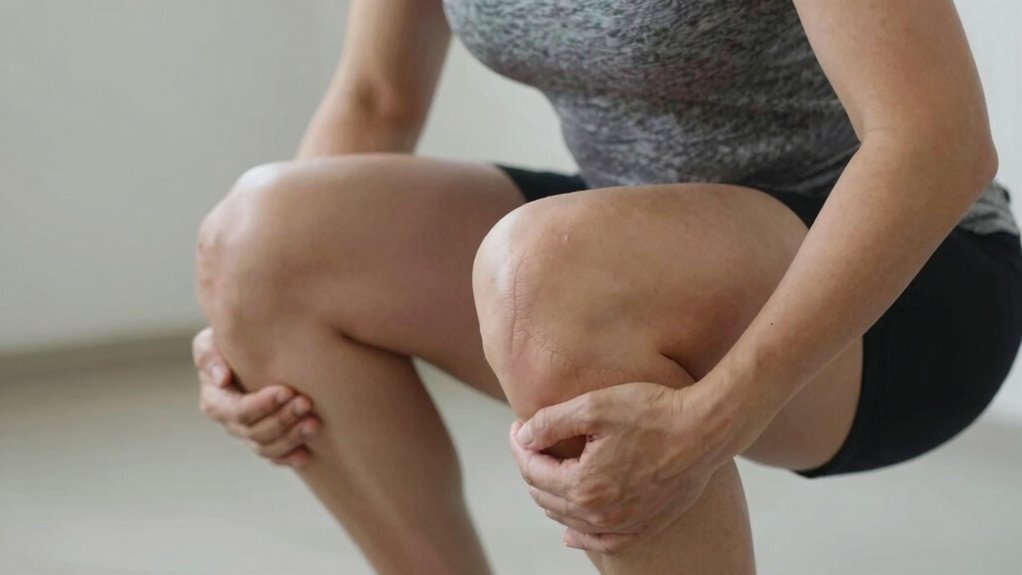
Maintaining the correct hip and torso position is essential for safe and effective squats. Proper hip alignment ensures your knees stay in line with your toes, reducing strain. Your torso angle should be slightly inclined forward, but not overly bent, to keep your spine aligned and engage core muscles. Focus on these key points:
- Keep your hips level and avoid tilting side to side
- Maintain a slight forward torso lean, about 45 degrees
- Engage your core to support proper torso angle
- Make certain your knees track over your toes, not past them
Proper technique is vital for preventing injuries and maximizing the benefits of your squat.
Easy Tips to Fix Your Form and Prevent Knee Pain
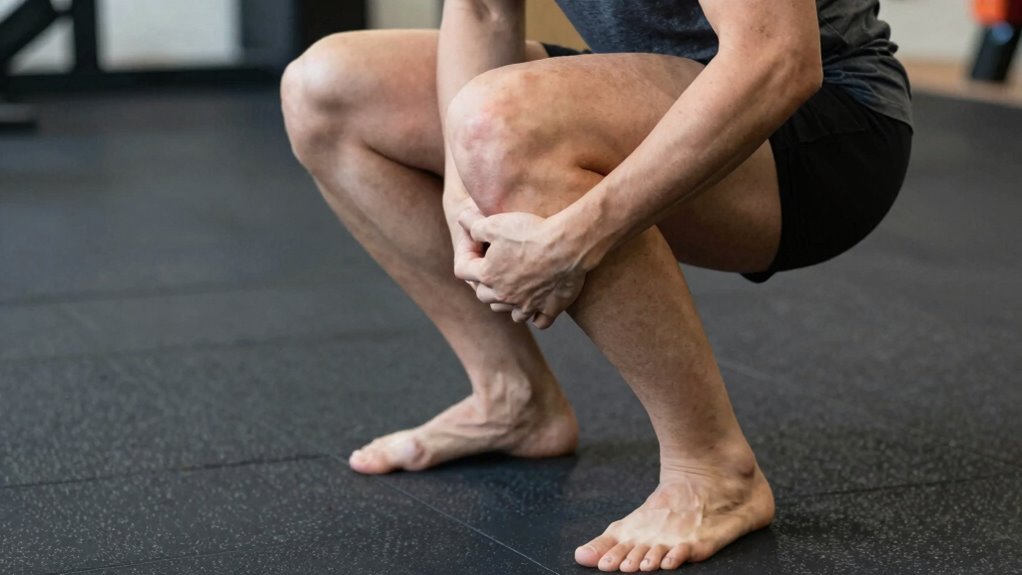
If you’re experiencing knee pain during squats, small adjustments to your form can make a big difference. Focus on maintaining proper knee alignment by tracking your knees over your toes. Avoid letting your knees cave inward or drift outward. Keep your squat depth manageable; going too deep can strain your knees if your form isn’t right. To help, use this quick guide:
| Tip | Explanation | Benefit |
|---|---|---|
| Keep knees aligned | Push knees slightly outward during squat | Prevents unnecessary stress |
| Control squat depth | Don’t go deeper than your form allows | Reduces knee strain |
| Engage core muscles | Stabilize your torso for better control | Improves overall knee safety |
Additionally, incorporating proper footwear can provide extra support and stability during your squat routine.
Adjusting these elements helps prevent pain and promotes safer, more effective squats.
Frequently Asked Questions
How Long Does It Typically Take to Correct Squat Knee Pain?
It usually takes about 4 to 6 weeks to correct squat knee pain, but your personal recovery timeline varies. You’ll need consistent adjustments, proper technique, and possibly rehab exercises. Focus on fixing your form and listen to your body. If you stay dedicated and seek guidance when needed, you’ll see improvements sooner. Remember, patience and persistence are key to overcoming knee pain and achieving pain-free squats.
Are There Specific Warm-Up Exercises to Prevent Knee Issues?
Yes, incorporating dynamic stretches like leg swings and hip circles before your squat helps prevent knee issues. Focus on muscle activation exercises such as glute bridges and bodyweight lunges to warm up key muscles. These routines increase blood flow, improve flexibility, and prepare your joints for movement, reducing the risk of knee pain. Make them a regular part of your warm-up to keep your knees safe and your squat performance ideal.
Can Knee Pain From Squats Indicate Underlying Joint Problems?
Knee pain from squats could signal underlying joint issues, especially if it persists. About 25% of adults experience knee problems linked to cartilage wear or joint instability. Pain may indicate compromised joint stability or deteriorating cartilage health, which require medical attention. Ignoring these signs can lead to more serious damage. Pay close attention to your body’s signals, and consider consulting a specialist if pain continues despite adjusting your technique.
What Types of Footwear Are Best for Knee-Safe Squatting?
For knee-safe squatting, you should choose proper footwear that offers good knee support and stability. Look for shoes with a flat, firm sole to maintain balance and guarantee proper alignment. Avoid overly cushioned or unstable shoes that can cause your knees to wobble. Good footwear helps distribute weight evenly, reducing strain and preventing pain. Always prioritize proper fit and support to protect your knees during squats.
Should I Avoid Squats Altogether if I Experience Knee Pain?
If you experience knee pain, you’re not alone—about 20% of lifters report knee discomfort during squats. You shouldn’t avoid squats altogether, but rather identify the cause of your knee injury. Consider squat alternatives like leg presses or step-ups to stay active without aggravating your knee. Consult a professional to assess your form and prevent further injury, ensuring you can build strength safely and effectively.
Conclusion
So, next time you’re squatting, remember—perfect form isn’t just for gym pros or Instagram models. Ignore your knees, neglect your hips, or let your torso flop around, and you’ll be dodging more than just pain—you’ll be dodging the mirror’s reflection. Think of it as a fun game: how many mistakes can you get away with before your knees call it quits? Spoiler alert: they’re not very good at playing hide and seek.