To figure out how much protein you need daily, consider your age, activity level, and health. Most sedentary adults require about 0.8 grams per kilogram of body weight, while active individuals might need 1.2 to 2.0 grams. Spreading out your protein intake across meals helps meet your goals without overdoing it. If you want easy tips and clarity on meeting your protein needs, there’s more to explore below.
Key Takeaways
- Most sedentary adults need about 0.8 g of protein per kg of body weight daily.
- Active individuals require 1.2 to 2.0 g of protein per kg to support increased activity.
- Spread protein intake evenly across meals to meet daily targets effectively.
- Choose a variety of natural sources like lean meats, dairy, beans, and nuts for balanced nutrition.
- Avoid excessive protein intake to prevent health risks; stick to personalized, recommended amounts.

Optimum Nutrition Gold Standard 100% Whey Protein Powder, Double Rich Chocolate 1.98 Pound (Packaging May Vary)
24 g High-Quality Whey Protein per Scoop – 100% of the protein from whey for a fast-absorbing, complete…
As an affiliate, we earn on qualifying purchases.
As an affiliate, we earn on qualifying purchases.
How Much Protein Do You Need Daily?

Determining how much protein you need each day depends on factors like your age, activity level, and overall health. If you’re active or trying to build muscle, you’ll likely need more protein, which can be easily incorporated through protein powders. These supplements can help fill gaps in your diet and simplify meal planning, especially when you’re busy or on the go. For sedentary individuals, the general recommendation is around 0.8 grams of protein per kilogram of body weight daily. But if you’re more active, aiming for 1.2 to 2.0 grams per kilogram may be beneficial. Keep in mind that balancing your intake across meals guarantees you meet your daily target without overdoing it. Adjust your protein intake based on your specific needs to support your health and fitness goals. Understanding nutritional guidelines can further help you tailor your diet effectively.
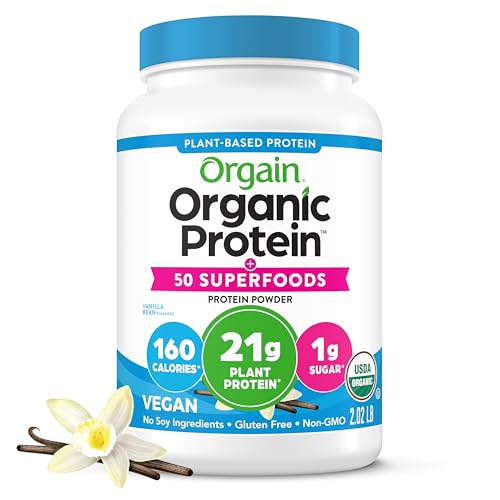
Orgain Organic Vegan Protein + 50 Superfoods Powder, Vanilla Bean – 21g Plant Based Protein, 8g Prebiotic Fiber, No Lactose Ingredients, Gluten Free, No Added Sugar, Non-GMO, 2.02 lb
CLEANER INGREDIENTS: 21g plant protein and 1g sugar per serving. Our protein blend consists of Organic pea, brown…
As an affiliate, we earn on qualifying purchases.
As an affiliate, we earn on qualifying purchases.
What Is Protein and Why Is It Important for Your Health?

Proteins are fundamental building blocks of your body, playing a crucial role in maintaining and repairing tissues, from muscles to skin. When you eat protein, your body begins protein digestion, breaking it down into amino acids. These amino acids form your body’s amino acid profile, which is essential for various functions like muscle growth, enzyme production, and immune support. Without enough protein, your body struggles to repair itself and maintain optimal health. Different protein sources offer varying amino acid profiles, so consuming a variety ensures you get all essential amino acids. Recognizing protein quality helps you make better dietary choices, supporting overall well-being and ensuring your body has the building blocks it needs to function properly.

Pure Protein Chocolate Peanut Butter Protein Bars – 20g Protein, 3g Sugar, 190 Calories (12 count) Low Sugar* High Protein Snack – Gluten Free – Perfect for a Healthy Snack
Protein Bars Low Sugar* High Protein – this bar contains just 3g of sugar and balanced macros, offering…
As an affiliate, we earn on qualifying purchases.
As an affiliate, we earn on qualifying purchases.
What Factors Affect Your Protein Needs?
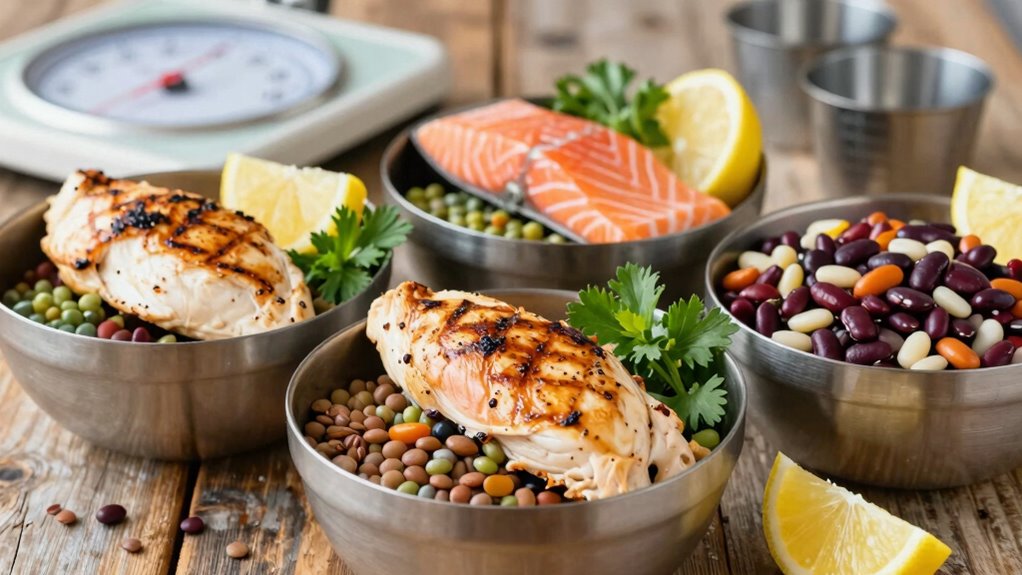
Your activity level and overall health play a big role in determining how much protein you need. Younger adults often require less, while older adults or those with specific health conditions might need more. Understanding these factors helps you tailor your intake for ideal health. For example, zodiac traits can influence your energy levels and nutritional needs, making personalized approaches beneficial.
Activity Level Impact
Have you ever wondered why your protein needs might change depending on how active you are? Your activity level directly impacts how much protein your body requires for recovery and muscle maintenance. If you engage in regular exercise routines, especially strength training or high-intensity workouts, you’ll need more protein to support muscle repair. Conversely, if your activity level drops, your protein needs decrease accordingly. Keep in mind that dietary restrictions, like vegetarian or vegan diets, may also influence your intake to make sure you’re getting enough essential amino acids. Additionally, portable restroom solutions at active events ensure comfort and hygiene for participants, supporting overall event success.
Age and Health Factors
As you age or face certain health conditions, your body’s protein needs can change substantially. Seniors often require more protein to maintain muscle mass and support recovery, making senior nutrition especially important. If you’re managing health issues like chronic disease or injury, your doctor may recommend adjusting your protein intake to aid healing and protect organ function. It’s also vital to consider supplement safety if you choose to use protein supplements, as some may interact with medications or contain unwanted additives. Aging can reduce your body’s ability to process protein efficiently, so tailoring your intake helps prevent muscle loss and supports overall health. Recognizing quality ingredients in your protein sources can ensure you’re getting the most benefit from your diet. Consulting healthcare professionals ensures you meet your specific needs safely, keeping your body strong as you age.

VELOMIX -2 Pack- 28 oz Protein Shaker Bottles for Protein Mixes – 2x Wire Whisk | Leak Proof Shaker Cups for Protein Shakes | Protein Shaker Bottle Pack (Black/Transparent)
100% LEAK-PROOF GUARANTEE – Say goodbye to messy spills with our meticulously designed protein shaker bottle. Ensure every…
As an affiliate, we earn on qualifying purchases.
As an affiliate, we earn on qualifying purchases.
How to Easily Calculate Your Daily Protein Intake
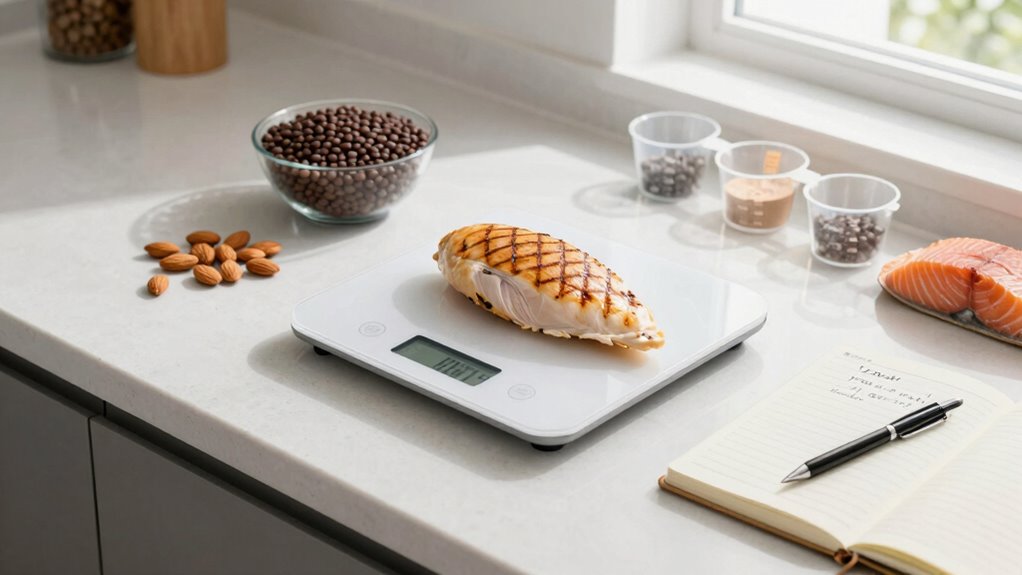
Calculating your daily protein intake is simpler than it seems. The key is understanding your body’s needs and applying straightforward protein calculation methods. First, determine your weight in kilograms or pounds, then multiply by a factor based on your activity level and health goals. This helps you set a realistic target for dietary planning. Remember, these factors vary, so adjust accordingly. To make it easier, keep these points in mind:
- Use your activity level to choose the right multiplier
- Focus on whole, protein-rich foods for accuracy
- Track your intake consistently to stay on target
Common Protein Myths Debunked
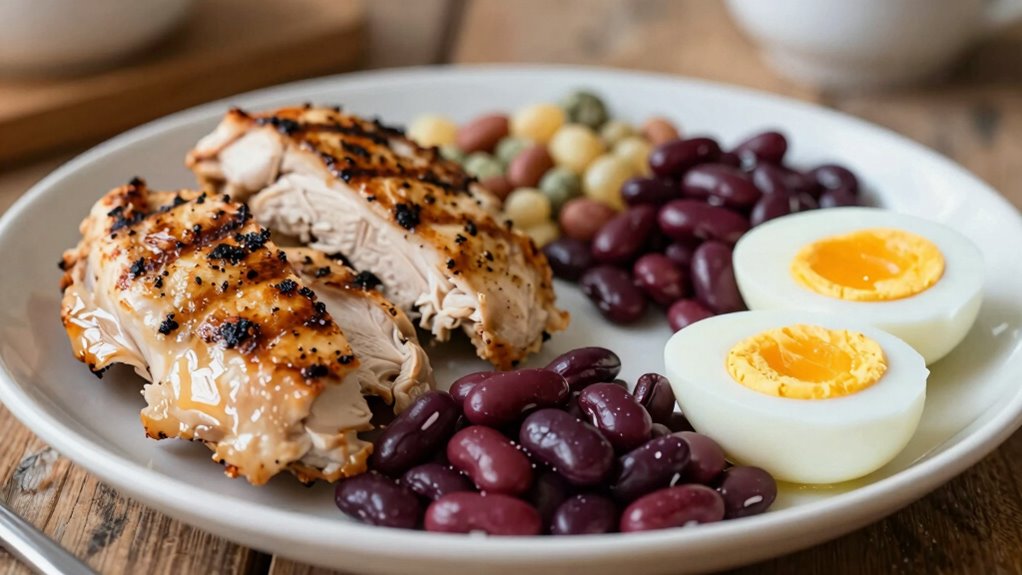
Many believe you need more protein than you actually do, but most people overestimate their needs. Plant proteins can provide all essential amino acids when eaten in variety and enough quantity. Plus, supplementation isn’t always necessary if you’re meeting your daily protein goals through food. Additionally, understanding the role of different protein sources can help clarify misconceptions about what constitutes a sufficient intake. Cryptid Mysteries
Protein Needs Are Overestimated
Despite common beliefs, your protein needs are often much lower than what many diet plans suggest. Many people fall victim to protein overestimation, thinking they need large amounts to stay healthy or build muscle. In reality, focusing solely on protein can disrupt nutrient balance, leading to unnecessary excess. Remember, your body requires a balanced intake of nutrients, not just protein. Overestimating your needs may cause you to neglect other essential nutrients like carbs and fats. It’s a myth that higher protein intake automatically means better health or faster muscle growth. Instead, aim for a well-rounded diet that meets your actual needs. By understanding that your protein requirements are modest, you can avoid overeating and promote overall health with a balanced approach. Additionally, understanding the role of protein in overall health can help you make more informed dietary choices.
Plant Proteins Are Adequate
Plant proteins often get a bad rap for being incomplete or insufficient, but that’s a myth. With a diverse range of plant-based sources, you can easily meet your protein needs. Many plant proteins complement each other, ensuring you get all essential amino acids over the course of the day. Plus, concerns about protein absorption are often overstated; your body efficiently processes plant proteins, especially when you consume a variety. Proper nutrition and a balanced diet help maximize the benefits of plant-based proteins. Plant-based diversity isn’t just good for health—it also supports sustainable eating. You don’t need animal products to reach your protein goals. By including legumes, grains, nuts, and seeds, you provide your body with a complete amino acid profile. Rest assured, plant proteins are more than capable of fueling your daily activities and supporting muscle maintenance.
Supplementation Isn’t Always Necessary
You don’t always need supplements to meet your protein requirements. Many people assume they must rely on protein powder or other supplement benefits to hit their goals, but that’s not true. Whole foods like eggs, dairy, beans, and lean meats can provide sufficient protein without extra powders. Relying solely on supplements can sometimes be unnecessary or even wasteful. Incorporating ethical consumer choices can help you make more informed decisions about your diet and supplement use, ensuring you’re aligned with your values.
Tips to Meet Your Protein Goals Without Overdoing It
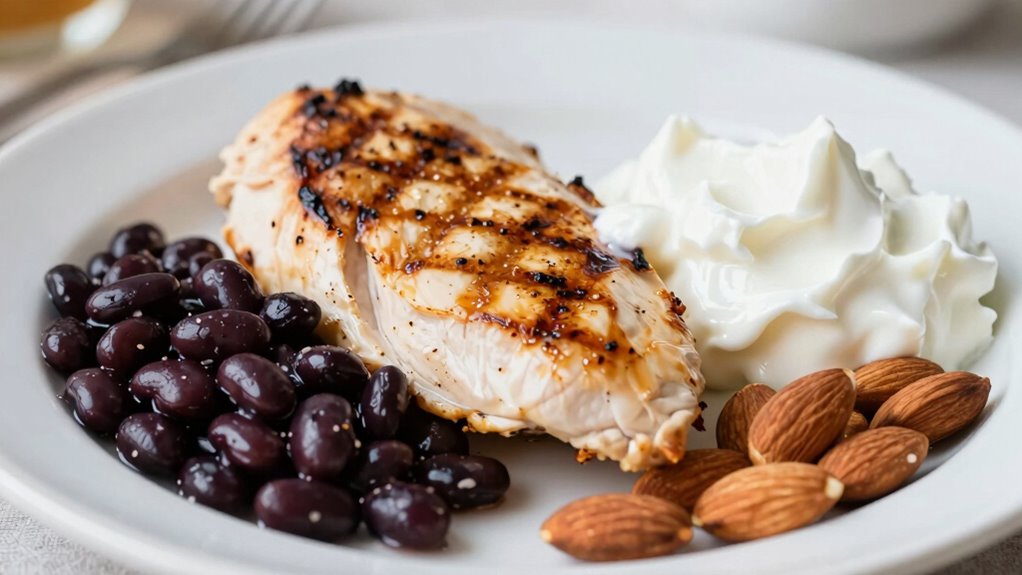
Achieving your protein goals is important for overall health and muscle maintenance, but it’s equally essential not to overconsume. To avoid falling for protein myths, focus on balanced dietary sources like lean meats, dairy, beans, and nuts instead of relying solely on supplements. Spread your protein intake evenly across meals to maximize absorption and avoid excess in one sitting. Keep portions moderate and track your intake if needed, so you don’t unintentionally overshoot your needs. Remember, more isn’t always better—excess protein can strain your kidneys and lead to weight gain. Incorporate a variety of protein-rich foods to meet your goals naturally, and consult reliable sources or a dietitian for personalized advice. Staying informed helps you meet your targets without risking overdoing it. Understanding protein needs can help you tailor your diet effectively.
Frequently Asked Questions
Can Vegetarians Get Enough Protein Without Supplements?
Yes, you can get enough protein without supplements by including a variety of plant-based proteins and vegetarian sources in your diet. Foods like beans, lentils, chickpeas, tofu, tempeh, quinoa, and nuts are rich in protein and provide essential amino acids. By combining these foods throughout the day, you guarantee you meet your protein needs naturally, without relying on supplements. A balanced vegetarian diet can easily support your health and fitness goals.
How Does Age Affect My Daily Protein Requirements?
As you age, your daily protein needs increase to combat age-related muscle loss and support overall health. Elderly nutritional needs emphasize higher protein intake to maintain muscle mass, strength, and recovery. You should aim for about 1.0 to 1.2 grams of protein per kilogram of body weight daily, adjusting based on activity level and health conditions. Prioritizing protein-rich foods helps you stay strong and healthy as you get older.
Are Protein Powders Necessary for Meeting Daily Needs?
Did you know that over 70% of adults don’t get enough protein? You don’t necessarily need protein powders to meet your daily needs. Plant-based proteins, like beans and nuts, can easily provide the right amount, especially since they’re absorbed efficiently with proper intake. Focus on whole foods, and you’ll naturally meet your goals. Protein powders can supplement, but they aren’t essential if you eat a balanced, protein-rich diet.
What Are the Signs of Protein Deficiency?
If you’re lacking enough protein, you might notice signs like fatigue, weakened muscles, or slow recovery after exercise. Poor protein absorption can cause these issues, along with digestive problems. You may also experience hair loss or brittle nails. Since amino acid profiles vary between sources, guarantee you’re getting a balanced intake. Recognizing these signs helps you adjust your diet or supplement intake to meet your body’s protein needs effectively.
How Do I Balance Protein Intake With Other Nutrients?
To balance your protein intake with other nutrients, focus on nutrient timing and ensuring proper protein absorption. Spread your protein consumption throughout the day to maximize absorption and support muscle repair. Pair proteins with healthy fats and carbs to create balanced meals that enhance nutrient absorption. Incorporate a variety of nutrient-dense foods to meet your overall dietary needs, and avoid excessive protein intake that could disrupt your nutrient balance.
Conclusion
So, now you’re officially a protein expert—ready to conquer the world one chicken breast at a time. Just remember, more isn’t always merrier, and even your protein needs have limits. Don’t fall for the sneaky myths or turn into a protein-hungry monster. Balance is key, so enjoy your healthy habits without turning into a meat-maniac. After all, your body prefers a well-fed, happy you—no overdoing required!