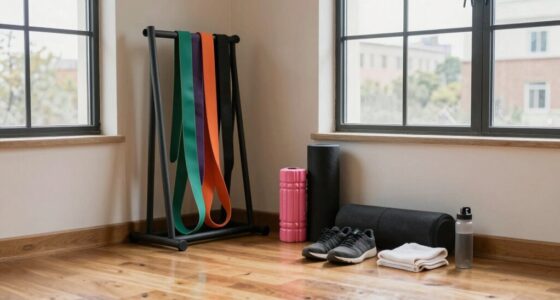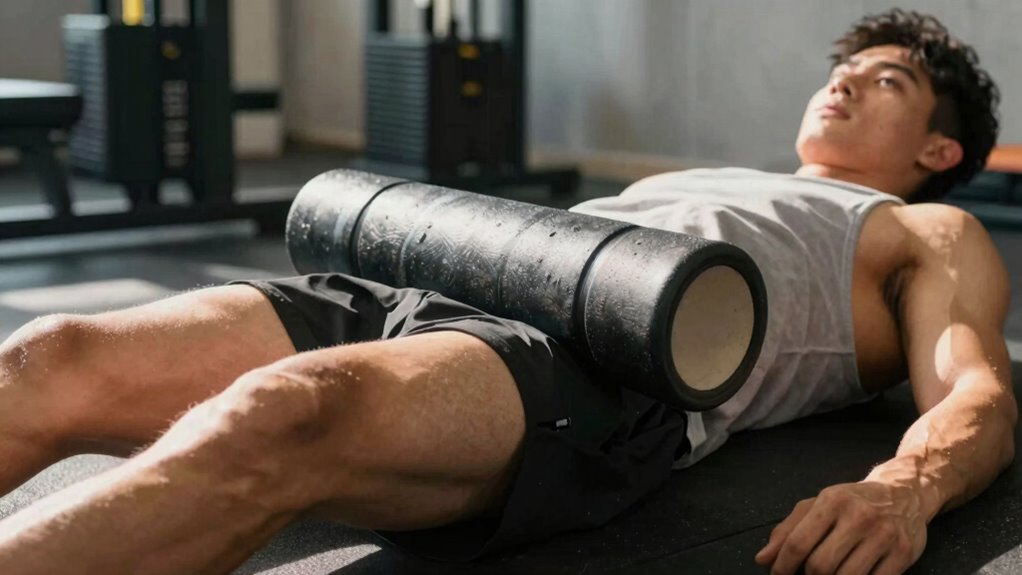

Foam rolling isn’t a miracle cure or a fix-all for muscle problems. It can help improve blood flow, loosen tight fascia, and reduce discomfort, but it won’t instantly heal damaged tissues or fix underlying issues. Relying solely on foam rolling may give a false sense of progress and won’t prevent every injury. To get the best results, combine it with proper warm-ups, strength work, and rest—more insights await if you explore further.
Key Takeaways
- Foam rolling helps with superficial muscle tightness but cannot penetrate deep tissues or resolve underlying structural issues.
- It is a supplementary tool, not a cure; it won’t fix injuries or replace proper training and medical treatment.
- Excessive or improper use can cause muscle irritation, bruising, or worsen discomfort.
- Foam rolling does not prevent all injuries; it should be combined with warm-ups, strength work, and proper technique.
- Myths include believing it targets every problem area or offers instant healing; it’s part of a holistic recovery plan.
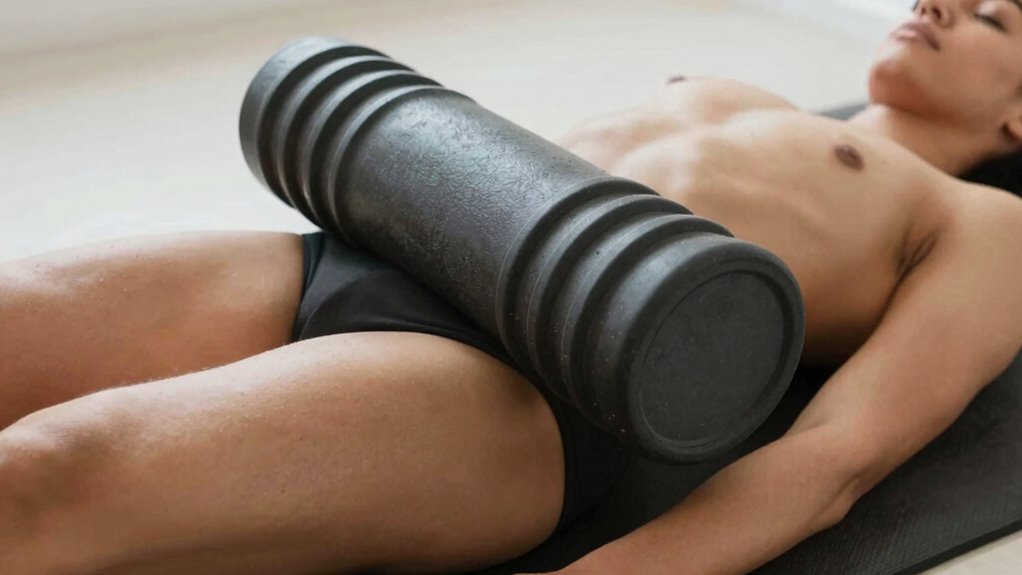
Many people believe foam rolling is a miracle cure for muscle soreness and tightness, but some of these beliefs are actually myths. While foam rolling can be a valuable tool in your fitness routine, it’s important to understand what it truly does and doesn’t do. For starters, foam rolling can help improve muscle recovery, but it’s not a magic fix that instantly heals damaged tissues. When you roll over sore or tight muscles, you increase blood flow and help break down adhesions in the fascia. This can alleviate discomfort and make subsequent workouts feel better. However, foam rolling alone isn’t enough to fully recover from intense training or injury. Proper rest, nutrition, and targeted stretching are also essential components of muscle recovery. Relying solely on foam rolling might give you a false sense of progress, so consider it part of a *holistic* recovery plan.
In terms of injury prevention, foam rolling can be useful, but it’s not a guarantee that you’ll avoid injuries altogether. Regularly rolling out your muscles can help maintain flexibility and prevent certain kinds of muscle tightness that often lead to strains or tears. When your muscles are more pliable, you’re less likely to overextend or overstress them during activity. That said, foam rolling shouldn’t replace proper warm-ups, strength training, or technique work. It’s best used as a supplement to these practices. Overdoing it or applying excessive pressure can even cause muscle irritation or bruising, counteracting its benefits. Remember, injury prevention involves a *comprehensive* approach, including good biomechanics, balanced training, and adequate rest. Additionally, understanding the role of fascia and its impact on muscle health can enhance the effectiveness of foam rolling as part of your recovery routine.
Another myth is that foam rolling can target every problem area or fix all muscle issues. While it’s effective for releasing superficial knots and tightness, it doesn’t penetrate deeply enough to resolve underlying structural problems or severe injuries. If you experience persistent pain or suspect a serious injury, you should consult a healthcare professional rather than relying solely on foam rolling. Also, some people believe that foam rolling is suitable for everyone, but certain conditions, such as acute injuries or inflammation, require different treatment approaches. It’s important to listen to your body and recognize when foam rolling might do more harm than good.
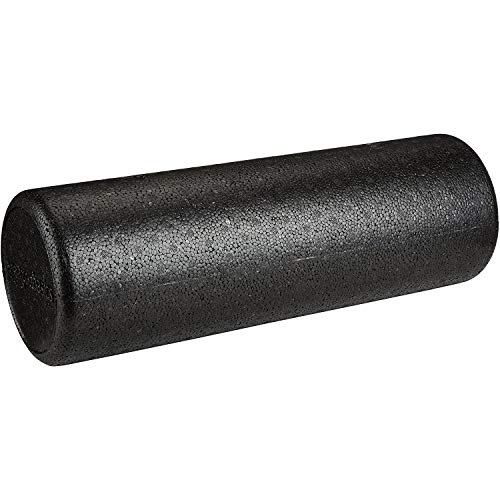
Amazon Basics High-Density Foam Roller for Exercise and Recovery, 18 Inches, Black
High-density foam roller in Black
As an affiliate, we earn on qualifying purchases.
As an affiliate, we earn on qualifying purchases.
Frequently Asked Questions
Can Foam Rolling Replace Stretching and Strength Training?
Foam rolling can’t replace stretching and strength training, but it can complement them by promoting muscle relaxation and reducing tension. While it helps loosen tight muscles, it doesn’t build strength or improve flexibility on its own. To prevent injuries and enhance performance, you should incorporate foam rolling alongside regular stretching and strength exercises. This combined approach optimizes muscle health, aiding in injury prevention and better overall movement.
How Often Should I Foam Roll for Optimal Results?
Rome wasn’t built in a day, and neither are your muscles. For ideal results, follow frequency guidelines of foam rolling 3-4 times per week, focusing on key areas. Incorporate foam rolling into your routine before and after workouts, and listen to your body. Optimal scheduling balances consistency and recovery, so don’t overdo it—aim for regular sessions that promote flexibility and reduce tension without causing discomfort.
Is Foam Rolling Suitable for All Age Groups?
Foam rolling is generally suitable for all age groups, but you should consider age limitations and safety precautions. Kids and seniors need to use softer foam rollers and apply gentle pressure, avoiding areas with injuries or inflammation. Always consult a healthcare professional if you’re unsure, especially for older adults or those with health issues. When done carefully, foam rolling can be a safe, effective way to improve flexibility and reduce muscle tension.
Are There Risks or Side Effects of Foam Rolling?
You should be aware of some risks with foam rolling, like injury risk and overstretching. If you roll too aggressively or target sensitive areas, you might cause bruising or muscle soreness. Overdoing it can lead to overstretching, which might weaken muscles or cause discomfort. Always listen to your body, use proper technique, and avoid rolling over joints or injured areas to minimize these side effects.
Can Foam Rolling Improve Athletic Performance Significantly?
You might think foam rolling boosts athletic performance markedly, but it mainly supports muscle recovery and injury prevention rather than directly increasing strength or speed. It helps loosen tight muscles, reducing soreness and enhancing flexibility, which can improve overall movement efficiency. While it’s beneficial for maintaining your body’s health, don’t rely solely on foam rolling for performance gains—combine it with proper training and rest for the best results.

MZDXJ Muscle Roller Massage Roller Stick- Deep Tissue Fascia Blaster for Myofascial Pain Relief, Lymphatic Drainage & Body Sculpting, Handheld Physical Therapy & Recovery Tool (Purple Black-18 inch)
[🌟Precise targeting] Our product can reach deep into muscle trigger points. Its professional massage design effectively relieves muscle…
As an affiliate, we earn on qualifying purchases.
As an affiliate, we earn on qualifying purchases.
Conclusion
Remember, foam rolling isn’t a miracle cure, but it can be a helpful tool in your wellness kit. Don’t rely on it to fix everything overnight—sometimes, a gentle approach and realistic expectations are your best friends. Keep listening to your body, stay consistent, and enjoy the small wins along the way. With patience and a little humor, you’ll find your rhythm and make foam rolling a positive part of your routine.

321 Strong Foam Roller – Medium Density Deep Tissue Massager for Muscle Massage and Myofascial Trigger Point Release, with 4K eBook – Orange
PATENTED TECHNOLOGY: Relieve sore muscles, perform deep tissue massage and acupressure with our medium density massage roller, great…
As an affiliate, we earn on qualifying purchases.
As an affiliate, we earn on qualifying purchases.

Foundation Roller – Premium EVA Foam Muscle Recovery and Flexibility Roller, Soft Compression for Injury Prevention, Travel-Friendly, Ideal for Athletes, Black/Grey, 12"
Moderate Compression: Provides a softer, less intense compression level, perfect for users seeking a gentler approach to muscle…
As an affiliate, we earn on qualifying purchases.
As an affiliate, we earn on qualifying purchases.