
If plates slide off during lifts, it’s usually because your collars aren’t secured tightly enough or they don’t fit properly. Cheap or worn collars can become brittle, crack, or loosen over time, increasing the risk of slippage. Using durable, high-quality collars and ensuring they’re properly tightened can prevent accidents. Regular inspections and maintenance help catch early signs of failure. Keep learning how to choose and secure the right collars to stay safe during your workouts.
Key Takeaways
- Secure collars tightly and properly install them to prevent plates from sliding during lifts.
- Use high-quality metal collars with strong locking mechanisms for better grip and durability.
- Ensure collars match the barbell diameter and fit snugly to reduce movement and wobbling.
- Regularly inspect collars and plates for cracks, wear, or deformation, replacing damaged components promptly.
- Maintain proper technique by double-checking plate alignment and collar tightness before lifting.

Clout Fitness Olympic Barbell Clamps Collars Quick Release Pair of Locking Weight Clips Fit 2 Inch Barbell for Weightlifting Red
Quickly change weights: The quick release lever makes it quick and easy to swap out weights
As an affiliate, we earn on qualifying purchases.
As an affiliate, we earn on qualifying purchases.
Why Do Plates Slide Off the Barbell During Lifts?
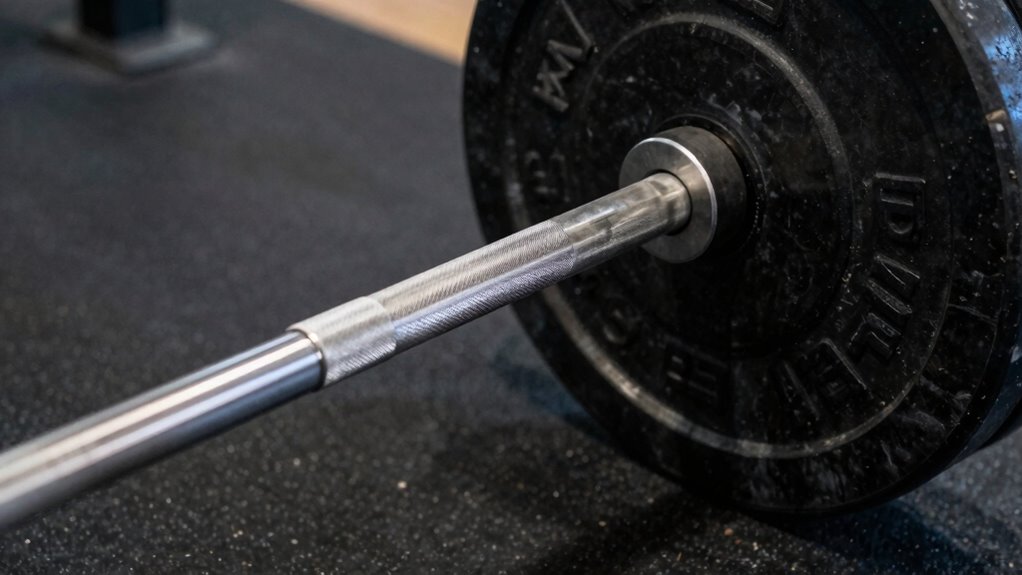
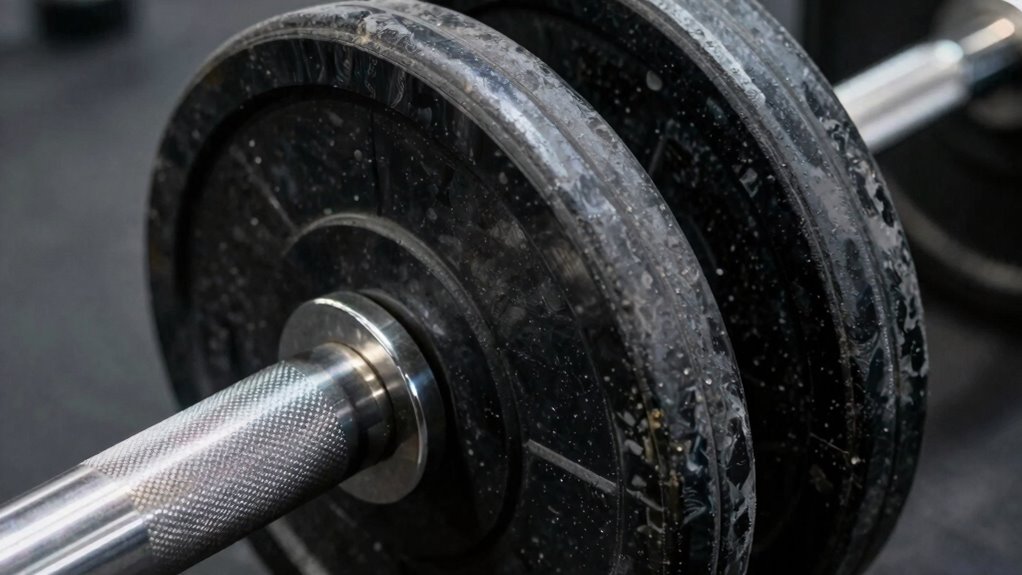
Plates can slide off the barbell during lifts when the collars aren’t secured tightly enough or if they’re not properly installed. The collar materials play a significant role in ensuring a secure fit; metal collars often provide a tighter grip than plastic or composite options. Additionally, plate design affects stability—plates with a smooth, even surface and a central hole that fits snugly on the barbell help prevent slipping. If the plate’s design allows for movement or doesn’t match the collar’s mechanism, it’s more likely to slide. Properly chosen collar materials combined with plates designed for a tight fit create a secure hold, reducing the risk of plates shifting during lifts. Material compatibility between the collars and plates is essential to prevent slippage and ensure safety during your workout. Ensuring that the collar mechanism is properly engaged and secure is also crucial for preventing plates from sliding off during intense lifts. Using properly fitted collars can significantly improve stability and safety during heavy lifts, especially when lifting near your maximum capacity.

Forcefree+ Barbell Clips (Pair), Barbell Clamps, Quick Release Olympic Barbell Clamps with Anti Slip TPR Grip, Barbell Collars for Secure Weightlifting & Powerlifting (Non Magnetic, Black)
𝐇𝐢𝐠𝐡 𝐒𝐭𝐫𝐞𝐧𝐠𝐭𝐡 & 𝐃𝐮𝐫𝐚𝐛𝐢𝐥𝐢𝐭𝐲: Forcefree+ Barbell Clamps made of high quality innovative nylon and glass fiber composite, outperforming…
As an affiliate, we earn on qualifying purchases.
As an affiliate, we earn on qualifying purchases.
Common Reasons Your Collars Fail to Secure Plates
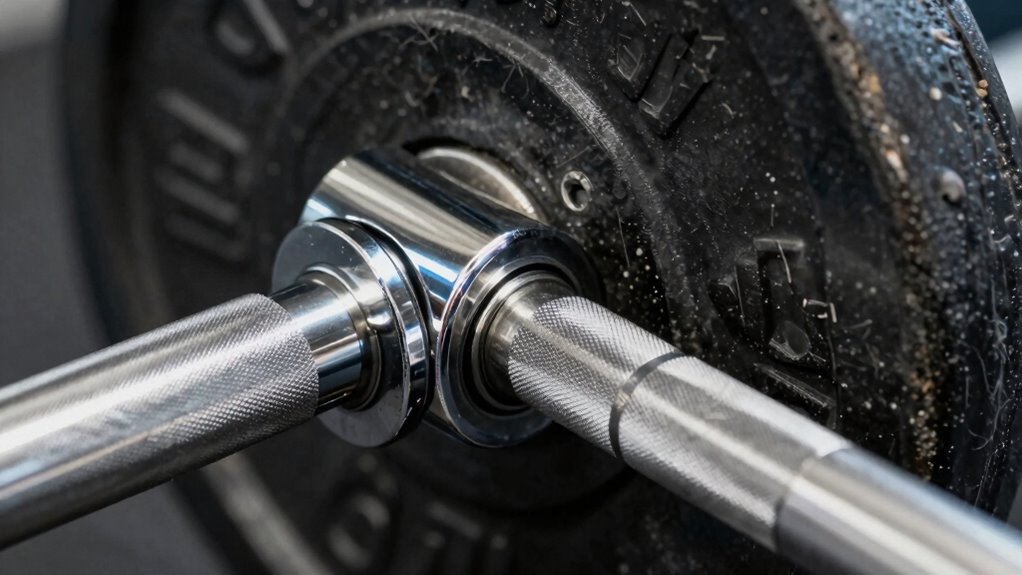
Have you ever wondered why your collars sometimes fail to hold the plates securely? Often, it’s due to issues with collar material or brand reputation. Low-quality collars made from cheap plastic or thin metal may not grip tightly, leading to slipping during lifts. Additionally, poorly manufactured collars from lesser-known brands might lack the necessary locking mechanism or durability, increasing failure risk.
| Issue | Effect |
|---|---|
| Low-quality collar material | Reduced grip, plates slip easily |
| Poor brand reputation | Inconsistent locking, quick wear |
| Improper fit or size | Loose fit causes failure |

DMoose Fitness Barbell Clips 2" (Pair) – Quick Release Olympic Barbell Clamps with Anti Slip TPR Lining – Barbell Collars for Secure Weightlifting & Powerlifting (Black – Non Magnetic)
EFFORTLESS USE WITH SECURE GRIP: No more struggling to put on or take off Barbell Collars. The grip…
As an affiliate, we earn on qualifying purchases.
As an affiliate, we earn on qualifying purchases.
How to Choose the Best Collars for Your Workout
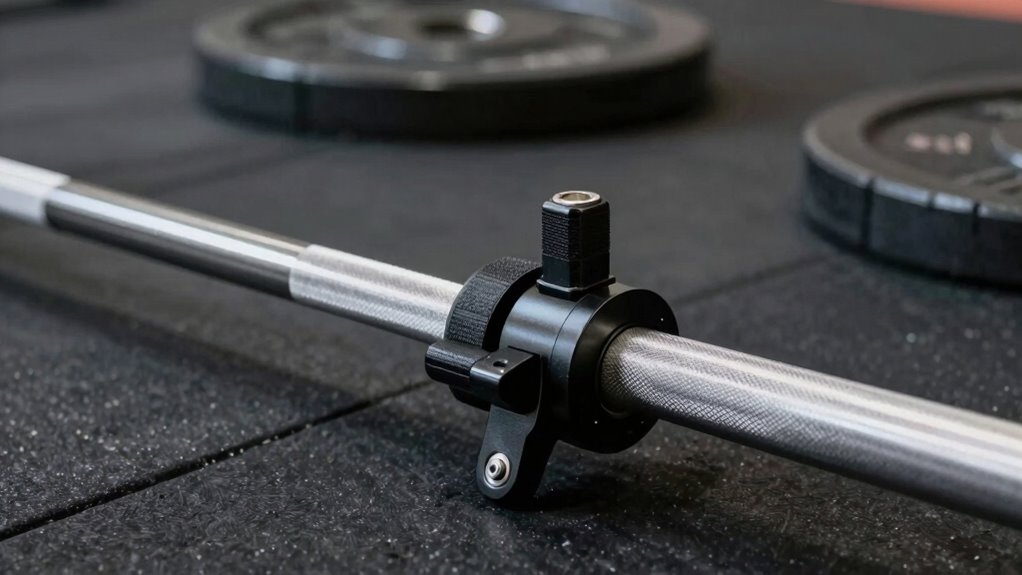
Choosing the right collars for your workout makes sure your plates stay secure and your lifts are safe. Start by considering collar materials; metal collars, like steel or brass, are durable and hold tight, while plastic options may lack strength. Look for collars with a strong grip mechanism that prevents slipping during lifts. Brand reputation matters too—stick to trusted brands known for quality and reliability. Read reviews to gauge durability and performance, and avoid cheap or poorly made collars that might fail under pressure. Verify the collars fit your barbell’s diameter precisely, as mismatched sizes can cause slippage. Additionally, understanding collar materials can help you select options that are compatible with your workout routine. Ultimately, selecting high-quality collars from reputable brands with suitable materials guarantees a secure fit, giving you confidence and safety during every workout.

ProsourceFit Olympic Barbell Spring Clip Collar 2-inch Pair with Easy-Grip Handles for Weightlifting,Powerlifting and Strength Training
COMFORT GRIP HANDLES – Smooth plastic handles make it easy to squeeze the collar and put it in…
As an affiliate, we earn on qualifying purchases.
As an affiliate, we earn on qualifying purchases.
How to Properly Secure Plates and Prevent Slippage
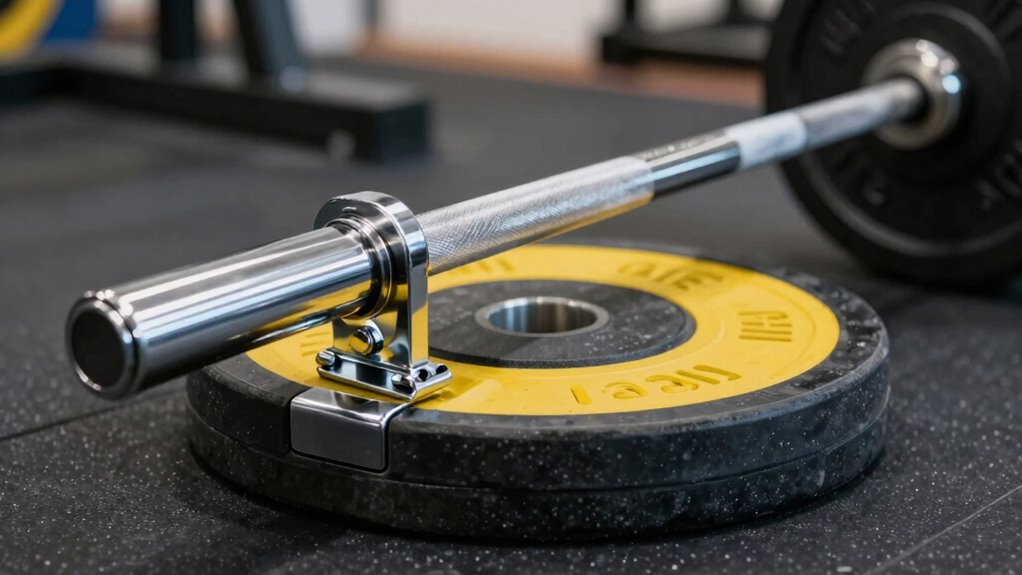
To keep your plates secure, you need to place your collars correctly and make sure they’re snug against the weights. Using locking collars adds extra safety by preventing any slippage during lifts. Proper technique and the right collars make a big difference in maintaining stability and safety. Additionally, choosing high-quality safety products can further reduce the risk of accidents during weightlifting. Ensuring your collars are compatible with your plates and understanding weightlifting equipment best practices can lead to a safer lifting experience, especially considering the importance of athletic safety measures in preventing injuries. Regularly inspecting your collars and understanding maintenance practices can also help ensure long-term safety and performance.
Correct Collar Placement Techniques
Properly securing your plates with barbell collars is essential for safety and performance. Start by ensuring correct collar positioning—place the collars close to the inside edges of the weights, evenly on both sides. Your hand placement should be firm but controlled; grip the collars securely to prevent slippage during lifts. Before tightening, double-check that the plates are flush against the collar and evenly aligned to avoid uneven pressure, which can cause shifting. Use both hands to tighten the collars firmly, ensuring they won’t loosen during movement. Avoid rushing; proper collar placement and secure hand placement are key to keeping plates stable. Additionally, selecting high-quality collars designed for your weight plates can significantly reduce slippage during your workout. Choosing collars with a secure locking mechanism can further enhance stability and safety. Using the correct size of collars for your plates is also crucial to prevent slippage and ensure a secure fit. When done correctly, these techniques minimize the risk of plates sliding and help you lift confidently and safely.
Use of Locking Collars
Locking collars are essential tools for keeping your plates secure during lifts, preventing them from slipping or shifting unexpectedly. The effectiveness of a locking collar depends on its locking mechanism, which tightly grips the barbell to hold the plates firmly in place. When choosing a collar material, consider durability and grip; steel collars offer strength and longevity, while rubber-coated collars provide added grip and protect the barbell’s finish. Properly securing plates involves ensuring the collar’s locking mechanism is fully engaged and snug against the plates. Avoid over-tightening, which can damage the collar or bar, but make sure it’s tight enough to prevent movement. Using the right collar material and verifying the locking mechanism’s security guarantees your plates stay in place, so you can lift confidently and safely. Additionally, understanding cookie categories can help you manage your online privacy while researching the best collars for your needs.
How to Tell If Your Collars Are Failing
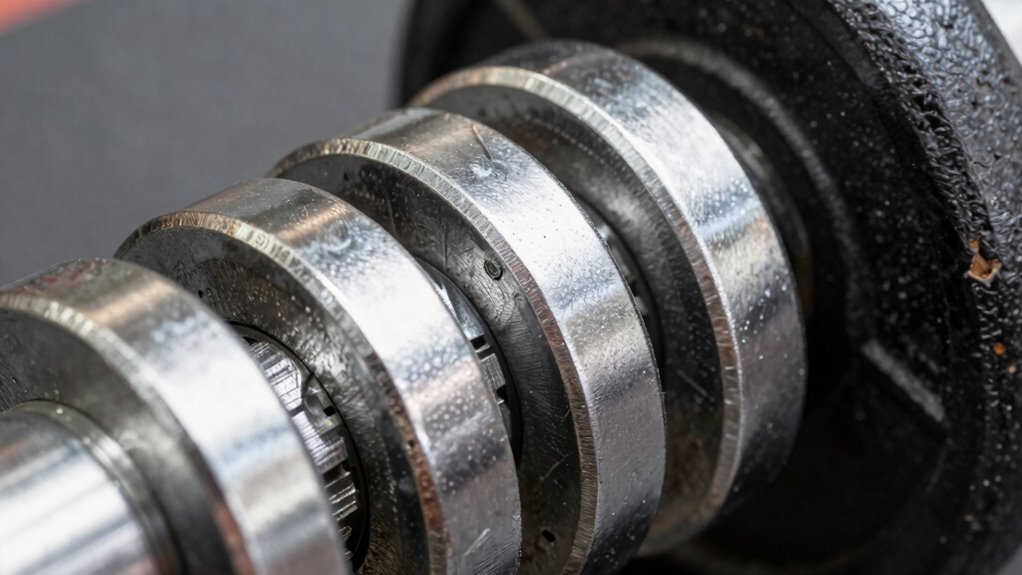
You should regularly check your collars for visible wear or damage, as cracks or dents can compromise their effectiveness. If they feel loose or wobble on the bar, it’s a sign they might be failing. Additionally, watch for unusual plate movement during lifts, which indicates your collars aren’t securing properly. Ensuring your collars have a proper fit and compatibility can help maintain safety during workouts. Regularly inspecting for wear and tear, including checking for material degradation, and replacing damaged collars can prevent accidents and ensure secure weightlifting. Being aware of collar material quality can also help you select more durable options that resist damage over time. Recognizing signs of odor or damage can further aid in identifying collars that need replacement or maintenance.
Visible Wear and Tear
Visible signs of wear and tear are clear indicators that your barbell collars may be failing. Look for rust buildup on the metal, which suggests exposure to moisture and potential weakening of the material. Rust can cause the collar to become brittle over time, increasing the risk of failure during lifts. Additionally, check for visible cracks or fractures in the collar’s body or locking mechanism. Cracks compromise the collar’s structural integrity, making it less secure and more prone to slipping or breaking. If you notice rust or cracks, it’s a sign that the collars are nearing the end of their lifespan. Regularly inspecting your collars helps you catch these issues early, ensuring your safety and maintaining a secure fit during every workout. Understanding material vulnerabilities can also help you choose more durable collars to prevent such issues. Being aware of wear patterns can aid in predicting when replacements might be necessary, and paying attention to manufacturing quality can further extend your equipment’s lifespan. Additionally, recognizing long-term usage effects can help you plan for timely replacements and maintain optimal safety standards. Moreover, considering product testing and quality assurance processes can help identify collars that are more resistant to wear and tear over time.
Loose or Wobbly Fit
A loose or wobbly fit in your barbell collars is a clear sign they’re failing and can compromise your safety during lifts. When collars don’t hold plates firmly, you might notice uneven weight distribution, which affects balance and increases the risk of plates slipping. This issue often stems from worn collar materials, such as broken clamps or degraded locking mechanisms. Over time, the fit becomes less secure, especially if the collars are made from cheaper or lower-quality materials. To check, try shaking the collars gently—if they shift or slide easily, it’s time to replace them. Regularly inspecting the fit and considering high-quality collars will ensure your plates stay secure, providing stability and safety throughout your workout. Recognizing growth mindset principles can also encourage proactive maintenance and safety awareness in your fitness routine.
Unusual Plate Movement
Unusual plate movement during lifts is a clear sign your barbell collars may be failing. If you notice plates shifting or wobbling, it could indicate plate deformation or that your collar material isn’t enough to hold the plates securely. Collars made from softer materials may wear out faster, leading to decreased grip and increased movement. Even if your collars seem tight initially, check for signs of deformation or cracks, which weaken their hold. When plates slide during lifts, it’s not just annoying — it’s dangerous. Regularly inspect your collars for signs of wear, especially if you’ve used them heavily or over time. Replacing worn collars with durable, high-quality material can prevent dangerous plate movement and keep your lifts safe.
Tips for Maintaining and Replacing Collars
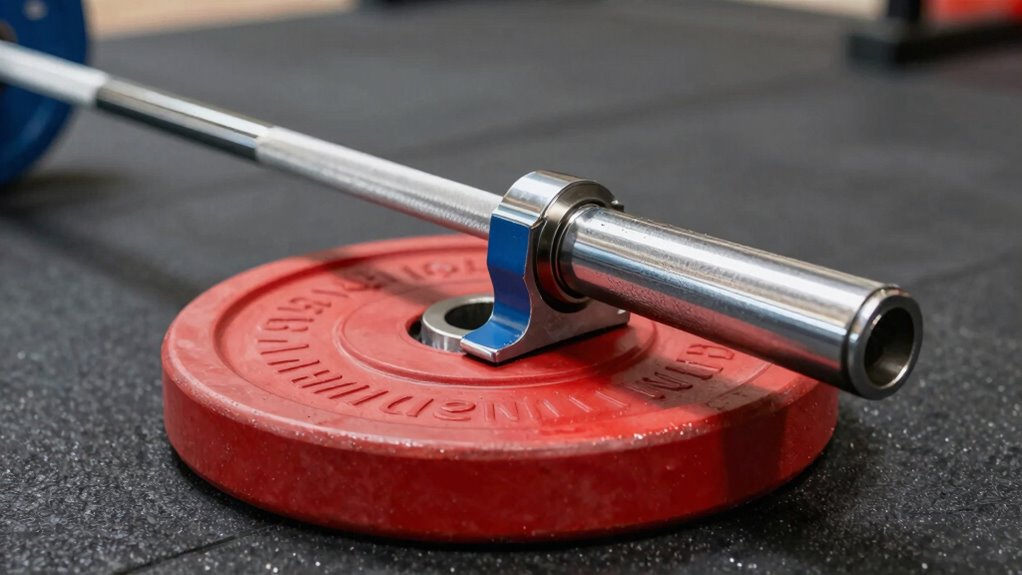
Maintaining your barbell collars is vital to guarantee they function safely and last longer. Regular maintenance routines help identify wear and prevent unexpected failure. Keep these tips in mind:
Regularly inspecting and maintaining your barbell collars ensures safety and longevity.
- Inspect collars before each use for cracks or deformation.
- Clean collars and bars regularly to remove dirt and debris.
- Lubricate moving parts if applicable, but avoid overdoing it.
- Replace collars immediately if they show signs of damage or persistent slipping.
Proper collar replacement is necessary when old or damaged collars no longer secure plates effectively. Using worn-out collars increases the risk of plates sliding during lifts, compromising safety. Consistent maintenance and timely replacements ensure your collars perform at their best and your workouts stay safe.
Troubleshooting Plate Slippage During Heavy Lifts
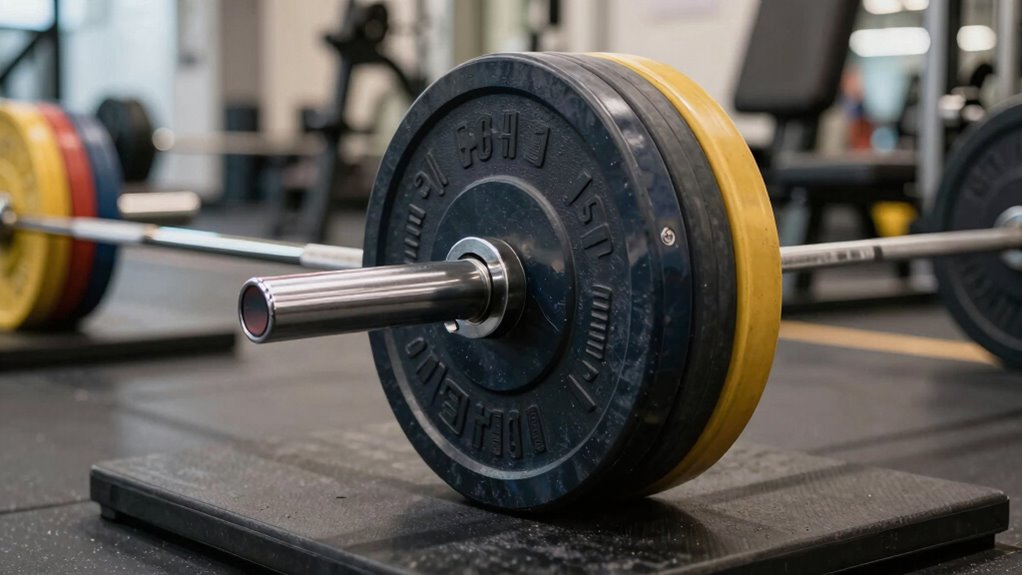
Plate slippage during heavy lifts can be frustrating and dangerous, but you can often troubleshoot the issue effectively. Start by examining the plate design; some plates have smooth or tapered edges that are more prone to slipping. Confirm your collars are compatible with your plates and fit snugly. Consider collar materials—metal collars with a secure locking mechanism tend to grip better than plastic or rubber ones. If your collars are loose or worn, replace them immediately. Also, check if the collars are properly tightened before lifting. Using collars with a quick-release or cam-lock system can improve grip during intense lifts. Finally, verify your plates are clean and free of debris, which can reduce friction and cause slippage. Properly matching plate design and collar materials considerably reduces the risk of plates sliding during your lifts.
Safety Tips to Keep Your Workout Secure
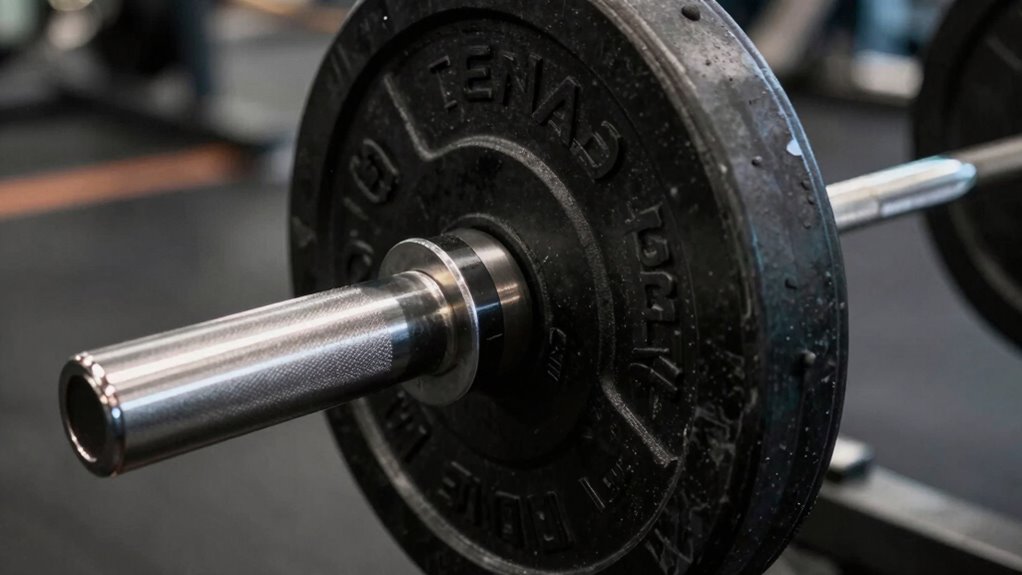
To keep your workout safe, always prioritize proper equipment use and awareness of your surroundings. Ensuring your collars are made from durable materials helps prevent slips and accidents. Proper weight distribution on the barbell reduces uneven pressure, which can cause plates to slide. Here are four safety tips:
- Select collars made from high-quality, secure collar materials to guarantee durability.
- Check that weights are evenly distributed on both sides of the barbell before lifting.
- Always tighten collars firmly to prevent plate movement during lifts.
- Regularly inspect your collars and barbell for wear or damage, replacing them if necessary.
Frequently Asked Questions
Are There Specific Collar Types for Different Lifting Exercises?
Yes, different lifting exercises call for specific collar types. For heavy lifts like squats and deadlifts, opt for collars with sturdy collar locking mechanisms and durable collar material, such as steel, to guarantee maximum security. For lighter exercises, quick-release collars with plastic or rubber components work well. Choosing the right collar type helps prevent plates from sliding, keeping your workout safe and effective.
How Often Should I Replace My Barbell Collars?
Think of your barbell collars as trusted guardians, protecting your lifts. You should substitute them when they show signs of wear, such as cracks, rust, or if they no longer tighten securely. Regular collar maintenance ensures safety and performance, so check them monthly if you lift often. Typically, replacement frequency depends on usage; replace collars every 1-2 years or as needed to keep your workouts safe and effective.
Can Improper Collar Use Damage My Weight Plates?
Improper collar use can definitely cause weight plate damage and compromise collar safety. If collars are too loose or not secured correctly, plates can shift or bang against the barbell, leading to dents or cracks. Always make sure your collars fit snugly and are properly locked in place. Regularly check for wear and tear, and replace damaged collars promptly to protect your plates and maintain a safe workout environment.
Do Collar Sizes Vary for Olympic vs. Standard Barbells?
Did you know that about 70% of weightlifters switch between Olympic and standard barbells? Collar sizes definitely vary for these types, affecting barbell compatibility. Olympic barbells typically have a 2-inch collar size, while standard ones usually feature a 1-inch collar size. Selecting the right collar size guarantees your plates stay secure during lifts, preventing accidents and plate sliding. Always check your barbell’s specifications before choosing collars to ensure a perfect fit.
What Are the Signs of Worn or Damaged Collars?
You’ll notice signs of wear on your collars, like rust, cracks, or looseness, indicating compromised collar durability. If they no longer clamp tightly or slide easily, it’s a sign they’re worn or damaged. Regularly inspect for deformities or weakened locking mechanisms. When you see these signs of wear, it’s time to replace your collars to guarantee safety and secure your weights effectively during lifts.
Conclusion
To keep your lifts safe and your plates firmly in place, choosing the right collars and securing them properly is essential. Don’t let slipping plates turn your workout into a chaos of flying weights—imagine the chaos of a tornado in your gym! Regularly check your collars, replace worn-out ones, and stay vigilant. With the right tools and a little attention, you’ll conquer every lift with confidence and keep your gym sessions unstoppable.