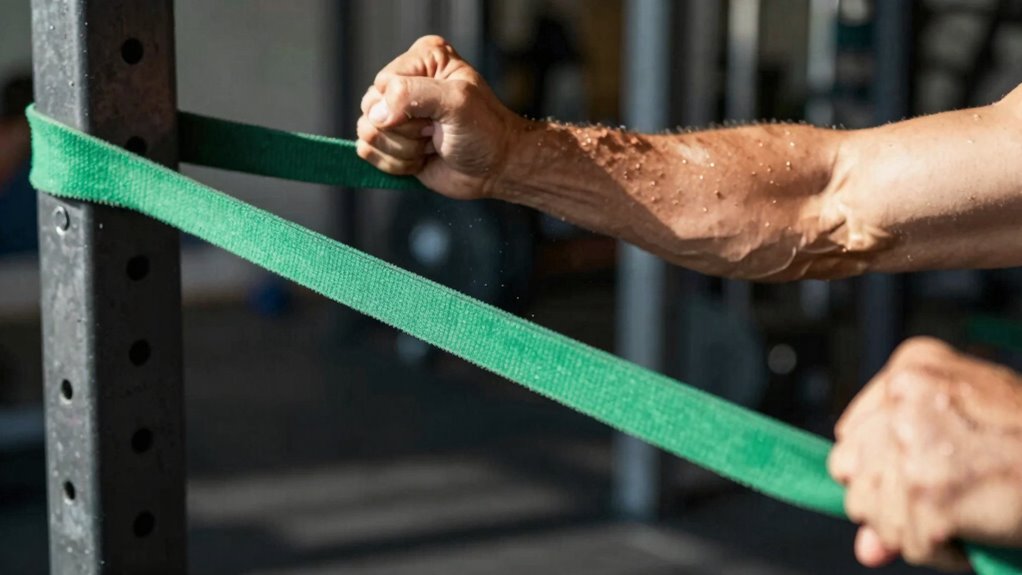

Resistance curves explain why some exercises start easy and then suddenly become brutal. During movement, your muscles have natural strength peaks and weak points. Static weights can feel uneven, making some phases tougher. Variable resistance equipment adjusts throughout the exercise, matching your strength curve. This keeps effort balanced and safe. If you keep exploring, you’ll discover how resistance curves can help you optimize your training and avoid plateaus.
Key Takeaways
- Resistance curves cause exercise difficulty to vary, feeling easier at weaker points and more brutal at stronger points.
- Variable resistance equipment aligns with natural strength patterns, intensifying effort when muscles are most capable.
- As resistance increases in stronger ranges, exercises become more challenging, creating a feeling of brutal exertion.
- Exercises feel easier when resistance is low during weaker points, then brutal as resistance ramps up at stronger points.
- Understanding resistance curves helps explain why workout intensity shifts, making some phases surprisingly tough despite initial ease.
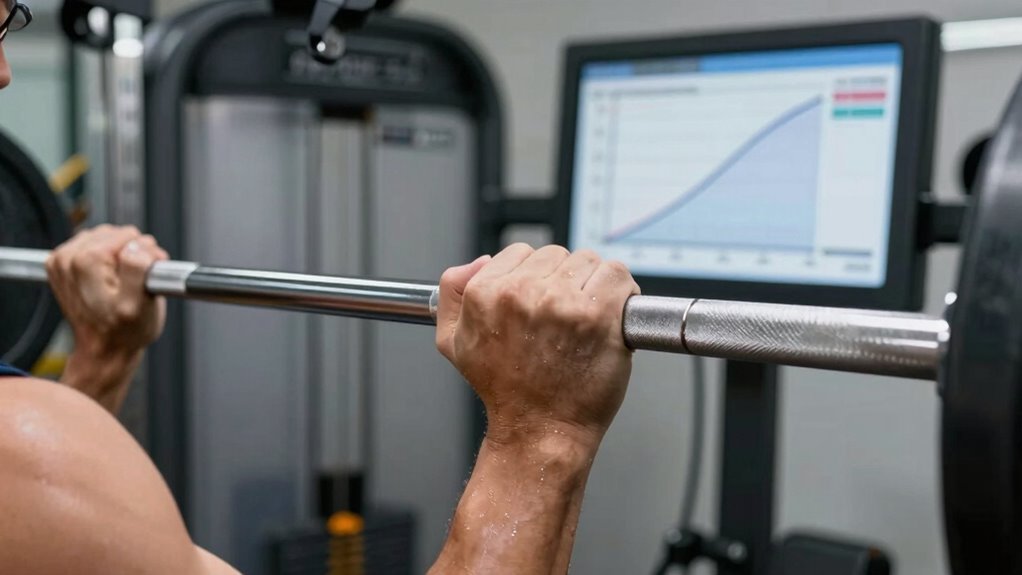
Have you ever wondered how materials or structures resist forces and loads? The same principles apply when you’re lifting weights or performing resistance exercises. Your muscles and joints face varying levels of difficulty throughout a movement, thanks to the concept of resistance curves. These curves map out how resistance changes across the range of motion, influencing how challenging an exercise feels at each point. Understanding the idea of variable resistance is key. Unlike static resistance—like lifting a fixed weight—variable resistance adjusts throughout the movement, making some phases easier and others more demanding. This resistance progression isn’t random; it’s designed to match your strength curve, where you’re typically strongest in the middle of a movement and weaker at the ends. By manipulating resistance, you can optimize your workout for efficiency and effectiveness.
Imagine performing a bicep curl. At the start, lifting the weight might feel manageable, but as you near the top, the resistance could suddenly feel much harder. This shift occurs because of the resistance curve inherent in your exercise setup. If the resistance remains constant, you might find certain phases easier and others painfully tough, leading to uneven muscle engagement. However, with variable resistance, such as resistance bands or specialized machines, the challenge adapts, providing less resistance when you’re weaker and more when you’re stronger. This resistance progression allows you to push your muscles safely and effectively through their full range of motion, maximizing strength gains while reducing the risk of injury.
Variable resistance adapts to your strength, making exercises safer and more effective through full range of motion.
The benefit of this tailored resistance is that it aligns more closely with your body’s natural strength curve, making some parts of the movement feel easier and others more brutal. It’s not just about making the workout harder; it’s about making it smarter. When resistance progresses smoothly, you can maintain better control and exertion levels, leading to more consistent muscle activation. This approach also prevents early fatigue at weaker points and guarantees you’re challenged at your peak strength points, ultimately leading to more balanced development.
Additionally, understanding the concept of resistance curves can help in selecting or designing equipment that optimizes your training effectiveness.
In essence, understanding resistance curves and how resistance progression works can transform your training. Instead of fighting against a constant force that feels uneven, you work with the natural strength patterns of your body. This not only enhances performance but also keeps your workouts safer and more sustainable. So, the next time an exercise feels surprisingly easy at first and then brutally difficult, you’re experiencing a resistance curve in action—an intelligent design that can be harnessed to unleash your full potential.

Fit Simplify Resistance Loop Exercise Bands with Instruction Guide and Carry Bag, Set of 5
High End Exercise Bands. Our 12"³ By 2"³ Heavy Duty Loop Resistance Bands Come In 5 Varying Resistance…
As an affiliate, we earn on qualifying purchases.
As an affiliate, we earn on qualifying purchases.
Frequently Asked Questions
How Do Resistance Curves Differ Between Machines and Free Weights?
You’ll notice that resistance curves differ between machines and free weights because machines use variable resistance, often through cam systems, which match your strength curve. This means the resistance feels easier at certain points and more brutal at others, providing consistent tension. Free weights, however, offer a more variable resistance based on your control and movement, so the tension can fluctuate unpredictably, making some parts easier and others tougher depending on your technique.
Can Resistance Curves Be Customized for Individual Strength Levels?
You can definitely customize resistance curves for your strength levels. By adjusting weights or machine settings, you create personalized resistance that adapts to your progress. Think of adaptive curves as your workout’s secret weapon—making exercises easier or harder exactly when needed. This personalized resistance guarantees continuous challenge, preventing plateaus. So, whether you’re a beginner or advanced, tailoring resistance curves keeps your training effective and engaging, matching your evolving strength perfectly.
What Role Do Resistance Curves Play in Preventing Injuries?
Resistance curves help prevent injuries by controlling joint stress throughout an exercise. They guarantee you don’t overload your joints at vulnerable points, reducing the risk of strain or sprains. By matching resistance to your strength curve, you maintain proper form and avoid sudden, excessive stress. This tailored approach promotes safer workouts, minimizes injury risk, and keeps you progressing without setbacks, making resistance curves essential for injury prevention.
Are There Specific Exercises With More Effective Resistance Curves?
You’ll find that exercises with more effective resistance curves often incorporate variable resistance and eccentric loading. These methods adapt resistance throughout the movement, making the exercise feel easier at the start and more challenging at the peak. Examples include banded squats or eccentric-focused movements, which maximize muscle engagement and minimize injury risk. By matching resistance to your strength curve, you get a safer, more efficient workout, reducing fatigue and enhancing gains.
How Do Resistance Curves Influence Muscle Hypertrophy and Endurance?
Resistance curves are your secret map to muscle growth and stamina. They guide muscle activation, making exercises more effective and preventing premature fatigue. When resistance gradually increases, muscles work harder over time, boosting hypertrophy. Conversely, a declining curve helps manage fatigue, allowing you to push longer for endurance. By understanding these curves, you optimize training, targeting muscle development while keeping fatigue in check, like a skilled sailor steering rough waters.
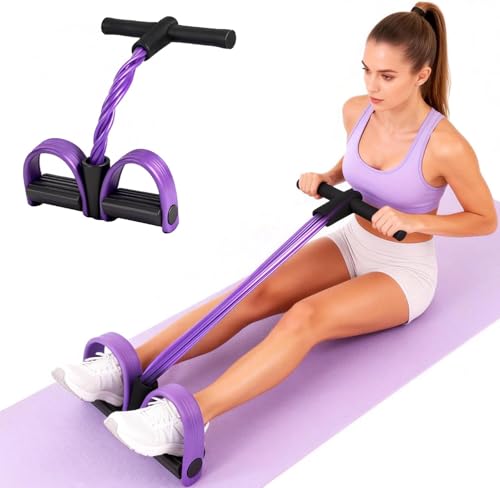
Multifunction Tension Rope, 6-Tube Elastic Yoga Pedal Puller Resistance Band, Natural Latex Tension Rope Fitness Equipment, for Abdomen/Waist/Arm/Leg Stretching Slimming Training (Purple)
👍【6 TUBES PEDAL RESISTANCE BAND】- FateFan 6 tube pedal fitness ropeis made of enviromental foam, and tube is…
As an affiliate, we earn on qualifying purchases.
As an affiliate, we earn on qualifying purchases.
Conclusion
Just like the tide’s gentle ebb and fierce surge, resistance curves remind you that strength isn’t static. Some exercises may feel like calm waters, only to reveal their stormy side—brutal and relentless. Embrace this dance of ebb and flow, knowing each phase builds your resilience. As the myth of Icarus warns, don’t fly too close to the sun, but don’t fear the climb either. Harness the wave, and let it shape your strength.

Eccentric Strength Training Machine, Flywheel Training Equipment with Strap, Adjustable Tension Strap Length, Adaptive Resistance Training, for Injury Rehabilitation, Muscle Toning, Body Shaping
【Eccentric Strength Enhancement Training】Significantly improve muscle strength by increasing peak torque of eccentric contraction of muscles. Eccentric strength…
As an affiliate, we earn on qualifying purchases.
As an affiliate, we earn on qualifying purchases.

Hydro Tone 3D Design Water Weights Pool Exercise Functional Strength Training Variable Resistance – Quick Start Guide – Yellow Pair
ENHANCED STRENGTH TRAINING: The unique 3D design facilitates isokinetic exercises focused on the upper body, with resistance increasing…
As an affiliate, we earn on qualifying purchases.
As an affiliate, we earn on qualifying purchases.