
Resistance bands feel harder at the top because their tension increases as you stretch them further, making the movement more challenging at full extension. As you pull, the band’s elasticity creates more resistance the more it stretches, activating your muscles more intensely. This variation helps target muscles effectively during key parts of exercises. If you want to understand how band tension shifts during your moves and how to manage it, keep exploring further.
Key Takeaways
- Resistance bands increase tension as they stretch further, making the movement feel harder at the top.
- Tension peaks near full extension due to elastic properties, activating muscles more intensely.
- Longer bands generate less initial resistance but increase tension during stretching, affecting difficulty.
- The elastic material’s characteristics determine resistance variation throughout the exercise.
- Proper band positioning and controlled movement optimize resistance and prevent overstretching or injury.

WHATAFIT Resistance Bands, Exercise Bands,Resistance Bands for Working Out, Work Out Bands with Handles for Men and Women Fitness, Strength Training Home Gym Equipment
DIFFERENT COLOR ADJUSTABLE RESISTANCE BANDS: The exercise bands come with 5 different resistance level 10lbs, 20lbs, 30lbs, 40lbs…
As an affiliate, we earn on qualifying purchases.
As an affiliate, we earn on qualifying purchases.
Why Do Resistance Bands Feel Harder at the Top of Your Exercise?

You might notice that resistance bands feel harder to pull at the top of your exercise, and this happens because of how tension increases as you stretch the band further. This increase in tension is directly related to the band’s elasticity; as you extend it, the material resists more. When the band reaches its maximum stretch, the tension peaks, making it feel tougher. This heightened tension also enhances muscle activation, encouraging your muscles to work harder during the movement’s peak. The band’s elasticity determines how much resistance it provides at different points, and at the top, the resistance is at its greatest. Understanding this helps you appreciate why resistance feels more intense at full stretch, ultimately making your workout more effective. Additionally, awareness of elasticity and tension dynamics can help you optimize your exercise form and prevent overstretching or injury.

Fit Simplify Resistance Loop Exercise Bands with Instruction Guide and Carry Bag, Set of 5
High End Exercise Bands. Our 12"³ By 2"³ Heavy Duty Loop Resistance Bands Come In 5 Varying Resistance…
As an affiliate, we earn on qualifying purchases.
As an affiliate, we earn on qualifying purchases.
How Does Resistance Band Tension Change During Your Movement?
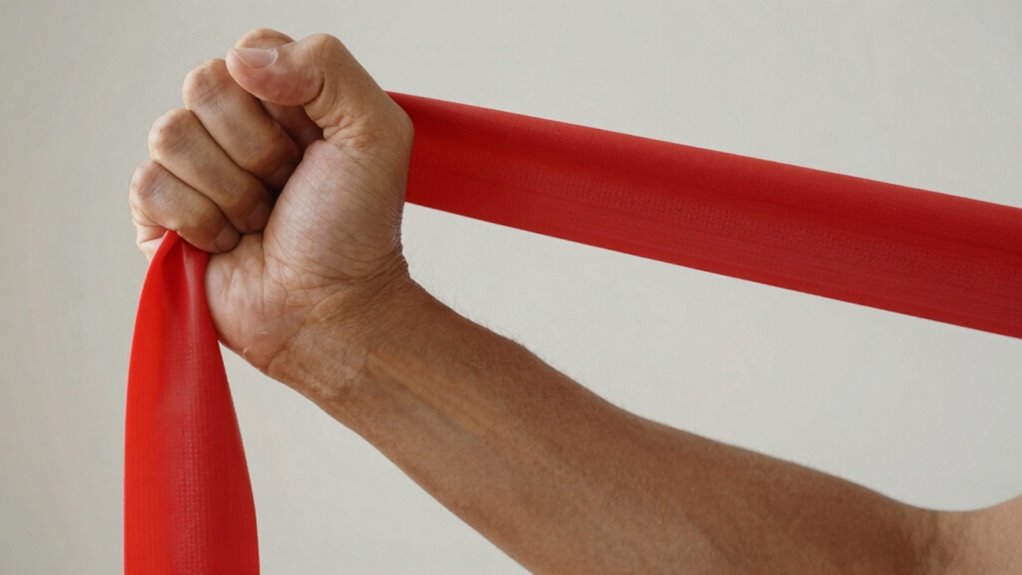
As you move through a resistance band exercise, the tension in the band fluctuates depending on your position. This is due to band elasticity and tension dynamics. When the band stretches, it resists with increasing force, making the tension higher at certain points. Typically, tension is lowest at the start and increases as you extend the band. Near the top of the movement, the band’s elasticity reaches its peak, creating more resistance. Conversely, as you return to the start, tension diminishes. This fluctuation is essential for effective training. Consider this table to visualize tension changes during a bicep curl:
| Position | Tension Level |
|---|---|
| Start (short) | Low |
| Midway | Moderate |
| Top (full stretch) | Highest |
| Returning | Decreases |
Additionally, understanding the elastic properties of resistance bands can help optimize your workout intensity and safety.

Resistance Bands, Pull Up Assist Bands – Workout Bands, Eexercise Bands for Working Out, Fitness, Training, Physical Therapy for Men Women – Multicolor
100% Natural Latex
As an affiliate, we earn on qualifying purchases.
As an affiliate, we earn on qualifying purchases.
How Band Length and Stretch Impact Resistance Band Tension
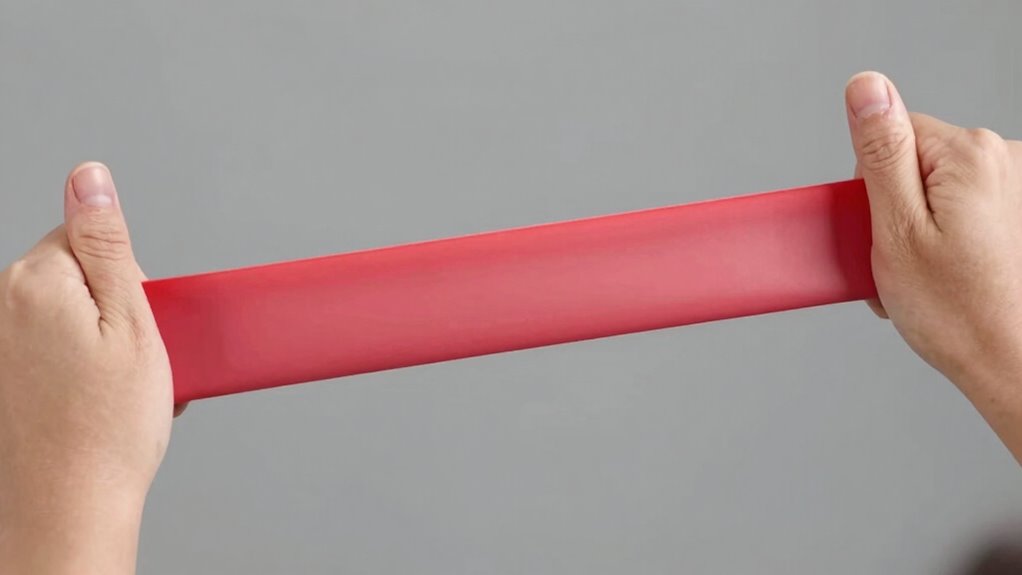
When you stretch a resistance band, its length decreases and tension increases, making your workout more challenging. Longer bands create less resistance initially but ramp up as you stretch them further, while shorter bands provide more consistent tension. Understanding how band length and stretch work together helps you target muscles more effectively and customize your exercises. Additionally, the elasticity of a band is influenced by its material properties, similar to how the flywheel in a vehicle affects engine performance energy transfer efficiency, ensuring smoother and more effective workouts.
Band Length Effects
The length of a resistance band considerably influences the amount of tension it provides during exercise. Shorter bands tend to offer higher tension early in the movement, but as you extend them, tension decreases due to reduced band elasticity. Longer bands, on the other hand, generate less initial tension but increase tension variation as you stretch further. This means:
- Shorter bands create a more consistent, immediate resistance but feel less challenging at the top.
- Longer bands allow more movement flexibility, but tension ramps up markedly toward full stretch.
- Band elasticity plays a key role, as more elastic bands produce greater tension variation, affecting how hard the exercise feels at different points. Understanding how band length impacts tension helps you choose the right band for targeted, effective workouts.
Stretch and Tension
Understanding how a resistance band’s stretch affects its tension can help you optimize your workout. When you stretch a band, its elastic properties determine how much resistance increases as you extend it. The more you stretch, the higher the tension, which challenges your muscles more effectively. This relationship is vital for muscle engagement, as it ensures consistent resistance through your movement. Keep in mind that a band’s tension isn’t linear; it becomes considerably harder at the top of the stretch, which is why you feel more resistance there. By adjusting your band length and stretch, you control the level of tension you generate, making your workouts more efficient and tailored to your strength level. Additionally, understanding the elasticity properties of resistance bands can help you select the right band for different exercises. Understanding this dynamic helps you maximize muscle activation with each exercise.
WHATAFIT Resistance Bands, Exercise Bands,Resistance Bands for Working Out, Work Out Bands with Handles for Men and Women Fitness, Strength Training Home Gym Equipment
DIFFERENT COLOR ADJUSTABLE RESISTANCE BANDS: The exercise bands come with 5 different resistance level 10lbs, 20lbs, 30lbs, 40lbs…
As an affiliate, we earn on qualifying purchases.
As an affiliate, we earn on qualifying purchases.
Do Different Resistance Bands Feel Different? Types and Their Effects
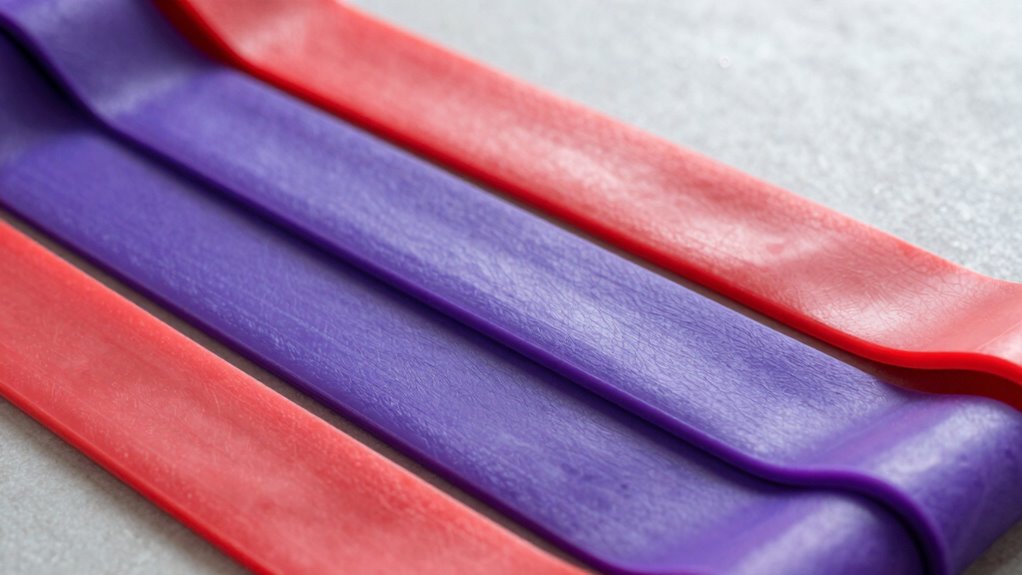
Different resistance bands can feel noticeably distinct, depending on their band material, thickness, and construction. These factors influence the resistance variation you experience during workouts. For example,:
- Latex bands tend to be more elastic, offering smooth resistance with minimal slack, ideal for controlled movements.
- Tube bands with handles often have a consistent resistance variation, making them versatile for different exercises.
- Fabric or woven bands usually provide a softer feel but can offer higher resistance, especially for larger muscle groups.
Your choice impacts how challenging exercises feel, especially at the top of the movement. Thicker or denser materials generally yield higher resistance, while lighter ones offer less. Understanding these differences helps you select the right band for your goals. Additionally, material composition plays a crucial role in durability and overall performance of the band.
Tips to Manage the Harder Feel at the Top and Get Better Results

To better handle the harder feel at the top of your resistance band exercises, focus on maintaining proper form and control throughout each movement. You can also adjust the band tension and your positioning to make the exercise more manageable and effective. Small tweaks in technique can lead to improved results and reduce strain. Incorporating progressive overload principles can further enhance your strength and endurance over time.
Proper Form and Control
Managing the harder feel at the top of resistance band exercises requires maintaining proper form and control throughout each movement. Focus on smooth, deliberate motions to assure consistent muscle engagement. To optimize your technique:
- Keep your core engaged to stabilize your body and prevent unwanted movement.
- Control the speed of each repetition, especially at the top, to maximize muscle engagement without relying on momentum.
- Progressively increase resistance or repetitions to improve exercise progression, making sure your form stays intact as intensity rises.
- Paying attention to proper form and control ensures you get the most from your workout and reduces the risk of injury.
Adjust Band Tension and Position
Adjusting the tension and position of your resistance band can make a significant difference when you feel the exercise getting harder at the top. Proper band anchoring guarantees you maintain consistent tension throughout the movement, preventing the band from slipping or loosening. You might find that repositioning the band higher or lower, or changing your anchoring point, creates a more even resistance curve. Additionally, grip techniques play a role—using a firm, secure grip helps control the band and ensures smooth motion. Experiment with different grips and hand positions to find what offers the right tension at the top. These adjustments allow you to manage the harder feel, improve control, and maximize results during your workout.
Common Mistakes When Using Resistance Bands: and How to Avoid Them
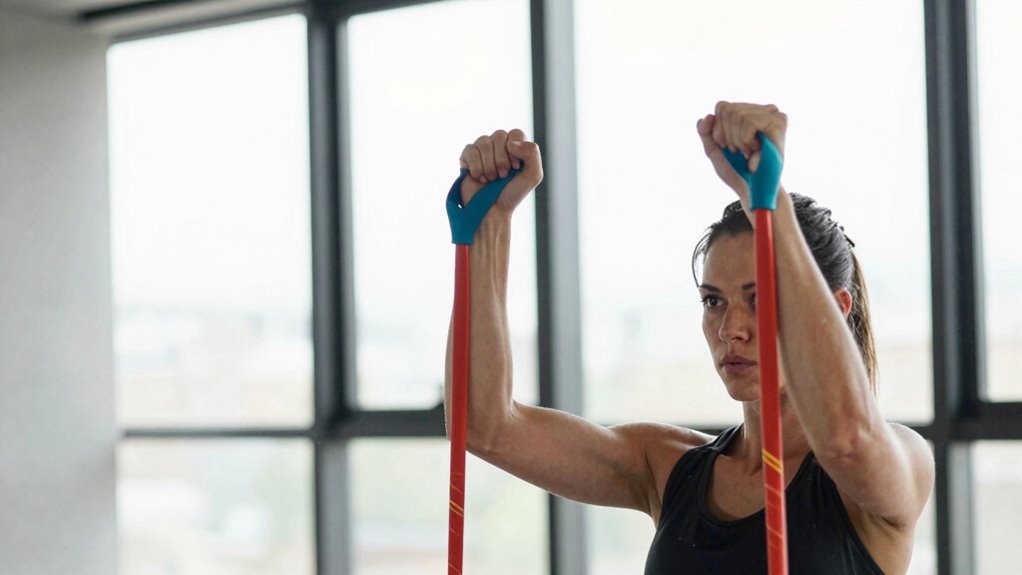
Using resistance bands incorrectly can lead to ineffective workouts or even injuries. One common mistake is poor band placement, which reduces control and targets the wrong muscles. To avoid this, make certain the band is securely anchored and aligned with your joint movement. Another mistake is neglecting resistance variation; sticking to a constant tension limits progress. Regularly adjust your band’s position or switch to different bands to challenge your muscles. Finally, many underestimate the importance of maintaining proper form throughout each exercise—compromising form can cause strain or injury. Being attentive to these details, such as understanding home design and architecture details, helps you get the most out of your resistance band workouts. By focusing on correct band placement, intentionally varying resistance, and practicing proper technique, you maximize effectiveness while minimizing risks.
Frequently Asked Questions
Can Resistance Bands Replace Free Weights Effectively?
Yes, resistance bands can replace free weights effectively. They provide varied band tension throughout each movement, challenging your muscles differently than free weights. Plus, they allow for a wide range of exercise variety, targeting muscles from multiple angles. While bands might not fully replace heavy lifting for maximum strength gains, they’re excellent for improving endurance, flexibility, and functional fitness, making them a versatile alternative or complement to free weights.
How Do I Choose the Right Resistance Band for My Fitness Level?
To choose the right resistance band for your fitness level, consider band tension and material durability. If you’re a beginner, opt for bands with lower tension to avoid strain. As you progress, increase tension gradually. Look for durable materials like rubber or latex to guarantee longevity and safety. Test different tensions to find one that challenges you without compromising form, and always check for quality to prevent snapping during workouts.
Are There Safety Concerns When Using Resistance Bands at Home?
While resistance bands are great for your workouts, you should always prioritize band safety to prevent injury. Carefully inspect your bands for wear, tears, or damage before each use. Use proper techniques and avoid overstretching to guarantee injury prevention. Keep your workspace clear and secure your bands properly. Following these safety tips helps you enjoy effective exercise at home without risking harm, keeping your fitness journey safe and smooth.
How Often Should I Replace My Resistance Bands?
You should replace your resistance bands every 6 to 12 months, depending on their band durability. Regularly check for signs of wear like cracks, tears, or loss of elasticity, which indicate it’s time for a replacement. Maintaining good band quality guarantees safe, effective workouts. Don’t wait too long—damaged bands can snap and cause injury, so prioritize replacement based on usage and visible wear to keep your workouts safe.
Can Resistance Bands Help Improve Joint Stability?
Yes, resistance bands can help improve joint stability by enhancing joint health through stability training. When you regularly incorporate bands into your workouts, you strengthen the muscles around your joints, which provides better support and reduces injury risk. Use them for controlled, specific movements to target stabilizer muscles. Over time, this can lead to improved balance, coordination, and overall joint function, making your joints more resilient during daily activities and exercise.
Conclusion
Understanding why resistance bands feel harder at the top helps you optimize your workouts. Remember, studies show that using resistance bands can increase muscle activation by up to 30%, making your exercises more effective. By paying attention to band tension and avoiding common mistakes, you’ll see better results and reduce injury risk. Keep experimenting with different bands and techniques — the more you learn, the more you’ll discover your strength potential.