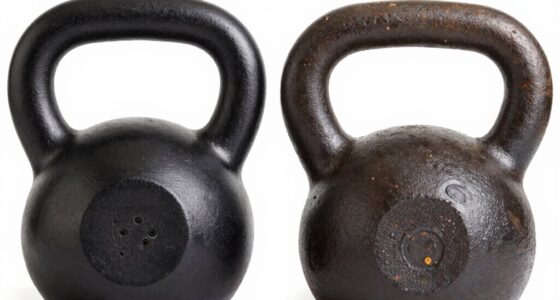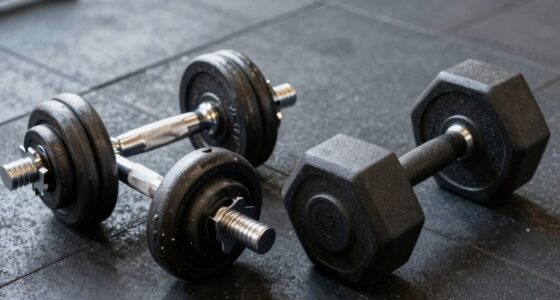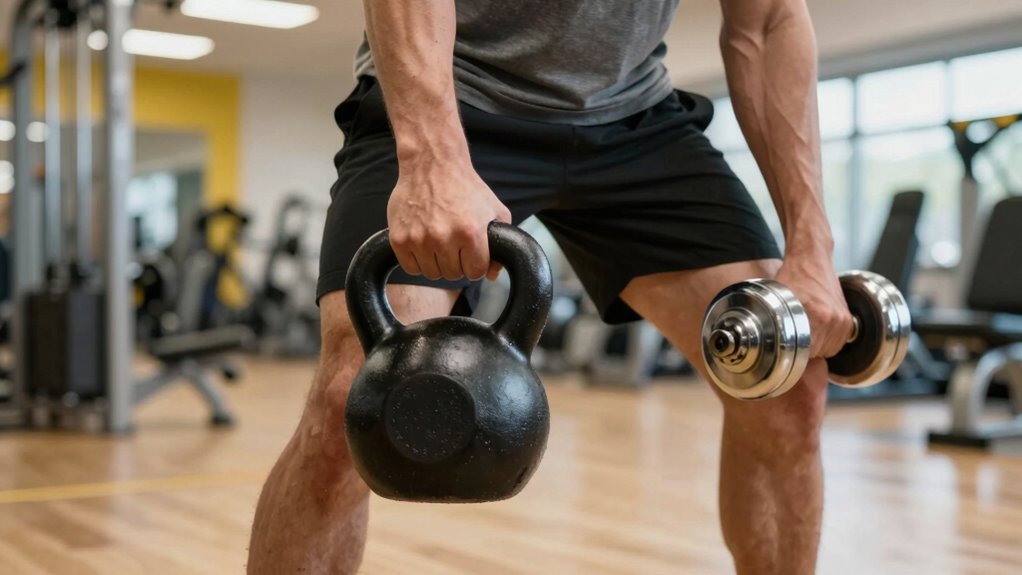
Kettlebells are better for building explosive power, functional strength, and athleticism because they emphasize dynamic, full-body movements that improve balance and coordination. They enhance grip strength and simulate sport-specific actions, boosting overall athletic performance. Dumbbells excel in targeted muscle work and controlled movements, making them ideal for muscle isolation and rehab. To maximize your training, understanding how both tools can benefit your athletic goals is essential—keep exploring to learn more.
Key Takeaways
- Kettlebells enhance explosive power and dynamic movement patterns crucial for athleticism.
- They improve balance, coordination, and proprioception through multi-planar, functional exercises.
- Kettlebell training increases grip strength and engages stabilizer muscles more effectively than dumbbells.
- Their versatility supports sport-specific, full-body movements, promoting overall athletic performance.
- Combining kettlebell work with balance drills boosts neuromuscular control and injury prevention.

REP Fitness Kettlebell, 14 kg, Adjustable Weight, Cast Iron, Strength Exercise Training, Home Gym, Power Workout Equipment, Free Weights, Dumbbell Alternative
What's Included: A single 14kg Rep Fitness kettlebell. We also offer a full lineup of sizes: 2.2lb/1kg, 9lb/4kg,…
As an affiliate, we earn on qualifying purchases.
As an affiliate, we earn on qualifying purchases.
Which Equipment Boosts Power and Explosiveness for Athletes?
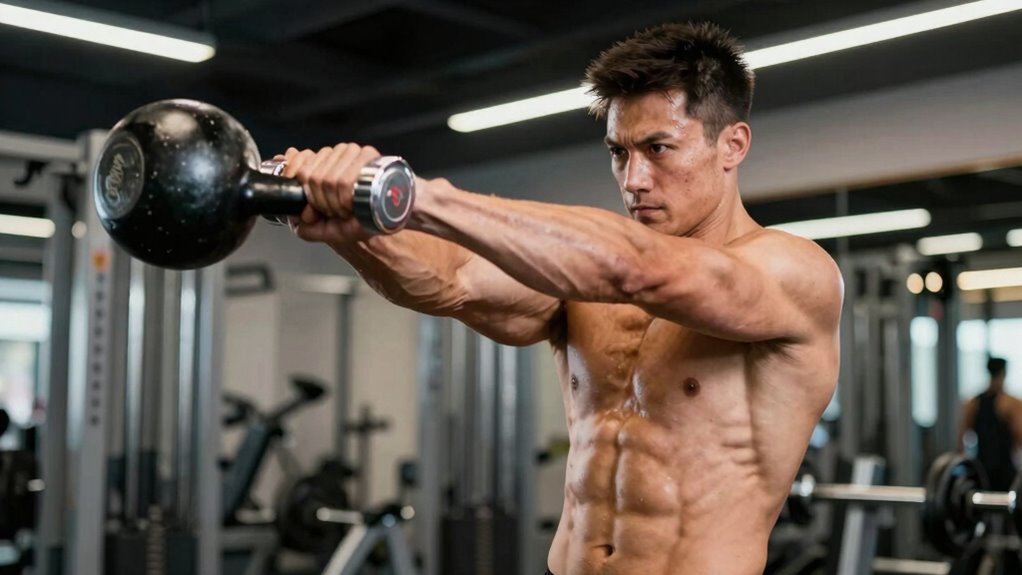
When it comes to boosting power and explosiveness, both kettlebells and dumbbells can be effective tools, but kettlebells often have an edge. Kettlebell exercises incorporate dynamic, full-body movements that challenge your balance training and require rapid, explosive actions. This dynamic nature helps improve your coordination and stability, translating into more powerful movements. Additionally, kettlebell swings and snatches enhance flexibility by promoting greater range of motion in the hips, shoulders, and spine. Dumbbells, while excellent for isolated strength work, don’t typically engage your core and balance as intensely during explosive movements. If you’re aiming to develop explosive power with an emphasis on improving flexibility and balance, kettlebell training offers a distinct advantage over traditional dumbbell routines. Functional movement training with kettlebells also supports everyday activities, making it a practical choice for athletes seeking overall athleticism.
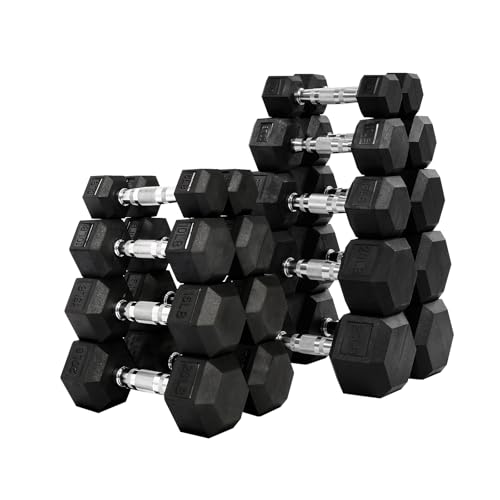
BBRUN Dumbbell Set 550 lb, Rubber Hex Free Weights Without Rack, Heavy-Duty Home Gym Equipment for Strength Training, Muscle Building and Full Body Workouts
Versatile Weight Selection: The bbrun Dumbbell Set offers unmatched flexibility with 8 premium weight options 550 lbs(5lb x2,…
As an affiliate, we earn on qualifying purchases.
As an affiliate, we earn on qualifying purchases.
How Do Kettlebells and Dumbbells Improve Athletic Endurance and Conditioning?
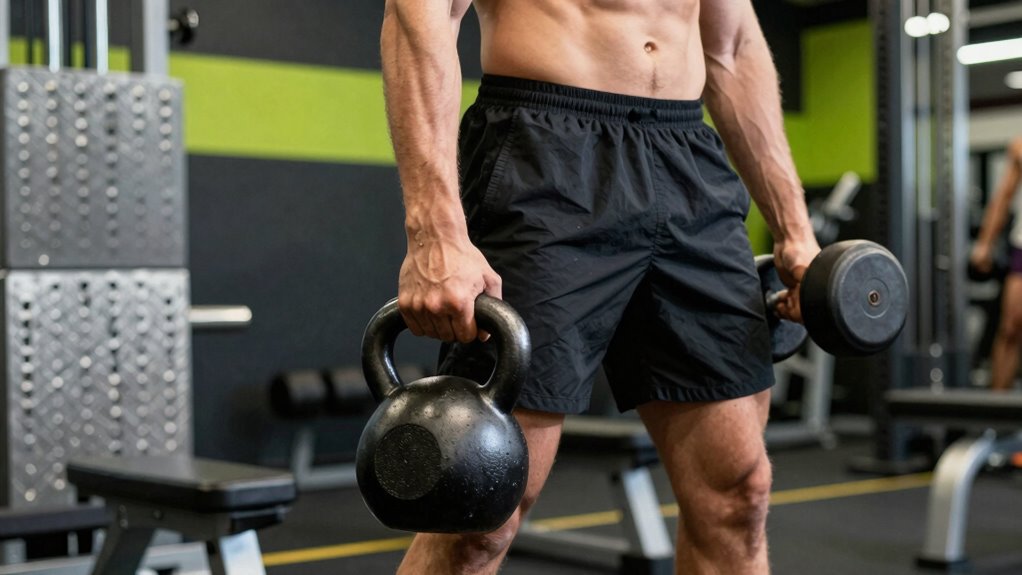
Using kettlebells and dumbbells can boost your cardiovascular efficiency and build muscular endurance. These workouts challenge your body to perform sustained movements, improving stamina over time. As a result, you become better equipped to handle demanding athletic activities. Incorporating comparative advantage principles into your training can further optimize resource allocation and skill development.
Enhanced Cardiovascular Efficiency
Kettlebells and dumbbells both boost cardiovascular efficiency by demanding sustained effort and encouraging dynamic movement. Incorporating interval training with either tool challenges your heart and lungs, improving overall cardiovascular health. Kettlebell exercises often involve continuous, ballistic movements that elevate your heart rate quickly, making them ideal for cardio-focused workouts. Dumbbell routines, especially when combined with circuits or high-rep sets, also push your endurance boundaries. Regularly engaging in these workouts enhances your body’s ability to deliver oxygen and nutrients efficiently, building stamina over time. As you progress, you’ll notice improved recovery times and sustained energy levels during athletic activities. Both tools serve as effective means to increase your cardiovascular efficiency, making them essential for all-encompassing athletic conditioning.
Muscular Endurance Development
Building cardiovascular efficiency with kettlebells and dumbbells also enhances muscular endurance, enabling you to sustain high-intensity efforts longer. Both tools challenge your muscles through repetitive, dynamic movements, which boost muscular endurance and improve workout stamina. Kettlebell exercises, like swings and cleans, target multiple muscle groups simultaneously, increasing your ability to perform prolonged, intense workouts. Dumbbell routines, such as presses and rows, build muscle stamina by requiring sustained effort over time. Regularly incorporating these weights into your training pushes your muscles to adapt and resist fatigue. Additionally, this type of training promotes muscular coordination, which enhances overall athletic performance. As your muscular endurance improves, you’ll notice better performance during athletic activities, quicker recovery, and the capacity to handle longer, more demanding workouts. This development is essential for building overall athleticism and resilience.

CAP Barbell 45 lb Multi-Use Adjustable Weight Set – Versatile Dumbbell, Barbell & Kettlebell for Full-Body Workouts
DURABLE CONSTRUCTION: Built with a tough TPR-coated exterior and iron-sand–filled plates, this adjustable weight set delivers accurate weight…
As an affiliate, we earn on qualifying purchases.
As an affiliate, we earn on qualifying purchases.
What Are the Unique Strength Benefits of Kettlebell Training?
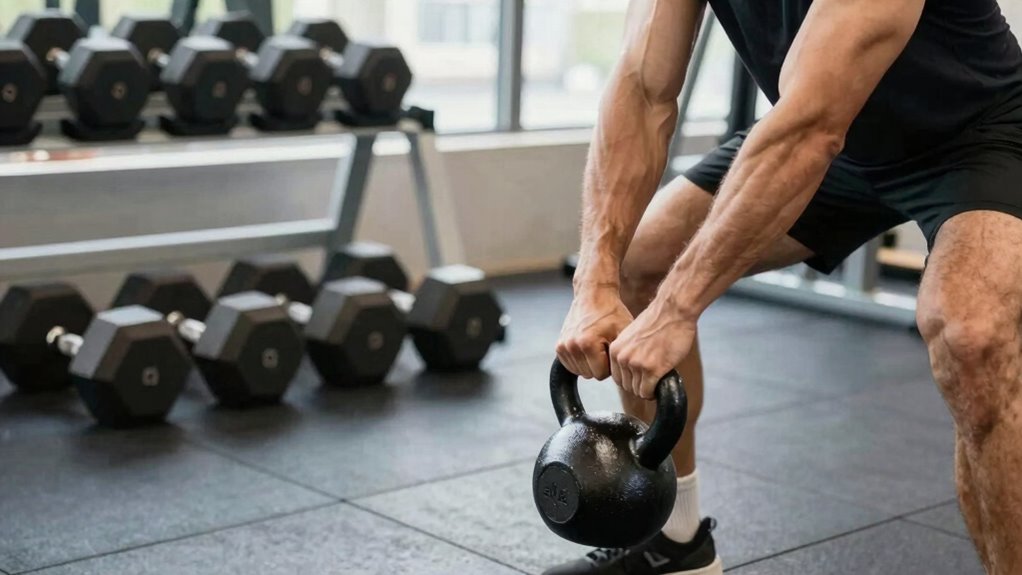
Kettlebell training emphasizes dynamic movement patterns that challenge your muscles in ways dumbbells can’t. This approach helps build functional strength and improves coordination. Plus, the unique grip requirements boost your grip strength more effectively. Additionally, content formats explored through such training can enhance your overall understanding of effective workout designs.
Dynamic Movement Patterns
When you engage in kettlebell training, you activate a wide range of dynamic movement patterns that challenge your muscles in unique ways. These movements improve dynamic stability and require constant coordination challenges, engaging multiple muscle groups simultaneously. Unlike traditional exercises, kettlebell swings and snatches force you to maintain control during rapid, flowing motions. Imagine the following:
| Movement Type | Muscle Engagement | Key Benefit |
|---|---|---|
| Swing | Hamstrings, glutes, core | Builds explosive power |
| Turkish Get-Up | Shoulders, core, hips | Enhances stability & coordination |
| Snatch | Legs, back, shoulders | Develops full-body athleticism |
This variety trains your body to move fluidly, adapt quickly, and maintain control under dynamic conditions. Free floating movements further challenge your stabilizer muscles, promoting overall athleticism.
Enhanced Grip Strength
The dynamic movements involved in kettlebell training place a unique demand on your grip, pushing it to develop strength in ways traditional weights often can’t match. When you swing, snatch, or perform Turkish get-ups, your hand grip is constantly engaged to control the kettlebell’s shifting weight. This continuous grip activation enhances your overall hand grip strength, making everyday tasks easier and improving athletic performance. Additionally, the repetitive squeezing and holding motions strengthen your forearms, leading to better stability and endurance. Unlike dumbbells, kettlebells require you to stabilize the weight through your grip during dynamic movements, which results in more targeted forearm and hand grip development. This improved grip strength translates into increased power, control, and injury resilience across various physical activities. Moreover, this type of training aligns with the principles of spiritual awakening and enlightenment, as it encourages mindfulness and focus during each movement, fostering a deeper connection between mind and body.

WF Athletic Supply Hammerstone Painted Cast Iron Kettlebells, Home & Gym Equipment, Great for Strength Training, Full Body Workout & Crossfit Training, Color & Size Options Available in 10-80 Pounds
💪 HIGH QUALITY CAST IRON KETTLEBELL – Constructed of solid cast iron with no welds, weak spots, or…
As an affiliate, we earn on qualifying purchases.
As an affiliate, we earn on qualifying purchases.
When Should You Choose Dumbbells Over Kettlebells for Your Workout?
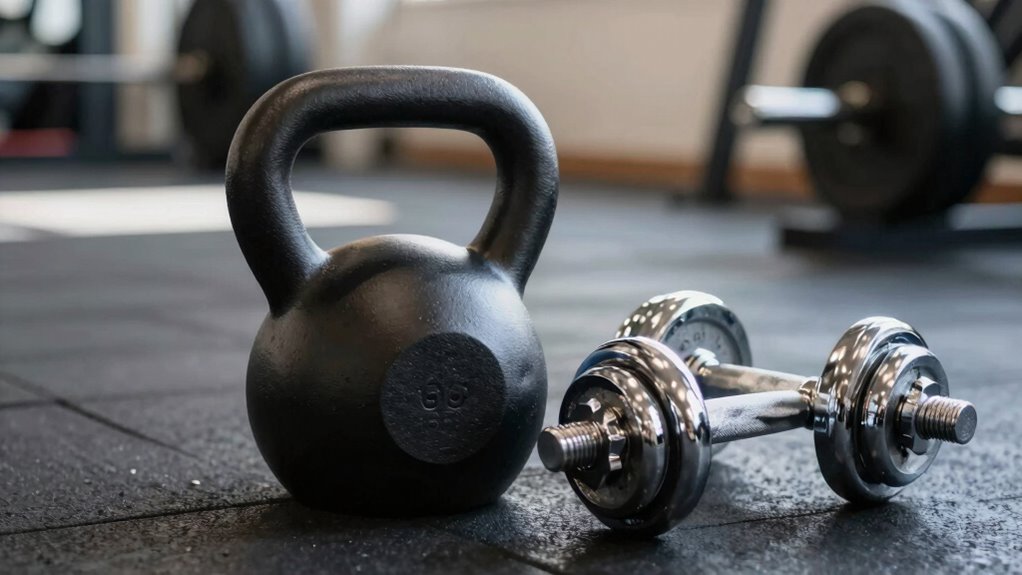
Choosing dumbbells over kettlebells is ideal when your workout requires targeted isolation or precise movement control. If your goal is muscle hypertrophy, dumbbells allow for balanced, controlled movements that focus on specific muscles, helping you maximize growth. They’re also better suited for flexibility training, as you can perform a wide range of motion exercises with greater stability. Dumbbells enable you to target smaller muscle groups and refine your technique, which is vital during rehabilitation or injury prevention. Additionally, they’re easier to adjust in weight, making progression straightforward. Use dumbbells when precision, controlled reps, or muscle isolation are priorities, ensuring you get the most benefit from your training without sacrificing form or safety. Incorporating proper equipment can also help improve overall training safety and effectiveness.
How to Incorporate Kettlebells and Dumbbells Into Your Athletic Training Routine
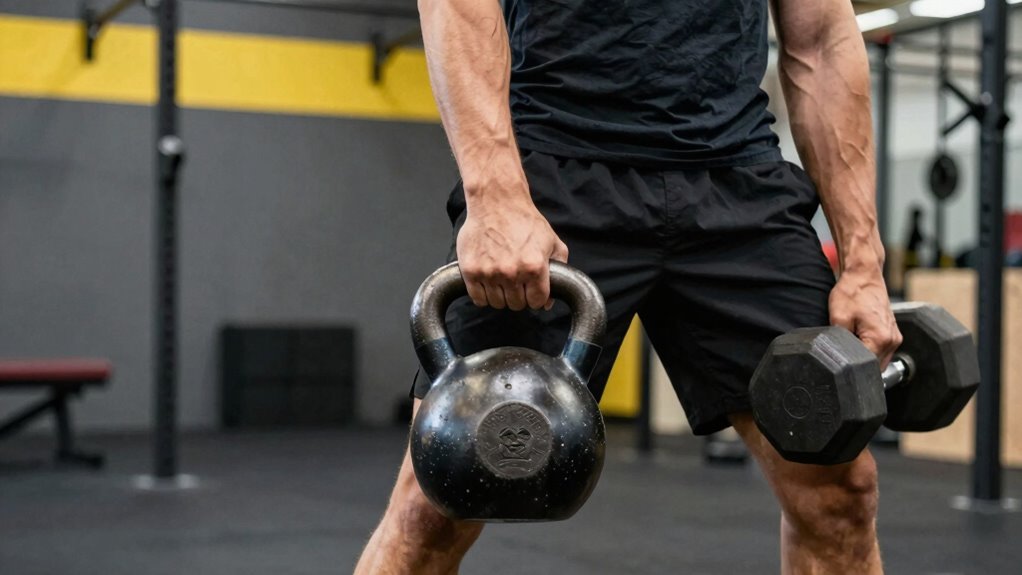
Integrating kettlebells and dumbbells into your athletic training routine enhances strength, power, and stability by targeting different movement patterns. To maximize benefits, combine these weights with tools like resistance bands and balance boards. Resistance bands add variable resistance, challenging muscles through full ranges of motion and improving joint stability. Use them during kettlebell swings or dumbbell presses to increase intensity. Balance boards help enhance your proprioception and core stability, essential for athletic performance. Incorporate balance board exercises between weightlifting sets to improve coordination and prevent injuries. For example, perform dumbbell rows on a balance board to engage stabilizers. Alternating kettlebell exercises with balance-enhancing drills ensures thorough development, making your training more functional and sport-specific. Proper technique is crucial to prevent injuries and ensure you get the most out of your workouts.
Which Equipment Is More Versatile for Functional and Sport-Specific Movements?
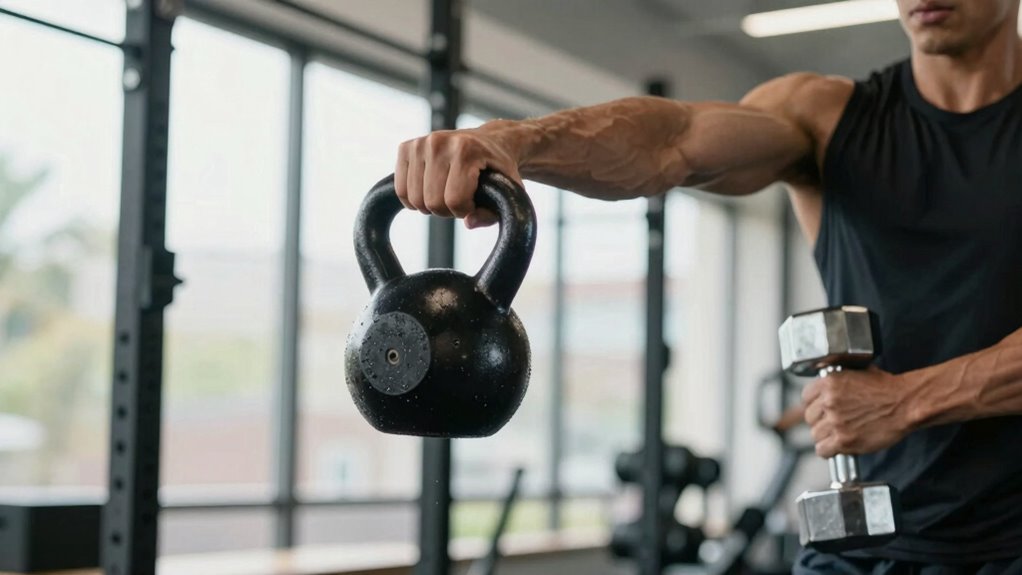
When it comes to functional and sport-specific movements, kettlebells often prove more versatile because their dynamic, multi-planar exercises mimic real-world and athletic actions. You can perform single arm exercises that challenge stability and coordination, making movements more realistic for sports. The adjustable weights of kettlebells allow you to easily modify resistance, tailoring workouts to different skill levels and movement patterns. This flexibility helps target multiple muscle groups simultaneously, enhancing overall athleticism. Additionally, kettlebells promote dynamic movement patterns that are essential for athletic performance and injury prevention. Dumbbells are useful too, but their traditional design limits the range of motion and fluidity needed for many sport-specific tasks. Kettlebells’ unique shape and weight distribution make them ideal for dynamic, functional training that closely resembles the demands of real athletic performance.
Frequently Asked Questions
Which Equipment Is Better for Improving Core Stability?
You’ll find kettlebells are excellent for improving core stability because they require more core engagement during dynamic movements. Their unique shape challenges your balance, enhancing overall balance and coordination. Dumbbells are also effective, especially for targeted core exercises. But if you’re aiming for greater balance enhancement and core engagement, kettlebells offer a more functional, full-body workout that boosts your athleticism and stability.
Can Kettlebells or Dumbbells Help Prevent Sports Injuries?
Think of kettlebells and dumbbells as shields for your body; they help guard against injuries through targeted training. Both tools boost injury prevention by enhancing strength, stability, and mobility, especially when integrated into sports-specific training. Using them regularly prepares your muscles and joints for real-game stresses, reducing the risk of strains and sprains. Incorporate both into your routine to build resilience and stay injury-free on the field.
How Do These Tools Impact Overall Athletic Flexibility?
Using kettlebells and dumbbells can considerably improve your overall athletic flexibility by enhancing joint mobility through dynamic stretching movements. These tools encourage a full range of motion, helping you loosen tight muscles and increase joint flexibility. Incorporate exercises like swings or lunges with weights to boost dynamic stretching, which in turn supports better movement efficiency, reduces injury risk, and enhances your athletic performance over time.
Are There Specific Sports That Benefit More From Kettlebell Training?
Like a sharp sword, kettlebell training slices through the demands of combat sports and endurance training. You’ll find it especially beneficial for fighters and athletes needing explosive power, core strength, and stamina. The dynamic swings and lifts mimic real-world movements, enhancing agility and coordination. If you participate in martial arts, boxing, or track events, kettlebells boost your performance by building functional strength and endurance effectively.
What Safety Considerations Should Be Taken With Each Equipment Type?
When using kettlebells or dumbbells, you should prioritize proper handling to prevent injuries. Always check equipment for damage and maintain it regularly to guarantee safety. Use correct form, especially during lifts, to avoid strain or accidents. Keep grip secure, avoid rushing, and start with lighter weights if you’re new. Maintaining your equipment and practicing proper handling helps reduce risks and keeps your workouts safe and effective.
Conclusion
Ultimately, both kettlebells and dumbbells can elevate your athleticism, but choosing the right depends on your goals. If you want explosive power and functional strength that mimics real movements, kettlebells are your best bet. Don’t worry about the initial awkwardness—imagine swinging with confidence, feeling your muscles ignite. With consistent practice, you’ll transform those early struggles into fluid, powerful movements that boost your performance in any sport or activity.