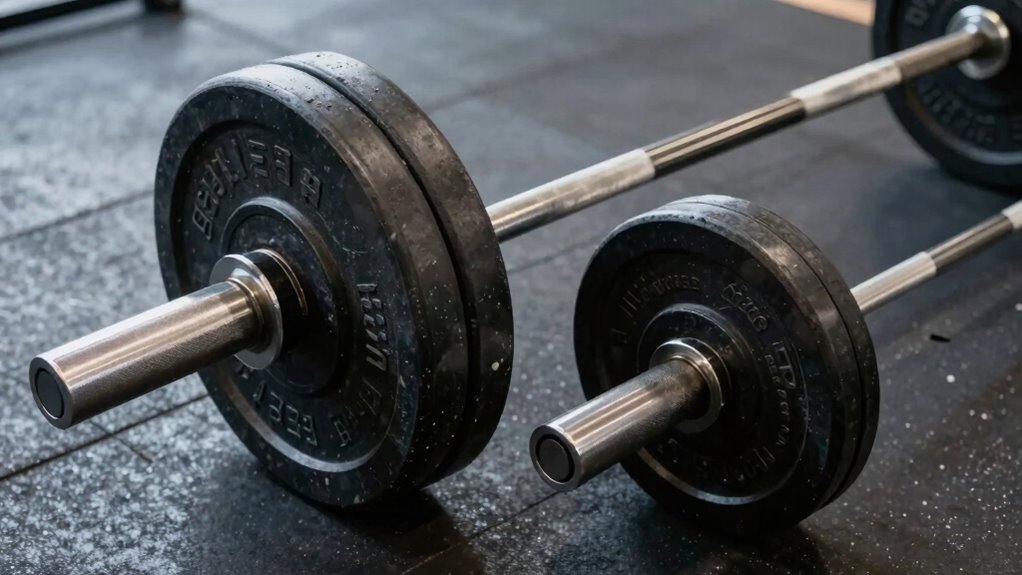
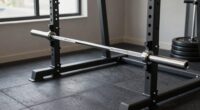
Your choice of barbell diameter impacts how comfortably and securely you grip the bar during lifts. Thinner bars, around 25mm, reduce grip fatigue and are easier to handle for smaller hands, while thicker bars, around 32mm, challenge your grip and help build forearm strength. Material and surface texture also influence comfort and slip resistance. Understanding how diameter affects grip can help you find the right fit for your goals and improve your lifting, and there’s more to discover below.
Key Takeaways
- Thinner bars (~25mm) are easier to grip, reducing fatigue, especially for smaller hands or beginners.
- Thicker bars (~32mm) increase grip challenge, aiding grip strength development over time.
- Bar diameter influences comfort; overly thick bars can feel unwieldy for some users.
- Material and texture, such as knurling, enhance grip security regardless of diameter.
- Selecting the appropriate diameter improves overall comfort, safety, and lifting efficiency based on individual needs.
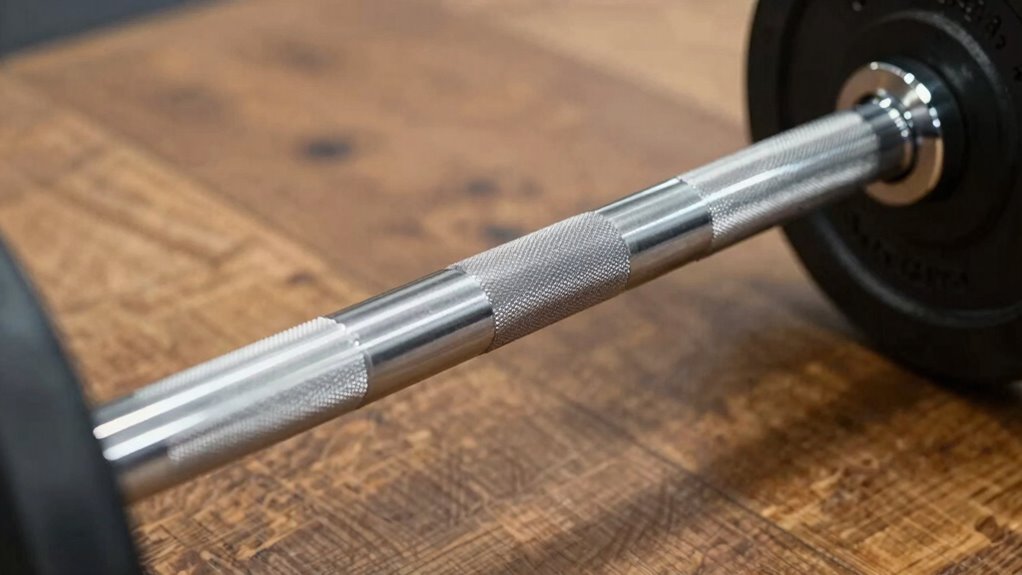
The diameter of a barbell plays a crucial role in your lifting experience, affecting grip, comfort, and overall performance. When you grasp the bar, your grip strength becomes a key factor in how effectively you can lift, control, and stabilize the weight. A thicker barbell naturally demands more grip strength, engaging your forearms and fingers more intensely. If you have smaller hands or less grip endurance, a thinner bar might feel more manageable and allow you to lift heavier for longer periods. Conversely, a thicker bar can challenge your grip, helping to develop strength over time, but it can also cause discomfort if your grip isn’t strong enough. Additionally, connected equipment such as grip trainers or specialized bars can enhance grip strength and comfort during training. Barbell material influences the diameter and overall feel of the barbell. Most standard bars are made from steel, which provides durability and a consistent diameter. High-quality steel bars tend to have a smooth finish, but some may have textured or knurled grips to improve hold. The knurling, combined with the bar’s diameter, directly impacts your grip strength and comfort. A well-designed knurl pattern ensures you don’t slip during lifts, especially when your hands are sweaty. If the bar’s diameter is too thick, it might feel unwieldy, especially if you prefer a more natural grip or have smaller hands. Thinner bars, often around 25mm in diameter, tend to be more comfortable for a wider range of lifters because they require less grip strength to hold securely. Thicker bars, like those around 32mm, are often used in powerlifting or specialty training to improve grip endurance and strength. Choosing the right barbell diameter depends on your goals and hand size. For beginners or those with smaller hands, a thinner bar can be less fatiguing and easier to grip, allowing you to focus on form and technique. As your grip strength improves, you might switch to a thicker bar to add challenge and build even more forearm and hand strength. The material of the barbell also plays a role here—some bars have a textured surface that enhances grip regardless of diameter, making them more comfortable and secure to hold. Ultimately, the right combination of barbell material and diameter can make a significant difference in your lifting experience, helping you lift more efficiently, comfortably, and safely.

PAPABABE Barbell, 6.5ft Women’s Olympic Barbell 35lb, 25mm Black Chrome Grip & 2-Inch Silver Sleeves, Hybrid Needle Bearings + Bushings, 190,000 PSI Steel, 1000lbs Home Gym Bar (Black/Silver)
190,000 PSI Steel Core – 1000lbs Power Bar for Heavy Lifts: Engineered with ultra-strong 190,000 PSI steel, this…
As an affiliate, we earn on qualifying purchases.
As an affiliate, we earn on qualifying purchases.
Frequently Asked Questions
Does Barbell Diameter Impact Lifting Technique?
Yes, barbell diameter impacts your lifting technique by influencing wrist positioning and grip fatigue. A thicker bar forces you to adjust your grip, which can strain your wrists and cause discomfort if you’re not used to it. This change may alter your lifting form, making it harder to maintain proper technique. To prevent issues, choose a barbell diameter that matches your hand size and strength, ensuring comfort and ideal performance.
Are Larger Diameters Better for Beginners?
Larger barbells are like trying to squeeze a watermelon with your hands—they’re not always better for beginners. If your hand size isn’t compatible, you might find the grip uncomfortable, leading to grip fatigue faster. Smaller diameters often suit beginners better, helping you build confidence and control without straining your hands. So, choose a barbell that fits your hand size to avoid unnecessary fatigue and improve your lifting experience.
How Does Diameter Influence Barbell Durability?
You’ll find that a thicker barbell can be more durable because it’s often made from stronger materials with better material strength, resisting bending or breaking under heavy loads. Additionally, larger diameters tend to feature enhanced corrosion resistance, especially if coated properly, which prolongs the bar’s lifespan. So, selecting a bar with the right diameter guarantees you get a sturdy, long-lasting piece of equipment that withstands regular use.
Is There a Standard Diameter for Olympic Bars?
Yes, there is a standard diameter for Olympic bars, typically 28mm for men’s bars and 25mm for women’s bars. This standardization helps with barbell aesthetics and makes barbell customization easier across gyms and equipment. Knowing these sizes allows you to choose the right grip and accessories, ensuring comfort and efficiency during lifts. Sticking to these standards also guarantees compatibility with most weight plates and racks.
Can Grip Strength Be Affected by Barbell Diameter?
Yes, grip strength can be affected by barbell diameter. A thicker barbell requires you to exert more hand strength, which can lead to increased hand fatigue over time. If your grip isn’t secure, it can compromise your safety and reduce lifting efficiency. Choosing a barbell with an appropriate diameter helps you maintain grip security, minimizes hand fatigue, and allows you to perform lifts with better control and comfort.

Professional Squat Bar, 32MM 55lb Squat Barbell for Powerlifting 95in/ 8Ft, Barbell for 2000 lbs Weight Capacity 205K PSI, Weight Bar Fit 2" Weights (Black)
PROFESSIONAL SQUAT BAR:With High-quality steel,tensile strength of 205K PSI and load capacity of 2000 LBS, LOEFT P95B professional…
As an affiliate, we earn on qualifying purchases.
As an affiliate, we earn on qualifying purchases.
Conclusion
Choosing the right barbell diameter isn’t just about comfort; it’s about revealing your true potential. When you select the perfect fit, you’re not just gripping metal—you’re grasping the power to push beyond limits. Remember, the right diameter can be your strongest ally or your greatest obstacle. So, ask yourself: will you let the barbell’s size define your strength, or will you seize it and forge your own path? The choice is yours.
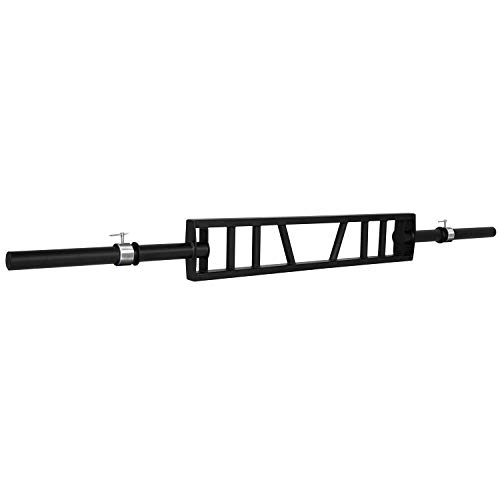
Yes4All Multi Grip Barbell – Swiss Bar, American Bar with 2 Collars, Fits Olympic Weight Plates – Commercial and Home Gym & Support Pressing, Lifting & Curls
HYBRID BAR: The multigrid bar is equipped with 6 different neutral and angled hollow grips for increased versatility…
As an affiliate, we earn on qualifying purchases.
As an affiliate, we earn on qualifying purchases.

Rubber Barbell Grip, Thick Dumbbell Grip Arm Strength Tool, Barbell Clutch Suitable For Row/Puller/Kettlebell, Gym Biceps Arm Muscle Trainer (Black, 10CM/ 3.9IN)
BARBELL CLUTCH >> Barbell Grips are able to convert a regular barbell into a thicker barbell to assist…
As an affiliate, we earn on qualifying purchases.
As an affiliate, we earn on qualifying purchases.