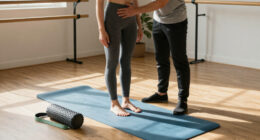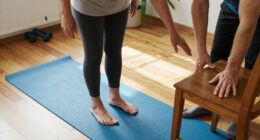

If you have tight hips, it can mess up your squat form, cause your knees to cave in, and increase injury risk. Improving hip mobility with targeted stretches and mobility drills helps you achieve better depth, proper knee tracking, and more stability. Incorporating consistent flexibility exercises like hip circles or pigeon pose can make a big difference. Keep exploring these techniques, and you’ll discover ways to optimize your squat performance and protect your joints.
Key Takeaways
- Incorporate dynamic hip mobility exercises like leg swings and hip circles into your warm-up.
- Use static stretches such as pigeon pose and butterfly stretch to lengthen tight hip muscles regularly.
- Focus on controlled movement and flexibility to improve squat depth and knee alignment.
- Consistency in mobility routines enhances joint range of motion, preventing tight hips from hindering squats.
- Address hip tightness early to improve stability, reduce injury risk, and optimize squat performance.

Have you ever wondered why some people can squat deeply with ease while others struggle? The answer often lies in their hip mobility, which directly influences your squat form and effectiveness. When your hips lack flexibility, it becomes harder to achieve proper knee alignment, causing your knees to cave inward or shift forward excessively. This misalignment not only hampers your performance but also increases the risk of injury. Improving hip mobility allows you to maintain better knee alignment throughout the squat, ensuring that your knees track directly over your toes. This alignment is essential because it distributes the load more evenly across your joints and muscles, reducing unnecessary stress on your knees and lower back.
Tight hips hinder knee alignment and increase injury risk during squats.
A key aspect of executing a safe and efficient squat is maintaining core stability. When your hips are tight, you might find yourself compensating by overusing your lower back or destabilizing your core. This compensation can lead to poor form, loss of balance, and even injury. By enhancing your hip flexibility, you’ll find it easier to engage your core properly, keeping your torso upright and stable. Core stability acts as a foundation that supports your entire movement, helping you control your descent and ascent. When your hips move freely, your body can generate more power and maintain better posture, making your squat more effective and safer.
To address tight hips, you should incorporate mobility exercises that target the hip flexors, hamstrings, and glutes. Dynamic stretches like leg swings and hip circles can warm up the area, increasing blood flow and preparing your joints for movement. Static stretches, such as pigeon pose or butterfly stretch, help lengthen tight muscles over time. Consistent stretching combined with mobility drills improves the range of motion in your hips, which in turn makes maintaining proper knee alignment easier during squats. Remember, it’s not just about flexibility but also about control; strengthening the surrounding muscles supports your increased mobility and helps you stabilize your hips during movement.
Ultimately, fixing tight hips isn’t just about feeling more comfortable—it’s about performing better and reducing injury risk. When your hips move freely, your body can execute squats with proper knee alignment and core stability, opening the full potential of your workout. Make mobility work a regular part of your routine, and you’ll notice improvements in your squat depth, consistency, and overall strength. With patience and targeted exercises, tight hips won’t hold you back anymore. Incorporating hip mobility exercises into your training routine is a proven way to enhance your overall movement quality and prevent long-term issues.
As an affiliate, we earn on qualifying purchases.
Frequently Asked Questions
How Long Does It Take to See Hip Mobility Improvements?
You can start noticing hip mobility improvements in about 2 to 4 weeks with consistent exercises. Keep track of your progress by noting how comfortably you squat or stretch, and stay dedicated to your routine. Exercise consistency is key; if you stick with your mobility drills daily or several times a week, you’ll see faster results. Remember, patience and regular effort make the biggest difference.
Are There Any Risks Associated With Hip Mobility Exercises?
You might think hip mobility exercises are risk-free, but they do carry injury risk if you push too hard. Overexertion concerns are real; forcing movements without proper form can cause strain or injury. To stay safe, start gently, listen to your body, and progress gradually. Remember, even the best stretches can backfire if you rush—so prioritize patience over quick fixes to avoid setbacks.
Can Poor Hip Mobility Affect Other Physical Activities?
Poor hip mobility can markedly impact other physical activities by limiting your hip flexibility and joint mobility. You might find it harder to perform activities like running, jumping, or lunging effectively. Restricted hips can cause compensations elsewhere in your body, increasing injury risk and reducing overall performance. Improving your hip flexibility and joint mobility helps you move more freely, enhances your athletic ability, and decreases discomfort during daily and sports activities.
What Are the Best Stretches for Chronic Hip Tightness?
To improve chronic hip tightness, focus on stretches that boost hip flexibility through consistent stretching routines. Try hip flexor stretches like lunges, pigeon pose, and butterfly stretch daily. Incorporate dynamic stretches such as leg swings and hip circles before workouts. These routines loosen tight muscles, enhance mobility, and reduce discomfort. Make stretching a daily habit, and you’ll notice significant improvements in hip flexibility, making activities like squatting and walking much easier.
How Often Should I Perform Hip Mobility Drills?
Ever notice how a small daily habit can boost your hip flexibility? You should perform hip mobility drills 3-5 times a week. Consistent exercise frequency helps loosen tight hips and improves your squat form. Don’t overdo it—just enough to keep your hips moving freely without strain. Incorporate these drills into your routine regularly, and you’ll see improvements in mobility and overall comfort during workouts.
As an affiliate, we earn on qualifying purchases.
Conclusion
Improving your hip mobility can open better squat form and prevent injuries, but don’t expect overnight results. Consistent effort, patience, and the right stretches are your best allies in this journey. Remember, Rome wasn’t built in a day—you need to lay a solid foundation before expecting major gains. Stick with your routine, stay dedicated, and you’ll eventually see the fruits of your labor. Keep pushing forward—slow and steady wins the race.
As an affiliate, we earn on qualifying purchases.
As an affiliate, we earn on qualifying purchases.