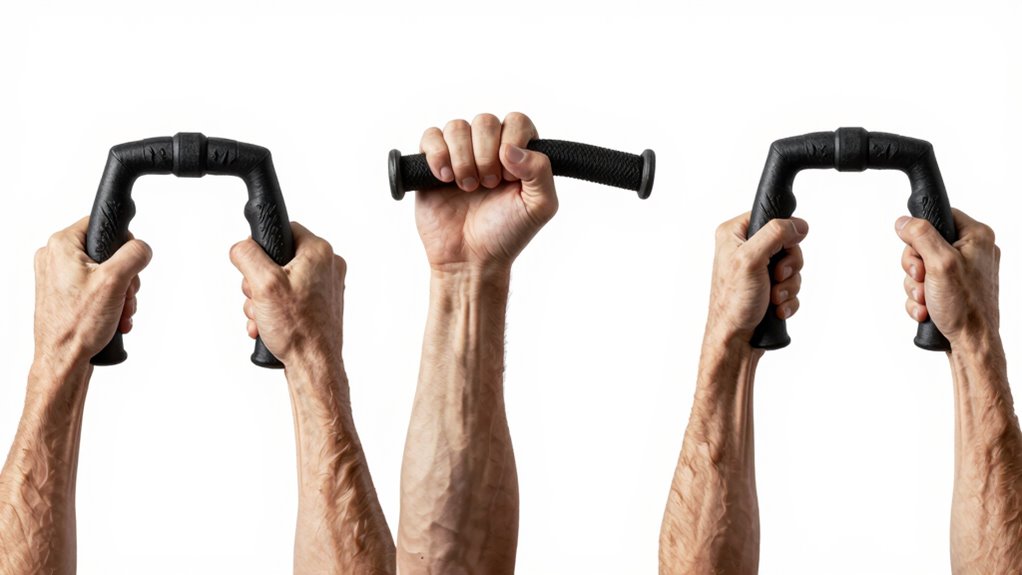

Choosing between neutral, pronated, or supinated grips depends on your goals and joint comfort. Neutral grip, with palms facing each other, reduces wrist and shoulder strain, making it ideal for joint health and longer sessions. Pronated grip emphasizes back and shoulder muscles but may stress your joints if overdone. Supinated grip shifts focus to your biceps and can be easier on shoulders. Understanding these differences helps optimize your workouts—exploring these options reveals which grip works best for you.

Get workout gear delivered free with Prime
- Fast, free delivery on millions of items
- Prime Video, Amazon Music and more included
- Member-only deals all year
Key Takeaways
- Neutral grip minimizes wrist and shoulder strain, ideal for beginners and injury prevention.
- Pronated grip emphasizes back and shoulder muscles but may increase joint stress if overused.
- Supinated grip shifts focus to biceps, offering arm development while generally being gentle on shoulders.
- Each grip type targets different muscles and has unique injury risks, influencing training focus and safety.
- Variations in grip can diversify workouts, improve muscle balance, and reduce overuse injuries.
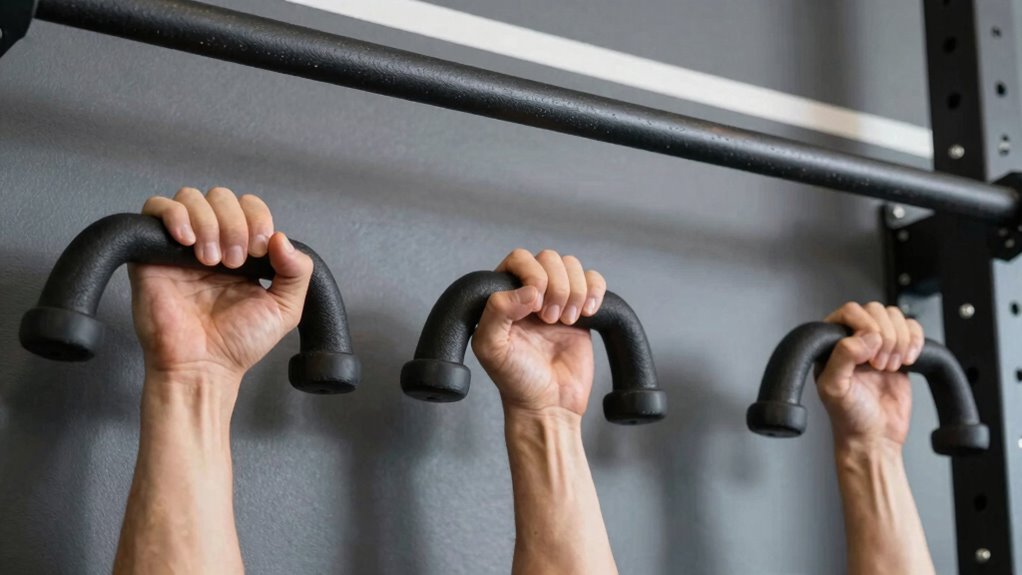
If you’re serious about improving your pull-up performance, investing in the right grips can make a big difference. Your hand grip variations not only influence how effectively you target muscles but also play a pivotal role in injury prevention. Choosing the right grip type can help you avoid unnecessary strain and reduce the risk of common injuries like wrist pain, tendinitis, or shoulder discomfort. Understanding the differences between neutral, pronated, and supinated grips allows you to tailor your training to your goals and physical readiness.
A neutral grip, where your palms face each other, tends to be easier on the wrists and shoulders. This grip offers a natural hand position that reduces strain, making it ideal for beginners or those recovering from injuries. Neutral grips can help you build strength progressively without overloading vulnerable joints, consequently promoting injury prevention. They also activate different muscle groups, primarily targeting the brachialis and brachioradialis muscles in your arms, which can lead to balanced upper-body development. If you’re looking for a comfortable, joint-friendly option that still delivers solid results, neutral grip pull-ups are a smart choice. Additionally, neutral grips can provide a more comfortable grip, especially during longer sets, reducing fatigue and enhancing workout performance.
In contrast, a pronated grip, with palms facing away from you, is the classic pull-up grip most people think of. It emphasizes the upper back, lats, and shoulders, making it highly effective for building overall pulling strength. However, this grip can place more stress on your wrists and shoulders if not performed with proper form, increasing the risk of strain or injury over time. To prevent this, start with moderate reps and focus on maintaining good technique. Incorporating pronated grip variations into your routine can be beneficial once your muscles and joints are accustomed to the movement, but it’s essential to listen to your body and avoid overuse.
A supinated grip, with palms facing toward you, is often called a chin-up grip. It shifts some of the load from your back to your biceps, making it easier to lift your body weight and suitable for building arm strength quickly. While it’s generally gentler on your shoulders, it can place more pressure on your wrists if your flexibility isn’t adequate. Using a supinated grip can also help you avoid shoulder impingement issues common with pronated pull-ups. Like the other variations, proper form is key to injury prevention. Incorporating supinated grip pull-ups can diversify your training and help develop your arm muscles efficiently, but don’t neglect stretching and strengthening your wrists to stay injury-free.
pull-up bar grips neutral pronated supinated
As an affiliate, we earn on qualifying purchases.
As an affiliate, we earn on qualifying purchases.
Frequently Asked Questions
Which Grip Type Offers the Best Wrist Comfort?
You’ll find that a neutral grip offers the best wrist comfort, reducing wrist strain and providing better grip stability. This grip keeps your wrists in a natural position, minimizing discomfort during pull-ups. If wrist comfort is your priority, especially if you experience pain or discomfort with other grips, switching to neutral can make your workout more comfortable and reduce the risk of strain or injury.
How Do Grip Types Impact Muscle Engagement?
Think of grip types like different keys to unlock muscle activation; each influences grip biomechanics uniquely. A pronated grip emphasizes your back and lats, while a supinated grip targets your biceps more. Neutral grips balance muscle engagement, reducing strain. Your choice impacts which muscles activate most during pull-ups, helping you customize workouts for strength or endurance. Experimenting with grips guarantees you hit all muscle groups effectively and prevents plateaus.
Are Certain Grips Better for Beginners?
For beginners, a neutral grip is often best because it requires less grip strength and puts less strain on your wrists, making it easier to maintain proper hand positioning. This grip helps you build confidence and strength gradually. As you improve, you can experiment with pronated or supinated grips to target different muscles and challenge your grip strength further. Starting with a neutral grip is a smart choice for easing into pull-ups.
Can Grip Choice Prevent Injuries During Pull-Ups?
Sure, your grip choice can help prevent injuries during pull-ups, or so you’d hope. Switching between neutral, pronated, and supinated grips can reduce forearm strain and improve grip durability, preventing overuse injuries. Ignoring this variety might lead to strained muscles or worse. So, don’t be stubborn—vary your grips to keep your forearms happy and your joints intact. Your future self will thank you.
How Do Grip Types Influence Grip Fatigue?
Your grip type directly influences grip fatigue by affecting grip strength and endurance. A neutral grip often reduces wrist strain, helping you maintain grip strength longer, while pronated and supinated grips can challenge your grip endurance more quickly due to increased muscle engagement. Switching between grip types during workouts can prevent early grip fatigue, allowing you to perform more reps and build overall grip strength without compromising endurance.
As an affiliate, we earn on qualifying purchases.
Conclusion
Now that you know the differences between neutral, pronated, and supinated grips, the choice is yours. But which grip will challenge your muscles the most—and push your limits? Will you stick with what’s familiar or dare to try something new? The answer could change your workout forever. So, next time you approach the bar, ask yourself: are you ready to unleash your true potential? The decision awaits—what will you choose?
As an affiliate, we earn on qualifying purchases.
pull-up bar with different grip options
As an affiliate, we earn on qualifying purchases.
As an affiliate, we earn on qualifying purchases.
Halloween Picks
halloween
As an affiliate, we earn on qualifying purchases.