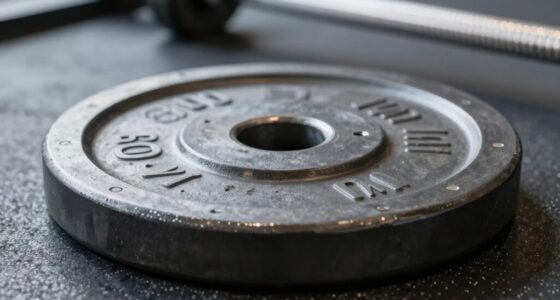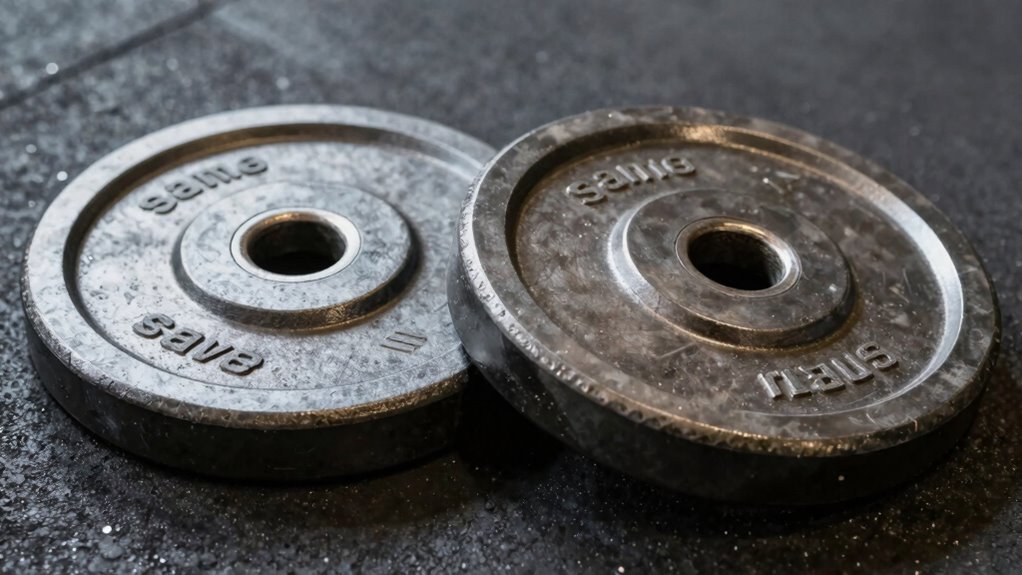
Even when plates are labeled as the same weight, manufacturing differences can cause slight variations that you feel during lifts. Factors like materials, machining, and finishing lead to tolerances of about 1-2%, meaning two 45-pound plates might weigh slightly more or less. These small differences are normal and don’t considerably affect your training. Understanding how these variations work helps you set realistic expectations and improve your workout awareness. Keep going to discover more about plate tolerances.

Get workout gear delivered free — and shop member deals
- Fast, free delivery on millions of items
- Access to Prime Big Deal Days deals on October 6–7
- Prime Video, Amazon Music and more included
Key Takeaways
- Manufacturing tolerances mean plates labeled as the same weight can vary by 1-2%.
- Small weight differences can affect how heavy the lift feels, especially near max capacity.
- Variations in materials and machining cause slight weight discrepancies despite identical labels.
- Multiple plates with minor differences can create uneven load distribution during lifts.
- Recognizing tolerances helps set realistic expectations and prevents frustration over minor weight differences.
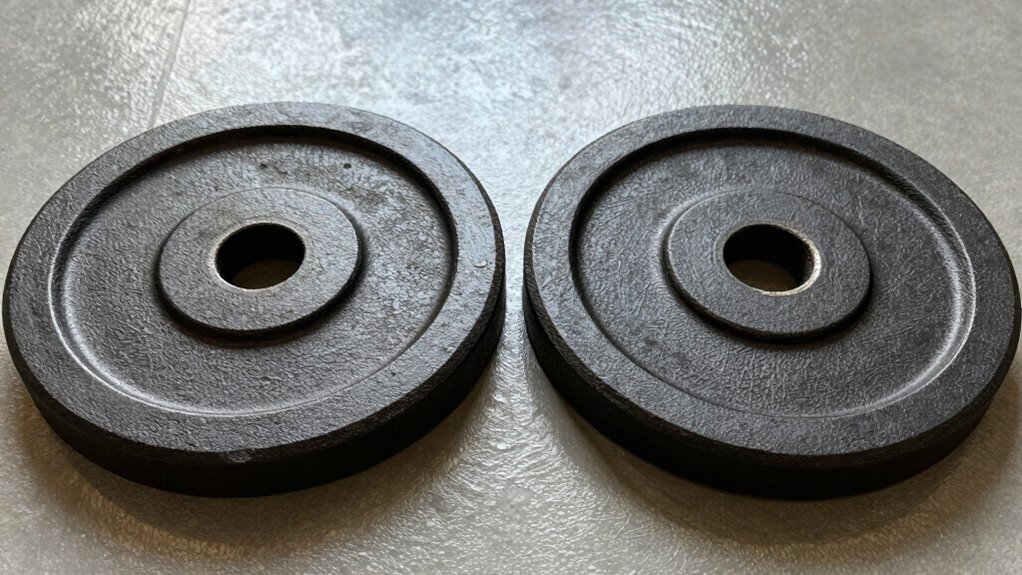
When selecting weight plates for your lifting routine, understanding their tolerances is essential, as manufacturing variations can affect the actual weight you’re lifting. Even if a plate is labeled as 45 pounds, it might weigh slightly more or less due to manufacturing inconsistencies. These small discrepancies are often within certain calibration standards set by industry guidelines, but they can still influence how your workout feels and your progress over time. Recognizing that no two plates are perfectly identical helps you set realistic expectations and ensures you’re not surprised by minor differences during your lifts.
Manufacturers are guided by calibration standards that specify acceptable weight tolerances, typically within a few percentage points of the stated weight. For example, a 45-pound plate might legally vary by 1-2%, meaning it could weigh anywhere between roughly 44 and 46 pounds. These standards are in place to account for natural manufacturing inconsistencies, which are inevitable in mass production. Such variations often stem from differences in materials, machining processes, or finishing techniques. While these inconsistencies usually don’t substantially impact your training, they can add up over time, especially if you’re lifting very close to your maximum capacity or tracking precise progress.
Manufacturers typically allow a 1-2% weight variation due to production inconsistencies.
It’s important to understand that weight plates are produced under strict but imperfect conditions. Manufacturers aim to create plates within specified tolerances, but minor deviations happen. Some plates might be slightly heavier or lighter, and this can affect the load on each side of the barbell. When you load up multiple plates, these small differences can accumulate, leading to an uneven lift or a perception that your bar isn’t perfectly balanced. This is why many serious lifters prefer calibrated or certified plates for their accuracy, especially during competitions or when tracking incremental gains.
Knowing about manufacturing inconsistencies also helps you make more informed choices when building your gym setup. If you’re seeking consistent loading, investing in high-quality, calibrated plates might be worth it. Conversely, standard plates with broader tolerances are usually fine for casual training but might not provide the precision needed for competitive lifting or advanced programming. While tolerances are designed to keep variations within safe and manageable limits, being aware of these nuances ensures you don’t get discouraged or confused when a “same weight” plate feels slightly different from another.
Being aware of floating on water concepts like buoyancy and displacement can also help you understand how water-based training or hydrotherapy might be incorporated into your fitness routine. Recognizing that small weight differences are normal and that your progress depends on consistent effort rather than perfect uniformity, this awareness helps you focus on your technique and consistency, knowing that minor variations in plate weights are just part of the process.
calibrated weight plates for lifting
As an affiliate, we earn on qualifying purchases.
As an affiliate, we earn on qualifying purchases.
Frequently Asked Questions
How Can I Identify a Weight Plate With Inaccurate Tolerances?
You can identify a weight plate with accuracy issues by checking for material differences like uneven surfaces or inconsistent paint. If the plate feels unusually lightweight or heavy compared to standard weights, it’s a sign of tolerance problems. Also, compare it with a trusted, calibrated scale. Variations in manufacturing quality and material inconsistencies often cause these inaccuracies, so inspecting for surface irregularities and verifying weights helps make sure you get accurate equipment.
Do Different Brands Have Consistent Weight Plate Tolerances?
Surprisingly, different brands often lack consistent weight plate tolerances, despite claims of standardization. You’d think manufacturing standards would keep things uniform, but brand consistency varies widely. Some companies cut corners, leading to plates that weigh slightly more or less than labeled. So, if you want reliable weights, don’t assume all brands meet the same standards—shop around and verify, because consistency isn’t guaranteed across brands.
How Often Should I Calibrate My Weight Plates?
You should calibrate your weight plates every 6 to 12 months to guarantee plate accuracy. Regular calibration helps maintain consistent weight measurements, especially if you notice discrepancies or use your plates frequently. If your gym experiences temperature changes or rough handling, consider calibrating more often. This way, you keep your training precise, and your weight measurements stay reliable, giving you confidence in your progress and safety during lifts.
Can Temperature Affect the Weight of My Plates?
Ever notice how your plates sometimes feel different? Temperature effects and material expansion play a role. When it’s hot, metal expands slightly, making your plates marginally heavier or lighter. Conversely, cold causes contraction. You might not see it on the scale, but these tiny shifts can affect how your weights feel during lifts. So, temperature changes are a subtle but real factor in weight accuracy.
Are There Regulations for Weight Plate Manufacturing Standards?
Yes, there are regulations for weight plate manufacturing standards. These standards guarantee manufacturing precision, so your plates meet specific weight requirements. Industry standards set acceptable tolerances, meaning plates might vary slightly in weight but still pass quality checks. Manufacturers follow these guidelines to guarantee consistency and safety. When buying plates, look for certifications or markings indicating they adhere to recognized standards, giving you confidence in their accuracy and quality.
standard weight plates 45 pounds
As an affiliate, we earn on qualifying purchases.
As an affiliate, we earn on qualifying purchases.
Conclusion
Remember, those weight plates are like silent guardians of your strength journey, each carrying a little secret behind their labels. Even if they don’t feel exactly the same, they symbolize your resilience and progress. Embrace the subtle differences, knowing they’re part of the process. Just like a sturdy bridge bears the weight of many journeys, your dedication remains unwavering, regardless of tiny variations. Keep lifting with purpose, and trust that your dedication outshines any tiny inconsistency.
As an affiliate, we earn on qualifying purchases.
weight plate tolerance certified
As an affiliate, we earn on qualifying purchases.
As an affiliate, we earn on qualifying purchases.
Halloween Picks
halloween
As an affiliate, we earn on qualifying purchases.